Recently I’ve had a bit of a run on books by and about Daphne du Maurier. First of all I read The Parasites, which reminded me that I’d had Justine Picardie’s novel, Daphne sitting on my bookshelves unread, so I immediately got it down. Then I just had to read My Cousin Rachel, a book I’ve had for years and never got round to reading before now. After that I read Daphne du Maurier: a Daughter’s Memoir by Flavia Leng, just because it was one of the books Justine Picardie consulted in writing her novel. I’ve previously read Margaret Forster’s biography Daphne du Maurier and Daphne du Maurier’s The ‘Rebecca’ Notebook and Other Memories, which is mainly autobiographical.
Daphne by Justine Picardie (2008) – synopsis (from the back cover):
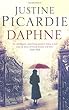 It is 1957. As Daphne du Maurier wanders alone through her remote mansion on the Cornish coast, she is haunted by thoughts of her failing marriage and the legendary heroine of her most famous novel, Rebecca, who now seems close at hand. Seeking distraction, she becomes fascinated by Branwell, the reprobate brother of the Bronte sisters, and begins a correspondence with the enigmatic scholar Alex Symington in which truth and fiction combine. Meanwhile, in present day London, a lonely young woman struggles with her thesis on du Maurier and the Brontes and finds herself retreating from her distant husband into a fifty-year-old literary mystery.
My view: 4/5
This book merges fact and fiction so well that it’s hard to differentiate between the two. I much preferred the story of Daphne herself and her search for information about Branwell. I had to go back to Forster’s biography of Daphne to compare the accounts of her life, which matched up pretty well. I was less keen on the modern day story of a young woman, the second wife of an older man. It had too many obvious parallels with Rebecca for my liking. And if you haven’t read Rebecca, this book gives away the plot. There are also references to My Cousin Rachel, which I glossed over in case there were any spoilers there too (I don’t think there were). All in all, a very satisfying mystery about Daphne and the missing Bronte documents.
My Cousin Rachel by Daphne du Maurier (1951) – synopsis (Amazon):
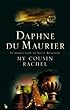 Orphaned at an early age, Philip Ashley is raised by his benevolent older cousin, Ambrose. Resolutely single, Ambrose delights in Philip as his heir, a man who will love his grand home as much as he does himself. But the cosy world the two construct is shattered when Ambrose sets off on a trip to Florence. There he falls in love and marries – and there he dies suddenly. In almost no time at all, the new widow – Philip’s cousin Rachel – turns up in England. Despite himself, Philip is drawn to this beautiful, sophisticated, mysterious woman like a moth to the flame. And yet …might she have had a hand in Ambrose’s death?
My view: 4/5
I thoroughly enjoyed this book, completely taken in by the characters and loving the setting in an old mansion in Cornwall. The story is narrated by Philip, so the other characters are seen through his eyes. The tension mounts as Philip becomes obsessed with Rachel and I was never quite sure what was real and what to believe. He is not a stable character and as Rachel’s own thoughts are not revealed it’s not clear if she can be believed either, whether she is sincere or evil and manipulative.
Daphne du Maurier: a Daughter’s Memoir (1994) – synopsis (from the back cover):
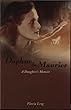 In this moving and revealing memoir, Flavia Leng paints a powerful portrait of her mother, Daphne du Maurier. She presents an account of an unusual and often lonely childhood spent in London and especially Cornwall, at her mother’s beloved home, Menabilly. Family friends included Nelson and Ellen Doubleday, Gertrude Lawrence and Noel Coward. However, at the centre of this story is Daphne du Maurier herself. The book reveals a writer with a deep attachment to Cornwall, where she put down her roots and found inspiration for her novels, and who spent much of her life as a recluse, withdrawn not only from the outside world but also from members of her own family. A picture emerges of a woman who lived in a world of her own creation that was beyond the comprehension of those around her.
My view: 3.5/5
In the epilogue Flavia Leng, Daphne du Maurier younger daughter, explained that she began to write this memoir of her childhood two years before her mother died in 1989 and it was never meant for publication – it was just for the family. And that to me epitomises this memoir – it’s an account of her childhood and of her family as seen through a child’s eyes. It seems a lonely childhood, despite being the middle child. As children Flavia and her older sister Tessa didn’t get on and both she and Tessa saw that their mother lavished more affection on her beloved son, Christopher who they called Kits. But a picture emerges of Daphne, who they called Bing, as a solitary person, closeted away with her typewriter or lost in her world of ‘never, never land’, peopled by the characters she invented, with little time for her children, who were looked after by Nanny and then ‘Tod’, their governess.
Like her mother Flavia has a great love of Cornwall which shines through the book – she was never happier than when alone in Menabilly and the surrounding woodlands. It’s a sad memoir ending with Flavia feeling she had no roots left after her parents died:
I have heard it said that a person only really grows up when both parents have gone; what I do know is that life will never be quite the same again. Cornwall no longer holds the enchantment it once did. Gone is the excitement of driving down those leafy, winding roads to the lovely old houses, my beloved Menabilly, and then later Kilmarth where Bing lived out her years.
 These reflect the variety of books that I enjoy. For more details about the books click on the links which take you to Amazon UK:



 I’m currently reading
  BooksPlease