Book Beginnings: Wild Swans by Jung Chang

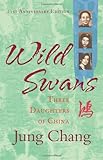
I’m currently reading Wild Swans by Jung Chang.

It begins:

At the age of fifteen my grandmother became the concubine of a warlord general, the police chief of a tenuous national government of China. The year was 1924 and China was in chaos. Much of it, including Manchuria, where my grandmother lived, was ruled by warlords. the liaison was arranged by her father, a police official in the provincial town of Xixian in southwest Manchuria, about a hundred miles north of the Great Wall and 250 miles northeast of Peking.

Wild Swans is a family memoir – the story of three generations of woman in Jung Chang’s family – her grandmother, mother and herself. This is the 2003 edition with an introduction by Jung Chang explaining how she came to write the book. She had always dreamed of being a writer, but growing up in Mao’s China it seemed out of the question, with most writers suffering in endless police persecutions. It was only after she had been allowed to come to Britain in 1978 to study that she had the freedom to write and to write what she wanted.

So far, I’m finding it fascinating, reading about her grandmother, who was one of the last generation of Chinese woman to suffer the practice of binding feet. I knew of this practice, but hadn’t realised just how much the little girls suffered and continued to suffer throughout their lives.

As this book is so long (over 600 pages in a small font) it’s going to take me quite a while to read it. I’l probably write a few posts on my progress.

First Chapter, First Paragraph is hosted by Diane at Bibliophile by the Sea.

Adventures of a One-Breasted Woman by Susan Cummings

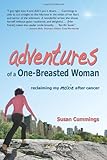
I received Susan Cumming’s book Adventures of a One-Breasted Woman: Reclaiming My Moxie After Cancer from the publisher via LibraryThing‘s Early Reviewer programme.

About the author from Goodreads:

Susan Cummings is a writer, an actress and now a 20-year breast cancer survivor. Once a newspaper reporter, she has since been published in a number of literary journals and written songs and plays. Feeling alone and vulnerable after her mastectomy for early-stage breast cancer, she looked, in vain, for a memoir of another woman’s experiences after cancer treatment. Eventually she wrote the book she had sought. She lived in New York City for many years, but is now settled in western Massachusets.

The fact that I’ve read this book shows how I’ve become more adjusted to reading about cancer than I was a few years ago. At that time I had grave misgivings about reading about breast cancer because my mother had died from it many years ago. But I was diagnosed with breast cancer a year last August and was so encouraged by how treatment has improved over the years that I’m now able to face reading about it. I haven’t had a mastectomy as Susan Cummings had but I was able to identity with some of the feelings she describes. Even so, I hesitated about reading the book as everyone has their own ways of coping and everybody’s experience is different.

Susan Cummings was diagnosed with cancer in 1992 and she chose to have a mastectomy rather than a lumpectomy followed by radiation because her surgeon said it would be a more assured cure. She didn’t move on after the operation and struggled with fear that the cancer would recur and with shame about her disfigured body.

Her book follows her thoughts and feelings over the six years after her surgery with openness. At times she was depressed, at others more optimistic and cheerful, accepting her body for what it is. I thought it was very good, easy to read and encouraging to read about someone who had not only survived but had managed to overcome her problems and face up to life with courage. Throughout the book I thought she looked realistically at the options open to her. It’s also an account of relationships and how they change, about her childhood and about different and alternative methods of healing.  I’m glad to have received and read it.

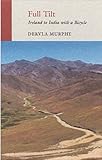
Full Tilt: Book Beginnings

One of the books I’m reading is Dervla Murphy’s Full Tilt: Dunkirk to Delhi on a Bicycle. It was first published in 1965 and is an account of her journey in 1963. I’m finding it slow reading because I’m constantly wondering about the places she describes, how they’ve changed since the early 1960s and looking them up.

Her journey took her through Europe, Persia (Iran), Afghanistan, over the Himalayas to Pakistan and into India. She travelled on her own, with a revolver in her saddle bag. It’s amazing.

It begins with her desire to cycle to India:

On my tenth birthday a bicycle and an atlas coincided as presents and a few days later I decided to cycle to India. I’ve never forgotten the exact spot on a hill near my home at Lismore, County Waterford, where the decision was made and it seemed to me then, as it still seems to me now, a logical decision, based on the discoveries that cycling was a most satisfactory method of transport and that (excluding the USSR for political reasons) the way to India offered few watery obstacles than any other destination at a similar distance. (page 1)

And that is what she did 21 years later.

So far I have travelled with her to Afghanistan, where she is on her way to Kabul via Khandahar. Needless to say I’m struck with thoughts about how much has changed in the world since then. I’m full of questions, not just about the current situation with all the places she describes, but also about how she managed it, how she found out where to stay, and how she communicated with people for example.

It’s very much a personal account, not so much about the actual cycling, although I was amused by her account of getting her cycle repaired in a Persian cycle shop where they would not use a screwdriver but hammered every screw into place. Not so funny, because a few days later the back wheel came off, as the relevant screw had been ruined!

Book Beginnings on Fridays is hosted by Gilion at Rose City Reader.

October’s Books

October has been another good month for reading. As in September I read ten books, listed below (the titles are linked to my posts on the books):

  1. The Judgement of Strangers by Andrew Taylor 4/5
  2. Dancing Backwards by Salley Vickers 3.5/5 (library book)
  3. Fear in the Sunlight by Nicola Upson 3/5 (Kindle)
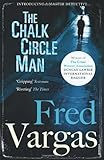
  4. The Chalk Circle Man by Fred Vargas 4.5/5 (library book)
  5. Sweet Tooth by Ian McEwan 3/5
  6. The House of Silk by Anthony Horowitz 4/5
  7. Hickory Dickory Dock by Agatha Christie 4.5/5
  8. Mrs Harris MP by Paul Gallico 4/5
  9. The History of Scotland by Richard Killen 4/5 (from TBR books)
  10. The Expats by Chris Pavone 3.5/5 (Kindle)

So, a total of 9 fiction books of which 6 were crime fiction, and 1 non fiction. Two of the books were library books, 2 were e-books and 1 book was from my to-be-read books (books I’ve owned before January 2012).

It’s difficult to pick a Book of the Month this time as I’ve rated all of the books as 3 and over (meaning they were good, enjoyable books), with just two as 4.5/5 (meaning I thought they were very good and I wanted to get back to them each time I had to stop reading).

I was tempted to say my Book of the Month is Agatha Christie’s Hickory Dickory Dock, because it’s good on characterisation, but overall I think it has to be The Chalk Circle Man by Fred Vargas for it’s sheer quirkiness and cleverly constructed plot.

For more books of the month see Kerrie’s Crime Fiction Pick of the Month on her blog Mysteries in Paradise.


Laurie Lee

Laurie Lee was born in Stroud in Gloucestershire and moved to Slad when he was three in 1917. He died there in 1997. His best known book is Cider With Rosie (1959) which I loved. It covers his childhood years in Slad and it is absolutely fascinating. He was also a poet and this book reads like a prose poem throughout – I wrote about it here.

I’ve recently read another two of Laurie Lee’s books – As I Walked Out One Midsummer Morning (1969), which is about his life after he left his home in Slad, and A Rose for Winter (1955), which is a record of his travels in Andalusia 15 years after he first went there.

 As I Walked Out One Midsummer Morning is the second of his autobiographical trilogy which began with Cider With Rosie followed by A Moment of War (1991). It begins in 1934 when Laurie Lee left his home in the Cotswolds and set out ‘to discover the world’. First he walked to London where he got a job on a building site and supplemented his income by playing the violin. He left for Spain a year later, landing at Vigo and then making his way on foot through to Castillo on the south coast, playing his violin in exchange for food and a bed for the night. Then the Spanish Civil War began in earnest and he came home on a Royal Navy destroyer that had been sent from Gibraltar to rescue any ‘British subjects who might be marooned on the coast.’ In an Epilogue he explains how he had shameful doubts about leaving Spain and so he returned to join the Republicans.

Lee writes vivid, lyrical prose with beautiful descriptions of the countryside, the scorching heat, the poverty and the people, so although I haven’t been to any of the places he describes it was easy to visualise the scenes. It’s not just the scenery he captures, but also the atmosphere, the splendour and squalor, and the desperation and also the love and enthusiasm for life.

In A Rose in Winter Lee writes about his travels in Andalusia which he visited with his wife fifteen years after his last time there during the Spanish Civil War. Again, he describes the towns and countryside beautifully, portraying the poverty, the hospitality and the changes the Civil War had inflicted. He takes part in religious processions, goes to a bull fight and watches the ‘most fundamental, most mysterious of all encounters in Andalusian folk-music – the cante flamenco’, a most dramatic and erotic performance.

Reading them one after the other I was struck by his descriptions of the towns – Seville, for example, in As I Walked Out One Midsummer Morning was

… dazzling – a creamy crustation of flower-banked houses fanning out from each bank of the river. The Moorish occupation had bequeathed the affection for water around which so many of even the poorest dwellings were built – a thousand miniature patios set with inexhaustible fountains which fell trickling upon ferns and leaves, each a nest of green repeated in endless variations around this theme of domestic oasis. (page 126)

and in A Rose for Winter

So Seville remains, favoured and sensual, exuding from the banks of its golden river a miasma of perpetual excitement, compounded of those appetites that are most particularly Spanish – chivalry, bloodshed, poetry and religious mortification. (page 34)

Katrina commented on my previous post about As I Walked Out One Midsummer Morning that she was disappointed to read that Laurie Lee’s Spanish experiences were almost all fiction. I tried to find out more about this. There are doubts that Lee falsified and embellished his involvement in the Spanish Civil War in A Moment of War (which I haven’t read). However, his widow denied this. In an interview recorded in The New York Times, 24 February 1985, Lee, talking about Cider With Rosie said  “… it is not so much about me as about the world that I observed from my earliest years. It was a world that I wanted to record because it was such a miracle visitation to me. I wanted to communicate what I had seen, so that others could see it.”

Whether his books are fictionalised accounts of his life or not, I like them. They evoke the past – a world long gone – and give a sense of what life was like. I like to think they portray truth, even if all the facts may not be strictly accurate.

From the Archives: Biographies

This is a second post in which I’m following Simon’s example at Stuck in a Book of posts in which he revisits his old reviews. I’ve been looking back into my archives at biographies ‘“ triggered by Katrina’s post on Daphne du Maurier’s Rebecca Notebook, which I’ve also read and written about in 2010.

So here’s a list of some of my posts on biographies of authors – with links to the posts, a short summary and a quotation from my review.

First of all two from 2007:

  • Daphne by Margaret Forster – a biography of Daphne Du Maurier, the author of Rebecca etc

From my post: There is too much I could say about ‘Daphne’, not least that it is a candid account of her relationships, eg her troubled married life; wartime love affair; and friendships with Gertrude Lawrence and Ellen Doubleday, as well as an excellent source of information on Du Maurier’s method of writing and views on life.

  • Lewis Carroll by Morton N Cohen – a biography of Charles Dodgson (Lewis Carroll) a long post  which has a somewhat controversial interpretation of some aspects of Dodgson’s life.

From my post: his account of Charles Dodgson’s life is basically chronological, but because he also looks at different aspects of Charles’s life it is a bit repetitive. As biographies go this is not one of the most straightforward or readable. It’s extremely detailed and at nearly 600 pages it is not a quick read.

One from 2008:

  • Dear Dodie by Valerie Grove – biography of Dodie Smith, the author of I Capture the Castle etc.

From my post: It is very readable and gives a very full picture of Dodie’s life, and it has an excellent index (always a plus for me). 

And two from 2009:

  • Wild Mary by Patrick Marnham – biography of Mary Wesley, the author of Camomile Lawn and other books.

From my post:  … I certainly wouldn’t like to have met Mary. She seems to have been a difficult and determined woman who aroused strong passions in those who knew and loved her.

From my post: My outstanding impression of the book is how amazingly detailed it is given the fact that few records of her life have survived.