Of Women by Shami Chakrabarti

A global perspective on gender injustice

Publication date 26 October 2017, Penguin, 229p. 

Review copy from the publishers via NetGalley

My rating: 3 stars

Shami Chakrabarti is passionate, and indeed angry, about the need for gender equality in her book Of Women: in the 21 Century.  She examines the effects of gender injustice on a wide variety of issues in many parts of the world. In parts it reads like a dry academic textbook, packed full of statistics and wide ranging examples of gender injustice on a global scale. It becomes more personal however, when she writes about her own experiences her family and her background.

She covers a broad overview of many issues, rather than an in depth study, including violence against women, abortion, sanitary products, childcare and sex education and topics such as faith, the concept of home and displaced persons, health, wealth, education, representation, opportunity and insecurity in the 21st century. There are so many issues for just one book of just 229 pages and it is depressing reading for the most part, even though she suggests a number of initiatives to improve matters.

However, she remains optimistic, concluding that she believes that ‘far greater equality for women and men is realistically within our reach and well worth the stretch.’ I don’t think it is that easy and will need more than a ‘stretch’.

There is an extensive list (for each chapter heading) of ‘Further Reading and Viewing’ at the end of the book, but I think it would also be helpful to have an index to the wide ranging issues covered in this book.

Shami Chakrabarti is a former director of Liberty (2003-16), is Labour’s Shadow Attorney General, a member of the House of Lords, and the author of On Liberty, a book about human rights violations published in 2014.

My thanks to the publishers for a review copy via NetGalley.

Amazon UK

My Week in Books: 15 November 2017

This Week in Books is a weekly round-up hosted by Lypsyy Lost & Found, about what I’ve been reading Now, Then & Next.

IMG_1384-0

A similar meme,  WWW Wednesday is run by Taking on a World of Words.

Now:

Victoria: A Life

I’m still reading Victoria: a Life by A N Wilson and have just finished Part One, ending with the death of William IV at 2.20 on the morning of 20 June 1837. Victoria is woken to the news that she is now Queen.

The Skeleton Road

I’ve also started The Skeleton Road by Val McDermid, the third  of her DCI Karen Pirie novels.  So far I’m finding it a bit slow going with rather a bewildering number of characters introduced one after the other. When a skeleton with a bullet hole in its skull is found at the top of a crumbling, gothic building in Edinburgh Karen and her Historic Cases Unit is called in to identify the body and investigate how long it has been there.

Then:

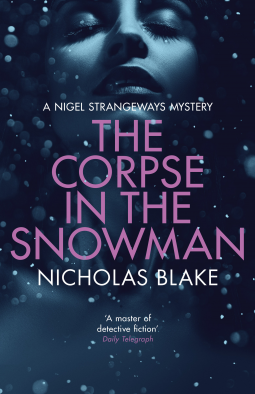
I’ve just finished The Corpse in the Snowman by Nicholas Blake, first published in 1941 as The Case of the Abominable Snowman. This is a manor house murder mystery  in which it first appears that Elizabeth Restorick has committed suicide. Or was it murder? Nigel Strangeways and Inspector Blount investigate.

Next:

Call the Dying (Lydmouth, #7)

I’m not sure, but Andrew Taylor’s Call the Dying caught my eye this morning when I passed the bookshelves in the hall. It’s set in the 1950s in the grip of a long, hard winter when dark forces are at play – a dead woman calls the dying in a seance, in a town shrouded in intrigue and suspicion. This is the seventh in Taylor’s Lydmouth series. I haven’t read any of the earlier books and I’m hoping that won’t matter.

Have you read any of these books?  Do any of them tempt you? 

First Chapter First Paragraph: 1599: A Year in the Life of William Shakespeare

eca8f-fistchapEvery Tuesday Diane at Bibliophile by the Sea hosts First Chapter First Paragraph Tuesday Intros to share the first paragraph sometimes two, of a book that she’s reading or is planning to read soon.

At the beginning of this month I read Bernard Cornwell’s Fools and Mortals set in 1595 as the Lord Chamberlain’s Men  are rehearsing Shakespeare’s new play, A Midsummer Night’s Dream.  And I remembered another book that I’ve been meaning to read for over 10 years – 1599 A Year in the Life of William Shakespeare by James Shapiro. That was the year the Globe Theatre was built and that Shakespeare wrote Julius Caesar, Henry V, As You Like It and Hamlet.

1599: A Year in the Life of William Shakespeare

I’m not sure where this book actually begins – there is a Preface, then a Prologue before you get to Chapter 1 on page 27! So here are the opening lines of each.

First:

Preface

In 1599 Elizabethans sent off an army to crush an Irish rebellion, weathered an armada threat from Spain, gambled on a fledgling East India Company and waited to see who would succeed their ageing and childless Queen. They also flocked to London’s playhouses, including the newly built Globe.

Then:

Prologue

The weather in London in December 1598 had been frigid – so cold that ten days before New Year the Thames was nearly frozen over at London Bridge. It thawed just before Christmas, and hardy playgoers flocked to the outdoor Rose playhouse in Southwark in record numbers. But the weather turned freezing cold again on St John’s Day, the 27th, and a great snowstorm blanketed London on 28 December.

As the snow fell, a dozen or so armed men gathered in Shoreditch, in London’s northern suburbs.

The armed men then went to another playhouse, the nearby Theatre that had been vacant for two years and proceeded to dismantle the building. They took the frame to a waterfront warehouse near Bridewell Stairs to store it, ready to resurrect it as the Globe.

And at last here are the opening sentences of

Chapter  1 A Battle of Wills

Late in the afternoon of Tuesday 26 December 1598, two days before their fateful rendezvous at the Theatre, the Chamberlain’s men made their way through London’s dark and chilly streets to Whitehall Palace to perform for the Queen. Elizabeth had returned to Whitehall in mid-November in time for her Accession Day celebrations. Whitehall, her only London residence, was also her favourite palace and she spent a quarter of her reign there, especially around Christmas.

The Chamberlain’s Men were at the Palace to play the first night of the Christmas holidays, performing The Second Part of Henry the Fourth.

I think this is a book that will take me quite some time to read – it’s full of detail, not just about Shakespeare, his plays and the theatre, but also about the events of his life and times!

What do you think?  Would you continue reading? 

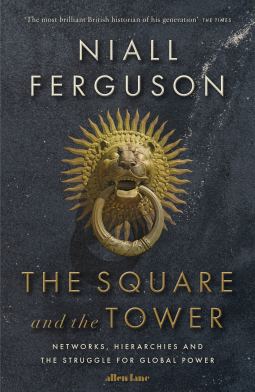
The Square and the Tower by Niall Ferguson

Published: Penguin Books (UK), 5 October 2017, 535 pages

Source: review copy from the publishers via NetGalley

My Rating: 2*

Blurb:

What if everything we thought we knew about history was wrong? From Niall Ferguson, the global bestselling author of Empire, The Ascent of Money and Civilization, this is a whole new way of imagining the world.

Most history is hierarchical: it’s about popes, presidents, and prime ministers. But what if that’s simply because they create the historical archives? What if we are missing equally powerful but less visible networks – leaving them to the conspiracy theorists, with their dreams of all-powerful Illuminati?

The twenty-first century has been hailed as the Networked Age. But in The Square and the Tower Niall Ferguson argues that social networks are nothing new. From the printers and preachers who made the Reformation to the freemasons who led the American Revolution, it was the networkers who disrupted the old order of popes and kings. Far from being novel, our era is the Second Networked Age, with the computer in the role of the printing press. Once we understand this, both the past, and the future, start to look very different indeed.

My thoughts:

Subtitled ‘Networks, Hierarchies and the Struggle for Global Power‘, this is described as ‘a whole new way of imagining the world’ as it’s possible that we’re missing information about networks because it’s not recorded in historical archives. But what I found in this book is rather different, being a run through history in what seemed to me a disjointed way, albeit very detailed, with network diagrams and many footnotes. I found parts of it quite tedious, especially the early section detailing the research on the history of networking. If I hadn’t requested the book from NetGalley I would have not bothered reading any more. Fortunately I found some sections were more interesting (such as on such varied topics as social media, the Illuminati, the Reformation, European Royal families, the Cambridge spies, Al Qaeda, ISIS and Trump to name but a few) and I did finish the book.

Ferguson states that his book seeks to learn about the future mainly by studying the past, in particular by looking at the importance of networks in the past that had been at times very powerful. But by the end of the book I didn’t feel too enlightened in that respect as often the distinction between hierarchies and networks is blurred – there are networks that are hierarchical and hierarchies that are parts of wider networks. As Ferguson acknowledges, the dichotomy between hierarchy and network is an over-simplification.

I requested this book when I saw it on NetGalley because history is a subject that I find fascinating, and the blurb interested me. However, although there are sections that I did find interesting, mainly those written as conventional narrative history, overall I was disappointed. I think it is disjointed with sections that don’t seem to me to have much connection with the main theme, overstretching the analogy. To summarise – I don’t think such theoretical historical analysis is for me.

My thanks to the publishers and NetGalley for a review copy.

Six Degrees of Separation: from Like Water for Chocolate to The Spy Who Came In From The Cold

Six Degrees of Separation is a monthly link-up hosted by Kate at Books Are My Favourite and Best. Each month a book is chosen as a starting point and linked to six other books to form a chain. A book doesn’t need to be connected to all the other books on the list, only to the one next to it in the chain.

This month the chain begins begin with a book that Kate says people may not have discovered, were it not for the hugely popular movie version – Laura Esquivel’s Like Water for Chocolate. I hadn’t discovered it at all until now! But I see that it’s a ‘bestseller’, a book about passion and the magic of food (including recipes), a tale of family life in  Mexico.
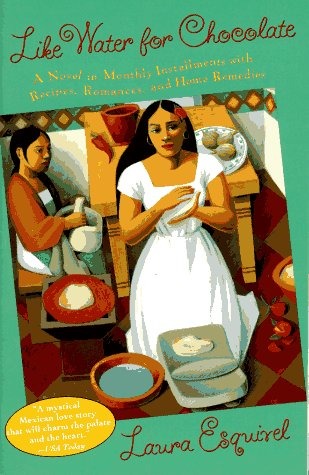
Like Water for Chocolate

The first link in my chain is a book also set partly in Mexico:

The Lacuna

The Lacuna by Barbara Kingsolver is the story of Harrison Shepherd, the son of a Mexican mother and an American father and it’s told through his diaries and letters together with genuine newspaper articles, although whether they reported truth or lies is questionable. As you can see from the cover swimming plays a part in this book. As a boy, Harrison, loved swimming and diving into a cave, which was only available at certain tides, a cave that was there one day and gone the next – a lacuna.

Swimming also features in Evil Under the Sun by Agatha Christie.
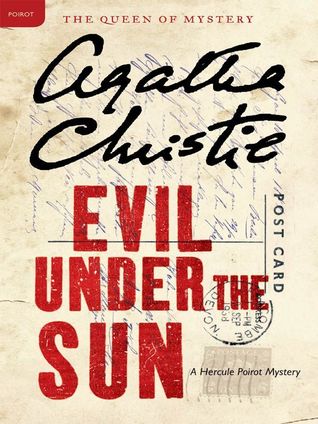
Evil Under the Sun (Hercule Poirot, #23)

Poirot is on holiday in Devon staying in a seaside hotel. It’s August, the sun is hot, people are enjoying themselves, swimming and sunbathing until Arlena is found dead – she’d been strangled.

The next book in my chain is also crime fiction  – Blue Heaven by C J Box.

Blue Heaven

This is a story set in North Idaho about two children, Annie and William who decide to go fishing without telling their mother, Monica, and witness a murder in the woods. One of the killers sees them and they run for their lives. It’s fast-paced and full of tension right to the end.

I chose Half of a Yellow Sun by Chimamanda Ngozi Adichie as the next link, a book that also has a colour in its title.

Half of a Yellow Sun

It’s based on the Nigeria-Biafra War of 1967 – 70. Focusing on the struggle between the north and the south, the Igbo, Yoruba and Hausa people, it brings home the horrors brought about by war, the ethnic, religious and racial divisions and the suffering that results.  It is also a novel about love and relationships, a beautiful and emotional book without being sentimental and factual without being boring.

Another book about war, but this one is non-fiction about a spy operation during World War Two – Operation Mincemeat by Ben Macintyre.

Operation Mincemeat: The True Spy Story That Changed the Course of World War II

It’s about the Allies’ deception plan in 1943, code-named Operation Mincemeat, which underpinned the invasion of Sicily. It was framed around a man who never was. I thought it was so far-fetched to be almost like reading a fictional spy story. I marvelled at the ingenuity of the minds of the plans’ originators and the daring it took to carry it out.

Operation Mincemeat led me to think about a fictional spy in The Spy Who Came in from the Cold by John Le Carré.

The Spy Who Came In from the Cold

This is set in the Cold War period in the 1960s and tells the story of Alex Leamas’s final assignment. It’s a dark, tense book and quite short, but very complicated; a story  full of secrecy, manipulation, of human frailty and its duplicitous nature.

What a journey! My chain moves through time and place – from Mexico to Devon, North Idaho, Nigeria, Sicily and Berlin. It encompasses fiction and non-fiction and takes in several wars. All, except for the book that starts the chain, are books I’ve read and enjoyed. Six Degrees of Separation is always fascinating to compile and I’m always surprised at where it goes and where it ends up. Who would have thought that a book about family life in Mexico would end up linked to a spy novel about the Cold War?

Library Books

I reserved these books over the last few months and, wouldn’t you know it, they all arrived practically together!

IMG_20170925_190629502[1]

A Darker Domain by Val McDermid. This is the second Karen Pirie book. I’ve borrowed it because I loved the first one, The Distant Echo. In 1984, in Fife, heiress Catriona Maclennan Grant & her baby son are kidnapped. The ransom payoff goes horribly wrong. She is killed while her son disappears without trace. 2008, Tuscany. A jogger stumbles upon dramatic new evidence that re-opens the cold case. For Detective Sergeant Karen Pirie, it’s an opportunity to make her mark.

Conclave by Robert Harris – I’ve thoroughly enjoyed other books by Robert Harris, so I’m keen to read this one about how a new Pope is chosen as the cardinals meet in the Sistine chapel to cast their votes. This is a novel and Harris depicts the cardinals as holy men – but ambitious and rivals to become the most powerful spiritual figure on earth.

The Hidden Life of Trees:What They Feel, How They Communicate – Discoveries from a Secret World by Peter Wohlleben. I read Katrina’s review of this book and immediately thought it sounded an amazing book as I love trees. Wohlleben is a German forester and his book is about his love of trees and why they matter on a global scale. He makes the case that the forest is a social network – I like the idea that they communicate with each other – even if they don’t actually walk and talk like Tolkien’s ents.

Days Without End by Sebastian Barry – I loved his book, The Secret Scripture and am hoping I’ll like this one too. Thomas McNulty and John Coles signed up for the US army in the 1850s and fought in the Indian Wars and then in the American Civil War. The book was awarded the Costa Book Award 2016 and won the 2017 Walter Scott Prize. It was also longlisted for the Man Booker Prize 2017 – not that winning these awards automatically means that I’ll like it and I’m often not keen on books about war.