Six Degrees of Separation: from Daisy Jones and The Six to Thirteen

I love doing Six Degrees of Separation, a monthly link-up hosted by Kate at Books Are My Favourite and Best. Each month a book is chosen as a starting point and linked to six other books to form a chain. A book doesn’t need to be connected to all the other books on the list, only to the one next to it in the chain.

Daisy Jones

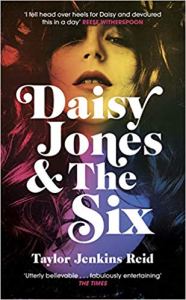
This month the chain begins with Daisy Jones and The Six by Taylor Jenkins Reid,  a novel about the rise and fall of a fictional 70s rock band inspired by Fleetwood Mac.

There are always several ways to go when compiling these Six Degree chains and at first my mind went blank  but looking at the books we got for Christmas I decided that Face It: a Memoir by Debbie Harry was just the right book for my first link, a book about a real rock band. Debbie Harry is the best known face of Blondie; she and the band forged a new sound that brought together the worlds of rock, punk, disco, reggae and hip-hop to create some of the most beloved pop songs of all time.

The Ballad of Jethro Tull: The official illustrated oral history is another book we got for Christmas. It’s Jethro Tull’s story told by Ian Anderson, band members past and present and the people who helped Tull become one of the most successful bands in rock history.

And then I thought my chain needed a change of genre, but sticking with the word ‘ballad’ I thought of Dreamwalker: The Ballad of Sir Benfro: Book 1 by James Oswald, a magical tale of the young dragon, Benfro, inspired by the language and folklore of Wales. It follows the adventures of a young dragon, Sir Benfro, in a land where his kind have been hunted near to extinction by men.

For the next link I turned to crime fiction and to one of James Oswald’s Inspector McLean novels, set in Edinburgh – The Hangman’s Song. It’s a dark, tense novel with elements of the supernatural  and parapsychology thrown in. It’s not a book for the faint-hearted or the squeamish as there are details of some gruesome deaths, murders and beatings that the characters go through. 

James Oswald is a Scottish author and so my last link is to another Scottish author – Chris Brookmyre, who has written The Way of all Flesh, under the pseudonym of Ambrose Parry with his wife, Dr Marisa Haetzman a consultant anaesthetist. It is set in Edinburgh in 1847 as Dr James Young Simpson, a professor of midwifery, discovered the anaesthetic properties of chloroform. It combines fact and fiction most successfully, the social scene, historical and medical facts slotting perfectly into the plot. It was on the Longlist for the 2019 Theakston Old Peculier Crime Novel of the Year.

But the winner was Thirteen by Steve Cavannagh, an Irish author. It’s the fifth book in the Eddie Flynn series of crime thrillers, ‘serving up a delicious twist to the traditional courtroom thriller, where in this instance the real killer is not the one on trial, but a member of the jury!’ I have a copy but haven’t read it yet. And quite by chance I see that it also links back to Daisy Jones and the Six as it has a number in the title.

From a fictional rock band to two real rock bands my chain also links up books of ballads and three crime fiction novels.

Next month (1 February 2020), we’ll begin with Fleishman is in Trouble by Taffy Brodesser-Akner.

Six Degrees of Separation: from Sanditon to The Lambs of London

I love doing Six Degrees of Separation, a monthly link-up hosted by Kate at Books Are My Favourite and Best. Each month a book is chosen as a starting point and linked to six other books to form a chain. A book doesn’t need to be connected to all the other books on the list, only to the one next to it in the chain.

Sanditon

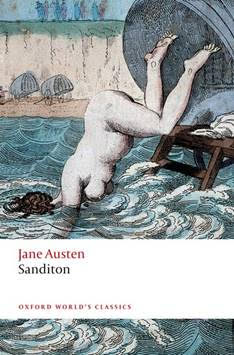
This month the chain begins with December 7, 2019), we’ll begin with Jane Austen’s unfinished manuscript, Sanditon. I read this a few years ago and enjoyed it very much.  It’s the last fiction that Jane Austen wrote, beginning it in January 1817, the year she died. She was ill and the subject of health is one of its themes, but not in a serious or gloomy way. It has a lively, bright and humorous tone, with three of the characters being hypochondriacs, wonderfully satirised by Jane Austen.

My first thought was to link to The Mystery of Edwin Drood, Charles Dickens’ unfinished novel. But I’ve already used it in an earlier Six Degrees post and I don’t like to use the same book twice in these posts, so my first link is to Castle Dor, which Sir Arthur Quiller-Couch had started to write  but had set aside unfinished before his death. His daughter asked Daphne du Maurier to finish it. It retells of the legend of the tragic lovers, Tristan and Isolde, transplanted in time and place to the early 1840s in Cornwall. 

The Last Enchantment by Mary Stewart also retells a legend, that of King Arthur and Merlin. It’s the third book of the Arthurian Saga, a book of myth and legend and about the conflict between good and evil.

My third link is King Arthur in King Arthur’s Bones by the Medieval Murderers, a group of five authors, all members of the Crime Writers’ Association. The book consists of five stories with a prologue and an epilogue tracing the mystery of Arthur’s remains. The legend is that King Arthur is not dead, but sleeping with his knights ready to return to defend his country in a time of great danger. One of the stories is set in the 17th century involving William Shakespeare’s brother Edmund who discovered a long thigh bone and a murder in the Tower of London in one of the compartments of the Lion Tower where the king kept lions and tigers. 

Another of Shakespeare’s brothers, Richard, appears in Fools and Mortals by Bernard Cornwell. It’s 1595 and the players are rehearsing a new play, A Midsummer Night’s Dream. Richard is longing to play a male role, but so far has only been given female roles. There is little brotherly love between the brothers and Richard is tempted to leave the Lord Chamberlain’s Men when Langley, the producer at the Swan in Southwark offers him a job, providing he will steal two of William’s new plays.

This brings me to Peter Ackroyd’s Biography of Shakespeare.  It is full of detail about the theatrical world, how the actors worked, about their patrons and managers, how Shakespeare interacted with other writers, and how his work was received by the public and the monarchy.

And so to my final link, another book by Peter Ackroyd, The Lambs of London, historical fiction based loosely on the lives of Mary and Charles Lamb. It also is a link to Shakespeare as Mary buys  a book from William Ireland, an antiquarian, a book that it is said once belonged to Shakespeare.

My chain is linked by unfinished books, books about legends, Tristan and Isolde and King Arthur, about Shakespeare and his brothers and books by Peter Ackroyd. It includes both crime and historical fiction and a biography.

Next month ( 4 January 2020), we’ll begin with Daisy Jones and The Six by Taylor Jenkins Reid, a book I’ve never heard of before. 

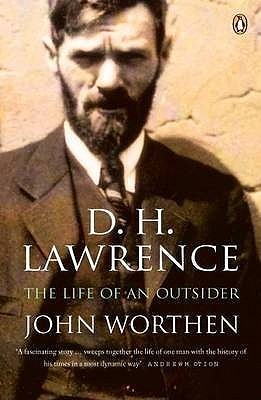
D H Lawrence: The Life Of An Outsider by John Worthen

D H Lawrence

Penguin Books|2006|518 pages|5*

In April I began reading  D. H. Lawrence: the Life of an Outsider by John Worthen, a biography. It is one of my TBRs as I bought it in 2008 when I visited D H Lawrence’s birthplace at Eastwood, 8 miles from Nottingham.

He was born in 1885 in a row of miners’ houses, a two up, two down redbrick house. The adjoining end terrace house is now a museum and shop (where I bought the book).

I find writing about biographies difficult. This book, in particular, is hard to summarise. I read the book slowly in short sections, reading it most days. It’s a detailed portrait of his life from his birth in 1885 in Eastwood in Nottinghamshire to his death at the age of 44 in 1930. An ‘outsider’, he always felt he didn’t fit in or belong either with his family, or his work colleagues, or the literary elite of the times.

By 1908 writing had become a necessity to him – writing poetry, but he was too insecure to send any of it to a publisher. At that time he was working in Croydon as an elementary teacher. He began writing his first novel, which by October 1910 he was calling ‘Paul Morel‘ . It later became ‘Sons and Lovers.’  It was in 1912 that he first met Frieda Weekley, whom he later married. She was then married to Ernest Weekley, a Nottingham University professor of modern languages.

Once he had left Eastwood he travelled in search of a place where he could be himself, but despite staying in different places, with friends, in hotels and in rented accommodation he felt he was really unable to find a place of his own. The maps at the beginning of the book illustrate this with maps of Lawrence’s Eastwood, of the places he lived in England, in Italy and in America and Mexico. Part of his need to find a place of his own was purely physical – he suffered from tuberculosis and he was searching for a climate where he could breathe easily. His final months were full of pain and suffering and he died in Bandol, France on 2 March 1930.

Worthen writes in depth about Lawrence’s personal life, his relationship with his family and in particular with his mother, Lydia and then his wife, Frieda, as well as his numerous friends and acquaintances, because although he thought of himself as an outsider he needed his friends. Lawrence was prolific, writing novels, short stories, plays, poems, letters, essays, nonfiction books, travel literature, and so on, as well as producing numerous paintings (some of which were on display at his Birthplace Museum).

D H Lawrence photos

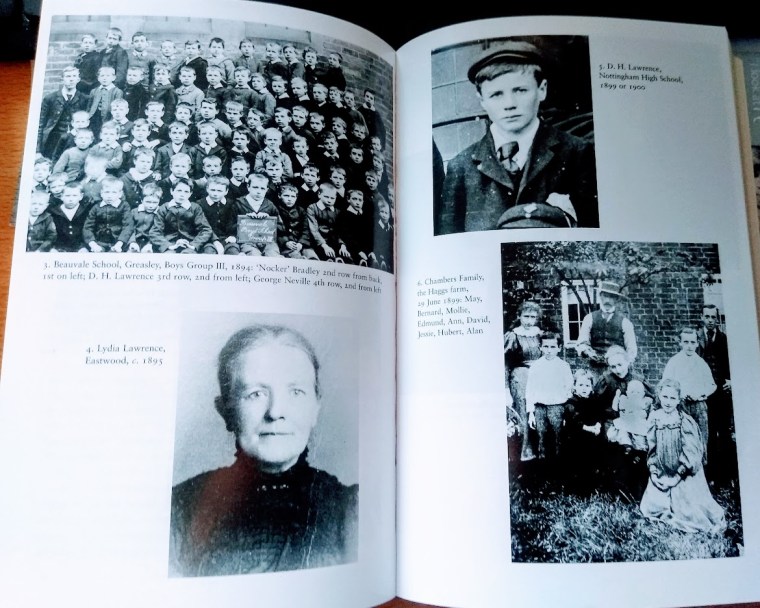
Worthen writes in great detail about his work, quoting from original sources, and tracing his development as a writer. There are 38 photographs, the first taken c.1886 of Lawrence as a baby in a pram to a photo of a clay head of him made in 1930 by Jo Davidson. I found it all fascinating, giving a portrait of a man often misunderstood by his contemporaries and criticised for being sexist, racist, a misogynist, a fascist and a colonialist. Worthen, however, writes:

He was in reality generous to women and men alike, and to all races and colours. He wrote wonderfully all his life about his experience of the natural world; he was more perceptive than almost any writer, before or since, about the effects of civilisation upon instinct and desire. He has constantly been attacked because his writing constantly thought things through in public. But it is, uncannily, as if Lawrence knew where both his contemporaries and those after him would be most sensitive and anxious, and concentrated his writing on those very subjects: sex, gender roles, the exercise of power. He intuitively worked his way into the concerns and anxieties of his contemporaries, though by doing so he also confirmed his alienation from his own age and (now) perhaps from ours. (pages xxv – xxvi)

I have read just a few of Lawrence’s novels – Women in Love, Sons and Lovers, The Virgin and the Gypsy, St Mawr, and The Man Who Died. I haven’t read Lady Chatterley’s Lover yet, but when I do I’ll look back at Worthern has to say about it.

About the author:

John Worthen  taught at universities in North America and Wales before becoming Professor of D. H. Lawrence Studies at the University of Nottingham, where he remains Emeritus Professor. His career as Lawrence’s biographer began in the 1980s, resulting in the first of a three-volume Cambridge biography – D. H. Lawrence: The Early Years 1885 – 1912. In 2001 Yale University Press brought out his group biography The Gang: Coleridge, the Wordsworth and the Hutchinsons in 1802. His newest biography is a life of the great German composer Robert Schumann, while he also plans to write a biography of Frieda von Richthofen, concentrating wholly on her life before she met D. H. Lawrence.

WWW Wednesday: 27 November 2019

IMG_1384-0

WWW Wednesday is run by Taking on a World of Words.

The Three Ws are:

What are you currently reading?
What did you recently finish reading?
What do you think you’ll read next?

a beautiful corpse

Currently I’m reading A Beautiful Corpse, crime fiction by Christi Daugherty, set in Savannah, Georgia. A beautiful law student has been killed and three men close to the victim are questioned. All of them claim to love her. All of them say they are innocent of her murder.  As journalist Harper McClain unravels a tangled story of obsession and jealousy, the killer turns his focus onto her. I’ve read over half the book and it is growing on me – I’m enjoying it more and more as I read on.

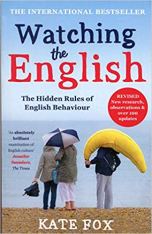
Watching the EnglishI’m also reading Watching the English by Kate Fox, a nonfiction book about the ‘Hidden Rules of English Behaviour’. I’ve only just started reading and so far it is really interesting as the author sets out her parameters and defines what she considers to be  ‘Englishness’ and why it is different from ‘Britishness’, which I think is a very tricky question and one that I have been puzzling over for years.

She refers in some instances to Jeremy Paxman (and I see from the index there are several references to him in this book) and she lists his book The English: A Portrait of a People, which I read about 5 years ago. I decided from reading his book that I didn’t really feel any clearer about what is is to be ‘English’ and it seemed there really is no such thing as ‘the English’ – we’re a mixture of all sorts, or as Paxman puts it, The English are a mongrel race‘. (page 59)

Furious hours

I’ve recently finished Furious Hours: Murder, Fraud, and the Last Trial of Harper Lee by Casey Cep, a nonfiction book about Willie Maxwell, an Alabama serial killer and the true-crime book that Harper Lee worked on obsessively in the years after To Kill a Mockingbird. I found this a fascinating book and posted my review yesterday

As for my next book I don’t know right now. I’m torn between wanting to read several, including A Pinch of Snuff by Reginald Hill, the 5th Dalziel and Pascoe novel, A Lovely Way to Burn by Louise Welsh, the 1st in her Plague Trilogy, Go Set A Watchman by Harper Lee and In Cold Blood by Truman Capote (the last two as I’ve just finished reading Furious Hours).

Have you read any of these books?  Do any of them tempt you? 
Furious Hours by Casey Cep

The stunning story of an Alabama serial killer and the true-crime book that Harper Lee worked on obsessively in the years after To Kill a Mockingbird

Furious hours

Cornerstone|May 2019|311 pages|e-book via NetGalley|Review copy|4*

In the first half of the book Casey Cep tells the story of the Reverend Willie Maxwell, who murdered members of his own family in the 1970s and held his rural community in Alabama, in fear and dread as they believed he was practising voodoo. He was shot dead at the funeral of his step-daughter by a relative, Robert Burns. Maxwell’s lawyer, Tom Radney, who had successfully defended Maxwell for years, then defended Burns, who confessed to the shooting, on the grounds of temporary insanity.

The second half is about the author, Harper Lee, who decided to write a book about all three men. In doing so Cep has written a remarkable biography of Harper Lee, her friendship with Truman Capote, her part in writing his book, In Cold Blood and her attempts to follow up the success of her book, To Kill a Mockingbird.

My favourite part of the book is without doubt the part about Harper Lee. All I knew about her before is that she wrote To Kill a Mockingbird, thought to be her only book until Go Set a Watchman was published in 2015. Cep explains that Watchman was an early version of Mockingbird, that Lee hadn’t edited or revised, and although it appears to be a sequel it isn’t  – it is the story she wrote first.

The section on Lee’s work in helping Capote  research his ‘nonfiction novel’ set in Kansas, In Cold Blood is equally as fascinating. They had lived next door to each other in Monroeville and as Cep phrased it ‘before Nelle was out of toddlerhood, she and Truman had become partners in crime and just about everything else.‘ (‘Nelle’ is her first name, the name she was known by for the first thirty-four years of her life, pronounced Nell, not Nellie.) Once they ran out of stories to read they started writing them. Cep goes into detail about the development of crime writing, and how Capote applied the techniques of fiction to nonfiction. Not everyone was happy with this novelisation of crime, not did they believe that Capote’s book was strictly factual, accusing him of  producing a sensational novel. Harper Lee minded very much about his fabrications, although she never objected publicly and this caused a rift between them.

So, this presented her with a challenge when it came to writing her book about Maxwell and his crimes, determined it would be based strictly on facts and she spent many years researching and writing her book, provisionally called The Reverend, but never finished it.

The sheer detail of Furious Hours made it quite a difficult book to read in some parts, digressing from the bare bones of the story into details such as the history of insurance, for example. But I was impressed by that detail and by Cep’s meticulous research. The book has an extensive Acknowledgements section, Notes and Bibliography, citing numerous books, journal articles and documentary films. And it has made me keen to read Go Set a Watchman, which although I bought a copy I have not read yet fearing it would spoil my love of To Kill a Mockingbird. I also must get round to reading Capote’s In Cold Blood, which I bought earlier this year, without knowing of Harper Lee’s involvement in the book.

My thanks to Cornerstone for an e-book review copy via NetGalley

Nonfiction November: Week 5 New To My TBR

nonficnov 19

I’ve been taking part in Nonfiction November 2019 again this year. It has now come to the end and this is the final topic!

The host this week is Rennie @ What’s Nonfiction who says ‘It’s been a month full of amazing nonfiction books! Which ones have made it onto your TBR? Be sure to link back to the original blogger who posted about that book’.

It certainly has been an amazing week in which I’ve read other book bloggers’ posts about many nonfiction books, most of them books that were completely new to me. These are just a few of the many that caught my imagination.

From Helen @She Reads Novels

  • The Wicked Boy by Kate Summerscale  – Victorian true crime
  • Decoding the Bayeux Tapestry by Arthur C. Wright – looks at the often-ignored images in the margins of the Tapestry and discusses what they add to our knowledge of the period.

From RennieWhat’s Nonfiction

From Kate @ Books Are My Favourite and Best

From Hopewell’s Library of Life

1947: Where Now Begins by Elizabeth Asbrink – a year that defined the modern world, intertwining historical events around the globe with key moments from the author’s personal history. I already have 1946: the Making of the Modern World by Victor Sebestyen, so it’ll be interesting to compare these books.

Many thanks to all the hosts of this year’s Nonfiction in November