Top Ten Tuesday: Long Book Titles

This week’s top is Long Book Titles. Here are some of the longest book titles I’ve reviewed on this blog. It appears that non-fiction books lend themselves more to long titles than fiction as six of them are non-fiction –

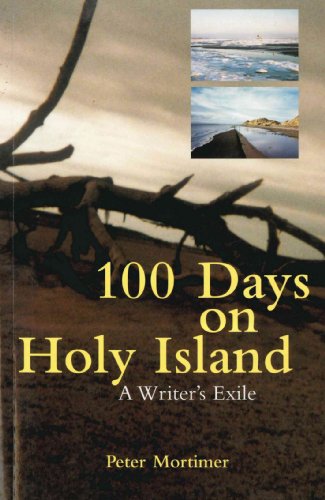
  1. 100 Days on Holy Island: a Writer’s Exile by Peter Mortimer – a record of his experience of living on the island of Lindisfarne.
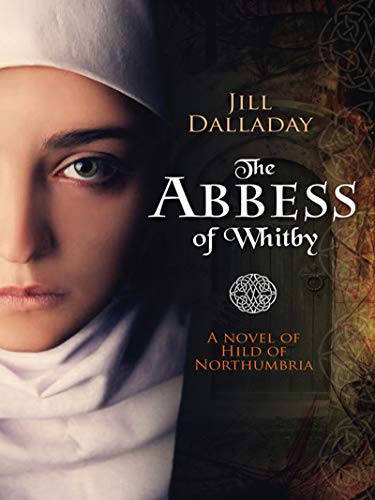
  2. The Abbess of Whitby: a novel of Hild of Northumbria by Jill Dalladay – Hild was born in 614 and died in 680.
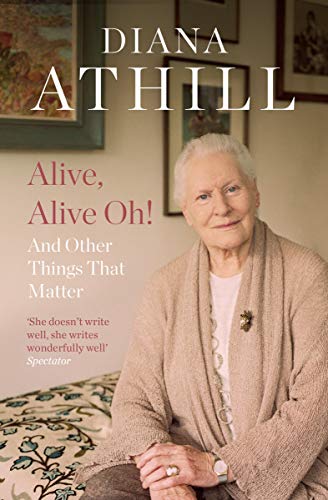
  3. Alive, Alive Oh! And Other Things That Matter by Diana Athill – her memories, thoughts and reflections on her life as she approaches her 100th year (she was born in 1917).
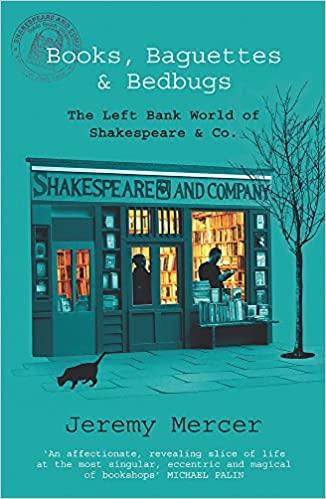
  4. Books, Baguettes and Bedbugs: the Left Bank World of Shakespeare & Co by Jeremy Mercer – a memoir of the author’s refuge at the Paris bookshop, Shakespeare & Co. on the banks of the River Seine opposite Notre Dame. 
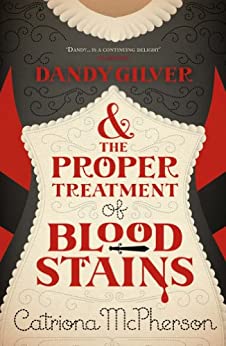
  5. Dandy Gilver and the Proper Treatment of Bloodstains by Catriona McPherson – crime fiction set in Edinburgh in 1926.
  6. Our Longest Days: A People’s History of the Second World War by the writers of Mass Observation – absolutely fascinating, this is a collection from diaries kept during the War.
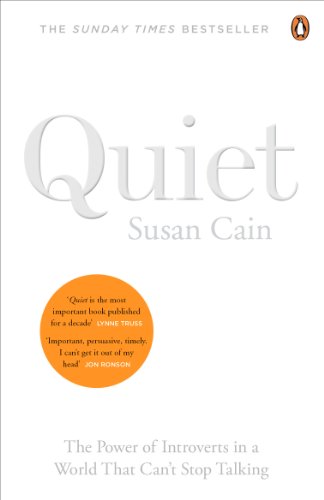
  7. Quiet: The Power of Introverts in a World That Can’t Stop Talking by Susan Cain – I loved this book, an ideal book to read for both introverts and extroverts.
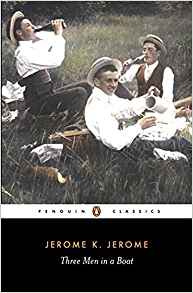
  8. Three Men in a Boat (to say nothing of the dog) by Jerome K Jerome –  a gentle witty book that kept me entertained all the way through.
  9. When the Lights Went Out: Britain in the Seventies by Andy Beckett – an excellent book, using original material such as diaries, letters, personal memoirs as well as books written about the period.
  10. The Woman Who Walked into the Sea by Mark Douglas-Hume – I don’t think this quite lived up to The Sea Detective, the first Cal McGill book. Cal is an oceanographer using his skills in tracking human bodies and sea-borne objects.

Nonfiction November is Coming

The last couple of years I’ve taken part in Nonfiction November, so although this year I haven’t read a lot of nonfiction I’ll be joining in once more.

Throughout the month of November, Katie @ Doing Dewey, Julie @ Julz Reads, Leann @Shelf Aware, and Rennie, invite you to put nonfiction at the top of your reading list with us. Each week’s prompt will be posted at that host’s blog on Monday with a link-up where you can link your post on the topic throughout the week.

This year’s schedule:

Week 1: (November 2-6) – Your Year in Nonfiction (Leann @ Shelf Aware): Take a look back at your year of nonfiction and reflect on the following questions – What was your favorite nonfiction read of the year? Do you have a particular topic you’ve been attracted to more this year? What nonfiction book have you recommended the most? What are you hoping to get out of participating in Nonfiction November?

Week 2: (November 9-13) – Book Pairing (Julie @ Julz Reads): This week, pair up a nonfiction book with a fiction title. It can be a “If you loved this book, read this!” or just two titles that you think would go well together. Maybe it’s a historical novel and you’d like to get the real history by reading a nonfiction version of the story.

Week 3: (November 16-20) – Be The Expert/Ask the Expert/Become the Expert (Rennie [me!] @ What’s Nonfiction [here!]): Three ways to join in this week! You can either share 3 or more books on a single topic that you have read and can recommend (be the expert), you can put the call out for good nonfiction on a specific topic that you have been dying to read (ask the expert), or you can create your own list of books on a topic that you’d like to read (become the expert).

Week 4: (November 23-27) – New to My TBR (Katie @ Doing Dewey): It’s been a month full of amazing nonfiction books! Which ones have made it onto your TBR? Be sure to link back to the original blogger who posted about that book!

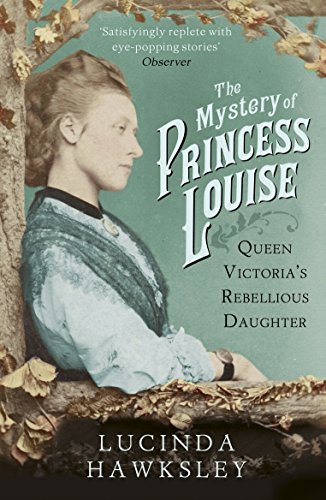
The Mystery of Princess Louise by Lucinda Hawksley

Mystery of Princess Louise

Vintage Books | 2014 | 416 pages | Paperback | library book | 4.5*

This is another catching up post. I finished reading The Mystery of Princess Louise: Queen Victoria’s Rebellious Daughter by Lucinda Hawksley during lockdown on 21 April, but didn’t feel like reviewing it that time. It’s a library book and as the library is still closed it has been renewed automatically for me.

Princess Louise was Victoria’s sixth child – her fourth daughter, born on 18th March 1848. It was an agonising and terrifying birth in a year of revolution and rebellion, a time when royal families throughout Europe were being deposed and in Britain the working classes were agitating for higher pay, better working conditions and more legal rights.

There is so much detail about her life in this book, packed with intrigues, scandals and secrets.

Blurb:

What was so dangerous about Queen Victoria’s artistic tempestuous sixth child, Princess Louise?

When Lucinda Hawksley started to investigate, often thwarted by inexplicable secrecy, she discovered a fascinating woman, modern before her time, whose story has been shielded from public view for years.

Louise was a sculptor and painter, friend to the Pre-Raphaelites and a keen member of the Aesthetic movement. The most feisty of the Victorian princesses, she kicked against her mother’s controlling nature and remained fiercely loyal to her brothers – especially the sickly Leopold and the much-maligned Bertie. She sought out other unconventional women, including Josephine Butler and George Eliot, and campaigned for education and health reform and for the rights of women. She battled with her indomitable mother for permission to practice the ‘masculine’ art of sculpture and go to art college – and in doing so became the first British princess to attend a public school.

The rumours of Louise’s colourful love life persist even today, with hints of love affairs dating as far back as her teenage years, and notable scandals included entanglements with her sculpting tutor Joseph Edgar Boehm and possibly even her sister Princess Beatrice’s handsome husband, Liko. True to rebellious form, she refused all royal suitors and became the first member of the royal family to marry a commoner since the sixteenth century.

My thoughts:

I knew nothing about Princess Louise. She had a difficult childhood, disliked and bullied by her mother and she often rebelled against the restrictions of life as a princess. She had an unhappy marriage to John Campbell, the Marquess of Lorne, later the 9th Duke of Argyll, a homosexual, and went with him to Canada in 1882 when he was appointed as Governor-General. Her relationship with Canada became a love-hate one, but began and ended with Canadian adoration.

The scandals arose about whether she had had an illegitimate child and her long term love affair with the sculptor Joseph Boehm. The mystery is still unresolved as Louise’s files in the Royal Archives are closed and her husband’s family archives are inaccessible.

Lucinda Hawksley writes:

I discovered that it was not only information about Princess Louise that had been hidden away, but information about a vast number of people who had played a role in her life, including royal servants and her art tutors. A great many items about these people that one would expect to be in other collections have been absorbed into the Royal Collection. … Over the decades, there has been some very careful sanitising of Princess Louise’s reputation and a whitewashing of her life, her achievements and her personality. (page 3)

I was amazed at her achievements, not only her artistic ability in both painting and sculpture, but also her charitable activities, raising money for hospitals, schools and other causes, such as the Gentlewomen’s Employment Association. She supported general suffrage and equal rights for both genders. She was fascinated by the social reformer Josephine Butler, who campaigned for the abolition of slavery, fed the homeless and worked with prostitutes and single mothers. Louise wanted to help Josephine in her campaign to reform the Contagious Diseases Act but Victoria and most of the rest of her family were outraged and she was forced not to take part. Louise was unconventional, generous and charming to people she liked.

It’s not a book to read quickly, as despite the lack of records, it is very detailed. There is an index and a bibliography, as well as several photographs. In this post I have simply skimmed the surface of all the stories about her, many of them simply amazing. I came away with the impression that she was ahead of her times. She was a forceful personality:

She was renowned by the public for her good looks, her unusual artistic dress sense and her sense of humour. Most importantly, Louise was also known for her compassion and her many ‘good works’. … She was regularly described as ‘captivating’, ‘charming’ and ‘clever’. people felt able to approach her, members of the public wrote letters to her, or begged for her help with charitable of political causes. … she spoke openly and controversially about subjects that other people shrank from and she was not above criticising the monarch. (page 11)

Louise died in 1939 at her home in Kensington Palace. Her last rebellious action was to leave instructions for her cremation – it was a very divisive issue, many were firmly against the idea. Her wishes were respected and a private cremation was carried out and the urn containing her ashes was transported to the Albert Memorial Chapel in Windsor, where her funeral was held. The next day they were interred in the Royal Burial Ground behind the family mausoleum at Frogmore in the Windsor Home Park. She had no legitimate children and the boy that it was claimed she had given up for adoption died in 1907. So it seems unlikely that the truth will ever be known unless the records are released.

Bookshelf Travelling for Insane Times

Judith at Reader in the Wilderness hosts this meme – Bookshelf Travelling for Insane Times. In this strange and difficult time of self isolation and sickness it is a real treat to get away from the non-stop bad news about coronovirus and to do other things – I think I’m going to write a separate post about what I’ve been doing to keep myself occupied. One of the things is, of course, is reading. Actually I haven’t been reading any more than usual, oddly enough, as the situation has affected my concentration levels and I have been doing other things too. 

I am enjoying this meme, looking round my actual bookshelves and re-discovering books I’ve read or am looking forward to reading. The idea is to share your bookshelves with other bloggers. Any aspect you like:

1. Home.
2. Books in the home.
3. Touring books in the home.
4. Books organized or not organized on shelves, in bookcases, in stacks, or heaped in a helter-skelter fashion on any surface, including the floor, the top of the piano, etc.
5. Talking about books and reading experiences from the past, present, or future.

Whatever you fancy as long as you have fun basically.

Friday Meme 3 April 2020

This week’s photo shows part of one of my book shelves that contains a mix of fiction and nonfiction books, shelved together for no reason other than they are almost all hardback books of a similar height!

You can see the whole shelf on my current header photo.

Thomas Hardy: the Time-Torn Man by Claire Tomalin. This is a biography that I began reading in 2007 and stopped when I had reached 1867 (Hardy was born in 1840) because I decided that it would be better if I had read his earlier books before reading about how he had written them. I’m sorry to say that even though I have read more of Hardy’s novels I still haven’t got back to this biography.

The Legacy of Elizabeth Pringle by Kirstie Wark is a novel that I read and enjoyed very much. It’s a story centred on the lives of two women – Elizabeth Pringle and Martha Morrison. Elizabeth has lived all her life on the Isle of Arran and knowing that she is dying and has no living relatives, leaves her house, Holmlea in Lamlash, to Anna Morrison, a woman she had seen years before, pushing her daughter’s pram down the road outside. It’s about family, relationships, especially mother/daughter/sister relationships, about happiness, love and heartbreak, old age, memories and the contrast between life in the early part of the twentieth century and the present.

The Children of Hurin by J R R Tolkien, edited by his son Christopher Tolkien. This is another book that I started and haven’t finished. During the First World War and before Tolkien wrote the tales that became the narrative of  The Hobbit and The Lord of the Rings he began writing a collection of stories he called The Book of Lost Tales. These are the tales of Middle-earth from times long before The Lord of the RingsI first read The Lord of the Rings years ago when I was at college,  and have since re-read it a few times along with The Hobbit, so this book is one I really want to read soon – my problem is that there are so many books I want to read and time is precious.

Agatha Christie’s Secret Notebooks by John Curran, subtitled Fifty Years of Mysteries in the Making. This is a fascinating book, exploring the contents of Agatha Christie’s 73 handwritten notebooks about her plots, titles and characters and two unpublished Poirot stories. The notebooks were found  at her home, Greenways, in a locked room, a long narrow room containing shelves and cupboards full of her printed books plus typescripts and manuscripts, letters and contracts, posters, playbills, photos and dust-jackets, scrapbooks and diaries.

And finally two of my husband’s books – The Second World War and Berlin: The Downfall 1945, both by Anthony Beevor. He has read both and recommends them highly. I’m not sure what to say about them, except they each weight a ton –  two enormous tomes! Fortunately I have both books on my Kindle as well as the hardbacks on the shelf, so you never know, one day I may get round to reading them.

WWW Wednesday: 1 April 2020

IMG_1384-0

WWW Wednesday is run by Taking on a World of Words.

The Three Ws are:

What are you currently reading?
What did you recently finish reading?
What do you think you’ll read next?

Currently reading:

Mystery of Princess LouiseThe Mystery of Princess Louise: Queen Victoria’s Rebellious Daughter by Lucinda Hawkesley. I’m finding this a fascinating biography of Louise, Victoria’s unconventional daughter. She was a sculptor and painter, who mixed with the artists of her day much to her mother’s dislike and was involved in many campaigns for reform in education and health. It’s packed with intrigues, scandals and secrets. I’ve read about two thirds of this book I borrowed from the library.

Mirror and LightThe Mirror and the Light by Hilary Mantel, the final book in Hilary Mantel’s Thomas Cromwell trilogy about the boy from Putney who climbed his way up to become Lord Cromwell, Secretary to King Henry VIII. I loved the first two books, Wolf Hall and Bring Up the Bodies, so it was an easy decision to buy the third book in hardback to complete the set. It is heavy, weighing in at 2lbs 13ozs with almost 900 pages and so I’m reading it very slowly. Just like the other two books I think it’s beautifully written, full of colour and detail. Reading it I feel as if I’m there back in 1536.

Fresh water for flowers

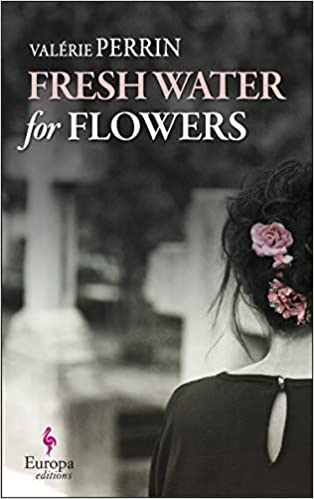
Recently Finished: Fresh Water for Flowers by Valérie Perrin, translated from the French by Hildegarde Serle. This is a complex novel, multi layered and centred on Violette, a cemetery keeper, switching between different people at different times in their lives.  I’ll write more about later on nearer its publication date in the summer.

Reading Next: This is where it gets difficult as there are so many I want to read. But it will probably be The Dutch House by Ann Patchett and  Queen Lucia by E F Benson, a book first published in 1920 for The 1920 Club hosted by Simon at Stuck in a Book and Karen at Kaggsy’s Bookish Ramblings is taking place between 13th and 19th April 2020. The idea is that you read a book published in that year and share your thoughts/review with other participants.

But then it could easily be one of these books I’ve mentioned in recent posts:

What do you think – which one would you read next?

Latest e-book additions at BooksPlease

We’re in self isolation right now and one of the things I’m hoping to do is to spend more time than usual reading. And one of the best things about reading e-books is that you don’t have to go out of the house or meet anyone to get them. 

The Overstory by Richard Powers – this was my Mother’s Day present from my son.

An artist inherits a hundred years of photographic portraits, all of the same doomed American chestnut. A hard-partying undergraduate in the late 1980s electrocutes herself, dies, and is sent back into life by creatures of air and light. A hearing- and speech-impaired scientist discovers that trees are communicating with one another. An Air Force crewmember in the Vietnam War is shot out of the sky, then saved by falling into a banyan.

This is the story of these and five other strangers, each summoned in different ways by the natural world, who are brought together in a last stand to save it from catastrophe.

The Feather Thief : Beauty, Obsession, and the Natural History Heist of the Century by Kirk Wallace Johnson – I’ve been watching Chris Packham’s daily live broadcasts and this is one of the books that he recommended.

One summer evening in 2009, twenty-year-old musical prodigy Edwin Rist broke into the Natural History Museum at Tring, home to one of the largest ornithological collections in the world. Once inside, Rist grabbed as many rare bird specimens as he was able to carry before escaping into the darkness.

Kirk Wallace Johnson was waist-deep in a river in New Mexico when his fly-fishing guide first told him about the heist. But what would possess a person to steal dead birds? And had Rist paid for his crime? In search of answers, Johnson embarked upon a worldwide investigation, leading him into the fiercely secretive underground community obsessed with the Victorian art of salmon fly-tying.

Was Edwin Rist a genius or narcissist? Mastermind or pawn?

The Dutch House by Ann Patchett – Longlisted for the Women’s Prize 2020. I’d reserved this at the library, but as it’s now closed I decided to buy the e-book!

Danny Conroy grows up in the Dutch House, a lavish mansion. Though his father is distant and his mother is absent, Danny has his beloved sister Maeve: Maeve, with her wall of black hair, her wit, her brilliance. Life is coherent, played out under the watchful eyes of the house’s former owners in the frames of their oil paintings.

Then one day their father brings Andrea home. Though they cannot know it, her arrival to the Dutch House sows the seed of the defining loss of Danny and Maeve’s lives. The siblings are drawn back time and again to the place they can never enter, knocking in vain on the locked door of the past. For behind the mystery of their own exile is that of their mother’s: an absence more powerful than any presence they have known.

Told with Ann Patchett’s inimitable blend of humour, rage and heartbreak, The Dutch House is a dark fairy tale and story of a paradise lost; of the powerful bonds of place and time that magnetize and repel us for our whole lives.