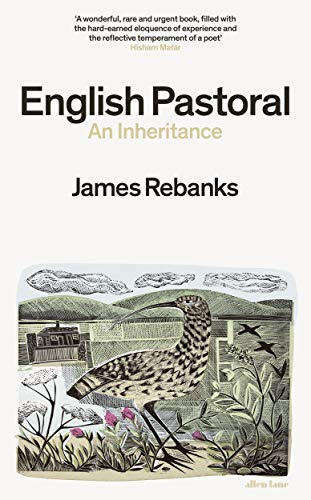
English Pastoral by James Rebanks

Penguin| 3 September 2020| 283 pages| Kindle review copy via Netgalley| 5*

English Pastoral: An Inheritance by James Rebanks is an absolutely marvellous book, the best book I’ve read this year and although it’s still February I can’t imagine that I’ll read a better book all year.

About the book:

As a boy, James Rebanks’s grandfather taught him to work the land the old way. Their family farm in the Lake District hills was part of an ancient agricultural landscape: a patchwork of crops and meadows, of pastures grazed with livestock, and hedgerows teeming with wildlife. And yet, by the time James inherited the farm, it was barely recognisable. The men and women had vanished from the fields; the old stone barns had crumbled; the skies had emptied of birds and their wind-blown song.

English Pastoral is the story of an inheritance: one that affects us all. It tells of how rural landscapes around the world were brought close to collapse, and the age-old rhythms of work, weather, community and wild things were lost. And yet this elegy from the northern fells is also a song of hope: of how, guided by the past, one farmer began to salvage a tiny corner of England that was now his, doing his best to restore the life that had vanished and to leave a legacy for the future.

This is a book about what it means to have love and pride in a place, and how, against all the odds, it may still be possible to build a new pastoral: not a utopia, but somewhere decent for us all.

It is inspirational as well as informative and it is beautifully written. I enjoyed his account of his childhood and his nostalgia at looking back at how his grandfather farmed the land. And I was enlightened about current farming practices and the effects they have on the land, depleting the soil of nutrients.

But all is not doom and gloom as Rebanks also explains what can be done to put things right, how we can achieve a balance of farmed and wild landscapes, by limiting use of some of the technological tools we’ve used over the last 50 years so that methods based on mixed farming and rotation can be re-established. By encouraging more diverse farm habitats, rotational grazing and other practices that mimic natural processes we can transform rural Britain.

I loved this book and came away with much to think about and also hope for the future.

My thanks to the publishers and NetGalley for the review copy, and as it is such an excellent book, after reading the review copy, I bought the e-book.

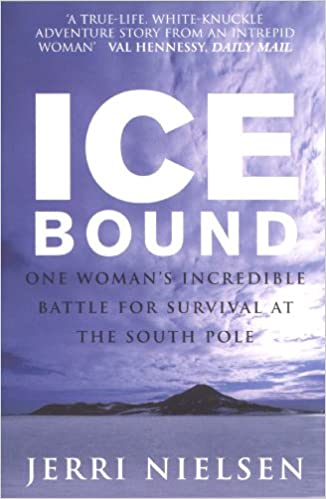
My Friday Post: Ice Bound by Jerri Nielsen

Every Friday Book Beginnings on Friday is hosted by Gillion at Rose City Reader where you can share the first sentence (or so) of the book you are reading. You can also share from a book you want to highlight just because it caught your fancy.

I’m reading Ice Bound: One Woman’s Incredible Battle for Survival at the South Pole by Jerri Nielsen.

It begins:

If this story is to begin anywhere, it should begin in the night. I have always been a night person. When the sun goes down, my spirits rise.

Also every Friday there is The Friday 56, hosted by Freda at Freda’s Voice. *Grab a book, any book. *Turn to Page 56 or 56% on your  ereader . If you have to improvise, that is okay. *Find a snippet, short and sweet, but no spoilers!

These are the rules:

  1. Grab a book, any book.
  2. Turn to page 56, or 56% on your eReader. If you have to improvise, that is okay.
  3. Find any sentence (or a few, just don’t spoil it) that grabs you.
  4. Post it.
  5. Add the URL to your post in the link on Freda’s most recent Friday 56 post.
  1. Grab a book, any book.
  2. Turn to page 56, or 56% on your eReader. If you have to improvise, that is okay.
  3. Find any sentence (or a few, just don’t spoil it) that grabs you.
  4. Post it.
  5. Add the URL to your post in the link on Freda’s most recent Friday 56 post.

Page 56:

I quickly learned to keep the head of my stethoscope in my bra to avoid giving my patients frostbite when I lifted their three to five layers of clothing. Fully undressing patients was impractical here.

~~~

About the book – from the back cover:

Dr Jerri Nielsen made international headlines worldwide when, as the only doctor at the Amundsen-Scott South Pole Research Station she diagnosed herself with breast cancer. The world’s media anxiously followed the immense efforts she and her fellow ‘polies’ took to treat her, the frantic drops of essential supplies and the final high-risk mission to airlift her out.

[This] is not just a powerful account of her struggle for survival, but also a thrilling adventure story about how a small community copes in the most hostile environment on earth, and a moving personal voyage of self-discovery and courage. But at its core lies a romance that makes even these pale into insignificance – Jerri’s realization that, dangers and discomforts and even cancer notwithstanding, she would rather be in the terrible beauty of Antarctica than anywhere else on earth.

My Friday Post: English Pastoral: An Inheritance by James Rebanks

Every Friday Book Beginnings on Friday is hosted by Gillion at Rose City Reader where you can share the first sentence (or so) of the book you are reading. You can also share from a book you want to highlight just because it caught your fancy.

I’ve just finished reading English Pastoral: an Inheritance by James Rebanks.

The black-headed gulls follow in our wake as if we are a little fishing boat out at sea. The sky is full of winged silhouettes and screaming beaks, and streaks of white seagull shit splatter like milk down on to the soil. I am riding in the tractor, crammed in behind my grandfather.

Also every Friday there is The Friday 56, hosted by Freda at Freda’s Voice. *Grab a book, any book. *Turn to Page 56 or 56% on your  ereader . If you have to improvise, that is okay. *Find a snippet, short and sweet, but no spoilers!

These are the rules:

  1. Grab a book, any book.
  2. Turn to page 56, or 56% on your eReader. If you have to improvise, that is okay.
  3. Find any sentence (or a few, just don’t spoil it) that grabs you.
  4. Post it.
  5. Add the URL to your post in the link on Freda’s most recent Friday 56 post.
  1. Grab a book, any book.
  2. Turn to page 56, or 56% on your eReader. If you have to improvise, that is okay.
  3. Find any sentence (or a few, just don’t spoil it) that grabs you.
  4. Post it.
  5. Add the URL to your post in the link on Freda’s most recent Friday 56 post.

About the book:

As a boy, James Rebanks’s grandfather taught him to work the land the old way. Their family farm in the Lake District hills was part of an ancient agricultural landscape: a patchwork of crops and meadows, of pastures grazed with livestock, and hedgerows teeming with wildlife. And yet, by the time James inherited the farm, it was barely recognisable. The men and women had vanished from the fields; the old stone barns had crumbled; the skies had emptied of birds and their wind-blown song.

English Pastoral is the story of an inheritance: one that affects us all. It tells of how rural landscapes around the world were brought close to collapse, and the age-old rhythms of work, weather, community and wild things were lost. And yet this elegy from the northern fells is also a song of hope: of how, guided by the past, one farmer began to salvage a tiny corner of England that was now his, doing his best to restore the life that had vanished and to leave a legacy for the future.

This is a book about what it means to have love and pride in a place, and how, against all the odds, it may still be possible to build a new pastoral: not a utopia, but somewhere decent for us all.

I loved it and will write more about it later.

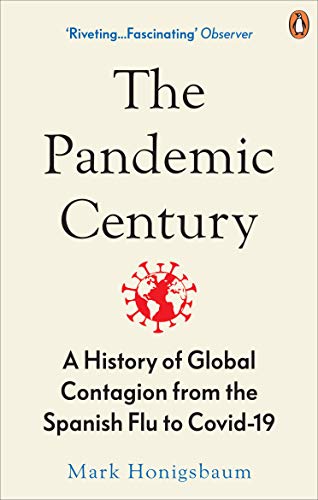
The Pandemic Century by Mark Honigsbaum

Penguin Random House UK| 4 June 2020| 363 pages| Review copy| 3.5*

About the book:

Ever since the 1918 Spanish influenza pandemic, scientists have dreamed of preventing catastrophic outbreaks of infectious disease. Yet, despite a century of medical progress, viral and bacterial disasters continue to take us by surprise, inciting panic and dominating news cycles. From the Spanish flu and the 1924 outbreak of pneumonic plague in Los Angeles, to the 1930 ‘parrot fever’ pandemic and the more recent SARS, Ebola, Zika and – now – COVID-19 epidemics, the last 100 years have been marked by a succession of unanticipated pandemic alarms.

In The Pandemic Century, Mark Honigsbaum chronicles 100 years of history in 10 outbreaks. Bringing us right up-to-date with a new chapter on COVID-19, this fast-paced, critically-acclaimed book combines science history, medical sociology and thrilling front-line reportage to deliver the story of our times.

As we meet dedicated disease detectives, obstructive public health officials, and gifted scientists often blinded by their own expertise, we come face-to-face with the brilliance and medical hubris shaping both the frontier of science – and the future of humanity’s survival.

My thoughts: I found this quite a difficult book to read and even more difficult to write about, so this is just a short overview.

My review copy of The Pandemic Century is an e-book, that unfortunately does not have the chapter on COVID-19. I think this is a very interesting account of the epidemiology, the medical advances and the history of the diseases. Honigsbaum details each pandemic focusing on the origins of the diseases and the scientific research involved in finding the causes, cures, and the methods of containing them.

But whilst parts of it written in a narrative style are fascinating, other parts are heavy going and dry with too much (for me) detailed information about the scientific research. Since 1940 scientists have identified 335 new human infectious diseases and nearly two thirds of them are from animals – and of these 70% originate in wildlife, mostly from bats! And then there is the threat from microbes – bacteria and rickettsial (ticks, lice, fleas, mites, chiggers, and mammals) organisms. I had to check the meanings of lots of words and abbreviations when I was reading this book! Alarmingly Honigsbaum states that ‘Reviewing the last hundred years of epidemic outbreaks, the only thing that is certain is that there will be new plagues and new pandemics.

My thanks to the publishers and NetGalley for a review copy.

Nonfiction November Week 4

Week 4: New to My TBR, hosted by Katie @ Doing Dewey: It’s been a month full of amazing nonfiction books! Which ones have made it onto your TBR? Be sure to link back to the original blogger who posted about that book!

So many books to choose from! Here are a few that appealed to me:

Plus the books recommended to me on my Ask the Experts post on World War Two:

From Shelleyrae – Poland 1939: The Outbreak of World War II by Roger Moorhouse

From Deb Nance:

  • The Splendid and the Vile: A Saga of Churchill, Family, and Defiance During the Blitz
  • Lost in Shangri-la: A True Story of Survival, Adventure, and the Most Incredible Rescue Mission of World War II
  • Unbroken: A World War II Story of Survival, Resilience and Redemption
  • Torpedoed: The True Story of the World War II Sinking of “The Children’s Ship

From The Paperback Princess

  • A Train in Winter by Caroline Moorehead, Hitler and the Habsburgs by James Longo
  • Sons and Soldiers by Bruce Henderson
  • When Books Went to War by Mollie Guptill Manning
  • In the Garden of Beasts by Erik Larson

From Gilt and Dust -No Woman’s World: From D-day to Berlin by Iris Carpenter

From What’s Nonfiction

  • A Woman in Berlin, an anonymous diary of a woman who lived through the Russian occupation of the city
  • Primo Levi’s memoirs like Survival in Auschwitz and The Reawakening,
  • Underground in Berlin.
  • Svetlana Alexievich’s The Unwomanly Face of War is an oral history of the women in the Red Army by Marie Jalowicz Simon

Thanks so much to our hosts, Katie at Doing Dewey, Julie at Julz Reads, Leann at Shelf Aware, and Rennie at  What’s Nonfiction! And thanks to everyone who stopped by with comments and recommendations as well!

Nonfiction November Week 3: Ask the Expert

We’re now in Week 3: (Nov. 12 to 16) of Nonfiction November. The topic is – Be The Expert/Ask the Expert/Become the Expert (RennieWhat’s Nonfiction)

Three ways to join in this week! You can either share three or more books on a single topic that you have read and can recommend (be the expert), you can put the call out for good nonfiction on a specific topic that you have been dying to read (ask the expert), or you can create your own list of books on a topic that you’d like to read (become the expert).

I’ve read a few books on World War 2 and would love to find out more. I have read several novels set during the War, the most recent is V2 by Robert Harris, which has made realise how little I know about it. It is a vast subject and I know there are very many books both fiction and nonfiction about it. My difficulty is where to start!

These are some of the nonfiction books I’ve read/have waiting to be read:

  • Our Longest Days: a People’s History of the Second World War by the Writers of Mass Observation, which is fascinating.
  • Wartime Britain 1939 – 1945 by Juliet Gardiner – I’ve only read some of this book.
  • The Ration Book Diet by Mike Brown, Carol Harris and C J Jackson – social history.
  • Winston Churchill’s six volume History of the Second World War – these look particularly daunting in the amount of detail involved! I’ve start the first volume.
  • Band of Brothers by Stephen E Ambrose – I watched the entire HBO series called Band of Brothers. I started to read the book and stalled!
  • Great Escape Stories by Eric Williams – TBR
  • How the Girl Guides Won the War by Janie Hampton – TBR

There are so many aspects to the war, so many countries involved, so many battles, people, places, politics, so many events that led up to the war, so many technological details and developments, etc, etc. Any suggestions of where to start will be much appreciated.