Once Upon a River by Diane Setterfield

An intriguing and mystifying book by Diane Setterfield – Once Upon a River – without doubt one of the best books I read last year – I was entranced from the beginning to the end. It’s a mystery beginning in the Swan Inn at Radcot, an ancient inn, well-known for its storytelling, on the banks of the Thames. A badly injured stranger enters carrying the drowned corpse of a little girl. It’s mystifying as hours later the dead child, miraculously it seems, takes a breath, and returns to life. The mystery is enhanced by folklore, by science that appears to be magic, and by romance and superstition.

The story has a timeless feel to it but it is set somewhere towards the end of the nineteenth century. There are numerous strands and characters to the story and Diane Setterfield drew me slowly into the book with a leisurely description of the characters and their situations. Just as the river, a character in its own right, takes many twists and turns and has many tributaries, it becomes apparent that the little girl could belong to a number of different families all with links to the river. As the story progresses these individual families each claim the child as theirs and I was never really certain which of them – if any – were telling the truth. Much is hidden and much eventually is revealed.

It’s a multi-layered book that you need time to digest, richly atmospheric and told from multiple viewpoints. I loved all the detail – about the river itself, about photography as Henry Daunt (based on Henry Taunt, the real-life photographer of the Thames and surrounding areas) travelled along the river in a houseboat with its own darkroom, about the body’s metabolism and the treatment of injuries and diseases of the late Victorian period and about belief in the afterlife. Various people refer to Quietly, the ferryman who featured in the stories people told – he appeared when you were in trouble on the water, gliding in his punt, either guiding you to the safety of the bank, or if it is your time he takes you to another shore ‘on the other side of the river.

Once Upon a River is a beautifully and lyrically told story, and cleverly plotted so that I was not completely sure at times what it was that I was reading. It’s historical fiction with a touch of magic that completely beguiled me with its mysteries and fascinating characters. I enjoyed reading her first book, The Thirteenth Tale, years ago before I began my blog, but I loved this one so much more!

My thanks to the publishers, Transworld Digital, for my review copy via NetGalley.

  • Format: Kindle Edition
  • File Size: 2336 KB
  • Print Length: 419 pages
  • Page Numbers Source ISBN: 0857525662
  • Publisher: Transworld Digital (4 Dec. 2018)
  • Source: Review copy
  • My Rating: 5*

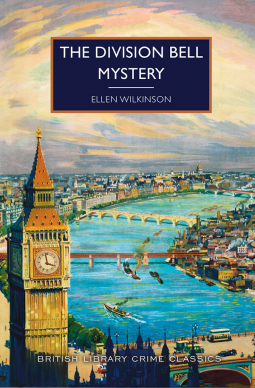
The Division Bell Mystery by Ellen Wilkinson

Poisoned Pen Press|4 December 2018 |227 pages|e-book |Review copy|5* This edition, published in association with the British Library, has a preface by Rachel Reeves, Member of Parliament for Leeds West and an introduction by Martin Edwards. It was first published in 1932 by George G Harrap & Co. I thoroughly enjoyed reading The Division Bell Mystery – it’s entertaining on several levels both from the mystery ‘locked room’ aspect and historically, socially and culturally with its insight into how Parliament worked in the 1930s and the status of women in Parliament in the inter-war years. In fact political commentary runs throughout the novel. It was a period of great social injustice, people were still struggling in the aftermath of the Great War – a period of mass unemployment with demands for both political and social change. Ellen Wilkinson was one of the first women Labour MPs. I’ve come across her before as a fiery politician, known as ‘Red Ellen’ both for her red hair and her left-wing politics. She supported the men from Jarrow in Tyneside in 1936 as they marched from their home town to London to present a petition against the mass unemployment and extreme poverty in the north-east of England. She marched with them for part of the way and handed in their petition to the House of Commons. She was a keen murder mystery fan and The Division Bell Mystery is her one entry into the Golden Age Detective fiction. The classic mystery was popular in the interwar years as people entertained themselves with puzzles such as the ‘locked room’ mysteries as in this book. The main character is the Home Secretary’s Parliamentary Private Secretary, young Robert West. As a Parliamentary Private Secretary herself, Ellen Wilkinson portrays his role and political intrigue with convincing detail. There’s a financial crisis and the Home Secretary is negotiating with the American financier Georges Oissel for a loan. The Division Bell rings – a signal to MPs to cast their votes – and West is shocked to hear a gunshot as he is making his way down the corridor leading to Room J, where the Home Secretary and Oissel had been dining. On entering the room he finds the Home Secretary has left to vote and Oissel is slumped on the floor, his shirt front stained with blood and a revolver lying beside him. No one else was in the room, no one had been seen entering or leaving the room and there is no evidence of who had killed him. It falls to West to work with the police investigating his death. It is a nicely complicated mystery but for me it is the setting and the characters that makes this book so interesting. West is the main character but I particularly liked Grace Richards, a young female MP, based on Ellen Wilkinson herself – in her preface Rachel Reeves points out the similarities between Ellen and Grace. Once I started to read The Division Bell Mystery I didn’t want to put it down – definitely a 5* read for me! My thanks to the publishers, Poisoned Pen Press, for my review copy via NetGalley.

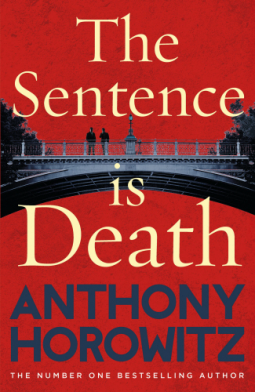
The Sentence is Death by Anthony Horowitz

5*

Random House UK Cornerstone|1 November 2018|384 pages|Review copy Last year when I read The Word is Murder I thought it was a very clever and different type of murder mystery. It features Daniel Hawthorne, an ex-policeman, now a private investigator, who the police call in to help when they have a case they call a ‘sticker’. What I found particularly interesting was the way that Anthony Horowitz inserted himself into the fiction, recruited by Hawthorne to write a book about him and the cases he investigates. In The Sentence is Death, Anthony appears again as a character, reluctantly, as he had agreed to a three-book contract with Hawthorne. At the start of the book Anthony, who wrote the script for the TV series of Foyles War, is on the set as the opening scenes in the seventh series were being shot. The rehearsal was disastrous, but it came to an abrupt end when Hawthorne interrupted the scenes by driving straight into the middle of the set to tell Anthony there had been another murder and that the police had asked for his help. Divorce lawyer Richard Pryce was found dead in his home, having been hit on the head by a wine bottle, a 1982 Chateau Lafite worth £3,000, and then stabbed to death with the broken bottle. There are several clues – there’s the number 182 written in green paint on the wall, the incredibly expensive bottle of wine when Pryce was a teetotaller, a public threat from a well known feminist writer, an unknown visitor the evening he was killed and plenty of other enemies as suspects.  There’s no doubt that Daniel is a brilliant detective, but Anthony finds him trying as he’s uncommunicative, keeping Anthony in the dark most of the time, he swears and he calls him ‘Tony’. I found it all most entertaining and perplexing, completely foxed by all the red herrings and twists and turns in the plot. But, mainly because I’d read the first book, I loved the interaction between Anthony and Daniel and had no difficulty with the mix of fact and fiction, enjoying the details about Anthony’s life as a scriptwriter as much as the mystery about the murder. I don’t think, however that you need to read The Word is Murder first because as a murder mystery The Sentence is Death works well as a standalone. But to  see how their relationship began and develops it would help to read the books in order. I loved this book as much or maybe even more than the first one and am delighted that I received a copy of this book from the publisher, via NetGalley, for review.

In a Dark, Dark Wood by Ruth Ware

In a Dark, Dark Wood

Nora hasn’t seen Clare for ten years. Not since the day Nora walked out of her old life and never looked back.

Until, out of the blue, an invitation to Clare’s hen party arrives. A weekend in a remote cottage – the perfect opportunity for Nora to reconnect with her best friend, to put the past behind her.

But something goes wrong.

Very wrong.

And as secrets and lies unravel, out in the dark, dark wood the past will finally catch up with Nora.

I featured In a Dark, Dark Wood by Ruth Ware in this Friday Post on book Beginnings and said that I wasn’t sure I wanted to read it having been disappointed  by the only other book by her that I’ve read, The Woman in Cabin 10.  But as some people commented that they had enjoyed it and as it has good reviews on Amazon and Goodreads I decided to read on. It promises to be a psychological thriller – a scary book – but maybe I’ve read too many psychological thrillers as I didn’t find it thrilling or scary. It’s mystery novel that slowly reveals why Leonora, known either as Lee or Nora or Leo, and Clare haven’t seen  or even spoken to each other since they were 16, ten years ago. That was also when Nora’s heart was broken when her relationship with James came to an abrupt end. She had never come to terms with their break up.

I thought the setting was good – the hen party is held in a glass house in the middle of a wood in Northumberland. The mobile phone signal is practically nonexistent and they are cut off from the outside world and isolated when the snow sets, in cutting off the landline. But the characters are stereotypes – a new mother pining for her baby back home, a gay male actor, a gay female doctor (who is in my opinion the most sensible of the group), the dippy devoted friend of the bride who has organised this terrible hen party, the bride, self-obsessed, selfish and manipulative as well as Nora, who can’t move on from her past. The outcome is predictable when footprints appear in the snow, the backdoor that was supposed to be locked is found open and the hen party keep arguing and antagonising each other. It’s obvious from the start that something terrible had happened when Nora wakes up in a hospital bed and realises that she can’t remember what had happened … or what she had done.

In a Dark, Dark Wood is Ruth Ware’s debut novel and the film rights have been optioned  by New Line Cinema.  I can imagine that a film would be much more terrifying than the book – it should be, the potential is there. I don’t like being critical of a book, but I can’t recommend this book.


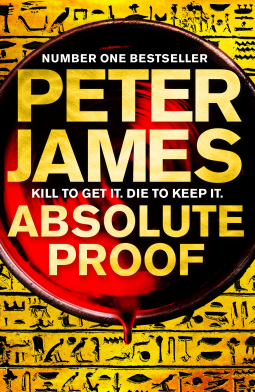
Absolute Proof by Peter James

3.5*

Pan Macmillan|4 October 2018|570 pages|Review copy Investigative reporter Ross Hunter nearly didn’t answer the phone call that would change his life – and possibly the world – for ever. ‘I’d just like to assure you I’m not a nutcase, Mr Hunter. My name is Dr Harry F. Cook. I know this is going to sound strange, but I’ve recently been given absolute proof of God’s existence – and I’ve been advised there is a writer, a respected journalist called Ross Hunter, who could help me to get taken seriously.’ What would it take to prove the existence of God? And what would be the consequences? This question and its answer lie at the heart of Absolute Proof, an international thriller from bestselling author Peter James. The false faith of a billionaire evangelist, the life’s work of a famous atheist, and the credibility of each of the world’s major religions are all under threat. If Ross Hunter can survive long enough to present the evidence . . . Absolute Proof is a long book and at times I struggled to carry on reading as, although for the most part it is fast-paced, it is slow going in parts. And it certainly tested my ability to suspend my disbelief several times. I’ve only read two of Peter James’ books previously, both crime fiction set in Brighton featuring Detective Superintendent Roy Grace. Absolute Proof is a standalone thriller and is very different from the Roy Grace books. It has similarities to Dan Brown’s The Da Vinci Code, as the search is on for proof of  God’s existence. Ross Hunter is married to Imogen and they are expecting their first child – however he has serious doubts about his marriage and suspects Imogen of cheating on him. The story of their marriage unfolds, underlying the main plotline.  Dr Harry  F Cook, a former RAF officer and  retired history of art professor, contacts Ross and drip feeds him information that Cook claims proves that God exists. The grid references Cook gives Hunter takes him to various places including Glastonbury, where he visits the Chalice Well in search of the Holy Grail, and Egypt in search of Queen Hatshepsut’s Temple. All the time he is in danger of death as he is pursued by those who do not want Cook’s claims to be made public. It’s a dramatic and hair-raising story that made me want to know what happened next at the same time as it made me question its credibility. It is certainly thought provoking and entertaining. One of the things that intrigued me was that in his Acknowledgements Peter James explains that the book began with a phone call he received in 1989 from someone who did indeed claim that he had been given absolute proof of God’s existence and that he had been given Peter James’s name as an author who would help him to get taken seriously. This started James’s ‘journey of exploration into what might be considered absolute proof – and just what the consequences might be.’ During the intervening years he has talked to many people from different faiths and had discussions with scientists, academics, theologians and clerics. He has certainly done his research and gives a long list of the people who have helped him, plus a list of his sources of reference, giving me yet more details of books I’d like to read. Thanks to Pan Macmillan and NetGalley for provided a review copy of this book.

Down to the Woods by M J Arlidge

If you go down to the woods today, you’d better not go alone …

Down to the Woods (Helen Grace #8)

Penguin UK – Michael Joseph|20 September 2018|480 pages|Review copy

Synopsis – Amazon UK:

There is a sickness in the forest. First, it was the wild horses. Now it’s innocent men and women, hunted down and murdered by a faceless figure. Lost in the darkness, they try to flee, they try to hide. In desperation, they call out for help. But there is no-one to hear their cries here…

DI Helen Grace must face down a new nightmare. The arrow-ridden victims hang from the New Forest’s ancient oaks, like pieces of strange fruit. Why are helpless holidaymakers being targeted in peak camping season? And what do their murders signify? Is a psychopath stalking the forest? Is there an occult element to the killings? Could the murders even be an offering to the Forest itself? Helen must walk into the darkness to discover the truth behind her most challenging, most macabre case yet.

My thoughts:

Down to the Woods is the 8th DI Helen Grace thriller by M J Arlidge. I haven’t read any of the earlier books and it’s obvious that Helen has a particularly dramatic and traumatic backstory, but enough explanation is given for me to read this book as a stand-alone. It’s tense and dark with several twists and turns and red herrings, that seemed obviously so to me. It’s on the grisly side of gruesome with graphic descriptions of violence and death and details of information on the dark web, all of which I find off-putting.

I don’t intend to retell the plot as I think the synopsis gives as much detail as you need to know to begin the book. It’s fast-paced in parts, but in others it’s slowed down considerably by the amount of description of the location and characters. Having said that I did like the description of the New Forest, with its ancient woodland, beautiful glades and of course the New Forest ponies.

However, I think the characters aren’t very credible, with maybe the exception of DS Charlie Brooke who has her own problems at home. DS Joseph Hudson is a new character to the series and there are several questions to be answered about his background that seemed rather dubious to me. The reporter Emilia Garanita is the stereotypical journalist with all the unlikable journalistic traits rolled into her character and you’re meant to dislike her. I expected Helen to be the main character but for most of the book she on the sidelines until the final section when she ends up close to death. The chapters are very short with cliff-hanger endings, designed to keep you turning the pages. I did want to know the outcome, but I got rather tired of all the violence and chase scenes throughout the book and was relieved to finish it.

2.5 stars rounded up to 3 stars on Goodreads. Other people liked it more than me – there are many 5 and 4 star reviews on Goodreads.

Thank you to Penguin UK – Michael Joseph and NetGalley for my copy of this book for review.