My Week in Books: 27 April 2016

This Week in Books is a weekly round-up hosted by Lypsyy Lost & Found, about what I’ve been reading Now, Then & Next.
IMG_1384-0

A similar meme,  WWW Wednesday is run by Taking on a World of Words.

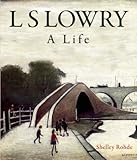
Now: I’m still reading L S Lowry: A Life by Shelley Rohde. Lowry is one of my favourite artists, well known for his urban paintings of industrial towns but his work covers a wide range of themes and subjects, from landscapes and seascapes to portraits.
I’m also reading The Voyage Out by Virginia Woolf, her first novel.

Blurb: Rachel Vinrace is on board her father’s ship, the Euphrosyne, on a voyage to South America. Despite being accompanied by her father and her aunt and uncle, Helen and Ridley Ambrose, the passage leads to Rachel’s awakening, both as a woman and as an individual. As the ship is wracked by storms, she finds herself romantically entangled with Richard Dalloway, an encounter that leaves her troubled and confused. Upon arrival in Santa Marina, Rachel strikes off alone to contemplate her identity, and finds herself with the aspiring novelist Terence Hewet. As the emerging romance between the two is complicated by their disagreements about gender and art, another storm, and tragedy, appear on the horizon.
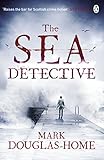
Then: I’ve recently finished The Sea Detective by Mark Douglas-Home, a crime fiction novel with a difference and a book I thoroughly enjoyed. This is the first in an unusual crime series.

Blurb: Cal McGill is an Edinburgh-based oceanographer, environmentalist and one-of-a-kind investigator. Using his knowledge of the waves – ocean currents, prevailing winds, shipping records – McGill can track where objects have come from, or where they’ve gone. It’s a unique skill that can help solve all sorts of mysteries. Such as when two severed feet wash up miles apart on two different islands off the coast of Scotland. Most strangely, forensic tests reveal that the feet belong to the same body.

As Cal McGill investigates, he unravels a web of corruption, exploitation and violence, which threatens many lives across the globe – very soon including his own…

My review is to follow.

Next: this is always a step into the unknown and at the moment I’m wondering whether to read one of my TBR books, such as Poirot Investigates a collection of short stories by Agatha Christie, first published in 1924.

Blurb: First there was the mystery of the film star and the diamond’¦ then came the ‘˜suicide’ that was murder’¦ the mystery of the absurdly cheap flat’¦ a suspicious death in a locked gun-room’¦ a million dollar bond robbery’¦ the curse of a Pharaoh’s tomb’¦ a jewel robbery by the sea’¦ the abduction of a Prime Minister’¦ the disappearance of a banker’¦ a phone call from a dying man’¦ and, finally, the mystery of the missing will.

What links these fascinating cases? Only the brilliant deductive powers of Hercule Poirot!

It’s probably about time I read some more of Agatha Christie’s short stories!
My Week in Books: 13 April 2016

This Week in Books is a weekly round-up hosted by Lypsyy Lost & Found, about what I’ve been reading Now, Then & Next.

IMG_1384-0

A similar meme,  WWW Wednesday is run by Taking on a World of Words.

Now: Currently I’m reading three books, because I like to vary my reading. So, I have a classic, a crime fiction and a non-fiction book on the go:

Blurb:

George Eliot drew on her own anguished childhood when she depicted the stormy relationship between Maggie and Tom Tulliver. Maggie’s often tormented battle to do her duty and belong on the one hand, and to be  herself, wild and natural, on the other, propels her from one crisis to another. As the Tulliver fortunes decline and fall, the rift between Maggie and her family becomes almost irreconcilable. But Maggie’s biggest mistake of all is to fall in love with Stephen Guest who is engaged to another woman.

Both a sharp and observant picture of English rural life and a profoundly convincing analysis of a woman’s psychology, The Mill on the Floss is a novel that tackles the complexities of morality versus desire.

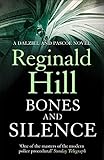
  • Bones and Silence by Reginald Hill – a Dalziel and Pascoe crime fiction novel. It’s book 11 in the series, which I’m reading totally out of order (there are over 20 in the series) and it is really good.

Blurb:

When Detective Superintendent Andy Dalziel witnesses a bizarre murder across the street from his own back garden, he is quite sure who the culprit is. After all, he’s got to believe what he sees with his own eyes. But what exactly does he see? And is he mistaken? Peter Pascoe thinks so.

Dalziel senses the doubters around him, which only strengthens his resolve. To make matters worse, he’s being pestered by an anonymous letter-writer, threatening suicide. Worse still, Pascoe seems intent on reminding him of the fact.

Meanwhile, the effervescent Eileen Chung is directing the Mystery Plays. And who does she have in mind for God? Daziel, of course. He shouldn’t have too much difficulty acting the part’¦

  • L S Lowry: A Life by Shelley Rohde. Lowry is one of my favourite artists, well known for his urban paintings of industrial towns but his work covers a wide range of themes and subjects, from landscapes and seascapes to portraits. This biography is based on collections of private papers held in The Lowry, Salford Quays.
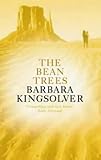
  • Then: I’ve recently finished The Bean Trees by Barbara Kingsolver, her first novel. I’ve read some of her other books –  loved The Poisonwood Bible which I’ve read a few times, and Homeland, a book of short stories, but wasn’t so taken with The Lacuna. I thoroughly enjoyed The Bean Trees – my review will follow shortly:

Blurb:

Plucky Taylor Greer grows up poor in rural Kentucky with two goals: to avoid pregnancy and to get away. She succeeds on both counts when she buys an old car and heads west. But midway across the country motherhood catches up with her when she becomes the guardian of an abandoned baby girl she calls Turtle. In Tuscon they encounter an extraordinary array of people, and with their help, Taylor builds herself and her sweet, stunned child a life.

Next: I really don’t know.

What about you? What are you reading this week?

My Week in Books: 30 March 2016

This Week in Books is a weekly round-up hosted by Lypsyy Lost & Found, about what I’ve been reading Now, Then & Next.

IMG_1384-0

A similar meme,  WWW Wednesday is run by Taking on a World of Words.

Now:  I’ve decided to concentrate on books from my to-be-read shelves and picked People of the Book by Geraldine Brooks, a book I’ve owned for nearly eight years. I can’t think why I haven’t read it before as so far I’m loving it.
Blurb:

People of the Book takes place in the aftermath of the Bosnian War, as a young book conservator arrives in Sarajevo to restore a lost treasure.

When Hannah Heath gets a call in the middle of the night in her Sydney home about a precious medieval manuscript which has been recovered from the smouldering ruins of wartorn Sarajevo, she knows she is on the brink of the experience of a lifetime. A renowned book conservator, she must now make her way to Bosnia to start work on restoring The Sarajevo Haggadah, a Jewish prayer book ‘“ to discover its secrets and piece together the story of its miraculous survival. But the trip will also set in motion a series of events that threaten to rock Hannah’s orderly life, including her encounter with Ozren Karamen, the young librarian who risked his life to save the book.

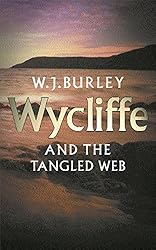
Then: I’ve recently finished Wycliffe and the Tangled Web by W J Burley, another book from my to-be-read shelves.

Blurb:

A beautiful schoolgirl goes missing from a Cornish village on the day she has told her boyfriend and sister she is pregnant. The possibility that she has been raped or murdered – or both – grows with every passing hour, and Chief Superintendent Wycliffe is brought in on the case.

The investigation reveals a complex network of family relationships and rivalries centred on the girl; and then Wycliffe finds a body – but not the one he expects. Have there been two murders? And if so, are they connected?

Wycliffe digs deeper, and soon realises that just beneath the normal, day-to-day surface of the community lies a web of hatred and resentment – a web he will have to untangle if he is to find the key to the mystery . . .

My post will follow soon.

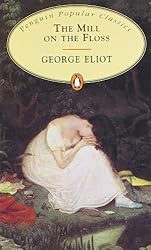
Next: I’m reluctant to say what I’ll be reading next because I usually change my mind when the time comes. But, I shall be reading The Mill on the Floss by George Eliot for the Classics Club Spin some time in April – yet another book I’ve owned for years.

Blurb:

George Eliot drew on her own anguished childhood when she depicted the stormy relationship between Maggie and Tom Tulliver. Maggie’s often tormented battle to do her duty and belong on the one hand, and to be  herself, wild and natural, on the other, propels her from one crisis to another. As the Tulliver fortunes decline and fall, the rift between Maggie and her family becomes almost irreconcilable. But Maggie’s biggest mistake of all is to fall in love with Stephen Guest who is engaged to another woman.

Both a sharp and observant picture of English rural life and a profoundly convincing analysis of a woman’s psychology, The Mill on the Floss is a novel that tackles the complexities of morality versus desire.

What about you? What are you reading this week?

My Week in Books: 16 March 2016

This Week in Books is a weekly round-up hosted by Lypsyy Lost & Found, about what I’ve been reading Now, Then & Next.

IMG_1384-0

A similar meme,  WWW Wednesday is run by Taking on a World of Words.

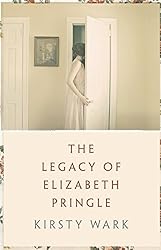
Now: I’m currently reading, and loving so far, The Legacy of Elizabeth Pringle by Kirsty Wark, a book I bought a couple of years ago. My copy is the hardback version, which is a joy to hold and read.

Blurb:

Born just before the First World War, Elizabeth Pringle has been a familiar yet solitary figure on the Scottish island of Arran. A dutiful daughter, an inspirational teacher, a gardener. But did anyone really know her? When Elizabeth dies, her will contains a surprise. She has left her home and her belongings to someone who is all but a stranger, a young mother she watched pushing a pram down the road more than thirty years ago.
Now it falls to Martha, the baby in that pram, to find out how her mother inherited the house in such strange circumstances, and in doing so, perhaps leave her own past behind. But first she has to find the answer to the question: who was Elizabeth Pringle?
A captivating and haunting story of the richness beneath so-called ordinary lives and the secrets and threads that hold women together.

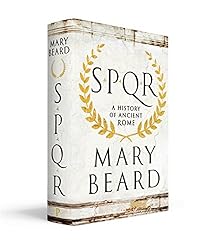
I’m still reading SPQR by Mary Beard, a fascinating history of Ancient Rome – see last week’s post for a synopsis. I’m reading the ebook and am currently at 46%. My Kindle estimates it will take me 8 hours and 1 minute to read to the end.

Then: Last week I was undecided about what to read next and had started reading three books, but suddenly it all became clear and I carried on reading Miss Pym Disposes by Josephine Tey, followed up by The Madness of July by James Naughtie. (See last week’s post for the synopses). Two very different books and I enjoyed both of them. I wrote about Tey’s book in this post. I have yet to write one about Naughtie’s book.

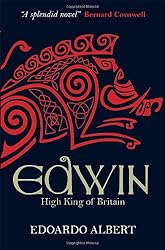
Next: As always I’m unsure which book I’ll pick up next. At the moment I’m leaning towards Edwin: High King of Britain: the Northumbrian Thrones 1 by Edoardo Albert, a present from my son for Mother’s Day.

Blurb:

Edwin, the deposed king of Northumbria, seeks refuge at the court of King Raedwald of East Anglia. But Raedwald is urged to kill his guest by Aethelfrith, Edwin’s usurper. As Edwin walks by the shore, alone and at bay, he is confronted by a mysterious figure ‘“ the missionary Paulinus ‘“ who prophesies that he will become High King of Britain.

It is a turning point. Through battles and astute political alliances Edwin rises to great power, in the process marrying the Kentish princess Aethelburh. As part of the marriage contract the princess is allowed to retain her Christian faith. But, in these times, to be a king is not a recipe for a long life . . . This turbulent and tormented period in British history sees the conversion of the Anglo-Saxon settlers who have forced their way on to British shores over previous centuries, arriving first to pillage, then to farm and trade ‘“ and to come to terms with the world view of the Celtic tribes they have driven out.

What are you reading this week ‘“ and have you read any of these books? Do let me know.

My Week in Books: 9 March 2016

This Week in Books is a weekly round-up hosted by Lypsyy Lost & Found, about what I’ve been reading Now, Then & Next.

IMG_1384-0

A similar meme,  WWW Wednesday is run by Taking on a World of Words.

Then – I’m  beginning this post with the book I’ve recently finished reading – Doctor Thorne (see this post for my review). Julian Fellowes’ adaptation of this book is currently on ITV and I was in two minds about watching it, but I thought I’d at least watch the first episode. However, as I expected, there are too many changes from the book for me to enjoy watching it. It is so condensed, and too much is revealed too early, so I have decided not to watch the next two parts.

Now and Next – After finishing Doctor Thorne I couldn’t decide what to read next and began reading three books. This happens to me sometimes and I expect I’ll soon concentrate on just one of these books and go back to the others later.

Blurb: Leys Physical Training College was famous for its excellent discipline and Miss Lucy Pym was pleased and flattered to be invited to give a psychology lecture there. But she had to admit that the health and vibrant beauty of the students made her feel just a little inadequate.

Then there was a nasty accident – and suddenly Miss Pym was forced to apply her agile intellect to the unpleasant fact that among all those impressively healthy bodies someone had a very sick mind…

Blurb: ‘He was sickened also with all these lies. His very soul was dismayed by the dirt through which he was forced to wade. He had become unconsciously connected with the lowest dregs of mankind, and would have to see his name mingled with theirs in the daily newspapers’

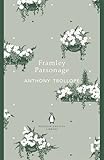
Mark Robarts is a clergyman with ambitions beyond his small country parish of Framley. In a naive attempt to mix in influential circles, he agrees to guarantee a bill for a large sum of money for the disreputable local Member of Parliament, while being helped in his career in the Church by the same hand. But the unscrupulous politician reneges on his financial obligations, and Mark must face the consequences this debt may bring to his family.

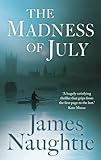
Blurb: From Radio 4’s James Naughtie, a sophisticated thriller about loyalty, survival and family rivalry deep in the Cold War, drawing on decades of experience as a political insider in Westminster and Washington.

It is a sweltering July in the mid-1970s, and for Will Flemyng, foreign office minister, the temperature is rising with each passing hour. A mysterious death has exposed secret passions in government, bringing on a political crisis that will draw him back into a familiar world of danger and deceit.

For Flemyng has a past. He was trained as a spy for a life behind enemy lines and now he’s compelled to go back. In the course of one long weekend he must question all his loyalties: to his friends, his enemies, and to his own two brothers. Only then can he expose the truth in London and Washington. When he has walked through the fire.

And I’m still slowly making progress with SPQR by Mary Beard, the Kindle edition (I read some of this every day).

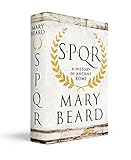
Blurb: Its history of empire, conquest, cruelty and excess is something against which we still judge ourselves. Its myths and stories – from Romulus and Remus to the Rape of Lucretia – still strike a chord with us. And its debates about citizenship, security and the rights of the individual still influence our own debates on civil liberty today.

SPQR is a new look at Roman history from one of the world’s foremost classicists. It explores not only how Rome grew from an insignificant village in central Italy to a power that controlled territory from Spain to Syria, but also how the Romans thought about themselves and their achievements, and why they are still important to us.

What are you reading this week – and have you read any of these books? Do let me know.

My Week in Books: 24 February 2016

This Week in Books is a weekly round-up hosted by Lypsyy Lost & Found, about what I’ve been reading Now, Then & Next.

IMG_1384-0

A similar meme,  WWW Wednesday is run by Taking on a World of Words.

Currently I’m still reading SPQR by Mary Beard, the Kindle edition. I started this a couple of weeks ago and am reading it slowly. It covers 1,000 years of the history of Ancient Rome – it’s about how it grew and sustained its position for so long and confronts some of the myths and half-truths about Rome.

I’ve also started to read Doctor Thorne by Anthony Trollope. I’ve read the first two books in his Barchester Towers series and a year ago I thought I would soon be reading Doctor Thorne, the third book. Well, I’ve now got round to it, spurred on by the fact that ITV will be showing Julian Fellowes’ three-part adaptation of the book early in March and I want to experience the book through my own imagination first, without outside influence. I am enjoying it very much so far. I’m reading the free version on Kindle but I see that OUP are publishing a tie-in edition on 3 March, with a foreword by Julian Fellowes.

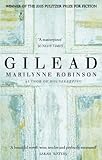
I’ve recently finished Gilead by Marilynne Robinson, a book I’ve had for about 8 years. Reverend John Ames, a 76 year old, dying of heart disease, is writing a letter to his 7 year old son telling him the things he would have told him if he had lived to see him grow up; the story of his life and that of his father and grandfather, and so much more besides. It’s not a book to rush through and I took my time reading this but still think I would get more out of it on a second reading. So I’ll be a while mulling it over before I review it. And I still have four other books I’ve read recently that I haven’t reviewed! 
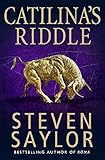
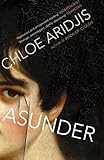
What I will be reading next – I never make up my mind what to read next until the time arrives to choose  a book – and it could be a while yet as both the books I’m currently reading are quite long. I’m not sure if I want to carry on with the Ancient Rome theme by reading Catalina’s Riddle by Steven Saylor,  or something completely different and much shorter such as Asunder by Chloe Aridjis, a book I borrowed from the library this week:

Blurb:

Marie’s job as a museum guard at the National Gallery in London offers her the life she always wanted, one of invisibility and quiet contemplation. But amid the hushed corridors surge currents of history and violence, paintings whose power belie their own fragility. There also lingers the legacy of her great-grandfather Ted, the warder who slipped and fell moments before reaching the suffragette Mary Richardson as she took a blade to one of the gallery’s masterpieces on the eve of the First World War.

After nine years there, Marie begins to feel the tug of restlessness. A decisive change comes in the form of a winter trip to Paris, where, with the arrival of an uninvited guest and an unexpected encounter, her carefully contained world is torn apart.

It does sound good – described on the front cover by the Independent as ‘Rapturous and enraptured reading‘ and by the Guardian as ‘Strange, extravagant, darkly absorbing.’

But then again I’d like to read Slade House by David Mitchell (I wrote about this book in my last My Week in Books post).

I’d love to know if any body else has the same difficulties as me in choosing what to read next?