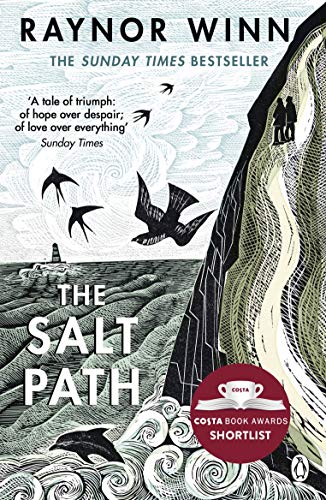
The Salt Path by Raynor Winn

Just days after Raynor learns that Moth, her husband of 32 years, is terminally ill, their home is taken away and they lose their livelihood. With nothing left and little time, they make the brave and impulsive decision to walk the 630 miles of the sea-swept South West Coast Path, from Somerset to Dorset, via Devon and Cornwall.

Carrying only the essentials for survival on their backs, they live wild in the ancient, weathered landscape of cliffs, sea and sky. Yet through every step, every encounter and every test along the way, their walk becomes a remarkable journey.

The Salt Path is an honest and life-affirming true story of coming to terms with grief and the healing power of the natural world. Ultimately, it is a portrayal of home, and how it can be lost, rebuilt and rediscovered in the most unexpected ways
.

I first wrote a short post about The Salt Path in this post. I bought the book in 2018 and was keen to read it, but so many other books intervened, and it was only when I saw Raynor Winn on Kate Humble’s Coastal Walks programme on the South West Coastal Path that I remembered about her book.

Raynor and Moth Winn, a couple in their 50s, were homeless, with no means of income except for £48 pounds a week. They had lost their home, business and livelihood, after investing in one of a friend’s companies that had failed. They found out that they were liable to make payments towards the debts of the company, were taken to court and ended up losing not only their savings but also their farm and home.

Despite finding out that Moth has a rare terminal illness, they decided to walk the South Coast Path. He had been diagnosed with corticobasal degeneration (CBD), a brain disease for which there is no cure or treatment apart from pain killers and physiotherapy. The consultant told him that he shouldn’t tire himself, or walk too far and to take care on the stairs. Their decision to walk the Path and camp wild seemed to me both brave and foolhardy and I read this book with absolute amazement that they could take themselves away from medical care and set off, almost totally unprepared and not fit enough to walk 630 miles along a coast path.

At first it was really difficult as Moth struggled with pain and exhaustion, and it horrified me that he could carry on in that condition. They had reached the Valley of Rocks in north Devon, when he sat down on the rocks. He felt he was eighty and was so tired that he hurt everywhere:

Can’t tell if I’m half asleep, or wide awake. It’s like my head’s in fog and I’m walking through treacle. This is the most bollockingly stupid thing we’ve ever done. I want to lie down.(page 58)

He had been taking Pregabalin to ease the nerve pain and had been told not to just stop taking them because of the immense list of withdrawal symptoms. But that is what he had done – they had left his supplies behind them, ready to put in the rucksack, but had forgotten them. Fortunately after a while the pain lessened, he felt much better and his head was clearer. The walking had helped!
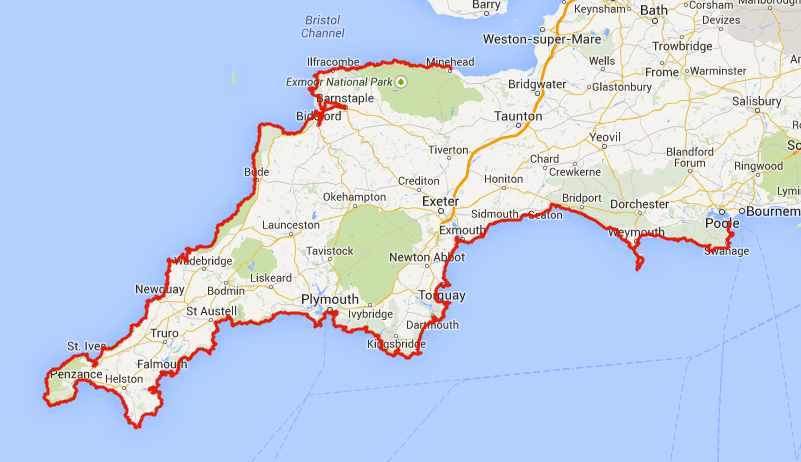
They had little to live on, their diet involved lots of rice and noodles, supplemented with wine gums and foraging for blackberries, mushrooms and dandelions. They took it at their own pace, following Paddy Dillon’s Walking Guide of the trail from Minehead on the Somerset coast right round Devon and Cornwall to Poole in Dorset, stopping to pick up their money and buy supplies along the route. But as winter was on the way when they reached Lantic Bay and Pencarrow Head they decided to take up a friend’s offer to stay with her for the winter free of rent if they could help with her building and on her farm.

However, once they stopped walking, Moth’s stiffness and his neurological pain increased and he struggled to move. He seemed to be deteriorating so quickly without the Pregabalin. But they were determined to finish the walk and completed it the next year. Once more, as they walked Moth’s condition improved. He didn’t understand how, thinking it may have ‘something to do with heavy endurance exercise‘, causing some sort of reaction that that they didn’t understand. He didn’t know how it worked but he just felt great.

Living with a death sentence, having no idea when it will be enacted, is to straddle a void. Every word or gesture, every breath of wind or drop of rain matters to a painful degree. For now we had moved outside of that. Moth was on death row, but he’d been granted the right to appeal. He knew CBD hadn’t miraculously disappeared, but somehow, for a while, it was held at bay.(page 243)

The Salt Path is not a book about walking the South Coast Path because you love walking, nor because you want the challenge of walking 630 miles, nor because you love wild camping. And it is not just about about the beauty of the surroundings and the experience of being close to nature (although that is there in Ray Winn’s beautiful descriptive writing). It is about the determination to live life, about overcoming pain and hardship, and the healing power of nature. It is about homelessness and the different reactions and attitudes of the people they met when they told them they were homeless. Some were hostile, some recoiled in horror and moved away as though they were social pariahs. Others were sympathetic and generous.

In this post I have concentrated on Moth’s health, because that is what struck me most as I was reading the book. But there is so much more in it than that. It’s one of the most remarkable books that I have read. I admired their determination and persistence in the face of all the difficulties and obstacles they met, but it is definitely not something I could ever undertake. It both fascinated and appalled me.

After I read The Salt Path I wondered how Ray and Moth are now and came across this article in The Herald, dated 20 September 2020, in which Raynor Winn looks back over these life-changing and challenging events. At lot has happened since then and the story of that is in her second book, The Wild Silence. You can follow Raynor on Twitter @raynor_winn.

  • Publisher : Michael Joseph; 1st edition (3 Sept. 2020)
  • Language : English
  • File size : 3148 KB
  • X-Ray : Enabled
  • Word Wise : Enabled
  • Print length : 280 pages
  • My Rating: 4*

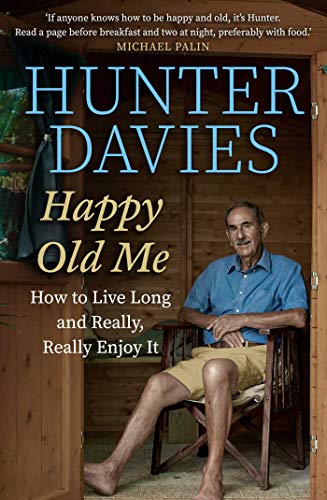
Happy Old Me by Hunter Davies

Happy Old Me

Simon & Schuster UK (21 Mar. 2019) | Hardback |291 pages |  4*

Blurb:

On 8th February 2016,Margaret Forster lost her life to cancer of the spine. The days that followed for her husband, Hunter Davies, were carried out on autopilot: arrangements to be made, family and friends to be contacted. But how do you cope after you have lost your loved one? How do you carry on?

As Hunter navigates what it means to be alone again after 55 years of marriage, coping with bereavement and being elderly (he still doesn’t believe he is), he shares his wisdom and lessons he has learnt living alone again. Revealing his emotional journey over the course of one year, as well as the often ignored practical implications of becoming widowed, he learns that, ultimately, bricks and mortar may change but the memories will remain. 

Part memoir, part self-help, Happy Old Me is a fitting, heart-felt tribute to the love of his life and a surprisingly amusing and informative book about an age, and stage in life, which we might all reach someday. The third book in Hunter Davies’ much-loved memoir series, which includes The Co-Op’s Got Bananas and A Life in the Day. 

Hunter Davies wrote Happy Old Me: How to Live a Long Life and Really Enjoy It in 2018 when he was in his eighty-second year. After fifty-five years of marriage he found he suddenly had to cope with living on his own, doing all the ‘domestic stuff he had never bothered to learn’ and get to grips with being old.

It tells of what he did during his first year after Margaret Forster, his wife died and also looks back at their time together and their family and careers. It is so readable, it’s like listening to him talking. I’ve read several of Margaret Forster’s books so it was good to ‘see’ her from his perspective.

I knew less about Hunter Davies, other than that he’s a journalist and has written several books on a variety of subjects. I’m reading The John Lennon Letters, that Davies edited  and my husband is reading his biography of Alfred Wainwright (I’ll read it later) and we have a copy of his book, A Walk Along the Wall, about Hadrian’s Wall (I’ll be reading that later too). Other books by him that interest me are his biographies of the Beatles and of William Wordsworth and also Lakeland: A Personal Journey. 

Amazon tells me that ‘Hunter Davies was at the heart of London culture in the Swinging Sixties, becoming close friends with The Beatles, and especially Sir Paul McCartney. He has been writing bestselling books, as well as widely read columns for over fifty years for major newspapers and magazines.’

In Happy Old Me he writes openly and frankly, with a sense of humour and a zest for life. I really enjoyed it.

Happy Old Me Contents

When was I happiest? People often get asked that, or ask themselves, especially when they get into their eighties, as if all happiness must be in the past, gone for ever. I always say now. And I mean it. I am happy. I am happy to have had my past and I am happy looking forward to tomorrow. (page 267)

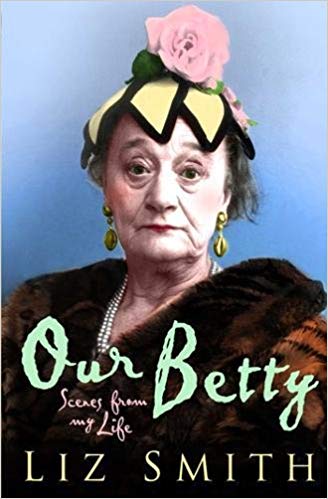
Our Betty: Scenes from my Life by Liz Smith

Our Betty

Simon & Schuster UK| New Ed edition (5 Mar. 2007)|240 pages|Library book|3*

Description from Goodreads:

Liz Smith is one of Britain’s much loved character actresses. This is her life story – from her cosseted yet lonely childhood with her beloved grandparents, through the war, marriage and children, divorce and poverty, long years working in dead-end jobs to her big break at the age of fifty.

From the back cover:

In her brilliantly quirky memoirs Liz Smith tells the hanuting story of her bitter-sweet pre-war childhood’ Daily Mail

These evocative scenes from Lincolnshire life are as good as anything in a Beryl Bainbridge novel. Liz Smith … is our greatest character actress. Her genius is to give all those grotesques and cartoons a measure of her own perky, quirky nature and generous soul. Daily Express

Typically idiosyncratic …shot through with shafts of broad comedy. It’s difficult not to gobble it all up in one go. Sunday Telegraph

From Wikipedia:

Betty Gleadle MBE (11 December 1921 – 24 December 2016), known by the stage name Liz Smith, was an English character actress, known for her roles in BBC sitcoms, including as Annie Brandon in I Didn’t Know You Cared (1975–79), the sisters Bette and Belle in 2point4 Children (1991–99), Letitia Cropley in The Vicar of Dibley (1994–96) and Norma Speakman (“Nana”) in The Royle Family (1998–2006). She also played Zillah in Lark Rise to Candleford (2008) and won the BAFTA Award for Best Actress in a Supporting Role for the 1984 film A Private Function.

My thoughts:

I loved the first part of this book as Liz Smith recalls scenes from her childhood. She was born almost a century ago now and the pictures she paints of her childhood in her words and in her little pen and ink sketches reveal a world so far removed from life as we know it today. She gives an excellent portrait of life between the two world wars. Her mother died when she was two and when she was seven her father left home and she never saw him again. She was brought up by her grandparents.

She writes in short sections telling about her home, how she loved going to the pictures, about the neighbours and the shops, about Christmas, the games she played, her first day at school, summer days, riding her bicycle, learning to be a dressmaker and then what she did during WW2 and her life after the war and becoming an actress.

I had thought before I read the book that it would have been all about her life as an actress, but I’m glad it isn’t. Although I was interested to read about the people she worked with in the various parts she played it was no where nearly as fascinating to me as her early years. It is quirky, funny in parts but also sad and moving.

Reading challenges: this is the 12th library book I’ve read this year and completes my Virtual Mount TBR challenge for the year.

The Marches by Rory Stewart

Marches

Vintage|September 2017|368 pages|Paperback|4*

I enjoyed reading The Marches: Border Walks With My Father by Rory Stewart. He’s been in the news here recently, having stood for leadership of the Conservative Party, and has now formally stood down from Parliament to run as an independent candidate for Mayor of London.

But none of that has anything to do with why I wanted to read his book. It’s because of the subject – walking in the borderlands between England and Scotland, in the place where I live. And it’s not just about walking – he also muses on history, memory and landscape, all topics that interest me immensely.

Blurb:

His father Brian taught Rory Stewart how to walk, and walked with him on journeys from Iran to Malaysia. Now they have chosen to do their final walk together along ‘the Marches’ – the frontier that divides their two countries, Scotland and England.

On their six-hundred-mile, thirty-day journey – with Rory on foot, and his father ‘ambushing’ him by car – the pair relive Scottish dances, reflect on Burmese honey-bears, and on the loss of human presence in the British landscape.
Travelling across mountain ridges and through housing estates they uncover a forgotten country crushed between England and Scotland: the Middleland. They discover unsettling modern lives, lodged in an ancient place, as their odyssey develops into a history of the British nationhood, a chronicle of contemporary Britain and an exuberant encounter between a father and a son.

And as the journey deepens, and the end approaches, Brian and Rory fight to match, step by step, modern voices, nationalisms and contemporary settlements to the natural beauty of the Marches, and a fierce absorption in tradition in their own unconventional lives.

My thoughts:

This is a book of three parts – Book One: The Wall about Rory Stewart’s walk along Hadrian’s Wall in 2011, with his father, then aged 89 – his father walking for the first hour or so each day. They had intended to walk the full length of the Wall, from east to west, but after they reached the fort at Bewcastle they decided to abandon their plan (his father having reached his limits) and drive back to his father’s house, Broich, near Crieff in Perthshire. He writes about the Wall, the Roman occupation of the area, his father’s career, about nationality and clans, and reminisces about his childhood and his time in Afghanistan.

Book Two: Middleland, in which he describes his walk from coast to coast, a distance of about 400 miles, taking him 26 days, walking alone from his cottage in Cumbria to the Solway Firth, then crossing and re-crossing the modern border (established in the 13th century) to Berwick-upon-Tweed and then back to Broich.

I got a bit lost in his descriptions of the route, not knowing some the places along the way. But there are maps of his route that helped me follow where he went. He describes the landscape, the geology, sheep farming and land use, the people he met, their history  and language and much, much more.

Book Three: The General Danced on the Lawn about his father, who died at the age of 93, before this book was finished. The whole book is permeated with his love and respect for his father, but this last section is all about Brian Stewart.

At the end of the Marches is a Chronology which I found very interesting, defining The Middleland before AD100 up to the present days. The Middleland is a term invented by Brian Stewart:

The geographical centre of the island of Britain. An upland landscape, whose core is the Lake District, the Peninnes, the Cheviots and the Scottish Borders, but whose fringes extend to the Humber in the south and the firths of Forth and Clyde in the north. A land naturally unified by geography and culture for two thousand years, but repeatedly divided by political frontiers. (page 339)

WWW Wednesday: 27 March 2019

IMG_1384-0

WWW Wednesday is run by Taking on a World of Words.

The Three Ws are:

What are you currently reading?
What did you recently finish reading?
What do you think you’ll read next?


I’m currently reading:

A Life of My Own: A Biographer’s Life by Claire Tomalin – a book that Marina @ Finding Time To Write, so kindly sent to me. I’ve been reading this a few chapters at a time for some while and am getting to the end of this book. This morning I read about the death of her second daughter, Susanna – such a moving tribute.

Moriarty by Anthony Horowitz – I’ve only read a few chapters so far. This is a Sherlock Holmes novel but without both Holmes and Watson – Sherlock Holmes and Moriarty have fallen to their deaths at the Reichenbach Falls. The discovery of a brutally murdered body in a leafy suburb is investigated by Pinkerton agent Frederick Chase  and Inspector Athelney Jones, a devoted student of Holmes’s methods of investigation and deduction.

Here Be Dragons by Sharon Penman, historical fiction, the first of her trilogy about the medieval princes of Gwynedd and the monarchs of England. I’m reading this on my Kindle and finding it just as compelling reading as her wonderful book The Sunne in Splendour. It tells the story of Llewelyn, the Prince of North Wales, and his rise to power and fame. So far, I’m reading about his childhood and teenage years.

I’ve recently finished:

Fingers in the Sparkle Jar by Chris Packham, which I first read two years ago. A very special book that is just as amazing to read as it was for the first time.

Wakenhyrst by Michelle Paver, a gothic novel due to be published on 4 April 2019. I loved her Dark Matter, a ghost story in the form of a diary set in the Arctic and so expected to love this one too. It’s not as chilling, but is just as atmospheric and full of mystery. I’ll be writing my review very soon.

In Edwardian Suffolk, a manor house stands alone in a lost corner of the Fens: a glinting wilderness of water whose whispering reeds guard ancient secrets. Maud is a lonely child growing up without a mother, ruled by her repressive father.

When he finds a painted medieval devil in a graveyard, unhallowed forces are awakened. Maud’s battle has begun. She must survive a world haunted by witchcraft, the age-old legends of her beloved fen – and the even more nightmarish demons of her father’s past.

My next book could be:

At the moment I don’t know. But it could be The Evidence Against You by Gillian Mcallister, due to be published on 18 April 2019.

The Evidence Against You

It’s the day Izzy’s father will be released from jail.

She has every reason to feel conflicted – he’s the man who gave her a childhood filled with happy memories.

But he has also just served seventeen years for the murder of her mother.

Now, Izzy’s father sends her a letter. He wants to talk, to defend himself against each piece of evidence from his trial.

But should she give him the benefit of the doubt?

Or is her father guilty as charged, and luring her into a trap?

Have you read any of these books?  Do any of them tempt you? 

Books Read in November 2018

This month I read seven books, made up of one review copy that came to me via  NetGalley, two library books and four of my own books (two of these on Kindle). Two of the seven books are non-fiction and the rest are fiction. My ratings range from 5 to 2.5 stars and are based solely on my reactions to the books.

I’ve written about three of these books (click on the links to read my reviews):

Jacob's Room is Full of Books: A Year of ReadingAbsolute ProofIn a Dark, Dark Wood

  1. Jacob’s Room is Full of Books by Susan Hill 5*  – in which Susan Hill describes a year of her reading.
  2. Absolute Proof by Peter James 3.5* –  a standalone thriller that is very different from his Roy Grace books. It has similarities to Dan Brown’s The Da Vinci Code, as the search is on for proof of  God’s existence.
  3. In a Dark, Dark Wood by Ruth Ware 2.5* – I was disappointed as this book promised to be a psychological thriller but it neither thrilled nor scared me, although it is a page-tuner. Leonora and Clare haven’t seen  or even spoken to each other since they were 16, ten years ago. So why has Clare invited Leonora to her hen party held in a glass house in the middle of a wood?

Here are some brief notes about the remaining four books:

I Am, I Am, I Am: Seventeen Brushes With DeathThe ReckoningThe New Mrs CliftonTombland (Matthew Shardlake, #7)

I Am, I Am, I Am by Maggie O’Farrell 5* – I wrote this Friday post about this book, with two quotations and a summary of the book. It’s a memoir with a difference: seventeen encounters of near-death experiences, with Maggie at different ages, in different locations, revealing a whole life in a series of tense, visceral snapshots. It’s a beautifully written book that I loved.

The Reckoning by John Grisham 5*, about Pete Banning, Clanton’s favourite son, a returning war hero, the patriarch of a prominent family, a farmer, father, neighbour, and a faithful member of the Methodist Church. Why did he shoot and kill the Reverend Dexter Bell? And then refuse to say why he killed him? I was intrigued and fascinated by the whole book that went back into Pete’s wartime experiences during world War Two during the Bataan Death March in the Philippines.

The New Mrs Clifton by Elizabeth Buchan 4* this begins in 1974 with the discovery of a skeleton, the remains of a woman, between twenty-five and thirty, buried beneath a tree in the garden of house in Clapham, facing the Common. Her identity and why and how she was killed is not revealed until very nearly the end of the book.

It then moves back in time to 1945 when Intelligence Officer Gus Clifton returns to London with Krista, the German wife he married secretly in Berlin. For his sisters, Julia and Tilly, this broken woman is nothing more than the enemy. For Nella, Gus’s loyal fiancée, it is a terrible betrayal. Elizabeth Buchan paints a convincing and moving picture of life in both London and Berlin post-war, highlighting the devastation of the bombing and showing how people have to come to terms with the changes in their lives. All the way through the book I wondered who the killer was and which woman had been murdered.

Tombland by C J Sansom 5* – I wrote this Friday post this book, giving two quotations and a summary of the book. Set in 1549 this is a remarkable and detailed book about the situation as Edward VI is on the throne following the death of his father Henry VIII and his uncle Edward Seymour, Duke of Somerset, rules as Protector.

Matthew Shardlake has been working as a lawyer in the service of Edward’s sister, the Lady Elizabeth. He is employed to investigate the gruesome murder of Edith Boleyn, the wife of John Boleyn – a distant Norfolk relation of Elizabeth’s mother. But the main part of the book is about Kett’s Rebellion – as thousands of peasants, in protest about the enclosures of common land, gather together on Mousehold Heath outside Norwich and battle ensues.

It’s an enormous book and I’m planning to write a longer post about it.