Spell the Month in Books is a linkup hosted by Jana on Reviews From the Stacks on the first Saturday of each month. The goal is to spell the current month with the first letter of book titles, excluding articles such as ‘the’ and ‘a’ as needed. That’s all there is to it! Some months there are optional theme challenges, such as “books with an orange cover” or books of a particular genre, but for the most part, any book you want to use is fair game!
This option this month is Science Fiction. I don’t read much science fiction these days, but I used to read a lot. I’ve chosen some books I read long before I began writing about books, some I’ve read more recently and some books that I own but haven’t read yet. The descriptions in italics are taken either from Amazon UK or from Goodreads.
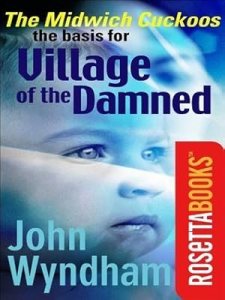
The story is set in an ordinary village, with a village green and a white-railed pond, a church and vicarage, an inn, smithy, post office, village shop and sixty cottages and small houses, a village hall, and two large houses, Kyle Manor and The Grange. A very ordinary village where not much goes on, which makes what happens there even more extraordinary. It’s eerie and very chilling, a story of alien invasion and the apparent helplessness of humanity to put up any resistance.
The Midwich Cuckoos is the classic tale of aliens in our midst, exploring how we respond when confronted by those who are innately superior to us in every conceivable way.
In the sleepy English village of Midwich, a mysterious silver object appears and all the inhabitants fall unconscious. A day later the object is gone and everyone awakens unharmed – except that all the women in the village are discovered to be pregnant.
The resultant children of Midwich do not belong to their parents: all are blonde, all are golden eyed. They grow up too fast and their minds exhibit frightening abilities that give them control over others and brings them into conflict with the villagers just as a chilling realisation dawns on the world outside . . .
A is for Artemis by Andy Weir – a TBR, a book I bought after watching, The Martian, the film of his first book.
WELCOME TO ARTEMIS. The first city on the moon. Population 2,000. Mostly tourists. Some criminals.
Jazz Bashara is one of the criminals. She lives in a poor area of Artemis and subsidises her work as a porter with smuggling contraband onto the moon. But it’s not enough.
So when she’s offered the chance to make a lot of money she jumps at it. But though planning a crime in 1/6th gravity may be more fun, it’s also a lot more dangerous.
When you live on the moon, of course you have a dark side…
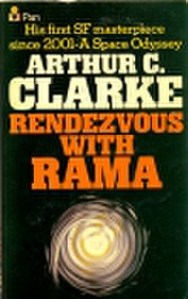
R is for Rendezvous with Rama. This is a book that we bought many years ago. I’m not sure whether I’ve read it or not. It was first published in 1973, so I’m guessing we bought it in the 1970s, the period when we were reading lots of science fiction.
The multi-award-winning SF masterpiece from one of the greatest SF writers of all time
Rama is a vast alien spacecraft that enters the Solar System. A perfect cylinder some fifty kilometres long, spinning rapidly, racing through space, Rama is a technological marvel, a mysterious and deeply enigmatic alien artefact.
It is Mankind’s first visitor from the stars and must be investigated …
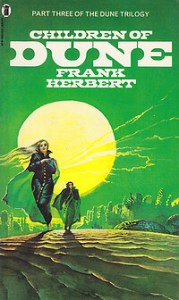
C is for Children of Dune by Frank Herbert, the third Dune novel. I read all the Dune books many years ago.
The Children of Dune are twin siblings Leto and Ghanima Atreides, whose father, the Emperor Paul Muad’Dib, disappeared in the desert wastelands of Arrakis nine years ago. Like their father, the twins possess supernormal abilities–making them valuable to their manipulative aunt Alia, who rules the Empire in the name of House Atreides.
Facing treason and rebellion on two fronts, Alia’s rule is not absolute. The displaced House Corrino is plotting to regain the throne while the fanatical Fremen are being provoked into open revolt by the enigmatic figure known only as The Preacher. Alia believes that by obtaining the secrets of the twins’ prophetic visions, she can maintain control over her dynasty.
But Leto and Ghanima have their own plans for their visions–and their destinies….
H is for The Handmaid’s Tale by Margaret Atwood – another book I read long before I began reviewing books.
Discover the dystopian novel that started a phenomenon.
Offred is a Handmaid in The Republic of Gilead. She is placed in the household of The Commander, Fred Waterford – her assigned name, Offred, means ‘of Fred’. She has only one function: to breed. If Offred refuses to enter into sexual servitude to repopulate a devastated world, she will be hanged. Yet even a repressive state cannot eradicate hope and desire. As she recalls her pre-revolution life in flashbacks, Offred must navigate through the terrifying landscape of torture and persecution in the present day, and between two men upon which her future hangs.
The next link up will be on April 5, 2025 when the theme will be: Animal on the Cover or in the Title.
Spell the Month in Books is a linkup hosted by Jana on Reviews From the Stacks on the first Saturday of each month. The goal is to spell the current month with the first letter of book titles, excluding articles such as ‘the’ and ‘a’ as needed. That’s all there is to it! Some months there are optional theme challenges, such as “books with an orange cover” or books of a particular genre, but for the most part, any book you want to use is fair game!
This month I’m not taking the option, which is Valentine’s Day/something sweet on the cover, but instead I’m featuring books from my blog, some from the early days of the blog.
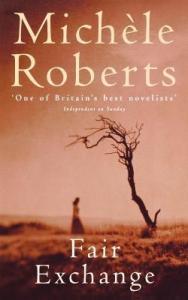
F is for Fair Exchange by Michele Roberts – historical fiction set in England and France in the late 1700s/early 1800s during the French Revolutionary period. While drawing hints and facts from the lives and secret affairs of two of the most famous and passionate figures of the late 18th century – Mary Wollstonecraft and William Wordworth – the intriguing mystery surrounding these two women, is Michèle Roberts own fascinating creation. It’s about William Saygood a fictional friend of Wordsworth’s. Mary Wollstonecraft appears in the novel but Roberts has ‘plundered various aspects of her life’ for the character, Jemima Boote. There is a fair bit in this book about women’s rights and their place in society, and about the question of nurture versus nature in bringing up children.
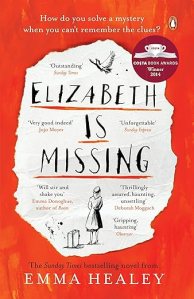
E is for Elizabeth is Missing by Emma Healey – Maud has dementia – but she knows her friend Elizabeth is missing. I enjoyed the TV adaption with Glenda Jackson as Maud much more than the book. Emma Healey’s depiction of dementia is convincing showing the confusion and bewilderment that Maud must have felt. It’s heart-rending. As Maud continues her search for Elizabeth, she also recalls the search for her sister, Sukey, who disappeared in 1946. And no matter who tells her to stop going on about it, to leave it alone, to shut up, Maud will get to the bottom of it. Because somewhere in Maud’s damaged mind lies the answer to an unsolved seventy-year-old mystery. One everyone has forgotten about.
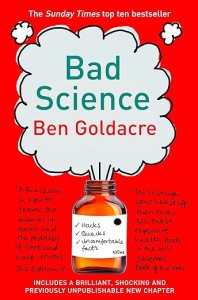
B is for Bad Science by Ben Goldacre – a splendid rant against the lack of education and knowledge about health with the inevitable result that we are unable to understand and judge for ourselves the effectiveness of the various treatments on offer. He describes how placebos work, just what homeopathy is, the misunderstandings about food and nutrition, and above all how to decide what works and what is quackery, scaremongering or downright dangerous. I found this easy to understand, apart from the statistics, which cause my eyes to glaze over at the mere sight of a graph, tables or columns of figures. Fortunately there’s not a lot of that in this book.
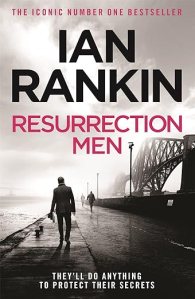
R is for Resurrection Men by Ian Rankin, an Inspector Rebus book. Resurrection Men isn’t about body-snatchers (as I wondered it might be), but about the cops who need re-training, including Rebus. They’re at Tullialian, the Scottish Police College and they are a tough bunch indeed, ‘the lowest of the low‘ as one of them, DI Gray tells a witness he is interrogating. To help them become team players – fat chance of that I thought – they’ve been given on old, unsolved case to work on. But Rebus was involved in the case at the time and begins to get paranoid about why is on the course. It’s a tough, gritty story and as with other Rebus books, there’s more than one investigation on the go, several, in fact, needing concentration to keep tabs on each one. I thought it was excellent.
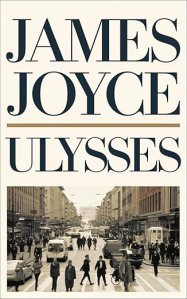
U is for Ulyssesby James Joyce – I have started this book and given up several times. I’d love to say I’ve finished it, but I haven’t. It deals with the events of one day in Dublin, 16th June 1904, now known as “Bloomsday”. The principal characters are Stephen Dedalus, Leopold Bloom and his wife Molly. Loosely modelled on the wanderings of Homer’s Ulysses as he travelled homewards to Ithaca, Joyce’s novel follows the interwoven paths of Stephen, estranged from his father and Leopold, grieving for his dead infant son. Written over a seven-year period, from 1914 to 1921, Ulysses has survived bowderlization, legal action and bitter controversy.
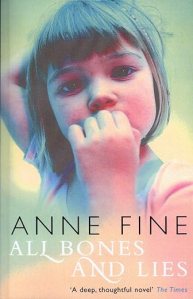
A is for All Bones and Lies by Anne Fine. I had high hopes I would like this book and that it would be a funny book – Anne Fine has won Awards for her children’s books and the film, Mrs Doubtfire, starring Robin Williams, is based on her book Madame Doubtfire. Although I didn’t enjoy the story, I did find it an indictment of how old age is looked upon by some people – an angry, unsettling and cruel look at our society.
Colin, works for the council and visits his aged mother, Norah. Norah is a grumbler, completely self-absorbed and constantly belittling Colin who can never please her. At times I found it confusing, just what was real and what was in his imagination and how the book hung together. Of course, everything goes wrong as events spiral out of Colin’s control.
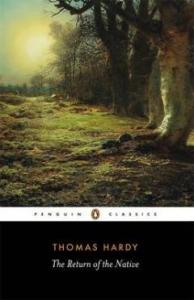
R is for The Return of the Native by Thomas Hardy, one of my favourite authors and I thoroughly enjoyed this book. It’s a dramatic and tragic love story. It has a large cast of characters, with lovers who change their affections throughout the novel and it’s full of intrigue with striking moonlit scenes, disputes, heated quarrels and misunderstandings, along with rustic characters and traditional celebrations, for example Guy Fawkes night, May Day and a Mummers’ play at Christmas. It’s not a book to read quickly and it transported me back to a time that ceased to exist before I was born, where time moved more slowly, ruled by the seasons and the weather, and with a clearly defined social hierarchy. And yet, I was surprised to find that youngsters were scribbling graffiti on ‘every gatepost and barn’s doors’, writing ‘some bad word or other’ so that a woman can hardly pass for shame some time.’
Y is for You Talkin’ To Me?: Rhetoric from Aristotle to Obama by Sam Leith a TBR. Sam Leith traces the art of argument from ancient Greece down to its many modern mutations. He introduces verbal villains from Hitler to Donald Trump – and the three musketeers: ethos, pathos and logos. He explains how rhetoric works in speeches from Cicero to Richard Nixon, and pays tribute to the rhetorical brilliance of AC/DC’s “Back In Black”. Before you know it, you’ll be confident in chiasmus and proud of your panegyrics – because rhetoric is useful, relevant and absolutely nothing to be afraid of.
The next link up will be on March 1, 2025 when the theme be Science Fiction
Spell the Month in Books is a linkup hosted by Jana on Reviews From the Stacks on the first Saturday of each month. The goal is to spell the current month with the first letter of book titles, excluding articles such as ‘the’ and ‘a’ as needed. That’s all there is to it! Some months there are optional theme challenges, such as “books with an orange cover” or books of a particular genre, but for the most part, any book you want to use is fair game!
The theme this month is New, interpreted as you wish: new releases, recent acquisitions, “new” in the title, etc, new-to-you books, new additions to your TBR list, recently published books, or something else that you connect with the word ‘New’.
These books are all recent additions to my TBR List or my Books I Want to Read List. The links go to the descriptions on Amazon.
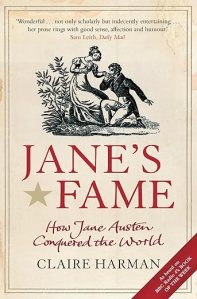
Award-winning biographer Claire Harman traces the growth of Jane Austen’s fame, the changing status of her work and what it has stood for – or has been made to stand for in English culture – in a wide-ranging study aimed at the general reader.
This is a story of personal struggle, family intrigue, accident, advocacy and sometimes surprising neglect as well as a history of changing public tastes and critical practices. Starting with Austen’s own experience as a beginning author (and addressing her difficulties getting published and her determination to succeed), Harman unfolds the history of how her estate was handled by her brother, sister, nieces and nephews, and goes on to explore the eruption of public interest in Austen in the last two decades of the nineteenth century, the making of her into a classic English author in the twentieth century, the critical wars that erupted as a result and, lastly, her powerful influence on contemporary phenomena such as chick-lit, romantic comedy, the heritage industry and film.
Part biography and part cultural history, this book does not just tell a fascinating story – it is essential reading for anyone interested in Austen’s life, works and remarkably potent fame.
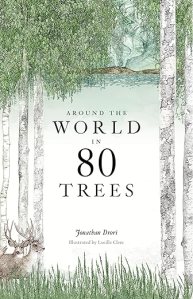
Bestselling author and environmentalist Jonathan Drori follows in the footsteps of Phileas Fogg as he tells the stories of 80 magnificent trees from all over the globe.
In Around the World in 80 Trees, Jonathan Drori uses plant science to illuminate how trees play a role in every part of human life, from the romantic to the regrettable. From the trees of Britain (this is a top search term), to India’s sacred banyan tree, they offer us sanctuary and inspiration – not to mention the raw materials for everything from aspirin to maple syrup. 25 February 2024
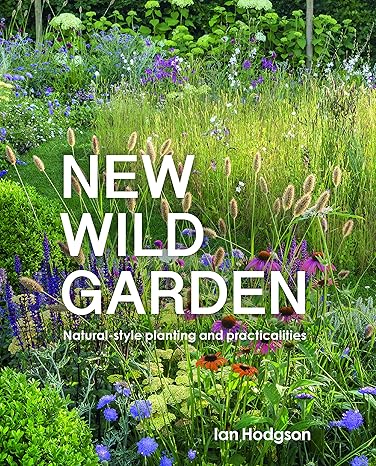
New Wild Garden combines new approaches to a more naturalistic design with the practical side of growing wildflowers and shows how to incorporate wildflowers, real meadows and a looser meadow-style planting into gardens and wild spaces.
With serious concern into the decline of pollinators and habitats, meadows are currently the focus of enormous creativity. Gardeners, wildlife lovers, professional designers and seed manufacturers are all pushing the envelope of what can be grown, the pictorial effects that can be achieved, and the benefits that this provides for gardeners and wildlife.
This book includes 15 step-by-step projects and an essential plant list, as well as offering inspiration to gardeners and an overview of the most influential movement in garden design over recent decades.
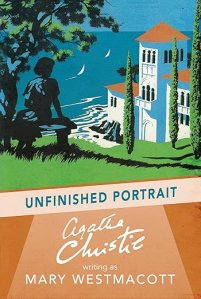
Bereft of the three people she has held most dear – her mother, her husband and her daughter – Celia is on the verge of suicide. Then one night on an exotic island she meets Larraby, a successful portrait painter, and through a long night of talk reveals how she is afraid to commit herself to a second chance of happiness with another person, yet is not brave enough to face life alone. Can Larraby help Celia come to terms with the past or will they part, her outcome still uncertain?
Famous for her ingenious crime books and plays, Agatha Christie also wrote about crimes of the heart, six bittersweet and very personal novels, as compelling and memorable as the best of her work.
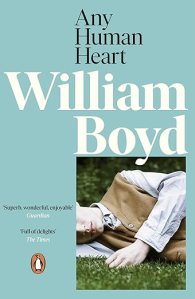
Every life is both ordinary and extraordinary but Logan Mountstuart’s contains more than its fair share of both. As a writer who finds inspiration with Hemingway and Virginia Woolf, a spy recruited by Ian Fleming and betrayed in the war and an art-dealer in ’60s New York, Logan mixes with the movers and shakers of his times. But as a son, friend, lover and husband, he makes the same mistakes we all do in our search for happiness.
Here, then, is the story of a life lived to the full – and a journey deep into a very human heart.
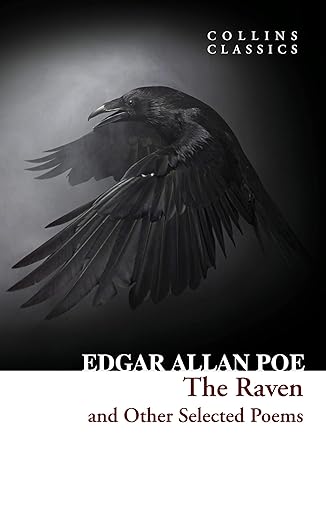
This selection of Edgar Allan Poe’s poetical works includes some of his best-known pieces, including the triumphant, gleeful ‘The Bells’, the tragic ode ‘Annabel Lee’ and his famous gothic tour de force, ‘The Raven’. Some present powerful, nightmarish images of the macabre and bizarre, while others have at their heart a profound sense of love, beauty and loss. All are linguistic masterpieces that demonstrate Poe’s gift for marrying rhythm, form and meaning.
An American writer of primarily prose and literary criticism, Edgar Allen Poe never ceased writing poetry throughout his turbulent life, and is today regarded as a central figure of American literary romanticism. He died in 1849.
Not only is it a fascinating insight into the life and customs of traveller people in the 1920s and 1930s, it is also a thought-provoking account of human strength and weakness, courage and cowardice, understanding and prejudice by a sensitive and entertaining writer.
The next link up will be on February 1, 2025 when the theme be Valentine’s Day/something sweet on the cover.
Spell the Month in Books is a linkup hosted by Jana on Reviews From the Stacks on the first Saturday of each month. The goal is to spell the current month with the first letter of book titles, excluding articles such as ‘the’ and ‘a’ as needed. That’s all there is to it! Some months there are optional theme challenges, such as “books with an orange cover” or books of a particular genre, but for the most part, any book you want to use is fair game!
The optional theme this month isChristmas or Nonfiction and I’ve chosen the Nonfiction option as I don’t read many Christmas-related books. The descriptions are taken from my posts on the books, where they exist.
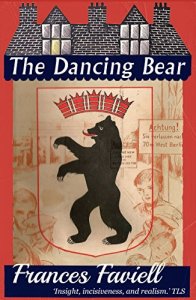
D is for The Dancing Bear by Frances Faviell, the pen name of Olivia Faviell Lucas, painter and author.
After the war, in 1946, she went with her young son, John, to Berlin where Richard Parker, her second husband, had been posted as a senior civil servant in the post-war British Administration. It was here that she befriended the Altmann family, which prompted her first book The Dancing Bear (1954), a memoir of the Occupation seen through the eyes of both occupier and occupied.It covers the years from Autumn 1946 to Autumn 1949, with an Epilogue dated Autumn 1953. Her memoir is mainly about her friendship with the Altmann family – Frau Maria Altmann, her husband, Oskar and her children, Ursula, who works for a group of American service men, Lilli, a ballet dancer and son, Fritz, who was a member of the Hitler Youth and is now involved in the Black Market. Their eldest son. Kurt. is missing in Russia. Berlin had been divided into four sectors by the Allies – Britain, the United States, France and the Soviet Union – and Frances is horrified by the conditions she found. There were deaths from hunger and cold as the winter approached and queues for bread, milk, cigarettes, cinemas, buses and trams.
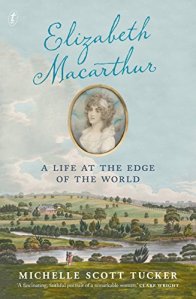
This is an extremely readable biography of a fascinating woman. It’s well researched and provides an insight into the early years of Australia’s colonial history. Elizabeth was born on 14 August 1766 in Devon, England and she married JohnMacarthur in October 1788. In June 1789 they sailed with their first child, Edward, to New South Wales where John joined his regiment, the New South Wales Corps, in the recently established colony of New South Wales.
For sixty years, Elizabeth ran the family farm in Parramatta, west of Sydney town – on her own during her husband’s long absences abroad, when she was responsible for the care of their valuable merino flocks, as well as the Camden Park estate and the direction of its convict labourers. By the time Macarthur came back from his second absence, he was overwhelmed by mental illness, and they spent the last few years of his life apart. He died in 1834. The house and gardens of her farm, aptly named ‘Elizabeth Farm’ is now an ‘access all areas’ museum. In 1850, she died in her daughter and son-in-law’s house at Watson’s Bay outside Sydney, overlooking the Pacific Ocean.
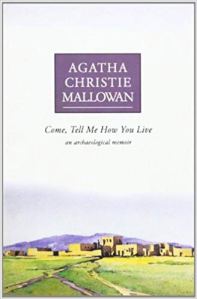
Agatha Christie had visited the Middle East in 1929 travelling on the Orient Express to Istanbul and then on to Damascus and Baghdad. She visited the excavations at Ur and returned there the following spring where she met archaeologist Max Mallowan – by the end of the summer they had decided to marry, which they did on 11 September 1930.
It’s her memoir in answer to her friends’ questions about what life was like when she accompanied Max on his excavations in Syria and Iraq in the 1930s. The emphasis in the book is on the everyday life on a dig and Agatha took an active part, helping to catalogue, label and clean the items they found as well as taking photographs and developing them. She also found time to spend on writing her books. So, although she gives a detailed account of how they worked, how they employed workmen for the excavations and servants who looked after Max and his team of archaeologists, there is not much about what they found.
She described the local people in her Epilogue as people, who know how to laugh and how to enjoy life, who are idle and gay, and who have dignity, good manners, and a great sense of humour, she also recorded their disputes: ‘Quarrelling is, in any case, almost continuous.‘ And ‘Syria is full of fiercely fanatical sects of all kinds, all willing to cut each other’s throats for the good cause! ‘
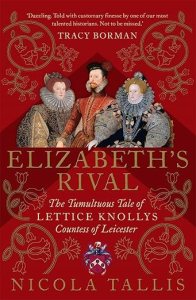
Cousin to Elizabeth I – and very likely also Henry VIII’s illegitimate granddaughter – Lettice Knollys had a life of dizzying highs and pitiful lows. Darling of the court, entangled in a love triangle with Robert Dudley and Elizabeth I, banished from court, plagued by scandals of affairs and murder, embroiled in treason, Lettice would go on to lose a husband and beloved son to the executioner’s axe. Living to the astonishing age of ninety-one, Lettice’s tale gives us a remarkable, personal lens on to the grand sweep of the Tudor Age, with those closest to her often at the heart of the events that defined it.
In the first ever biography of this extraordinary woman, Nicola Tallis’s dramatic narrative takes us through those events, including the religious turmoil, plots and intrigues of Mary, Queen of Scots, attempted coups, and bloody Irish conflicts, among others. Surviving well into the reign of Charles I, Lettice truly was the last of the great Elizabethans. (Amazon UK)
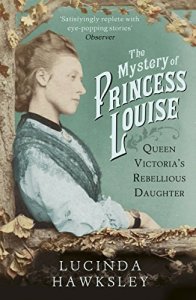
Princess Louise was Victoria’s sixth child – her fourth daughter, born on 18th March 1848. It was an agonising and terrifying birth in a year of revolution and rebellion, a time when royal families throughout Europe were being deposed and in Britain the working classes were agitating for higher pay, better working conditions and more legal rights. There is so much detail about her life in this book, packed with intrigues, scandals and secrets.
She had a difficult childhood, disliked and bullied by her mother and she often rebelled against the restrictions of life as a princess. She had an unhappy marriage to John Campbell, the Marquess of Lorne, later the 9th Duke of Argyll, a homosexual, and went with him to Canada in 1882 when he was appointed as Governor-General. Her relationship with Canada became a love-hate one, but began and ended with Canadian adoration.
The scandals arose about whether she had had an illegitimate child and her long term love affair with the sculptor Joseph Boehm. The mystery is still unresolved as Louise’s files in the Royal Archives are closed and her husband’s family archives are inaccessible.
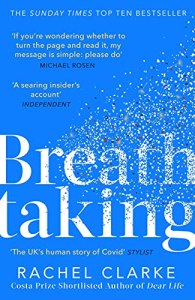
B is for Breathtaking by Rachel Clarke, a palliative care doctor.
Her book recounts her experiences during the first four months of 2020, when she worked on the Covid-19 wards in the Oxford University Hospitals system. Taken from her diary that she kept at the time it has an immediacy as she records her insomnia, her fears for her family and also the tremendous resilience, courage and empathy that she and the rest of the hospital staff had. Although it is a grim account, it is also uplifting to know the care they took of their patients and the attentiveness to their patients’ needs despite the fact that many of the staff were not trained in intensive care and had never dealt with anything like this before. Breathtaking records the compassion and kindness of numerous people, and pays tribute to both NHS staff and volunteers in dealing with such a distressing and immensely horrific situation.
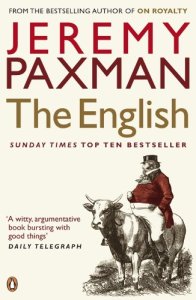
I like Paxman’s style of writing, I could almost hear him speaking as I read. He’s a person who has grown on me over the years and lately I’ve enjoyed his TV documentaries too. It’s always been entertaining to watch his interviews, even if I didn’t agree with his views – or his aggressive approach. It’s toned down in this book, but every now and then his acerbic nature comes across. He writes about food, sport, football hooligans, language, individualism, education, religion, ‘John Bull’, cities and the countryside – the English idyllic village, class structure and social tone, attitudes to women, business and trade to name but a few topics. It’s well researched and very readable, with a bibliography listing all the books he mentions plus others that presumably he has used. It seems there really is no such thing as ‘the English’ – we’re a mixture of all sorts, or as Paxman puts it, The English are a mongrel race‘. (page 59)
This is the story of a house and those who peopled it between the years 1930 and 1960. In 1930 Maxine Elliott, an American, commissioned the architect Barry Dierks to build the Chateau de l’Horizon on the land she had bought on a narrow stretch of rocks with a small promontory between Cannes and Juan-les-Pins. This is the part of the book I enjoyed the most, first of all about Maxine herself, then the description of the construction of the Chateaux and the years that Maxine owned it and lived there. Maxine really came into her own there as a superb hostess. Regular visitors included Winston Churchill, Cole Porter, Noel Coward, Somerset Maugham among many others – famous actors and actresses as well as members of the aristocracy and politicians.
The Duke and Duchess of Windsor, who lived nearby before the Second World War, were also visitors. The picture painted of them is not flattering – and there was much talk about how to address Wallis and whether the women should curtsy to her. By the time the War approached Maxine had lost her sparkle, suffering from ill health and she died in March 1940.
The Chateau was bought by Aly Khan, the Aga Khan’s heir presumptive at the time. There is quite a lot about his time there, his womanising, his marriage to Rita Hayworth and the social scene of the post-war period up to 1960. It is a fascinating and entertaining book about a pampered, luxurious and decadent world.
The next link up will be on January 4, 2025 when the theme will be: New; this could be new-to-you books, new additions to your TBR list, recently published books, or something else that you connect with the word ‘New’.
Spell the Month in Books is a linkup hosted by Jana on Reviews From the Stacks on the first Saturday of each month. The goal is to spell the current month with the first letter of book titles, excluding articles such as ‘the’ and ‘a’ as needed. That’s all there is to it! Some months there are optional theme challenges, such as “books with an orange cover” or books of a particular genre, but for the most part, any book you want to use is fair game!
The optional theme this month isFood or Autumn Decorations on the Cover. I’ve focused on books with Food on the covers and these are cookery books that in some instances I’ve been using for many years.
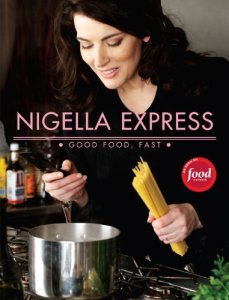
N is for Nigella Express: Good Food, Fast by Nigella Lawson. This is for everyone who loves good food, but just doesn’t have time or patience at the end of the day for a long, drawn-out cooking session. I’ve made several of the recipes in this book – for example Broccoli and Stilton Soup, using frozen broccoli. It cooks in minutes and is very tasty. There are chapters – Super Speedy Suppers, Get Up Go Breakfasts, Packed Lunches and Picnics, Instant Italian, Christmas Quickies and Store Cupboard SOS.
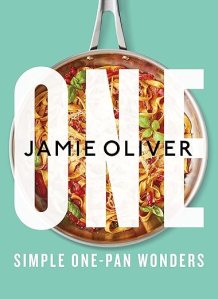
O is for One: Simple One-Pan Wonders by Jamie Oliver. It has over 120 recipes for tasty, fuss-free and satisfying dishes cooked in just one pan. What’s better: each recipe has just eight ingredients or fewer, meaning minimal prep (and washing up) and offering maximum convenience. With chapters including Veggie Delights, Celebrating Chicken, Frying Pan Pasta, Batch Cooking, Puds & Cakes, it all looks simply delicious.
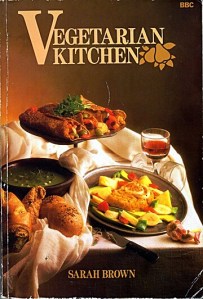
V is for Vegetarian Kitchen by Sarah Brown, a book I’ve had for years, after watching the BBC Vegetarian Kitchen series first broadcast in the late 1980s. I’ve made lots of these recipes – lasagne, casseroles, pasta dishes, flans, tarts and quiches, moussaka, vegetable dishes, and lovely cakes.
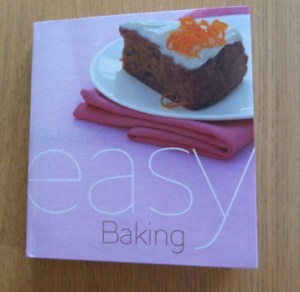
E is for Easy Baking by Marks and Spencer, 208 edition, recipes for Cakes, Slices & Bars, Cookies and Small Bakes, and Desserts. I’ve made the recipe for Sticky Toffee Cake, one of my favourite cakes. There are lots more recipes I’ll try making – including Jewel-topped Madeira Cake, which is topped with sliced glacé fruits glazed with honey, Chocolate Chip and Walnut Slices, Viennese Chocolate Fingers and Manhatton Cheesecake, which looks amazing with a digestive biscuit base and topped with a blueberry sauce.
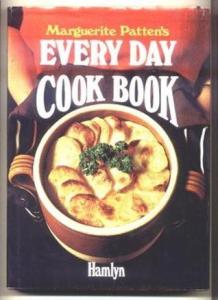
M is for Marguerite Patten’s Every Day Cook Book in colour. This was a wedding present gift in 1969. For many years it was my go-to cookery book, although I also used The Pennywise Cookbook by Lorna Walker, published by the Milk Marketing Board of England and Wales in 1974 – my mum bought it for me from her milkman. The Every Day Cook Book is much more comprehensive and has lots of recipes and colour photographs, including ‘meals for all occasions from family snacks to meals when you entertain’.
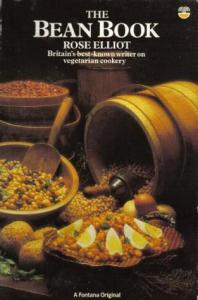
B is for The Bean Book by Rose Elliot, a paperback book. This is packed with recipes for cooking with beans and also pulses, described as ‘rich in protein, low in fat, high in fibre, an excellent source of iron, phosphorus and B vitamins‘. There are no photographs. Flicking through it now I don’t think I’ve tried many of the recipes, but the book falls open at the recipe for Haricot Bean and Vegetable Pie which I’ve ticked. I don’t remember making it. It looks time consuming, from soaking the beans, then simmering them with onions, garlic, and stock for an hour, then adding tomato puree and seasoning. Meanwhile you cook potatoes carrots and leeks. Put the leeks and carrots in the base of a casserole dish, top with the bean mixture, sprinkle with grated cheese, and top with mashed potato, sprinkle with more grated cheese, before baking for 30-40 minutes. So different from Nigella’s Express book!
Version 1.0.0
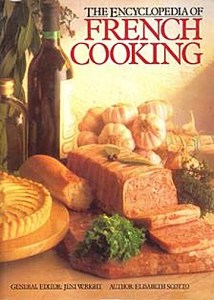
E is for The Encyclopedia of French Cooking by Elizabeth Scotto, a present from my sister. It has sections on the History of French cooking dividing it into la haute cuisine, the finest food by the great French chefs and la cuisine regionale, which is the simple cooking of the provinces or regions of France, cooked by French housewives. There are over 250 recipes, including delicious local specialities. The introduction includes information about French cheeses and other special ingredients, wine and cooking equipment. There is also a detailed glossary of French cooking terms and a map showing the different regions. After that the book is divided into the usual sections – Soups, Hors d’oeuvre & Salads, Fish and so on.
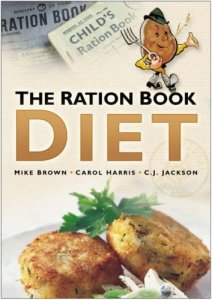
R is for The Ration Book Diet by Mike Brown, Carol Harris and C J Jackson This uses the wartime diet as a model and includes sixty recipes, some taken straight from cookery books of the time, with only minor adjustments, but most are new dishes created using the ingredients that were available during the war. Some of the recipes are taken straight from cookery books of the time, with some minor adjustments, but most are new recipes created using the range of ingredients available during the war. And there is also a chapter on Rationing, which was still in operation when I was a small child, although I didn’t know that at the time. It continued until 1954. This is a very interesting book. Throughout the book there are many illustrations and photographs from the war years. One good thing to come out of the war was that at the end of the war in 1945 as a nation we were healthier than we had ever been before or have been since.
The next link up will be on December 7, 2024 when the theme will be: Christmas or Nonfiction.
Spell the Month in Books is a linkup hosted by Jana on Reviews From the Stacks on the first Saturday of each month. The goal is to spell the current month with the first letter of book titles, excluding articles such as ‘the’ and ‘a’ as needed. That’s all there is to it! Some months there are optional theme challenges, such as “books with an orange cover” or books of a particular genre, but for the most part, any book you want to use is fair game!
The optional theme this month isYour Favourite Genre. I’ve chosen books combining two of my favourite genres historical fiction and crime fiction into Historical Crime Fiction.
The links in the titles of each book are to my own posts.
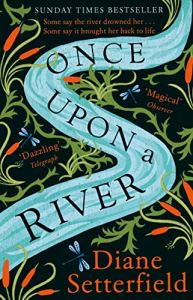
An intriguing and mystifying book that entranced me from the beginning to the end. The story has a timeless feel to it but it is set somewhere towards the end of the nineteenth century. It’s a mystery beginning in the Swan Inn at Radcot, an ancient inn, well-known for its storytelling, on the banks of the Thames. A badly injured stranger enters carrying the drowned corpse of a little girl. It’s mystifying as hours later the dead child, miraculously it seems, takes a breath, and returns to life. The mystery is enhanced by folklore, by science that appears to be magic, and by romance and superstition.
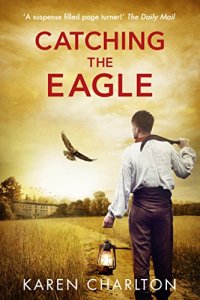
Set in Northumberland in 1809, this book is based on a true story – that of Karen Charlton’s husband’s ancestors. Kirkley Hall manor house is mysteriously burgled. When suspicion falls on Jamie Charlton, he and his family face a desperate battle to save him from the gallows. Stephen Lavender, the detective employed by Nathaniel Ogle, the owner of Kirkley Hall was also a real historical figure, a detective, who later became the Deputy Chief Constable of Manchester after the formation of the police force by Sir Robert Peel. This is the type of historical fiction that I like. The characters come across as real people, with real problems in a real time and place (Northumberland 1809 – 1811).
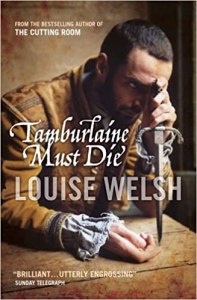
T is for Tamburlaine Must Die by Louise Welsh. This is a novella, written in the first person and set in May 1593. It’s a tense, dramatic story of the last days of Christopher Marlowe, playwright, poet and spy. Accused of heresy and atheism, his death is a mystery, although conjecture and rumours abound. It conveys the claustrophobic atmosphere of danger surrounding Marlowe; who can he trust, and who is behind the pseudonym of ‘Tamburlaine’, who posted a libellous handbill referencing Marlowe’s plays? In such a brief book Louise Welsh has managed to convey the political and the seedy underworld of the Elizabethan period, the dishonesty and love of intrigue, the dangers of the plague and the threat of war.
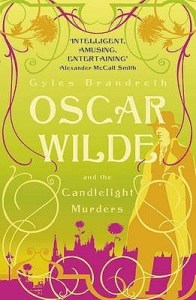
O is for Oscar Wilde and the Candlelight Murders by Gyles Brandreth. It’s set in 1889 – 1890, fin-de-siècle London and Paris and the mystery begins with Oscar Wilde finding the naked body of Billy Wood, a 16 year old boy in the candle-lit room in a small terraced house in Westminster, close to the Houses of Parliament. Billy’s throat has been cut and he is laid out as though on a funeral bier, surrounded by candles, with the smell of incense still in the air. It’s a combination of fiction and fact, with both real and imaginary characters. Wilde with the help of his friends Arthur Conan Doyle and Robert Sherard sets out to solve the crime.
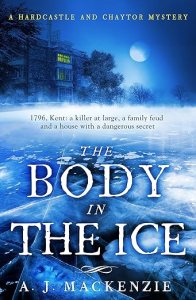
B is for The Body in the Ice by A J MacKenzie. It’s the 2nd Hardcastle and Chaytor Mystery set in Romney Marsh and the surrounding countryside in 1796-7. This is the period after the end of the American War of Independence, so Britain and America are at peace, but Britain and revolutionary France are at war with the constant threat of a French invasion. That winter was exceptionally harsh and cold and on Christmas Day in the village of St Mary in the Marsh, on the Kent coast Amelia Chaytor is spending the day with her friends, spinsters Miss Godfrey and Miss Roper when their maidservant bursts in and announces that she has seen someone at New Hall stables, frozen into the ice face down. Previously two men had been seen arriving at the Hall and at first it looks as though one of them has killed the other as they have both disappeared.
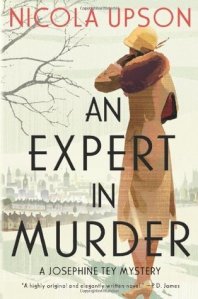
E is for An Expert in Murder, a very detailed and intricate murder mystery by Nicola Upson. She has a passion for the theatre and it shines through to great advantage in this book, set in the theatrical world of the 1930s – March, 1934 to be precise, as the final week of Josephine Tey’s play Richard of Bordeaux begins. Josephine is travelling from her home in Inverness to London by steam train when she meets an enthusiastic fan, Elspeth Simmons, who boarded the train at Berwick-upon-Tweed. They arrive in London, but then Elspeth is murdered and soon afterwards Bernard Aubrey, the theatre owner is also found dead, poisoned. Detective Inspector Archie Primrose, a friend of Josephine’s investigates. It’s a blend of fact and fiction.
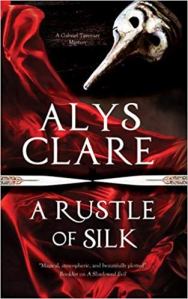
R is for A Rustle of Silk by Alys Clare, first in a series featuring Dr Gabriel Taverner, set in the early years of 17th century England. It begins in April 1603 when former ship’s surgeon Gabriel Taverner has settled in Devon near his family and he is trying to set up a new practice as a physician. The local coroner, Theophilus Davey asks him to examine a partially decomposed body found beside the river. At first it looks as though it was suicide, but on realising that it’s his brother-in-law, Jeromy, Gabriel and Theophilus are convinced that he was murdered.
The next link up will be on November 2, 2024 when the theme will be: Food or Autumn Decorations on the Cover






 BooksPlease