What are you currently reading? What did you recently finish reading? What do you think you’ll read next?
I don’t take part in this every week, but try to do so once a month.
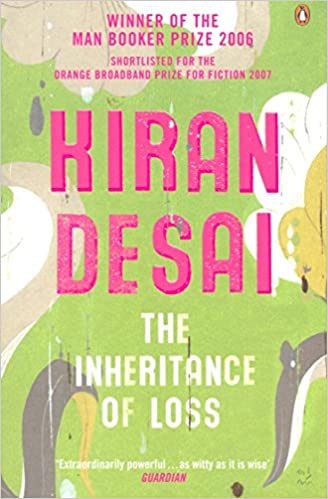
Currently I’m still reading The Inheritance of loss by Kiran Desai, the winner of several prizes including the 2006 Booker Prize. It’s a book I bought in 2007 and meant to read long before now. I’m reading this slowly but making good progress. It alternates between the characters in the Himalayas and their family members who are working in New York.
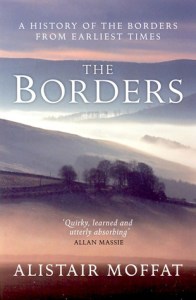
I’ve become engrossed in reading The Borders: A History of the Borders from Earliest Times by Alistair Moffat. My interest in this is that I live in the region and so is about places I know that covers the southern part of Scotland and the northern part of England. It is nonfiction but begins with an imaginary description of life in the most ancient times ‘where hunter-gatherers penetrated into the virgin interior‘, as it states in the synopsis. I particularly like the factual inserts in the text, commenting on historical details. I’ve read 34% on my Kindle, which may not sound very far into the book – but I’m now on page 289!
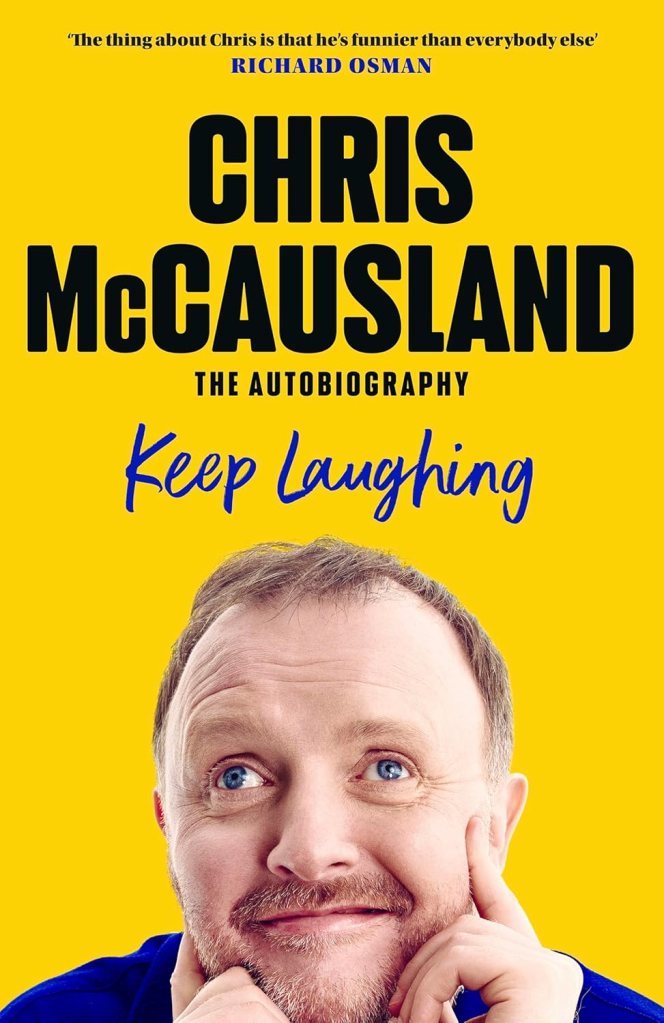
The last book I read was Keep Laughing: the Autobiography by Chris McCausland, a book I loved. For those who may not have heard of Chris, he is a stand- up comedian, who won BBC’s Strictly Come Dancing, with professional dancer Dianne Buswell, in 2024 and then a BAFTA award in 2025. He is blind due to retinitis pigmentosa. I’ll write more about later on. Here’s the description from Amazon:
Already one of the country’s best loved comedians, Chris McCausland’s participation on Strictly was a phenomenon. But how did the boy from Liverpool end up winning the hearts of the nation?
This is his remarkable story, of a twenty-five-year journey through sight loss to blindness. Of the highs, the lows and the downright hilarious along the way.
From being a lowlife conker dealer, and running his very own bootlegging empire (kind of) . . . to almost becoming a spy for MI5 (really) . . .
And of how he dared himself to try stand-up comedy, and ended up being brilliant on all your favourite TV shows.
Before, of course, he surprised himself, as well as everybody else, when he tried dancing on live TV in front of millions.
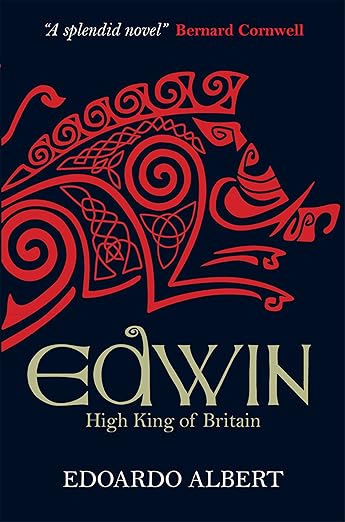
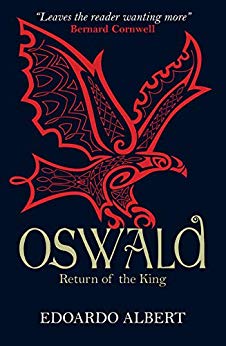
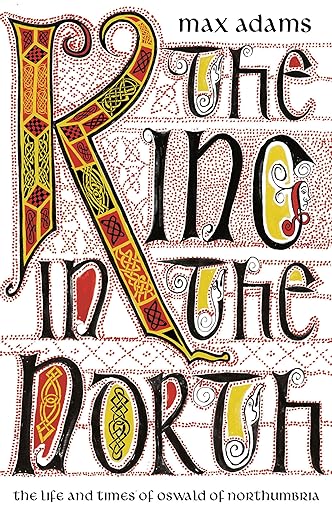
What will I read next? It could be one of these books because they are about some of the kings in the same area and period covered in Moffatt’s book.
Edwin: High King of Britain or Oswald: the Return of the King, both by Edoardo Albert, or The King in the North by Max Adams
But when the time comes to start another book it could be something completely different.
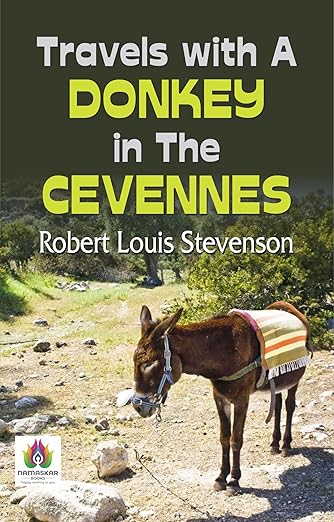
Namaskar Books| 2022| 124 pages| e-book| my own copy| 4*
The wild Cévennes region of France forms the backdrop for the pioneering travelogue Travels with a Donkey, written by a young Robert Louis Stevenson. Ever hopeful of encountering the adventure he yearned for and raising much needed finance at the start of his writing career, Stevenson embarked on the 120-mile, 12-day trek and recorded his experiences in this journal. His only companion for the trip was a predictably stubborn donkey called Modestine. Travels with a Donkey gives the reader a rare glimpse of the character of the author, and the journalistic and often comical style of writing is in refreshing contrast to Stevenson’s more famous works. (Goodreads)
This is a short nonfiction book, just right for both Nonfiction November and Novellas in November. It’s a book I’ve had since 2011 and I’m glad to say that it was well worth the wait. I enjoyed it on several levels, as travel writing, history of the Cévennes region, descriptive writing of the French countryside in 1878, observations of the local people and Stevenson’s thoughts on religion.
He began his journey through the Cévennes, a range of mountains in south-central France, at Le Monastier, a highland valley fifteen miles from Le Puy, where he spent a month preparing for his excursion southward to Alais (modern name, Alès) a distance of 120 miles.
I was struck by what he took with him – a sleeping sack, because he didn’t intend to rely on the hospitality of a village inn, and a tent was troublesome to pitch and then strike. Whereas, a sleeping sack was always ready to get into. His was extraordinary, made of green waterproof cart-cloth lined with blue ‘sheep’s fur’, nearly six feet square plus two triangular flaps to make a pillow at night and the top and bottom of the sack by day. It was a huge sort of long roll or sausage, large enough for two at a pinch. And that was why he bought a donkey from an old man. He called her Modestine because she was
a diminutive she-ass, not much bigger than a dog, the colour of a mouse, with a kindly eye and a determined under-jaw. There was something neat and high-bred, a quakerish elegance, about the rogue that hit my fancy on the spot.
But he soon discovered that unless he beat Modestine with a staff, which he didn’t want to do; it sickened him – and me too. He had to let her go at her own pace and patiently follow her and there were times when she just stopped and wouldn’t go any further. This was extremely slow and in the end he resorted to a goad, which was a plain wand with an eighth of an inch of pin which worked wonders on poor Modestine, who carried most of his equipment.
As well as his clothing, he also took his travelling wear of country velveteen, pilot coat and knitted spencer (a short waist-length, double-breasted, man’s jacket, originally named after GeorgeSpencer, 2nd Earl Spencer), some books, a railway rug, food, and a variety of other things including a revolver, a spirit lamp, lantern, candles, a jack-knife and large leather flask, a bottle of Beaujolais, a leg of cold mutton and a considerable quantity of black bread and white for himself and the donkey and of all things an eggbeater, which he later abandoned. He wasn’t travelling light!
The book is full of Stevenson’s descriptions of the countryside, such as this one of the landscape as he approached the Trappist Monastery of Our Lady of Sorrows:
The sun had come out as I left the shelter of a pine-wood, and I beheld suddenly a fine wild landscape to the south. High rocky hills, as blue as sapphires, closed the view, and between these lay ridge upon ridge, heathery, craggy, the sun glittering on veins of rock, the underwood clambering in the hollows, as rude as God made them at first.
Modestine had to stop at St Jean du Gard, as she just couldn’t travel any further and needed to rest. He sold her and continued on to Alais by diligence (a public stagecoach). He missed her after she was gone.
For twelve days we were fast companions; we had travelled upwards of a hundred and twelve miles, crossed several respectable ridges, and jogged along with our six legs by many a rocky and many a boggy road. After the first day, although sometimes I was hurt and distant in manner, I still kept my patience; and as for her, poor soul! she had come to regard me as a god. She loved to eat out of my hand. She was patient, elegant in form, the colour of an ideal mouse, and inimitably small.
And he wept!
I was rather surprised by how much I enjoyed this book, mainly because I didn’t know anything about it other than its title and thought it was perhaps fiction. Of course it isn’t and it’s full of detail of his hike that I haven’t mentioned in this review. I shouldn’t have been surprised as I’ve enjoyed other books by Stevenson – Treasure Island, Kidnapped and Catriona.
I read in Wikipedia that Stevenson’s purpose in making his journey ‘was designed to provide material for publication while allowing him to distance himself from a love affair with an American woman of which his friends and family did not approve and who had returned to her husband in California’, but without giving a source for this information. In his book Stevenson does say when talking to a monk he met at the Trappist Monastery that he was not a pedlar (as the monk thought), but a ‘literary man, who drew landscapes and was going to write a book’.
William Collins| 5 Jun 2025| 298 pages| e-book| Review copy| 4*
Description:
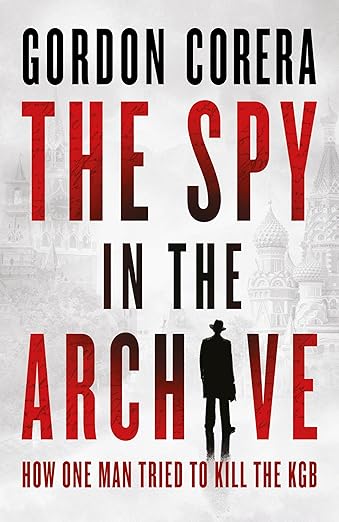
The Spy in the Archive tells the remarkable story of how Vasili Mitrokhin – an introverted archivist who loved nothing more than dusty files – ended up changing the world. As the in-house archivist for the KGB, the secrets he was exposed to inside its walls turned him first into a dissident and then a spy, a traitor to his country but a man determined to expose the truth about the dark forces that had subverted Russia, forces still at work in the country today.
Bestselling writer and historian Gordon Corera tells of the operation to extract this prized asset from Russia for the first time. It is an edge-of-the-seat thriller, with vivid flashbacks to Mitrokhin’s earlier time as a KGB idealist prepared to do what it took to serve the Soviet Union and his growing realisation that the communist state was imprisoning its own people. It is the story of what it was like to live in the Soviet Union, to raise a family and then of one man’s journey from the heart of the Soviet state to disillusion, betrayal freand defection. At its heart is Mitrokhin’s determination to take on the most powerful institution in the world by revealing its darkest secrets. This is narrative non-fiction at its absolute best.
I was intrigued by the title of The Spy in the Archive: How One Man Tried to Kill the KGB by Gordon Corera, a former BBC correspondent. It’s about Vasili Mitrokhin, a KGB archivist who defected to Britain in 1992. Mitrokhin, a quiet, introverted and determined man, was a reluctant defector, because whilst he loved Russia he came to hate the KGB and the Soviet system.
Working in the archives gave him access to top-secret documents and he decided to copy the files on slips of paper written in his own personal code, a type of shorthand. He wasn’t searched when he left work, although his bags were, so he hid the slips of paper in his clothing and typed them up in full at home. They included details about the Soviet secret service and the ‘illegals’, deep-cover operatives who penetrated Western society. These ‘illegals’ had been used to recruit and run the Cambridge spies, including Kim Philby in MI6 as well as atomic spies in America who had stolen the secrets of the Manhattan project and the bomb, and spies in other countries. He also noted the names of hundreds of agents in the west who had collaborated with the KGB. He wanted the documents he had copied to be made public, not just to the world but to open the Russians’ eyes to the corruption, torture and terror that was prevalent.
So, in 1992 he decided to take a sample of his notes first to the US embassy in Riga and Vilnius, but he was not taken seriously, He then went to the British embassy in Vilnius, where he was believed and eventually and handed over his secret archive.
It is a remarkable book about a remarkable man. It’s an in-depth account, that took me weeks to read as it’s not a book to read quickly. It’s fascinating and informative, as I know very little about Russian history post the 1917 Revolution (and not much before that either). It includes a glimpse of a young Vladimir Putin, aged sixteen, who already walked with a swagger as he announced to a KGB official that he wanted to get a job, on his way to becoming a Chekist. I think it’s worthy of note that in 2000 he was the first President to attend the Chekist day celebrations personally. Corera wrote that ‘only a few could understand what his [Putin’s] rise really signified. Mitrokhin, in his exile, was one of those. He understood the Chekist roots from which Putin had sprung and he understood what his rise meant.’
I’d never heard of Chekism before so that was particularly interesting for me. The word derives from Lenin’s creation in 1917 of the ‘All Russian Extraordinary Committee to combat Counter-Revolution and Sabotage’, known by its initials as the Cheka. It was more than a secret police force, it was ‘a revolutionary terrorist organisation’. The Lubyanka building in Moscow was its headquarters. It was formally dissolved in 1922 (the year Mitrokhin was born). But it was renamed several times and eventually emerged as the KGB. As Corera explains ‘the Cheka never died. It simply passed from the land of the living to the land of the dead, an otherworldly beast whose outward form would change but whose dark heart kept beating. … those who served the beast would always refer to themselves as the same thing: Chekists.’ Mitrokhin became a Chekist and that was what he came to hate and want to defeat by exposing to the Russian people and the world. He made it a condition of his defection that the documents he had copied should be made public
The final section concerning his exfiltration from Russia via Lithuania and Sweden reads like fiction. It was hard to believe that it is all true, as I began to wonder whether Mitrokhin and his family would make it to London, even though I knew that he did. Sadly, despite his determination that his work would reach the Russian people, that has not proved possible. He died from pneumonia in January 2004.
Many thanks to the publishers for a review copy via NetGalley. I enjoyed this fascinating and enlightening book.
Top 5 Tuesday was created by Shanah at Bionic Book Worm, and it is now being hosted by Meeghan at Meeghan Reads. For details of all of the latest prompts for January to March, see Meeghan’s post here.
Today the topic is Top 5 books with a place in the title – any location or place in a title is fine. I decided to feature books in different countries than my own (UK) – namely Italy, Japan, Greece, Russia and France.
These are all books I’ve read with links to my reviews.
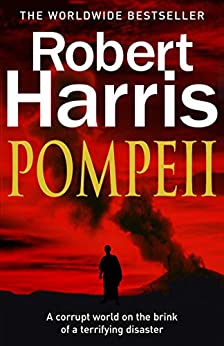
Pompeii by Robert Harris – one of my favourite books. Vesuvius erupts destroying the town of Pompeii and killing its inhabitants as they tried to flee the pumice, ash, searing heat and flames. The story begins just two days before the eruption of Mount Vesuvius and builds up to a climax.
Nagasaki : Life After Nuclear War by Susan Southard, nonfiction, an amazing, heart-wrenching book. On August 9th 1945, two days after the atomic bombing of Hiroshima, a five-ton plutonium bomb was dropped on the small coastal town of Nagasaki. The effects were cataclysmic. It follows the lives of five of the survivors from then to the present day.
This must be one of the most devastatingly sad and depressing books I’ve read and yet also one of the most uplifting, detailing the dropping of the bomb, which killed 74,000 people and injured another 75,000.
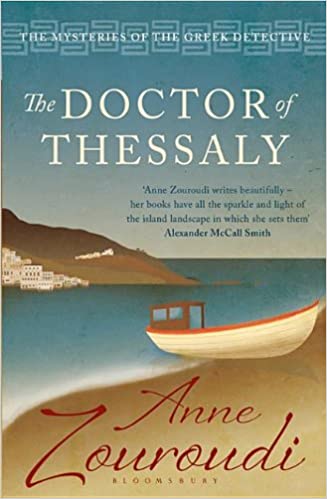
The Doctor of Thessaly by Anne Zouroudi, the third in the series of her Mysteries of the Greek Detective, about Hermes Diaktoros, a mysterious fat man. I was never sure who he worked for, or how he knew of the mystery to solve. Each of the books in the series features one of the Seven Deadly Sins – in this one it is envy, a tale of revenge and retribution.
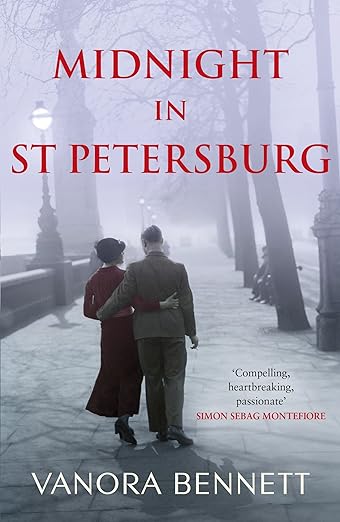
Midnight in St Petersburg by Vanora Bennett. It begins in 1911 in pre-revolutionary Russia with Inna Feldman travelling by train to St Petersburg to escape the pogroms in Kiev hoping to stay with her distant cousin, Yasha Kagan. The book is split into three sections – September – December 1911, 1916-17 and 1918-19 as Russia enters the First World War and is plunged into Revolution and life becomes increasingly dangerous for them all.
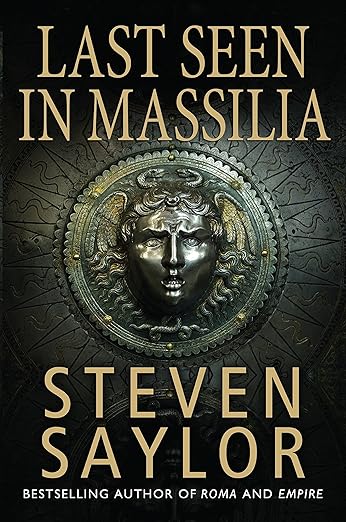
Last Seen in Massilia by Steven Saylor, historical crime fiction set in in Massilia – modern day Marseilles. It’s 49BC during Caesar’s siege of the city., featuring an investigator called Gordianus the Finder. I really liked all the details about Massilia – how it was governed – the hierarchy of the Timouchoi its ruling officials, its relationship to Rome, its traditions and customs. This is the 8th book in Saylor’s Roma Sub Rosa series set in ancient Rome.
Spell the Month in Books is a linkup hosted by Jana on Reviews From the Stacks on the first Saturday of each month. The goal is to spell the current month with the first letter of book titles, excluding articles such as ‘the’ and ‘a’ as needed. That’s all there is to it! Some months there are optional theme challenges, such as “books with an orange cover” or books of a particular genre, but for the most part, any book you want to use is fair game!
The optional theme this month isChristmas or Nonfiction and I’ve chosen the Nonfiction option as I don’t read many Christmas-related books. The descriptions are taken from my posts on the books, where they exist.
D is for The Dancing Bear by Frances Faviell, the pen name of Olivia Faviell Lucas, painter and author.
After the war, in 1946, she went with her young son, John, to Berlin where Richard Parker, her second husband, had been posted as a senior civil servant in the post-war British Administration. It was here that she befriended the Altmann family, which prompted her first book The Dancing Bear (1954), a memoir of the Occupation seen through the eyes of both occupier and occupied.It covers the years from Autumn 1946 to Autumn 1949, with an Epilogue dated Autumn 1953. Her memoir is mainly about her friendship with the Altmann family – Frau Maria Altmann, her husband, Oskar and her children, Ursula, who works for a group of American service men, Lilli, a ballet dancer and son, Fritz, who was a member of the Hitler Youth and is now involved in the Black Market. Their eldest son. Kurt. is missing in Russia. Berlin had been divided into four sectors by the Allies – Britain, the United States, France and the Soviet Union – and Frances is horrified by the conditions she found. There were deaths from hunger and cold as the winter approached and queues for bread, milk, cigarettes, cinemas, buses and trams.
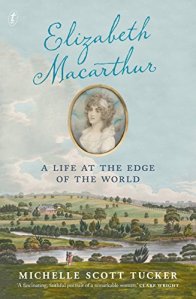
This is an extremely readable biography of a fascinating woman. It’s well researched and provides an insight into the early years of Australia’s colonial history. Elizabeth was born on 14 August 1766 in Devon, England and she married JohnMacarthur in October 1788. In June 1789 they sailed with their first child, Edward, to New South Wales where John joined his regiment, the New South Wales Corps, in the recently established colony of New South Wales.
For sixty years, Elizabeth ran the family farm in Parramatta, west of Sydney town – on her own during her husband’s long absences abroad, when she was responsible for the care of their valuable merino flocks, as well as the Camden Park estate and the direction of its convict labourers. By the time Macarthur came back from his second absence, he was overwhelmed by mental illness, and they spent the last few years of his life apart. He died in 1834. The house and gardens of her farm, aptly named ‘Elizabeth Farm’ is now an ‘access all areas’ museum. In 1850, she died in her daughter and son-in-law’s house at Watson’s Bay outside Sydney, overlooking the Pacific Ocean.
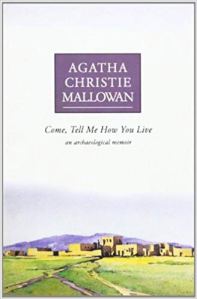
Agatha Christie had visited the Middle East in 1929 travelling on the Orient Express to Istanbul and then on to Damascus and Baghdad. She visited the excavations at Ur and returned there the following spring where she met archaeologist Max Mallowan – by the end of the summer they had decided to marry, which they did on 11 September 1930.
It’s her memoir in answer to her friends’ questions about what life was like when she accompanied Max on his excavations in Syria and Iraq in the 1930s. The emphasis in the book is on the everyday life on a dig and Agatha took an active part, helping to catalogue, label and clean the items they found as well as taking photographs and developing them. She also found time to spend on writing her books. So, although she gives a detailed account of how they worked, how they employed workmen for the excavations and servants who looked after Max and his team of archaeologists, there is not much about what they found.
She described the local people in her Epilogue as people, who know how to laugh and how to enjoy life, who are idle and gay, and who have dignity, good manners, and a great sense of humour, she also recorded their disputes: ‘Quarrelling is, in any case, almost continuous.‘ And ‘Syria is full of fiercely fanatical sects of all kinds, all willing to cut each other’s throats for the good cause! ‘
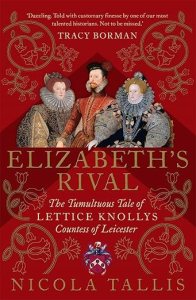
Cousin to Elizabeth I – and very likely also Henry VIII’s illegitimate granddaughter – Lettice Knollys had a life of dizzying highs and pitiful lows. Darling of the court, entangled in a love triangle with Robert Dudley and Elizabeth I, banished from court, plagued by scandals of affairs and murder, embroiled in treason, Lettice would go on to lose a husband and beloved son to the executioner’s axe. Living to the astonishing age of ninety-one, Lettice’s tale gives us a remarkable, personal lens on to the grand sweep of the Tudor Age, with those closest to her often at the heart of the events that defined it.
In the first ever biography of this extraordinary woman, Nicola Tallis’s dramatic narrative takes us through those events, including the religious turmoil, plots and intrigues of Mary, Queen of Scots, attempted coups, and bloody Irish conflicts, among others. Surviving well into the reign of Charles I, Lettice truly was the last of the great Elizabethans. (Amazon UK)
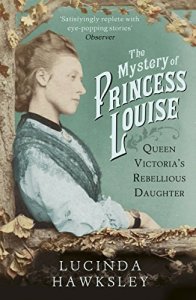
Princess Louise was Victoria’s sixth child – her fourth daughter, born on 18th March 1848. It was an agonising and terrifying birth in a year of revolution and rebellion, a time when royal families throughout Europe were being deposed and in Britain the working classes were agitating for higher pay, better working conditions and more legal rights. There is so much detail about her life in this book, packed with intrigues, scandals and secrets.
She had a difficult childhood, disliked and bullied by her mother and she often rebelled against the restrictions of life as a princess. She had an unhappy marriage to John Campbell, the Marquess of Lorne, later the 9th Duke of Argyll, a homosexual, and went with him to Canada in 1882 when he was appointed as Governor-General. Her relationship with Canada became a love-hate one, but began and ended with Canadian adoration.
The scandals arose about whether she had had an illegitimate child and her long term love affair with the sculptor Joseph Boehm. The mystery is still unresolved as Louise’s files in the Royal Archives are closed and her husband’s family archives are inaccessible.
B is for Breathtaking by Rachel Clarke, a palliative care doctor.
Her book recounts her experiences during the first four months of 2020, when she worked on the Covid-19 wards in the Oxford University Hospitals system. Taken from her diary that she kept at the time it has an immediacy as she records her insomnia, her fears for her family and also the tremendous resilience, courage and empathy that she and the rest of the hospital staff had. Although it is a grim account, it is also uplifting to know the care they took of their patients and the attentiveness to their patients’ needs despite the fact that many of the staff were not trained in intensive care and had never dealt with anything like this before. Breathtaking records the compassion and kindness of numerous people, and pays tribute to both NHS staff and volunteers in dealing with such a distressing and immensely horrific situation.
I like Paxman’s style of writing, I could almost hear him speaking as I read. He’s a person who has grown on me over the years and lately I’ve enjoyed his TV documentaries too. It’s always been entertaining to watch his interviews, even if I didn’t agree with his views – or his aggressive approach. It’s toned down in this book, but every now and then his acerbic nature comes across. He writes about food, sport, football hooligans, language, individualism, education, religion, ‘John Bull’, cities and the countryside – the English idyllic village, class structure and social tone, attitudes to women, business and trade to name but a few topics. It’s well researched and very readable, with a bibliography listing all the books he mentions plus others that presumably he has used. It seems there really is no such thing as ‘the English’ – we’re a mixture of all sorts, or as Paxman puts it, The English are a mongrel race‘. (page 59)
This is the story of a house and those who peopled it between the years 1930 and 1960. In 1930 Maxine Elliott, an American, commissioned the architect Barry Dierks to build the Chateau de l’Horizon on the land she had bought on a narrow stretch of rocks with a small promontory between Cannes and Juan-les-Pins. This is the part of the book I enjoyed the most, first of all about Maxine herself, then the description of the construction of the Chateaux and the years that Maxine owned it and lived there. Maxine really came into her own there as a superb hostess. Regular visitors included Winston Churchill, Cole Porter, Noel Coward, Somerset Maugham among many others – famous actors and actresses as well as members of the aristocracy and politicians.
The Duke and Duchess of Windsor, who lived nearby before the Second World War, were also visitors. The picture painted of them is not flattering – and there was much talk about how to address Wallis and whether the women should curtsy to her. By the time the War approached Maxine had lost her sparkle, suffering from ill health and she died in March 1940.
The Chateau was bought by Aly Khan, the Aga Khan’s heir presumptive at the time. There is quite a lot about his time there, his womanising, his marriage to Rita Hayworth and the social scene of the post-war period up to 1960. It is a fascinating and entertaining book about a pampered, luxurious and decadent world.
The next link up will be on January 4, 2025 when the theme will be: New; this could be new-to-you books, new additions to your TBR list, recently published books, or something else that you connect with the word ‘New’.
Spell the Month in Books is a linkup hosted by Jana on Reviews From the Stackson the first Saturday of each month. The goal is to spell the current month with the first letter of book titles, excluding articles such as ‘the’ and ‘a’ as needed. That’s all there is to it! Some months there are optional theme challenges, such as “books with an orange cover” or books of a particular genre, but for the most part, any book you want to use is fair game!
This month’s theme is History. I don’t think that the books you choose have to be books that you’ve read, but where possible I like to do that, or at least choose books that I want to read and and this month I’ve managed to find enough nonfiction books about different aspects of history that I have read with titles beginning with each of the letters to spell JUNE.
I think it was a foregone conclusion that I would really enjoy historian Lucy Worsley’s Jane Austen at Home. I have loved Jane Austen’s books for many years, going back to when I was about 12 and read Pride and Prejudice for the first time. I’d previously read Carol Shields’s biography Jane Austen and Claire Tomalin’s Jane Austen: a Life so there was really very little I learned reading Jane Austen at Home that surprised me or that I hadn’t known before.
I suppose what was new to me was the emphasis on what home life was like during the period of Jane’s life and seeing photos of the houses and places that she had lived or stayed in as a visitor. And I think I gained a better understanding of the social history of Georgian England and of Jane’s wider family connections and what her family and friends thought of her both as a person and as an author.
Jane Austen at Home is both very readable and very detailed, which is not an easy thing to achieve. There is an extensive section at the end of the book, listing sources, a bibliography, notes on the text and an index. There are two sections of colour plates.
U is for Under the Tuscan Sun by Frances Mayes
In this book the author describes how she bought and renovated an abandoned villa. It’s full of the pleasures of living in Tuscany – the sun, the food, the wine and the local people. It makes me want to do the same! It’s nothing like the film they made of it – the book is much better. Bella Tuscany is the follow up book with more details about the restoration of the villa and its garden, plus recipes.
I read this book before I began blogging, so no review. And I no longer have my copy, which just shows the dangers of recycling books as I’d love to re-read it!
The facts are horrendous – on August 9th 1945, two days after the atomic bombing of Hiroshima, a five-ton plutonium bomb was dropped on the small coastal town of Nagasaki. The effects were cataclysmic.
This must be one of the most devastatingly sad and depressing books I’ve read and yet also one of the most uplifting, detailing the dropping of the bomb, which killed 74,000 people and injured another 75,000. As the subtitle indicates this book is not just about the events of 9 August 1945 but it follows the lives of five of the survivors from then to the present day. And it is their accounts which make this such an emotive and uplifting book, as it shows their bravery, how they survived, and how they were eventually able to tell others about their experiences. Along with all the facts about the after effects of the bombing, the destruction, and radiation, it exposes the true horror of atomic warfare, making it an impressive and most compelling account of pain, fear, bravery and compassion.
This is an excellent biography because it is thorough, well researched and it provides an insight into the early years of Australia’s colonial history. It is an extremely readable biography of a fascinating woman. Elizabeth was born on 14 August 1766 in Devon, England and she married JohnMacarthur in October 1788. In June 1789 they sailed with their first child, Edward, initially on the Neptune, and then on the convict ship Scarborough to New South Wales where John joined his regiment, the New South Wales Corps, in the recently established colony of New South Wales.
For sixty years, Elizabeth ran the family farm in Parramatta, west of Sydney town – on her own during her husband’s long absences abroad, four years during her husband’s first absence, and nine years during the second, when she was responsible for the care of their valuable merino flocks, as well as the Camden Park estate and the direction of its convict labourers.
The book is packed with detail about the landscape, the indigenous population, the disputes between various sections of the colony, about farming and the establishment of the wool industry, not forgetting the details of the Macarthur family members, illnesses, and the position of the women within the community.
The next link up will be on July 6, 2024 when the optional theme will be Stars/Sky





 BooksPlease