From the Archives

Simon at Stuck in a Book has a series of posts in which he revisits his old reviews. I think it’s a good idea and thought I’d do something similar, because one of my reasons for writing this blog is to help me remember what I’ve read.

Like Simon I’ve been writing a blog since 2007 so I’m kicking off by looking back into my archives at Historical Fiction books – one from each year, with links to my posts, a short summary and a quotation from my review:

1) Here Lies Arthur by Philip Reeve – an adventure story, set in Britain in AD 500, telling the story of King Arthur.

From my review: ‘The picture Reeve paints is of a turbulent and harsh world, with Arthur as a war-leader in a land where opposing war-bands fight for supremacy.’

2) Winter in Madrid by C J Sansom – set in Spain during the Spanish Civil War and the first two years of the Second World War.

From my review: ‘an action packed thrilling war/spy story and also a moving love story and historical drama all rolled into this tense and gripping novel.’

3) The Company of Liars by Karen Maitland – Set in England in 1348 it tells the tale of a group of people fleeing across the country as the plague moves inland from the ports.

From my review: ‘As you would expect from the title the members of the group, a conjuror, a one-armed storyteller, a musician and his apprentice, a young couple on the run, a mid-wife and a strange child who can read the runes are all liars, with secrets that gradually exposed as they journey on. ‘

4) Wolf Hall by Hilary Mantel – the story of Thomas Cromwell, the son of a blacksmith, and his political rise, set against the background of Henry VIII’s England.

From my post: ‘What I found most enjoyable was the way this book transported me back to that time, with Mantel’s descriptions of the pageantry, the people, the places and the beliefs and attitudes of the protagonists.’

5) Fair Exchange by Michèle Roberts – set in England and France in the late 1700s/early 1800s during the French Revolutionary period.

From my post: ‘there is a fair bit in this book about women’s rights and their place in society, and about the question of nurture versus nature in bringing up children.’

Over to you now – which great historical fiction books have you enjoyed?

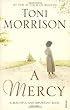
A Mercy by Toni Morrison

Toni Morrison is the author of ten novels, from The Bluest Eye(1970) to A Mercy (2008). She has received the National Book Critics Circle Award and the Pulitzer Prize. In 1993 she was awarded the Nobel Prize in Literature. She lives in New York.

I recently read A Mercy. I found it a difficult book, both to understand and to appreciate. In fact once I’d read it I went back to the beginning and read it again, almost straight away and then found myself turning back to the first page again.The narration moves between the characters and at times I wasn’t sure whose voice I was reading and had to backtrack several times. Even on the second reading, I was not sure, even though the characters have different ways of talking.

From the back cover:

On the day that Jacob, an Anglo-Dutch trader and adventurer, agrees to accept a slave in lieu of payment of a debt from a plantation owner, little Florens’ life changes. With her intelligence and passion for wearing the cast-off shoes of her mistress Florens has never blended into the background and now at the age of eight she is taken from her family to begin a new life. She ends up part of Jacob’s household, along with his wife Rebekka, Lina their Native American servant and the strange and melancholy Sorrow who was rescued from a shipwreck. Together these women face the trials of their harsh environment as Jacob attempts to carve out a place for himself in the brutal landscape of the north of America in the seventeenth century.

It’s definitely character-based, and the plot is hard to follow (at least I thought so), although on the second reading it was much clearer. It begins with a confession:

Don’t be afraid. My telling can’t hurt you in spite of what I have done and I promise to lie quietly in the dark – weeping perhaps or occasionally seeing the blood once more – but I will never unfold my limbs to rise up and bare teeth.

and it was only at the end that I could understand the beginning.The writing is lovely, the mood is melancholy and touching.The setting is America in the 1680s – 1690. It’s a land still largely unknown territory that regularly changed hands, a land where you couldn’t be sure who was friend or foe. The themes of this novel are slavery, racism and religion, with a mighty emphasis on motherhood and the position of women in that time and place.

A Mercy is not my favourite Toni Morrison book and I wouldn’t recommend it to anyone who hasn’t read any of her other books, but it is thought provoking and moving. I prefer Song of Solomon and Beloved.

  • Source: my own copy
  • Rating: 3/5

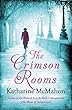
Crime Fiction Alphabet: K is for The Crimson Rooms by Katharine McMahon

Kerrie at Mysteries in Paradise hosts the Crime Fiction Alphabet each week. It has now reached the letter K and my choice is Katharine McMahon’s book The Crimson Rooms.

I bought The Crimson Rooms a couple of years ago because I’d enjoyed reading Katharine McMahon’s The Rose of Sebastopol, which I read in 2008. It’s been sitting with the other to-be-reads on my bookshelves since then and I hadn’t realised that this is not only historical fiction, but also historical crime fiction.

It’s set in London in 1924, with Britain still coming to terms with the aftermath of the First World War. Evelyn Gifford, one of the few pioneer female lawyers, lives at home with her mother, aunt and grandmother, still mourning the death of her brother James in the trenches. Evelyn is woken in the early hours one morning to find Meredith and her child, Edmund, aged 6 on the doorstep, claiming that Edmund is James’s son. Evelyn and the other women are thrown into confusion as Meredith upsets their memories of James.

Meanwhile Evelyn carries on with her work, taking on the case of Leah Marchant, who wants to get back her children who had been taken into care. She was accused of trying to kidnap her own baby. It’s early days for women to be accepted as lawyers and Evelyn struggles to defend Leah who distrusts her and wants Daniel Breen, Evelyn’s boss to defend her.

She is also involved in defending Stephen Wheeler, an old schoolfriend of Daniel’s. Stephen is accused of murdering Stella, his young wife of a fortnight. It’s obvious to Evelyn and Daniel that Stephen is innocent, but at first he refuses to talk and defend himself. After a humiliating experience in court, barrister Nicholas Thorne offers to help Evelyn much to her dislike. But she finds herself drawn to him and wonders how much she can trust him.

I was thoroughly engrossed in this book. It was not just the court cases, I was fascinated by the account of early women lawyers, represented by Evelyn, the central character. It clearly shows the prejudice these women had to overcome just to qualify as lawyers, never mind the difficulties of persuading law firms to employ them and clients to accept them. Katherine McMahon has included a Chronology of Women in Law from 1875 to 1950 at the back of the book and an analysis of why it took so long for women to be accepted. Evelyn is based on Carrie Morrison, who was the first British woman to be become a solicitor.

It’s not just about crime and the court cases, it’s also a novel about the way people’s lives were affected by the War, how men were unable to resume their old lives, some damaged by shell-shock and the horrors they had taken part in, or witnessed during the war. Women, too, had their lives completely changed, so many had their marriage prospects destroyed, and were replaced by work, becoming career women.

Katherine McMahon has done extensive research of the period but it all sits easily within the narrative. It’s beautifully written, full of imagery that creates a vivid picture of the setting and the characters. For example, she describes the moon:

… an extraordinary crescent moon which had, in the last few minutes, risen above the river, with the old moon burdening its lap like a fat round cushion.

and I like this description of one of the characters as she walked from the garden towards the house,

… the trailing hem of her robe a pool of ivory, her hair a swathe of black silk. (page 207)

Katharine McMahon’s other books are:

  • The Alchemist’s Daughter
  • A Way through the Woods
  • Footsteps
  • Confinement
  • After Mary
  • The Season of Light

More details are on her website.

Classics Challenge 2012 – July Prompt

This year I am taking part in A Classics Challenge hosted by Katherine of November’s Autumn. The goal is to read at least seven classics in 2012 and every month Katherine is posting a prompt to help us discuss the books we are reading. July’s prompt is about

Lasting Impressions

Choose one of the Classics you’ve read this year or are currently reading.

What is a moment, quote, or character that you feel will stay with you? Years from now, when some of the details have faded, that lasting impression the book has left you with? What is it? –or why did it fail to leave an impression?

I wondered which classic to choose for this post, but I knew the answer as soon as I read the the words ‘lasting impressions’ had to be either Pride and Prejudice or A Tale of Two Cities. Both of these are books I first read when I was a teenager, so I know the lasting impressions they have made on me, both the characters and lots of quotations. How could I ever forget Elizabeth Bennet and Mr Darcy, or Charles Darnay and the wonderful Sydney Carton? And the opening sentences of both are so memorable.

From Pride and Prejudice:

It is a truth universally acknowledged, that a single man in possession of a good fortune, must be in want of a wife.

and from A Tale of Two Cities:

It was the best of times, it was the worst of times, it was the age of wisdom, it was the age of foolishness, it was the epoch of belief, it was the epoch of incredulity, it was the season of Light, it was the season of Darkness, it was the spring of hope, it was the winter of despair, we had everything before us, we had nothing before us, we were all going direct to Heaven, we were all going direct the other way.

Whereas I’ve read  Pride and Prejudice several times I’d only ever read A Tale of Two Cities once before and my memory of it was that it was about the French Revolution and the sacrifice that Sydney Carton made to save Charles Darnay from the Guillotine, with these words, which close the book:

It is a far, far better thing that I do, than I have ever done; it is a far, far better rest that I go to than I have ever known.

Reading the book this time round the character of Sydney Carton is much clearer in my mind, with several vivid images of his slovenly appearance and drunken behaviour. He is in fact a brilliant barrister, but also an alcoholic, lacking self confidence. He is called a ‘jackal‘, who worked for his fellow barrister, Stryver, who then got the credit.

Sydney Carton, idlest and most unpromising of men, was Stryver’s great ally. What the two drank together, between Hilary Term and Michaelmas, might have floated a king’s ship. Stryver never had a case in hand, anywhere, but Carton was there, with his hands in his pockets, staring at the ceiling of the court; they went to the same Circuit, and even there they prolonged their usual orgies late into the night, and Carton was rumoured to be seen at broad day, going home stealthily and unsteadily to his lodgings, like a dissipated cat. At last, it began to get about, among such as were interested in the matter, that although Sydney Carton would never be a lion, he was an amazingly good jackal, and that he rendered suit and service to Stryver in that humble capacity.

To help him overcome his drunkenness he soaked towels in a bowl of cold water and after wringing them out folded them on his head, and whilst working continued drinking wine, brandy and rum with sugar and lemons.

Two or three times, the matter in hand became so knotty, that the jackal found it imperative on him to get up, and steep his towels anew. From these pilgrimages to the jug and basin he returned with such eccentricities of damp headgear as no words can describe; which were made the more ludicrous by his anxious gravity.

He is moody and morose, and when he falls in love with Lucie Manette, he realises he is a wastrel, a ‘drunken, poor creature‘, that she can never return his love and that he can only ever bring her to misery, sorrow and repentance, blight and disgrace her, pulling him down with himself. 

It is Carton’s resemblance to Charles Darnay that enables him to martyr himself in Darnay’s place because of his love for Lucie. It is these two images that will remain with me – that of the dissolute man, who despite his drunkenness, worked though the night with his head wrapped in damp towels, and the man as he approached his death on the Guillotine with:

… the peacefullest man’s face ever beheld there. Many added that he looked sublime and prophetic.

The Secret River by Kate Grenville: a Book Review

Every now and then I read a book that completely captivates me and transports me to another world and The Secret River by Kate Grenville is one of those books. I know a book is a good book for me if I abandon any other books I’m reading and can’t wait to get back to it each time I have to put it down. This is one of those books.

It begins:

The Alexander, with its cargo of convicts, had bucked over the face of the ocean for the better part of a year. Now it had fetched up at the end of the earth. There was no lock on the door of the hut where William Thornhill, transported for the term of his natural life in the Year of Our Lord eighteen hundred and six, was passing his first night in His Majesty’s penal colony of New South Wales. There was hardly a door, barely a wall: only a flap of bark, a screen of sticks and mud. There was no need of lock, of door, of wall: this was a prison whose bars were ten thousand miles of water.

This is historical fiction, straight-forward story-telling following William Thornhill from his childhood in the slums of London to Australia. He was a Thames waterman transported for stealing timber; his wife,Sal and child went with him and together they make a new life for themselves. It’s about struggle for survival as William is eventually pardoned and becomes a waterman on the Hawkesbury River and then a settler with his own land and servants.

The novel raises several issues – about crime and punishment, about landownership, defence of property, power, class and colonisation. The settlers take land owned by the ‘blacks’ – the Aborigines – with the inevitable resulting conflicts and atrocities on both sides. It begins with confrontation between William and the ‘blacks’ as William tries to negotiate a relationship with the Aborigines who unknown to him owned the land he had been granted. But it’s not the only conflict he has to deal with because he also has to contend with some of the  other English settlers on neighbouring land who have a much more violent attitude towards the Aborigines. Although William has a longing for the land he does not have the same identification with it as the Aborigines do:

‘˜Jack slapped his hand on the ground so hard a puff of dust flew up and wafted away.  This me, he said. My place. He smoothed the dirt with his palm so it left a patch’¦ Sit down hereabouts.’ …

… there was an emptiness as he [Thornhill] watched Jack’s hand caressing the dirt. This was something he did not have: a place that was part of his flesh and spirit. (page 344)

It’s a well-paced narrative with good descriptive writing setting the scenes vividly in their locations. It’s rhythmic expressing moods, the differences in cultures and the mounting tension. There are some stereotypical characters, but the main characters, William in particular, are convincing. Their dilemmas they face come over as real as they struggle to come to terms with their situations.

I found this book difficult to put down and it has lived in my mind for days – a dramatic and vivid story and thought -provoking as well. There are two more novels by Kate Grenville about Australia’s history – The Lieutenant, published in 2008, and Sarah Thornhill, published earlier this year. I hope they’re as good.

Bring Up the Bodies by Hilary Mantel

Synopsis from the book cover:

By 1535 Thomas Cromwell, the blacksmith’s son, is far from his humble origins. Chief Minister to Henry VIII, his fortunes have risen with those of Anne Boleyn, Henry’s second wife, for whose sake Henry has broken with Rome and created his own church. But Henry’s actions have forced England into dangerous isolation, and Anne has failed to do what she promised: bear a son to secure the Tudor line. When Henry visits Wolf Hall, Cromwell watches as Henry falls in love with the silent, plain Jane Seymour. The minister sees what is at stake: not just the king’s pleasure, but the safety of the nation. As he eases a way through the sexual politics of the court, its miasma of gossip, he must negotiate a ‘˜truth’ that will satisfy Henry and secure his own career. But neither minister nor king will emerge undamaged from the bloody theatre of Anne’s final days.

Some thoughts:

Bring Up the Bodies by Hilary Mantel is described on the sleeve of the book cover as ‘a speaking picture, an audacious vision of Tudor England that sheds its light on the modern world.’

It is, of course, the sequel to Wolf Hall and I was too keen to read it to wait for the paperback to come out. I finished it a while ago and have been mulling over in my mind what to write about it. On balance, I didn’t enjoy it as much as Wolf Hall and I had just a little feeling of anti-climax about it, but then the novelty of Wolf Hall for me was the way Hilary Mantel not only brought the Tudor world alive but also how she overturned my ideas of both Thomas Cromwell and Sir Thomas More. As there is no denying that I knew that Anne Boleyn was not going to make a go of her marriage to Henry VIII, so there was little drama there for me. I didn’t even want her to escape her fate.

And yet, Bring Up the Bodies is still a brilliant book. It’s beautifully written, even if it is in the present tense, full of colour and detail so that there is no doubt that this is 16th century England, with vivid descriptions of the people, buildings, fabrics, and landscapes of both town and countryside.

One of the things that stood out for me in Wolf Hall was just how much of a family man Cromwell was, how much he loved and protected them. In Bring Up the Bodies, my overall impression of him is as a politician, a schemer and an implacable enemy. Right from the start he’s in the thick of the action as he and Henry are out hunting, flying their hawks. Cromwell’s are named after his dead daughters, a reminder of him as the family man, but immediately we are made aware that he is very much in the king’s service.  

He never spares himself in the king’s service, he knows his worth and his merits and makes sure of his reward: offices, perquisites and title deeds, manor houses and farms. He has a way of getting his way, he has a method; he will charm a man or bribe him, coax him or threaten him, he will explain to a man where his true interests lie, and he will introduce that same man to aspects of himself he didn’t know existed. … he is distinguished by his courtesy, his calmness and his indefatigable attention to England’s business.  (pages 6-7)

Truly, a man not a man to ignore. A man to be wary of, and even though Henry fondly and familiarly calls him ‘Crumb’, a man needing to take great care of himself. Anne Boleyn, in contrast, by the end of the book is ‘ a tiny figure, a bundle of bones’  when she is brought to the scaffold. But Cromwell is not deceived:

She does not look like a powerful enemy of England, but looks can deceive. If she could have brought Katherine to this same place, she would have. If her sway had continued, the child Mary might have stood here; and he himself of course, pulling off his coat and waiting for the coarse English axe. (page 395)

However, this is not the end of Cromwell:

Summer, 1536: he is promoted Baron Cromwell. He cannot call himself Lord Cromwell of Putney. He might laugh. However. He can call himself Baron Cromwell of Wimbledon. He ranged all over those fields, when he was a boy.

The word ‘however’ is like an imp coiled beneath your chair. It induces ink to form words you have not yet seen and lines to march across the page and overshoot the margin. There are no endings. If you think so you are deceived as to their nature. They are all beginnings. Here is one. (page 407)

And so, on to the next book …