Sunday Selection: Sisters

One of my aims this year is to reduce my massive backlog of unread books, hence the reason for joining the Mount TBR Reading Challenge.  I’m not doing too badly as so far I’ve read 19, but it’s still only a drop in the ocean. In June I wrote about some of the books I’ve owned for more than a year and today I’m looking at some more the books on the list – in some cases I’ve had these books for several years! It’s about time I read at least one of these sometime soon. I don’t like to plan too far ahead what I’m going to read but I like to have some titles in mind.

When I looked through my books I realised that I was picking out books about SISTERS:

First up for consideration are two non fiction books (the blurbs are extracts from Amazon/Goodreads):

The Sisters Who Would Be Queen: The tragedy of Mary, Katherine and Lady Jane Grey by Leanda de Lisle – this is the story of the tumultuous lives of Lady Jane Grey, known as the ‘Nine-Day Queen’ and her sisters. I’ve had this book for 3 years. I was full of enthusiasm when I first bought it because I’d been reading novels about the Tudor period and thought I’d balance them with non fiction.

Lady Jane Grey is an iconic figure in English history. Misremembered as the ‘Nine Days Queen’, she has been mythologized as a child-woman destroyed on the altar of political expediency. Exploding the many myths of Lady Jane’s life and casting fresh light onto Elizabeth’s reign, acclaimed historian Leanda de Lisle brings the tumultuous world of the Grey sisters to life, at a time when a royal marriage could gain you a kingdom or cost you everything.

The Mitfords: Letters Between Six Sisters by Charlotte Mosley – a selection of unpublished letters between the Mitford sisters – Nancy, Pamela, Diana, Unity, Jessica and Deborah. I’ve had this book for 5 years! I think two of the reasons I’ve not read it before now is that it is so long – over 800 pages and it’s in a very small font.

Carefree, revelatory and intimate, this selection of unpublished letters between the six legendary Mitford sisters, compiled by Diana Mitford’s daughter-in-law, is alive with wit, passion and heartbreak. The letters chronicle the social quirks and political upheavals of the twentieth century but also chart the stormy, enduring relationships between the uniquely gifted ‘and collectively notorious Mitford sisters’. 

And then some novels featuring sisters:

Bunner Sisters by Edith Wharton. I’ve not had this one for that long – just since last November. I down loaded it on my Kindle because it’s a free book and I thought maybe I should try another book by Edith Wharton, having failed to finish The House of Mirth. At the time I was not in the mood for it.
In the days when New York’s traffic moved at the pace of the drooping horse-car, when society applauded Christine Nilsson at the Academy of Music and basked in the sunsets of the Hudson River School on the walls of the National Academy of Design, an inconspicuous shop with a single show-window was intimately and favourably known to the feminine population of the quarter bordering on Stuyvesant Square. It was a very small shop, in a shabby basement, in a side-street already doomed to decline; its fame was so purely local that the customers on whom its existence depended were almost congenitally aware of the exact range of “goods” to be found at Bunner Sisters’.

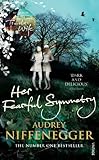
Her Fearful Symmetry by Audrey Niffeneger – I’m not sure how long I’ve had this book, but it’s about three years. I’m not sure I’ll like it as I wasn’t keen on The Time Traveler’s Wife, but it was the time travelling aspect that irritated me with that book – the constant switching backwards and forwards in time. This one looks a bit different.

Set in and around Highgate Cemetery in London. Julia and Valentina are semi-normal American teenagers with an abnormally intense attachment to one another. The girls move to their aunt’s flat, which borders Highgate Cemetery in London and as the girls become embroiled in the fraying lives of their aunt’s neighbors, they also discover that much is still alive in Highgate, including–perhaps–their aunt, who can’t seem to leave her old apartment and life behind.

Rise and Shine by Anna Quindlen, a book I’ve had for six years! I bought it because I’d enjoyed Blessings a satisfying but sad novel about an abandoned baby. 

A novel about two sisters, the true meaning of success, and the qualities in life that matter most. It’s an otherwise ordinary Monday when Meghan Fitzmaurice’s perfect life hits a wall. A household name as the host of Rise and Shine, the country’s highest-rated morning talk show, Meghan cuts to a commercial break but not before she mutters two forbidden words into her open mike. 

In an instant, it’s the end of an era, not only for Meghan, who is unaccustomed to dealing with adversity, but also for her younger sister, Bridget, a social worker in the Bronx who has always lived in Meghan’s long shadow.

I’ve nearly finished reading Third Girl by Agatha Christie, also one of my to-be-read books, so now all I have to do is decide which book to read next. At the moment I’m leaning towards Her Fearful Symmetry, despite my misgivings about The Time Traveler’s Wife.

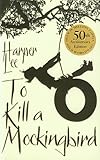
To Kill a Mockingbird by Harper Lee

 I often find with well-known books that all the world seems to love that they don’t live up to the hype, but To Kill a Mockingbird certainly does! It’s a wonderful book!

It was first published in 1960 and is set in the Deep South of  America in the 1930s. To Kill a Mockingbird is narrated by Scout (Jean Louise Finch) as she looks back as an adult to the Depression, the years when with her older brother, Jem, and their friend, Dill, she witnessed the trial of Tom Robinson, a black man accused of raping a white girl. Scout’s father, Atticus, a lawyer defends Tom. It’s also the story of Boo Radley, their neighbour, a man who is never seen, who is said to only come out at night. The children are scared of him, people said he was ‘a malevolent phantom‘, but their curiosity makes them fascinated by the idea of getting him to come out.

It’s the story seen through the eyes of a child, but narrated by an adult. And it’s told as a series of episodes in the fictional town of Maycomb, revealing the hypocrisy, prejudice and social injustice of the times. I was immediately drawn into Scout’s world, seeing Maycomb and its inhabitants through her eyes.

Maycomb was an old town, but it was a tired old town when I first knew it. In rainy weather the streets turned to red slop; grass grew on the sidewalks, the court-house sagged in the square. Somehow, it was hotter then; a black dog suffered on a summer’s day; bony mules hitched to Hoover carts flicked flies in the sweltering shade of live oaks on the square. Men’s stiff collars wilted by nine in the morning. Ladies bathed before noon, after their three o’clock naps, and by nightfall were like soft tea-cakes with frostings of sweat and sweet talcum. (page 5)

Scout is a feisty character, always prepared to stand up for what she thinks is right, but Atticus, who also stands for justice and the moral and ethical ideal, has to reign her in sometimes. The book is full of strong characters and for me the outstanding scenes are those when Atticus sat reading outside the jail to stop the lynch mob attacking Tom and the trial itself at the court-house. It is all so vivid I believed I was right there with them.

There is so much to think about reading this book and I could write page after page! But here are a few quotations that particularly struck me:

‘First of all,’ he [Atticus] said, ‘if you can learn a simple trick, Scout, you’ll get along better with all kinds of folks. You never really understand a person until you consider things from his point of view -‘

‘Sir?’

‘- until you climb into his skin and walk around in it.’ (page 33)

and

 Shoot all the bluejays you want, if you can hit ’em, but remember it’s a sin to kill a mockingbird.

… Mockingbirds don’t do one thing, but make music for us to enjoy. they don’t eat up people’s gardens, don’t nest in corncribs, they don’t do one thing but sing their hearts out for us. That’s why it’s a sin to kill a mockingbird. (pages 99 – 100)

and

‘People in their right minds never take pride in their talents,’ said Miss Maudie. (page 109)

and

People generally see what they look for, and hear what they listen for … (page 192)

On equality:

We know all men are not created equal in the sense some people would have us believe – some people are smarter than others, some people have more opportunity because they’re born with it, some men make more money than others, some ladies make better cakes than others – some people are born gifted beyond the normal scope of most men.

But there is one way in this country in which all men are created equal – there is one human institution that makes a pauper the equal of a Rockefeller, the stupid man the equal of any college president. That institution, gentlemen, is the court. (page 226)

The sticking point, however, is that a court is no better than the people sitting on the jury …

The Bookman's Tale by Charlie Lovett

When Alma Books contacted me to ask if I would like a review copy of The Bookman’s Tale: a novel of love and obsession by Charlie Lovett I was delighted. How could I resist a book about books, involving a search to discover the truth behind what could be a priceless Shakespearean manuscript? The book arrived the next day and I made the ‘mistake’ of looking at it whilst I drank a cup of coffee. I couldn’t put it down and by the end of the day I had read half the book.

The Bookman’s Tale

Synopsis from the back cover:

 A mysterious portrait ignites an antiquarian bookseller’s search – through time and the works of Shakespeare – for his lost love.

After the death of his wife, Peter Byerly, a young antiquarian bookseller, relocates from the States to the English countryside, where he hopes to rediscover the joys of life through his passion for collecting and restoring rare books. But when he opens an eighteenth-century study on Shakespeare forgeries, he is shocked to find a Victorian portrait strikingly similar to his wife tumble out of its pages, and becomes obsessed with tracking down its origins. As he follows the trail back to the nineteenth century and then to Shakespeare’s time, Peter learns the truth about his own past and unearths a book that might prove that Shakespeare was indeed the author of all his plays.

My view:

There are three different strands to this book, which interconnect and are interwoven throughout the book: the present day ie 1995 with Peter in England, the 1980s in America when Peter met and fell in love with Amanda, and the story of the Pandosto manuscript, a romance by Elizabethan poet Robert Greene, on which Shakespeare based The Winter’s Tale, from 1592 to 1879.

It began really well and Peter is not the only bookseller involved in the story – there is Bartholomew Harbottle in the Elizabethan/Stuart period and the Victorian Benjamin Mayhew both of whom play important roles. I really liked the historical sections and the details about the book trade and forgery is fascinating. I found the love story between Peter and his beloved Amanda rather cloying. Peter himself, suffers from an anxiety disorder and it is only his love for books and Amanda that seemed to make it possible for him to function at all – a good portrayal of an obsessive neurotic character.

By the second half of the book however, my enthusiasm for it began to droop a little as the chase around England became more frantic and a bit improbable. The many story lines as the book progressed became a series of cliff hangers, culminating in what seemed to me like something out of a cross between a Dan Brown novel, an Enid Blyton Famous Five book and a murder mystery. But, although there are just too many coincidence, twists and turns, and at times it is a bit melodramatic I still enjoyed it, swept along by the plot, an absorbing mix of historical fact and fiction, mystery and romance set in a book lovers’ world.

Charlie Lovett is a writer, teacher and playwright of plays for children. He is also a former antiquarian bookseller and an avid book collector. All this is evident in The Bookman’s Tale! He has a website with more information about the book and the sources he used.

Tamburlaine Must Die by Louise Welsh

It was a treat to read Tamburlaine Must Die, a short book that I read in a day. I can’t remember when I last read a book in a day!

Sometimes novellas, such as this is with just 140 pages, can seem lacking, needing more depth of character or plot, leaving me feeling that it should really have been a full length novel, or an even shorter story. But Tamburlaine Must Die has an immediacy, that drew me in to the late Elizabethan world.

I wrote about the opening paragraph and synopsis on Tuesday and almost immediately after I began to read the book. Written in the first person and set in May 1593, it’s a tense, dramatic story of the last days of Christopher Marlowe, playwright, poet and spy. Accused of heresy and atheism, his death is a mystery, although conjecture and rumours abound. Louise Welsh has used several sources in writing this novella, but as she writes in the Author’s Note:

History has bequeathed us a tantalising framework of facts – the Elizabethans were as prolific as the Stasi when it came to official documents. Yet the facts can’t tell us the full tale and historian’s theories on Marlowe’s death are ultimately well informed, meticulously researched speculation.

We know that Marlowe dies in a house in Deptford. We know the date of his death and the three men present. We know the nature of the wound that killed him. Everything else is educated guesswork, or in this author’s case, a fiction.

Tamburlaine Must Die conveys the claustrophobic atmosphere of danger surrounding Marlowe; who can he trust, and who is behind the pseudonym of ‘Tamburlaine’, who posted a libellous handbill referencing Marlowe’s plays? He is very aware that death is just around the corner:

A dagger can find its way into a belly or a back before the victim spies it. I thought I felt the prickle of surveillance on my shoulders. And though I knew it was most likely the effect of my own blood running faster in my veins, I made my way from the crush of people, trying to keep note of who was around me, checking  if any faces lingered in the thinning crowd. (page 31)

As well as Marlowe, Louise Welsh throws in Dr Dee and Thomas Walsingham, Marlowe’s patron and refers to Walter Raleigh too. In such a brief book she has managed to convey the political and the seedy underworld of the Elizabethan period, the dishonesty and love of intrigue, the dangers of the plague and the threat of war. Has much changed since then, I wonder.

First Chapter First Paragraph Tuesday Intros

Every Tuesday Diane at  Bibliophile by the Sea hosts First Chapter First Paragraph Tuesday Intros, sharing the first paragraph or (a few) of a book she’s reading or thinking about reading soon.

Today I’m in the mood for reading short fiction and picked this book off my to-be-read shelves. It’s Tamburlaine Must Die by Louise Welsh, set in 1593 it tells the story of playwright, Christopher Marlowe’s last days, weaving together fact and fiction. It’s only 140 pages.

It begins:

I have four candles and one evening in which to write this account. Tomorrow I will lodge these papers with my last true friend. If I survive the day, they will light our pipes. But should I not return, he has instructions to secrete this chronicle where it will lie undiscovered for a long span, in the hope that when these pages are found, the age will be different and my words may be judged by honest eyes.

When I read the first four words I immediately thought of the Ronnie Barker and Ronnie Corbett sketch from years ago in the Two RonniesThe Four Candles. I don’t suppose that is the response Louise Welsh would have expected, but there it is, that’s what came to my mind. But this is not a comedy as this summary from Amazon reveals:

London, 1593. A city on edge. Under threat from plague and war, strangers are unwelcome, suspicion is wholesale, severed heads grin from the spikes on Tower Bridge. Playwright, poet and spy, Christopher Marlowe walks the city’s mean streets with just three days to find the murderous Tamburlaine, a killer escaped from the pages of his most violent play. Tamburlaine Must Die is the searing adventure of a man who dares to defy both God and the state and whose murder remains a taunting mystery to the present day.

What do you think? Would you keep reading?

Falling Angels by Tracy Chevalier

I really enjoyed reading Falling Angels by Tracy Chevalier. It’s been sitting unread for several years on the to-be read shelves and I’ve been meaning to read it for ages after reading her earlier book, Girl with a Pearl Earring. I should have got round to it sooner.

It begins:

I woke this morning with a stranger in my bed. The head of blond hair beside me was decidedly not my husband’s. I did not know whether to be shocked or amused.

Well, I thought, here’s a novel way to begin the new century.

It is 1901, the day after Queen Victoria’s death and the ‘I’ in this opening is Kitty Coleman, one of several narrators in this novel set in Edwardian England.

Synopsis from Tracy Chevalier’s website:

Two families visit neighboring graves in a fashionable London cemetery. One is decorated with a sentimental angel, the other an elaborate urn. The Waterhouses revere the late Queen and cling to Victorian traditions; the Colemans look forward to a more modern society. To their mutual distaste, the families are inextricably linked when their daughters become friends behind the tombstones. And worse, befriend the gravedigger’s son.

As the girls grow up and the new century finds its feet, as cars replace horses and electricity outshines gas lighting, Britain emerges from the shadows of oppressive Victorian values to a golden Edwardian summer. It is then that the beautiful, frustrated Mrs Coleman makes a bid for greater personal freedom, with disastrous consequences, and the lives of the Colemans and the Waterhouses are changed forever.

A poignant tale of two families brought reluctantly together, Falling Angels is an intimate story of childhood friendships, sexual awakening and human frailty. Yet its epic sweep takes in the changing of a nation, the fight for women’s suffrage and the questioning of steadfast beliefs.

My view:

This book covers the years from 1901 – 1908 when the world was on the cusp of change just before the outbreak of the First World War, and I found myself wondering what my grandmothers, who would have been much the same age as Kitty Coleman and Gertrude Waterhouse, had thought about it all. What would they have thought about the suffragettes for example? I suspect it would have been similar to one of the characters, Jenny Whitby, the Colemans’ maid servant, as they too were domestic servants. Jenny is horrified when she listens to the suffragettes, whilst she served them with scones at Kitty Coleman’s ‘At Home’:

What I heard made me want to spit. They talked about helping women but it turns out they are choosy about who exactly gets the help. They ain’t fighting for my vote – only for women who own property or went to university. (pages 227 – 228)

Maybe my great aunt who never married and became a matron at a public school would have had more sympathy and agreed with the suffragettes that all women would not get the vote all at once and they had to start somewhere. These are the early years of the suffragette movement culminating in the book in June 1908 with the Women’s March in Hyde Park to demand Votes for Women.

The change between Victorian and Edwardian England was a gradual one, as attitudes to life and death were transformed and the middle-class Colemans and the Waterhouses reflect these changing attitudes with the Colemans looking forward to the modern era, whilst the Waterhouses still value the Victorian traditions. I was interested in the discussion about cremation/burial, with Kitty favouring cremation  in opposition to her mother-in-law as they visited the columbarium (a place for keeping cinerary remains, ie ashes) that had recently been opened at the cemetery. Their discussion with Mr Jackson, the superintendent of the cemetery was a theological one in which he ends the discussion of how God could reunite the body and soul if the body has been burnt by saying:

Surely there is no difference between the decomposed remains of a buried body and the ashes of a burned one. … I would simply say that God is capable of all things, and nothing we do with our remains will stop Him if he wishes to reunite our souls with our bodies. (pages 37 – 38)

I liked the multiple first person narrator structure of the book, giving an all round view of events and the characters’ views and thoughts. It was easy to distinguish between them all, the two daughters, Maude Coleman and Lavinia Waterhouse in particular are very well depicted. The setting too is so well described that I could imagine myself wandering round the cemetery with all its gothic symbology, and see the suffragettes’ march with their banners ‘Deeds not Words’ and hear their cries of ‘Votes for Women’.

It’s an easy to read book that still manages to contain depth both of characterisation and of themes – family relationships, in particular that of mother and daughter, attitudes towards death and mourning, the change in social codes, the perils of being an unmarried mother and the beginnings of the women’s movement. I was fascinated by it!

This page on Tracy Chevalier’s website lists her books – I have one more of hers – The Lady and the Unicorn, I mustn’t wait too long before I read it!

Although I didn’t read this to take part in any challenges I realise that it fits in with several I’ve signed up to do – the Mount TBR Challenge, the Historical Fiction Reading Challenge and the What’s in a Name Challenge (in the category of book with the word ‘down’ or an equivalent in the title).