WWW Wednesday: 22 May 2019

IMG_1384-0

WWW Wednesday is run by Taking on a World of Words.

The Three Ws are:

What are you currently reading?
What did you recently finish reading?
What do you think you’ll read next?


Currently reading: Three books,  D H Lawrence: the Life of an Outsider by John Worthen, Sweet Thursday by John Steinbeck and The Doll Factory by Elizabeth Macneal.

I’ve made more progress with D H Lawrence: the Life of an Outsider. It’s a thorough and detailed account of his life and I’ve just got up to 1912 when he first met Frieda Weekley, the wife of Ernest Weekley, a Nottingham University professor of modern languages. Lawrence had finished writing ‘Paul Morel‘ (Sons and Lovers) and had needing a break he decided to travel – to go to Germany. He got in touch with Weekley to ask for his advice.

Sweet Thursday is my Classics Club spin book to read by 31 May. So far I’ve only read a few chapters. This is a follow on from Steinbeck’s Cannery Row which I loved. Set after the Second World War in Monterey, on the California Coast, Sweet Thursday is what they call the day after Lousy Wednesday, which is one of those days that’s just naturally bad.

I’ve included The Doll Factory in my 20 Books of Summer challenge and I made the mistake of looking at it and before I knew it I’d read 20%. It really is compelling reading for me – historical fiction set in London beginning in 1850 as the Grand Exhibition is being built in Hyde Park. Twin sisters Iris and Rose paint dolls for a living but Iris dreams of a life as an artist. This is the period when the Pre-Raphaelite Brotherhood are making their mark in the art world.

Recently finished Codename Villanelle by Luke Jennings, the basis for the BAFTA-winning Killing Eve TV series. I enjoyed this but not as much as the TV version. See my review here.
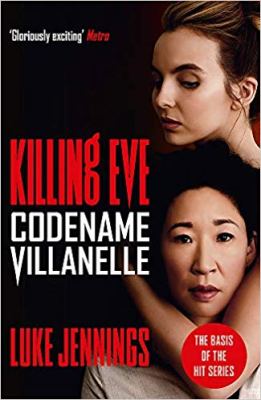
Codename Villanelle

My next book could be:

As usual I’m not at all sure what it could be, but after reading Codename Villanelle I’ve got my eye on No Tomorrow by Luke Jennings, which continues the story.

No tomorrow

Blurb (Amazon):

In a hotel room in Venice, where she’s just completed a routine assassination, Villanelle receives a late-night call.

Eve Polastri has discovered that a senior MI5 officer is in the pay of the Twelve, and is about to debrief him. As Eve interrogates her subject, desperately trying to fit the pieces of the puzzle together, Villanelle moves in for the kill.

The duel between the two women intensifies, as does their mutual obsession, and when the action moves from the high passes of the Tyrol to the heart of Russia, Eve finally begins to unwrap the enigma of her adversary’s true identity.

Have you read any of these books?  Do any of them tempt you? 
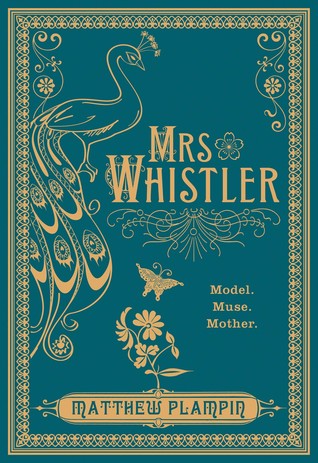
Mrs Whistler by Matthew Plampin

‘Maud could tell the whole story, but she will not.’

Mrs Whistler

The Borough Press|2 May 2019|465 pages|Paperback Review copy|5*

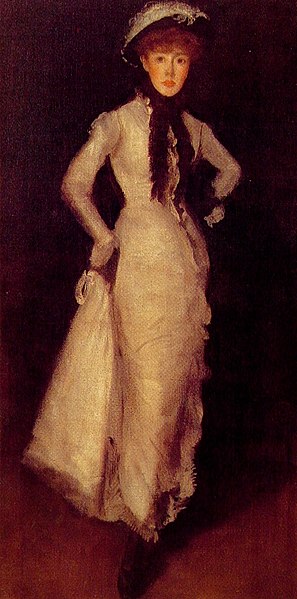
I loved this novel about the American artist James McNeill Whistler and his model and mistress, Maud Franklin, the ‘Mrs Whistler‘ of the title. I’m familiar with some of his paintings, his Nocturnes and the portrait of his mother, Arrangement in Grey and Black, known as Whistler’s Mother, but knew nothing about his private life. He was painting at the same time as the Impressionists at the end of the nineteenth century and some of his paintings seem to me to be similar in style to their work, but I think he is above all an individual, standing on his own. I love his signature, a stylised butterfly based on his initials, that heads up some of the chapters in Mrs Whistler.

Whistler Arrangement in White and Black Maud Franklin 1876
Maud Franklin (Arrangement in White and Black) by Whistler 1876

The book covers two episodes in their lives during the years 1876 to 1880 – a bitter feud with his patron Francis Leyland about his fee for painting The Peacock Room, and the libel trial in which Whistler sued the art critic John Ruskin, over a review that dismissed him as a fraud. Ruskin had criticised Whistler’s Nocturne in Black and Gold: The Falling Rocket, accusing him of asking for ‘two hundred guineas for flinging a pot of paint in the public’s face.’ These two events brought Whistler to the point of bankruptcy.

Whistler Nocturne in black and gold
Nocturne in Black and Gold (c.1875, Detroit Institute of Arts)

And interwoven is the story of Maud and her relationship with Whistler. Maud, as the title indicates, is the main character, on the borders of society she is not only his model, but also the mother of two of his children – both fostered at birth. Alongside these two are Whistler’s so-called friend, the flamboyant and duplicitous Charles Augustus Howell, known as Owl, and Howell’s mistress Rosa Corder.

It’s a good story, albeit a long one, that moves quite slowly through these four years. I loved all the detail – of Whistler’s impetuous and rebellious character, his relationship with his brother and mother (the real Mrs Whistler), as well as with Maud – and the details of the house he had built in London on Tite Street in Chelsea, which he called the White House, his flight to Venice and most of all about his paintings.

In his Author’s Note Matthew Plampin lists the books he consulted in writing his novel and referenced the online archive of Whistler’s correspondence at the University of Glasgow, which he used, as he puts it, for ‘many of this novel’s best lines.He explains that there are gaps in the records – notably about Maud. The American art critic Elizabeth Pennell and her husband Joseph had compiled a biography of Whistler in 1903, but they found that certain details were elusive. They had questions about Howell, about the saga of The Peacock Room and about Maud. Maud was still alive at the time but refused to talk to the Pennells, as they described it: ‘Maud could tell the whole story, but she will not.‘  Plampin’s fictionalised biography fills in some of the gaps in the story, imagining what Maud thought and how she coped with Whistler’s behaviour and attitude towards her and especially about how she felt about her daughters, living with their foster family.

Many thanks to the publishers, The Borough Press for my review copy via NetGalley.

About the Author

Matthew Plampin completed a PhD at the Courtauld Institute of Art and now lectures on nineteenth-century art and architecture. He is the author of five novels, The Street Philosopher, The Devil’s Acre, Illumination, Will & Tom and Mrs Whistler. He lives in London with his family.

New Additions

May bks 2019

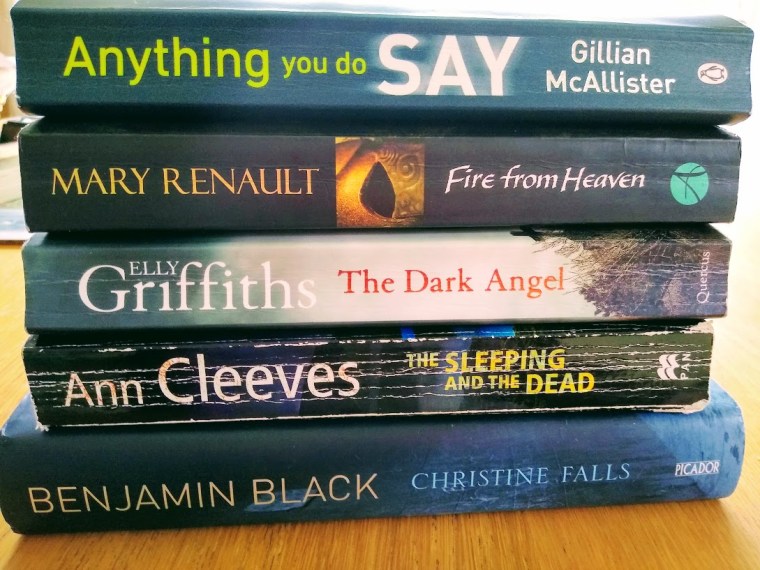
These are my latest additions to my TBR books from Barter Books in Alnwick. From top to bottom:

  • Anything You Do Say by Gillian McAllister – because I’ve loved other books by her. This is a psychological thriller that has two separate storylines following two paths that Joanna’s future might take.
  • Fire from Heaven: a novel of Alexander the Great by Mary Renault – because this book caught my eye in the historical fiction section and I remember enjoying some of her books years ago. This is the first in her Alexandrian Trilogy.
  • The Dark Angel by Elly Griffiths, a Dr Ruth Galloway Mystery – because I like Ruth and enjoy these books, even though they are written in the present tense, which I can find irritating. This one is set in Italy.
  • The Sleeping and the Dead by Ann Cleeves – because I love her books. This is one of her earlier books, first published in 2001. It’s a standalone murder mystery featuring Detective Peter Porteous.
  • Christine Falls by Benjamin Black -because I’ve been on the lookout for this book ever since I read Vengeance, the 5th book in his Quirke Mysteries series. This is the 1st book in the series, a murder mystery set in the 1950s in Dublin where Quirke is a pathologist. Benjamin Black is the pen name of John Banville.

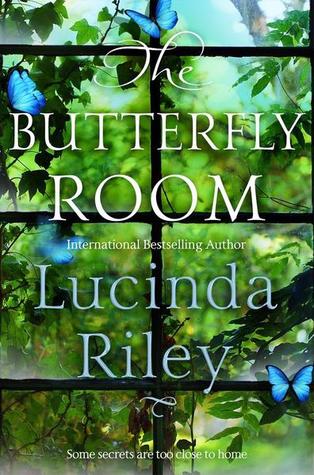
The Butterfly Room by Lucinda Riley

The Butterfly Room

Macmillan|2 May 2019|624 pages|Review copy|4*

If you love family sagas spanning generations then you’ll love The Butterfly Room by Lucinda Riley. This is a standalone novel and the first book by Lucinda Riley that I have read, although I have some of her Seven Sisters series waiting to be read.

The story revolves around Posy Montague and her family home, Admiral House in the Suffolk countryside, a house that had been in her family for generations. The narrative alternates between the different periods of her life from her childhood in the 1940s to the present day in 2006 as she nears her seventieth birthday. It is not a fast paced book but moves in a leisurely fashion through the various decades building a complex picture of her life.

Her early childhood years were idyllic spent with her parents at Admiral House. It was then that her love of nature began as her beloved father encouraged her to draw plants and showed her how to catch butterflies. The Butterfly Room in the Folly in the grounds of Admiral House plays an important role in the book. As a child Posy thought it looked like a fairy-tale castle with its turret made of yellow sandy brick. It was there that her father spent a lot of time on his own and she imagined it as a place where fairies and their butterfly friends lived. However, as the story developed it was clear to me that the Folly was not the wonderful place she imagined – and there is a dark secret hidden behind its locked door.

After a period spent with her grandmother in Cornwall and her time at Cambridge University followed by a job at Kew Gardens, she married and returned to Admiral House where she brought up her two sons. Years later the house is in desperate need of restoration, which Posy can’t afford and she is faced with the prospect of selling it, despite all the memories it holds and the beautiful garden she had created in the grounds.

But life is never straightforward for Posy and her two sons both present her with almost insurmountable problems. Then Freddie arrives on the scene, a man who broke her heart fifty years earlier when he suddenly ended their engagement without any explanation. He is still reluctant to tell her why and much as she wants to trust him she hesitates.

There is so much more in the book than I’ve mentioned here, too much to reveal in this post without spoiling the story.  I used to read family sagas like this years ago, books I used to race through and read one after another. I don’t think they have quite the same appeal to me these days, but I did enjoy it, and even though I think it is too long, it kept my attention to the end. Maybe because I read a lot of crime fiction I could see what would happen to some of the characters, but as for the secret of the Butterfly Room, I guessed some of the truth, but not the whole secret! It reads well, is a page-turner, full of interesting situations and believable characters. A minor criticism, which is purely personal, is that I became so tired of Posy addressing her family and friends as darling/dear boy/girl so often.

Many thanks to the publishers, Macmillan for my review copy via NetGalley.

Six Degrees of Separation: from The Dry to The Song of Troy

I love doing Six Degrees of Separation, a monthly link-up hosted by Kate at Books Are My Favourite and Best. Each month a book is chosen as a starting point and linked to six other books to form a chain. A book doesn’t need to be connected to all the other books on the list, only to the one next to it in the chain. But for this chain the books are all connected in that they are all books on my TBR shelves.

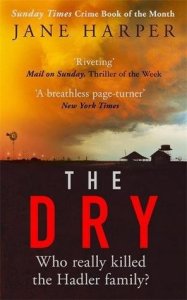
The Dry

This month the chain begins with The Dry by Jane Harper, crime fiction set in a small country town in Australia, where the Hadler family were brutally murdered. I have had this book on my TBR shelves for quite some time now and I really want to read it as I loved Force of Nature and The Lost Man. I was thinking of linking to one of these books but decided to go for another book, one that I bought on the same day as The Dry. It’s Longbourn by Jo Baker, a story about the Bennet’s servants in a re-imagining of Jane Austen’s Pride and Prejudice.

Another book that is a re-imagining is Rebecca’s Tale by Sally Beauman, a companion novel to Daphne du Maurier’s Rebecca. It is set 20 years after the death of Rebecca and the burning of Manderley. I’m hoping I’ll  love it as much as I loved Rebecca and Hitchcock’s 1940 film of the book. Sally Beauman was a journalist before she became an author. She wrote Rebecca’s Tale after writing an article about the work of Daphne du Maurier in The New Yorker magazine.

My next link is through the author’s first name – Sally – to  another author called Sally,  Sally Gunning and her book, The Widow’s War. It’s historical fiction set in Cape Cod, Massachusetts during the years prior to the War of Independence. After Lyddie Berry’s husband of 20 years dies in a whaling accident she has to fight a ‘war’ for control of her own destiny. Under the laws of the colony widows had the use of only one third of their husbands’ real estate, and did not inherit the ownership.

A different type of war is the subject of Small Wars by Sadie Jones. This is historical fiction set in  Cyprus in the 1950s as the EOKA terrorists are fighting for independence from Britain and union with Greece.

Another book set on an island is The Island by Victoria Hislop.  Alexis Fielding discovers the story of her mother’s family on the island of Spinalonga, a tiny, deserted island off the coast of Crete – Greece’s former leper colony.  Victoria Hislop was also a journalist before she became an author.

As was Colleen McCullough, the author of numerous books including the Masters of Rome series. So, my final link is to one of her books – The Song of Troy in  which she recounts the tale of Helen and Paris, sparking the Trojan War. Colleen McCullough was also an Australian author so it links back to the first book, The Dry by Jane Harper, also an Australian author, who I’m delighted to see was also a journalist before becoming an author!

In addition to all the books being TBRs, four of the authors were journalists before becoming authors and two are Australian authors.

The chain moves through time from the present day back to late classical Antiquity, beginning in Australia and passing through England, America, Cyprus, Crete to Anatolia in modern Turkey.

Next month (June 1, 2019), the chain will begin with the winner of the 2019 Wellcome Prize, Murmur by Will Eaves.

My Friday Post: Iris and Ruby by Rosie Thomas

Book Beginnings Button

Every Friday Book Beginnings on Friday is hosted by Gillion at Rose City Reader where you can share the first sentence (or so) of the book you are reading, along with your initial thoughts about the sentence, impressions of the book, or anything else the opener inspires.

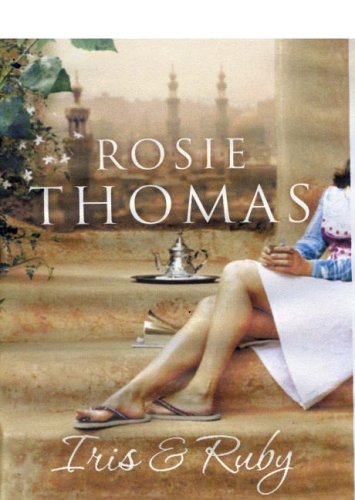
This week I’ve been looking at some of my TBRs deciding which one to read next and came across Iris and Ruby by Rosie Thomas. It’s been on my shelves a long time – 12 years – it really is time I read it!

Iris and Ruby

I remember.

And even as I say the words aloud in the silent room and hear the whisper dying away in the shadows of the house, I realise it’s not true.

Also every Friday there is The Friday 56, hosted by Freda at Freda’s Voice.

30879-friday2b56These are the rules:

  1. Grab a book, any book.
  2. Turn to page 56, or 56% on your eReader. If you have to improvise, that is okay.
  3. Find any sentence (or a few, just don’t spoil it) that grabs you.
  4. Post it.
  5. Add the URL to your post in the link on Freda’s most recent Friday 56 post.

Page 56:

‘I remember the Blitz. the beginning of it anyway. Then I came out here, to Cairo, to work.’

‘ Did you? How come?’

‘That’s the beginning of another long story.’

Blurb:

The unexpected arrival of her wilful teenage granddaughter, Ruby, brings life and disorder to 82-year-old Iris Black’s old house in Cairo. Ruby, driven away from England by her fraught relationship with her own mother, is seeking refuge with the grandmother she hasn’t seen for years.

An unlikely bond develops as Ruby helps Iris document her fading memories of the glittering, cosmopolitan Cairo of World War Two, and of her one true love – the enigmatic Captain Xan Molyneux – whom she lost to the ravages of war.

This lost love shaped Iris’s past – and will affect Ruby’s future in ways they could not have imagined…

~~~

What do you think? Would you keep reading?