The Last Protector by Andrew Taylor

London, 1668 – A dangerous secret lies beneath Whitehall Palace…
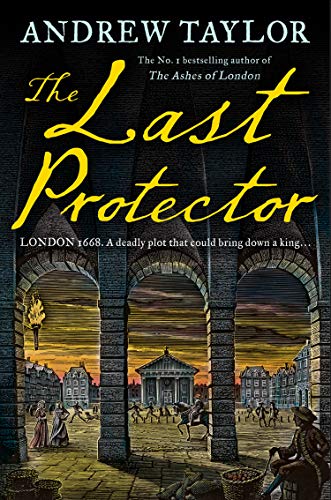
The Last Protector HarperCollins|2 April 2020|419 pages|ebook |Review copy via NetGalley|4* The Last Protector is the fourth book in Andrew Taylor’s series featuring James Marwood, a government agent and Cat (Catherine) Lovett, set in Restoration England. The year is 1668 and the exiled Richard Cromwell, son of Oliver, heavily in debt, has returned in disguise to England. Charles’ extravagant life style and licentious behaviour has now lost him the support of the people and many are hankering after the old days under Oliver Cromwell and then his son, Richard as Lord Protectors. He needs Parliament to vote him the funds to pay off his debts, maintain his court and fund the expansion of the navy and is relying on the Duke of Buckingham for support. However Marwood’s masters suspect that Buckingham is secretly conspiring against the King and assign him to spy on him.  Cat, a regicide’s daughter, is married to Simon Hakesby, an elderly and ailing surveyor and architect. She knew Richard’s daughter Elizabeth as a child and finds herself drawn into the Cromwells’ plan to recover a package Richard’s mother had hidden in the Cockpit in the gardens of the Palace of Whitehall just before her death; a package Richard hopes would be sufficient to clear his debts. He turns to the Duke of Buckingham for support in gaining access to the Cockpit. Buckingham is keen to use Richard in his plans to gain power. Cat, who now is unhappy in her marriage, resentful of Simon’s demands on her, is reluctant to get involved but unfortunately for her Simon is eager to help, and they soon find themselves in great danger. She is reluctant to ask for Marwood’s help fearing they could be charged with treason. Like the earlier books in the series this is a gripping story, full of historical detail, complications, intrigue and danger. The characterisation is brilliant with memorable characters such as Ferrus, a mazer-scourer’s labourer, who lives a terrible life, forced to sleep in a kennel with Windy, a vicious dog that guards the kitchen yard at the Cockpit. Treated brutally by his master, Ezra Reeves, his job is to clean the sewers. He is starved so he can squeeze himself down unto the foul stinking mess of the sewers, bending his long thin arms and legs. The stench of London comes across very vividly in this novel. Then there is Chloris, the kind-hearted prostitute, who helps Marwood.  This is a book full of action too, with a swiftly moving plot and a climatic ending. It is full of suspense and surprises. Andrew Taylor is a supreme storyteller, combining fact and fiction – his novels are full of historical details that slot seamlessly into his stories. I’ve read all  the earlier books and loved them too – The Ashes of London (set in 1666, six years after Charles II was reinstated as King) and The Fire Court (set in 1667, eight months after the Great Fire of London), and The King’s Evil (set seven months later). It is not necessary to read the earlier books as I think they all work well as standalones, but I think it really helps if you do. Many thanks to the publishers, HarperCollins for my review copy.
Bookshelf Travelling for Insane Times

Judith at Reader in the Wilderness hosts this meme – Bookshelf Travelling for Insane Times.  I am enjoying this meme, looking round my actual bookshelves and re-discovering books I’ve read or am looking forward to reading. The idea is to share your bookshelves with other bloggers.

This is really a Friday meme, but once more I’m late writing my post!

For this week’s post I’ve been looking through some of my oldest books.

The Secret Garden

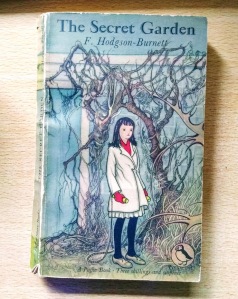
First is a book from my childhood, The Secret Garden by Frances  Hodgson-Burnett. It is now yellowing and a bit battered, but still in one piece. In the description at the front of the book the editor writes: Girls like it most, and between the ages of nine and fourteen – and, be warned, keep your copy carefully. You will want to go back and read it over and over again. I can’t remember how old I was, but the editor was right – I did read it over and over again.  I’ve wanted a walled garden ever since I read about the secret garden that Mary found at her Uncle’s house, Misselthwaite Manor in Yorkshire. It’s about the magic of nature, that makes plants and people grow and develop, the magic of the power of positive thinking and prayer, of the healing power of the mind, and of laughter and love.

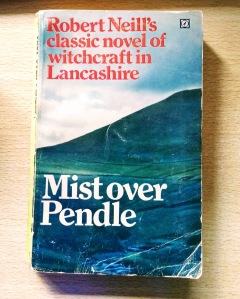
Mist over PendleNext a book I read as a teenager – Mist Over Pendle by Robert Neill. Set in rural Lancashire in the early 17th century it tells the story of Margery Whitaker, an orphan who went to live with her relatives on the Lancashire and Yorkshire border. People have died, apparently from belladonna poisoning and two old crones are suspected of witchcraft. Margery and her cousin Roger investigate whether they really were witches. I found it fascinating and it was probably the book that started me off reading historical fiction.
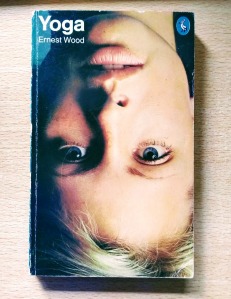
YogaI began doing yoga when I was in my thirties and Yoga by Ernest Wood is one of several books I bought at the time. It’s not just a book about the yoga breathing practices or the yoga postures – and there are no photos demonstrating them – it’s more about the classical background of yoga and its goals – the awakening of the higher spirit, bodily and mental health and the benefits of yoga in daily life. So, there are chapters on the ethics and morality of yoga, yoga and the intellect, yoga and vitality and the basic philosophy of yoga.
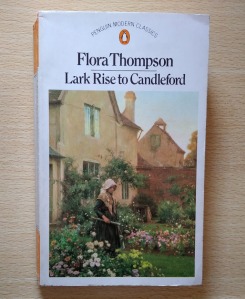
Lark Rise mineAnd finally a book I read in my forties. I’d had a really bad case of flu which meant that I couldn’t even lift my head off the pillow, never mind pick up a book! But when  I was recovering I read and loved Flora Thompson’s book Lark Rise to Candleford. It’s a trilogy including in addition to Lark Rise, Over to Candleford and Candleford Green. It’s a record of country life at the end of the 19th century, based on the author’s experiences during childhood and youth. It chronicles May Day celebrations and forgotten children’s games as well as the daily lives of farmworkers and craftsmen, and her friends and relations.
My Friday Post: The Mirror and the Light by Hilary Mantel

Book Beginnings Button

Every Friday Book Beginnings on Friday is hosted by Gillion at Rose City Reader where you can share the first sentence (or so) of the book you are reading, along with your initial thoughts about the sentence, impressions of the book, or anything else the opener inspires.

Mirror and Light

I began reading The Mirror and the Light by Hilary Mantel as soon as it arrived in the post on 6 March – and I’m still reading it, very slowly, as it is a very long and detailed book.

It begins:

Wreckage (1)

London, May 1536

Once the queen’s head is severed, he walks away.

He is Thomas Cromwell, Secretary to Henry VIII, and the Queen was Anne Boleyn.

Also every Friday there is The Friday 56, hosted by Freda at Freda’s Voice.

30879-friday2b56These are the rules:

  1. Grab a book, any book.
  2. Turn to page 56, or 56% on your eReader. If you have to improvise, that is okay.
  3. Find any sentence (or a few, just don’t spoil it) that grabs you.
  4. Post it.
  5. Add the URL to your post in the link on Freda’s most recent Friday 56 post.

Page 56: Chapuys, the  ambassador of the Emperor Charles V is talking to Cromwell about the dangers to Henry’s life:

A dagger thrust, it is easily done. It may be, even, it needs no human hand to strike. There is plague that kills in a day. There is the sweating sickness that kills in an hour.

How true!

Blurb

With The Mirror and the Light, Hilary Mantel brings to a triumphant close the trilogy she began with Wolf Hall and Bring Up the Bodies. She traces the final years of Thomas Cromwell, the boy from nowhere who climbs to the heights of power, offering a defining portrait of predator and prey, of a ferocious contest between present and past, between royal will and a common man’s vision: of a modern nation making itself through conflict, passion and courage.

~~~

Does this book appeal to you too? Have you read/are you reading this book

Six Degrees of Separation: from Stasiland to A Lovely Way to Burn

It’s time again for Six Degrees of Separation, a monthly link-up hosted by Kate at Books Are My Favourite and Best. Each month a book is chosen as a starting point and linked to six other books to form a chain. A book doesn’t need to be connected to all the other books on the list, only to the one next to it in the chain.

Stasiland

This month the chain begins with Stasiland: Stories From Behind the Berlin Wall by Anna Funder – the winner of the Samuel Johnson Prize for Non-Fiction 2004. It is a book I have not read but I’m wondering whether I will. It sounds both interesting and shocking.

My first link is Black Dogs by Ian McEwan, a novel about the aftermath of the Nazi era in Europe, and how the fall of the Berlin Wall in the late 1980s affected those who once saw Communism as a way forward for society. The question of the black dogs is not really answered though – were they symbolic of evil, or an expression of Churchill’s term for depression, or real creatures?  Part set in Berlin with Bernard, when the Wall came down in 1989 and part set in 1989 at the family house at St Maurice de Navacelles in Languedoc in southern France

There’s another character called Bernard, and also set partly in the Languedoc area in Carcassonne, in The Burning Chambers by Kate Mosse. Bernard Joubert, a bookseller had been imprisoned accused of being a traitor and a heretic after he had let slip information about a secret will. It’s a complicated story of war, conspiracies, love, betrayal, forgery, torture and family secrets.

Another book about a bookseller is The Bookman’s Tale by Charlie Lovett. Peter Byerly is an antiquarian bookseller. His wife has recently died and when he opens an eighteenth-century study on Shakespeare forgeries, he is shocked to find a Victorian portrait strikingly similar to his wife tumble out of its pages. He becomes obsessed with tracking down its origins. it becomes a chase around England, similar to a cross between a Dan Brown novel, an Enid Blyton Famous Five book and a murder mystery.

And that brings me to my next link – Dan Brown’s books. For pure escapism I really like them. They’re not great literature but they are great entertainment, even though they follow the same formula – a breathtaking race against time as Robert Langdon follows  clues as in The Lost Symbol. This book is set within the hidden chambers, tunnels, and temples of Washington, DC. as Langdon searches for his friend, Peter Solomon, a Mason.

And so to the next link, using the author’s name, Dan, brings me to Daniel Defoe’s A Journal of the Plague Year a novel about one man’s experiences of the year 1665, in which the Great Plague or the bubonic plague – known as the Black Death – struck the city of London.

Thinking about Defoe’s book reminded me of A Lovely Way to Burn by Louise Welsh, an apocalyptic novel in which a  new and unidentified virus, known as ‘the sweats’ sweeps the globe and London quickly descends into chaos – supermarkets are looted, roads are gridlocked as people try to flee the infection, then society just crumbles as people look out only for themselves, rioting and eventually succumbing to the mysterious illness and dying. Let’s hope the current corona virus pandemic doesn’t descend into this!

~~~

My chain began in Berlin and moved to France, then to Britain, America and ended back in Britain. It covered a variety of genres and time periods, including contemporary fiction, historical and crime fiction. The links are through places, words in the titles and authors’ names. And there is also a link that runs through the chain with the use of the letter ‘B’ either in the book titles, in the authors’ names, or in significant words in the descriptions.

Kate writes: ‘Given the current pandemic, the obvious choice for next month (May 2, 2020) is The Road by Cormac McCarthy.’

WWW Wednesday: 1 April 2020

IMG_1384-0

WWW Wednesday is run by Taking on a World of Words.

The Three Ws are:

What are you currently reading?
What did you recently finish reading?
What do you think you’ll read next?

Currently reading:

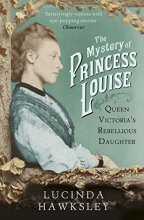
Mystery of Princess LouiseThe Mystery of Princess Louise: Queen Victoria’s Rebellious Daughter by Lucinda Hawkesley. I’m finding this a fascinating biography of Louise, Victoria’s unconventional daughter. She was a sculptor and painter, who mixed with the artists of her day much to her mother’s dislike and was involved in many campaigns for reform in education and health. It’s packed with intrigues, scandals and secrets. I’ve read about two thirds of this book I borrowed from the library.
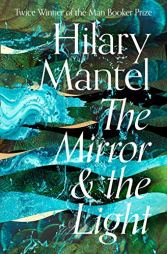
Mirror and LightThe Mirror and the Light by Hilary Mantel, the final book in Hilary Mantel’s Thomas Cromwell trilogy about the boy from Putney who climbed his way up to become Lord Cromwell, Secretary to King Henry VIII. I loved the first two books, Wolf Hall and Bring Up the Bodies, so it was an easy decision to buy the third book in hardback to complete the set. It is heavy, weighing in at 2lbs 13ozs with almost 900 pages and so I’m reading it very slowly. Just like the other two books I think it’s beautifully written, full of colour and detail. Reading it I feel as if I’m there back in 1536.

Fresh water for flowers

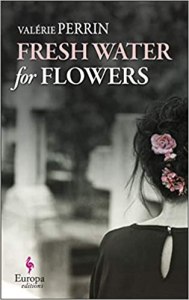
Recently Finished: Fresh Water for Flowers by Valérie Perrin, translated from the French by Hildegarde Serle. This is a complex novel, multi layered and centred on Violette, a cemetery keeper, switching between different people at different times in their lives.  I’ll write more about later on nearer its publication date in the summer.

Reading Next: This is where it gets difficult as there are so many I want to read. But it will probably be The Dutch House by Ann Patchett and  Queen Lucia by E F Benson, a book first published in 1920 for The 1920 Club hosted by Simon at Stuck in a Book and Karen at Kaggsy’s Bookish Ramblings is taking place between 13th and 19th April 2020. The idea is that you read a book published in that year and share your thoughts/review with other participants.

But then it could easily be one of these books I’ve mentioned in recent posts:

What do you think – which one would you read next?

Top Ten Tuesday: Historical Mysteries

top-ten-tuesday-new

Top Ten Tuesday is a weekly meme created by The Broke and the Bookish and now hosted by Jana at That Artsy Reader Girl. For the rules see her blog.

This week’s topic is Genre Freebie and I’ve chosen Historical Mysteries, a combination of two of my favourite genres Historical Fiction and Crime Fiction. I’ve read lots of historical mysteries, so these ten are just a selection – and just see how people coped in the past with the ‘plague’ and new diseases in the 19th century:

Alias Grace by Margaret Atwood – based on the true story of the murder of Thomas Kinnear and his housekeeper in Canada in 1843. Grace and fellow servant James are found guilty of the murders. James was hanged and Grace imprisoned for life. The question, never answered to my satisfaction, all through the book is, was Grace guilty?

The Art of Dying by Ambrose Parry, a combination of historical fact and fiction; the social scene, historical and medical facts slotting perfectly into an intricate murder mystery.  It is mainly set in 1850 in Edinburgh, when a mysterious illness baffles doctors, who are unable to identify the disease, let alone cure their patients. When Dr Simpson is blamed for the death of a patient in suspicious circumstances, Dr Will Raven attempts to clear his name and in doing so uncovers more unexplained deaths.

Arthur and George by Julian Barnes – based on the true story of Arthur Conan Doyle and George Edalji, a solicitor from Birmingham. In 1903, George was found guilty of a terrible crime and sentenced to seven years’ imprisonment. Desperate to prove his innocence, he recruited Sir Arthur Conan Doyle, creator of Sherlock Holmes, to help solve his mysterious case and win him a pardon.

Asta’s Book by Barbara Vine,  published as Anna’s Book in the USA. It begins in 1905. There’s a murder, a missing child, a question of identity and overarching it all are the stories of two families – the Westerbys and the Ropers and all the people connected to them.

The Plague Charmer by Karen Maitland, a fascinating medieval tale full of atmosphere and superstition, set in Porlock Weir in 1361 where a village is isolated by the plague when the Black Death spreads once more across England. It’s a complex story, told from different characters’ perspectives, following the lives of Will, a ‘fake’ dwarf, Sara, a packhorse man’s wife and her family, Matilda, a religious zealot, and Christina at nearby Porlock Manor amongst others. It’s also a tale of murder and of love.

The Daughter of Time by Josephine Tey. Inspector Alan Grant of Scotland Yard, recuperating from a broken leg, becomes fascinated with a contemporary portrait of Richard III that bears no resemblance to the Wicked Uncle of history. He determines to find out, with the help of the British Museum and an American scholar, what kind of man Richard III really was and who killed the Princes in the Tower.

Dissolution by C J Sansom – the first in his Tudor murder mystery series featuring lawyer Matthew Shardlake. This is set in 1537 – Shardlake investigates the death of a Commissioner during the dissolution of the monasteries.

The House at Riverton by Kate Morton, a novel split into two time zones, 1924 and 1999. The novel opens in 1999 with Grace’s dream of the night in 1924 when Robbie Hunter, a poet, committed suicide at Riverton Manor. Grace’s memories are revived after Ursula, an American film director who is making a film of the suicide had asked for her help as the only person involved who was still alive.

Mistress of the Art of Death by Ariana Franklin, set in Cambridge in 1170 during the reign of Henry II. A child has been murdered and others have disappeared (also found murdered). Adelia is a female doctor, who specialises in studying corpses. Running the risk of being accused of witchcraft, she cannot openly carry out her investigations in England in the 12th century and has to pretend that Mansur, a Muslim eunuch (her bodyguard) is the doctor.

The Name of the Rose by Umberto Eco, set in 1327. Franciscans in a wealthy Italian abbey are suspected of heresy, and Brother William of Baskerville arrives to investigate.When his delicate mission is suddenly overshadowed by seven bizarre deaths, Brother William turns detective.