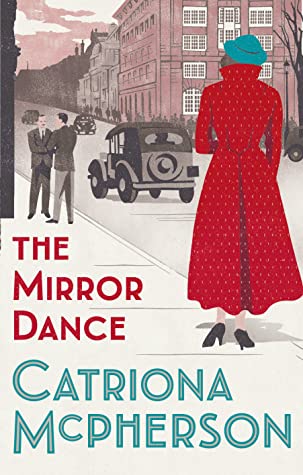
The Mirror Dance by Catriona McPherson

Hodder and Stoughton| 21 January 2021| 259 pages| e-book| Review copy| 3*

Description:

Something sinister is afoot in the streets of Dundee, when a puppeteer is found murdered behind his striped Punch and Judy stand, as children sit cross-legged drinking ginger beer. At once, Dandy Gilver’s semmingly-innocuous investigation into plagiarism takes a darker turn. The gruesome death seems to be inextricably bound to the gloomy offices of Doig’s Publishers, its secrets hidden in the real stories behind their girls’ magazines The Rosie Cheek and The Freckle.

On meeting a mysterious professor from St Andrews, Dandy and her faithful colleague Alex Osbourne are flung into the worlds of academia, the theatre and publishing. Nothing is quite as it seems, and behind the cheerful facades of puppets and comic books, is a troubled history has begun to repeat itself.

My thoughts:

I’ve read some of the Dandy Gilver mysteries by Catriona McPherson, set in the 1920s and 1930s Scotland. The Mirror Dance is the 15th book. The last one I read was the 6th, a few years ago now, so when I saw it on NetGalley I requested it. I was pleased to find, that although I’d missed so many of the books in the series, it’s easy to read as a standalone.

It begins on an August Bank Holiday weekend in 1937, when Dandy (short for Dandelion Dahlia!), a private detective, receives a phone call from Miss Sandy Bissett, a magazine publisher in Dundee. She asks Dandy to go to Dudhope Park to warn the Punch and Judy man there that he is infringing copyrighted property as he is using two of the magazine’s cartoon characters, Rosie Cheeke and Freckles in his show. So, the next day, Bank Holiday Monday, together with her female staff, Grant, her lady’s maid, Becky her housemaid and Mrs Tilling, her cook, Dandy goes to Dundee to see the puppet show, looking out for the appearance of the magazine characters.

But during the show, the puppet Scaramouche extended his neck upwards, unfolding from pleats like an accordion and then stayed still like a tableau. The children lost interest and the adults were grumbling. When Dandy and Grant went to the back of the Punch and Judy tent they found the puppeteer slumped dead behind the scene, with his throat cut. The police are called but Dandy and her partner, Alec take it upon themselves to investigate the murder, an apparently impossible murder, with no signs of the murderer, and no one knew the puppeteer’s name.

I liked the setting. There is a good sense of location in Dundee in the 1930s, when the effects of the First World War were still lingering and the threat of another war was on the horizon. This is a convoluted murder mystery, where there is more than meets the eye. There is a lot of detail about the publishing industry and the theatrical world of the time which was interesting, but overall the amount of detail of everyday life, with all its sights and smells, slowed the book down too much for me.

There are several complications, red herrings and apparent impossibilities and I was puzzled about the relevance of a murder 50 years earlier in the same park, of an earlier Punch and Judy man. I became a bit lost in the detail about the number of women suspects Dandy and Alec consider – there were two, and then perhaps there were three. Who were they and what was the motive for the murder? Gradually that became clear, but I got exasperated at the number of times Dandy and the others went over and over what was happening, working out how it could have happened and why. Although some of it is confusing and I hadn’t worked out the identity of the murderer some of it seemed so obvious to me that I couldn’t see why it took them so long to work it out. So, although I enjoyed the actual murder mystery and the mirror dance aspect, where everything is turned on its head, I did not enjoy how it was told.

My thanks to the publishers and NetGalley for my review copy.
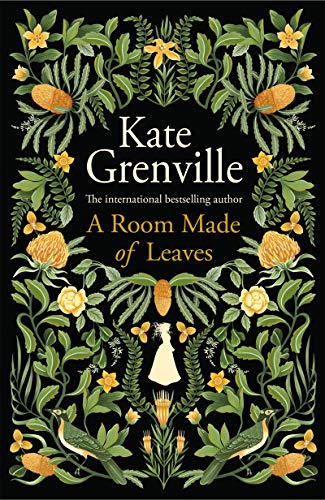
A Room Made of Leaves by Kate Grenville

Canongate| 6 August 2020| 325 pages| e-book| Review copy| 4*

I’m late getting round to reading A Room Made of Leaves, because I am behind with reviewing my NetGalley books. But it was well worth the wait. It’s historical fiction telling the story of the Macarthurs, Elizabeth and John Macarthur, who settled in Australia at the end of the eighteenth century. It’s based on the real lives of the Macarthurs using letters, journals and official documents of the early years of the New South Wales colony. But, although based on fact this is not history, it is fiction, as Kate Grenville makes clear in her Author’s Note at the end of the book (which I read after I read the opening paragraphs of the Editor’s Note at the start of the book).

Description

It is 1788. Twenty-one-year-old Elizabeth is hungry for life but, as the ward of a Devon clergyman, knows she has few prospects. When a soldier, John Macarthur promises her the earth one midsummer’s night, she believes him and with a baby on the way she marries him. Only then he tells her he is to take up a position as Lieutenant in a New South Wales penal colony and she has no choice but to go. Sailing for six months to the far side of the globe with a child growing inside her, she arrives to find Sydney Town a brutal, dusty, hungry place of makeshift shelters, failing crops, scheming and rumours.

All her life she has learned to be obliging, to fold herself up small. Now, in the vast landscapes of an unknown continent, Elizabeth has to discover a strength she never imagined, and passions she could never express. 

Inspired by the real life of a remarkable woman, this is an extraordinarily rich, beautifully wrought novel of resilience, courage and the mystery of human desire.

My thoughts:

I’ve enjoyed all of the books by Kate Grenville that I’ve read so far. Her writing suits me – historical fiction, straight-forward story-telling, with good descriptive writing setting the scenes vividly in their locations. I find her books difficult to put down and they stay in my mind long after I’ve finished reading. This one is no exception.

It begins in Devon where Elizabeth was born and grew up, first with her parents and then after her father died on her grandfather’s sheep farm and then with the local vicar’s family, whose daughter, Bridie is her friend. There she meets John Macarthur, an ensign. When she becomes pregnant they marry and then he tells her he has signed on as a lieutenant in the New South Wales Corps in the penal colony at Sydney Cove. But their married life is not a happy one. John was rash, impulsive, changeable, self-deceiving, and given to embarking on grandiose schemes. He was quick to take offence and was dangerously unbalanced. Over the course of their marriage he was forced to return to England twice, at first for four years and later for nine. During that time Elizabeth made the best of life, carrying on with their sheep farm at Parramatta, where she improved the flock, and helped to establish New South Wales as a reliable supplier of quality wool.

One of the outstanding parts of the book for me is her relationship with William Dawes, an astronomer with the Corps, who was mapping the night sky. He had an observatory near Elizabeth’s farm and it was there that she met some of the local inhabitants and learned a bit of their language and about their ways of life. And it is with William that Elizabeth learns to appreciate not just the night sky, but also the landscape and its flora and fauna and in particular the ‘room made of leaves’ – a private space enclosed on three sides by greenery, a place where you could simply be yourself.

This is a book that captivated me from the opening paragraphs, and there is so much more in it than I have mentioned in this post. It gave me much to think about, in particular bearing in mind the epigraph, an actual quotation from one of Elizabeth’s letters: Believe not too quickly, reminding me that this is a work of fiction. I enjoyed it immensely. And it makes me want to know more about the Macarthurs. I came across Michelle Scott Tucker’s biography: Elizabeth Macarthur: A Life at the Edge of the World and I was delighted to see that Kate Grenville references this book as the standard biography in her Acknowledgements. It is now on my wishlist!

Many thanks to the publishers and NetGalley for my review copy.

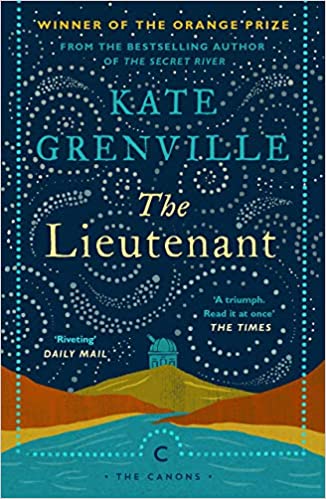
My Friday Post: The Lieutenant by Kate Grenville

Every Friday Book Beginnings on Friday is hosted by Gillion at Rose City Reader where you can share the first sentence (or so) of the book you are reading. You can also share from a book you want to highlight just because it caught your fancy.

I’m currently reading A Room Made of Leaves by Elizabeth Grenville, her latest book, and have nearly finished it. I love her books and as I’ve nearly finished it I was wondering which book to read next and remembered I have one of her earlier books, The Lieutenant still waiting to be read. To my surprise when I opened it this morning I found that it is another book about one of the characters in A Room Made of Leaves. That character is William Dawes, a real person, a soldier in the first days of the Colony of New South Wales.

The Lieutenant  is about Daniel Rooke, based on real events in William Dawes’ life, using his notebooks in which he recorded his conversations with a young girl, Patyegarang, (also in A Room Made of Leaves), in his efforts to learn the language of the indigenous people of Sydney. It is a novel that stays close to the historical events. 

It begins:

Daniel Rooke was quiet, moody, a man of few words. He had no memories other than of being an outsider.

Also every Friday there is The Friday 56, hosted by Freda at Freda’s Voice. *Grab a book, any book. *Turn to Page 56 or 56% on your  ereader . If you have to improvise, that is okay. *Find a snippet, short and sweet, but no spoilers!

  1. Grab a book, any book.
  2. Turn to page 56, or 56% on your eReader. If you have to improvise, that is okay.
  3. Find any sentence (or a few, just don’t spoil it) that grabs you.
  4. Post it.
  5. Add the URL to your post in the link on Freda’s most recent Friday 56 post.

Page 56:

It seemed that the natives did not like the surgeon’s music any more than they had enjoyed his performance with the pistol. Their faces were stony. After a minute they took the two pieces of shield and disappeared into the woods.

Book description:

1788 Daniel Rooke sets out on a journey that will change the course of his life. As a lieutenant in the First Fleet, he lands on the wild and unknown shores of New South Wales. There he sets up an observatory to chart the stars. But this country will prove far more revelatory than the skies above.

Based on real events, The Lieutenant tells the unforgettable story of Rooke’s connection to an Aboriginal child – a remarkable friendship that resonates across the oceans and the centuries.

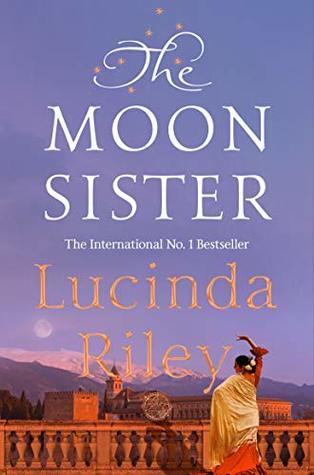
The Moon Sister by Lucinda Riley

Rating: 4 out of 5.

I’ve had this book for a while now and have just finished reading it. It is the 5th book in Lucinda Riley’s series, The Seven Sisters and as I’d only read the first book I thought I’d read the other three books first before this one, so that I could read them in order. But as the 7th book, The Missing Sister, will be published in May I thought I had better read The Moon Sister now. The books are based on the legends of The Seven Sisters of the Pleiades. Although this is just one in the series I think it reads very well as a standalone book.

I loved this book, about Tiggy D’Apilese, the fifth sister adopted by Pa Salt and brought up in their childhood home, ‘Atlantis’ – a fabulous, secluded castle situated on the shores of Lake Geneva. The sisters are all named after the stars in the Pleiades star cluster. Tiggy’s star name is Taygete. Pa Salt had died earlier in the year and had left clues for each girl so that if they want they can discover who their parents were and the circumstances of their birth. Tiggy is her nickname after the hedgehog Mrs Tiggy-winkle from the Beatrix Potter book – and because when she was born her hair stuck up in spikes.

The book description summarises this long and detailed (769 pages) book, and I don’t intend to go into much more detail about the plot. The story begins in the Scottish Highlands where Tiggy works as a wildlife consultant, then moves to Sacromente in Spain, then onto Portugal, South America and New York before moving back to the Highlands as Tiggy finds out about her birth and her family history.

Blurb:

After the death of her father – Pa Salt, an elusive billionaire who adopted his six daughters from around the globe – Tiggy D’Aplièse , trusting her instincts, moves to the remote wilds of Scotland. There she takes a job doing what she loves; caring for animals on the vast and isolated Kinnaird estate, employed by the enigmatic and troubled Laird, Charlie Kinnaird.

Her decision alters her future irrevocably when Chilly, an ancient gipsy who has lived for years on the estate, tells her that not only does she possess a sixth sense, passed down from her ancestors, but it was foretold long ago that he would be the one to send her back home to Granada in Spain . . .

In the shadow of the magnificent Alhambra, Tiggy discovers her connection to the fabled gypsy community of Sacromonte, who were forced to flee their homes during the civil war, and to ‘La Candela’ the greatest flamenco dancer of her generation.

From the Scottish Highlands and Spain, to South America and New York, Tiggy follows the trail back to her own exotic but complex past. And under the watchful eye of a gifted gypsy bruja she begins to embrace her own talent for healing.

But when fate takes a hand, Tiggy must decide whether to stay with her new-found family or return to Kinnaird, and Charlie . . .

The modern day story is interesting, about her work on the Kinnaird Estate (based on Alladale Wilderness Reserve), but I felt that her relationship with the Laird was rather naive, and at the end of the book how that was resolved felt contrived. But I loved the episodes in which Tiggy meets Chilly, and those with the deer and the white stag. Chilly is the old gypsy, who she befriended. He calls her ‘Hotchiwitchi’, Romany for hedgehog, and tells her that she has a special gift in her hands to heal animals. He also tells her that she should go to the seven caves of Sacromente, where she was born. Tiggy sees a white stag, which she calls Pegasus and tries to protect him from poachers, when news got out he was on the Estate. White stags are revered; there a several myths about them – one being that Tiggy’s mythical counterpart, Taygete, who was a companion of the Greek deity Artemis, ‘the Mistress of Animals’, was being pursued by and to protect her Artemis turned her into a doe.

But the most interesting and fascinating part of the book for me is the story of Tiggy’s , grandmother, Lucia Amaya-Albaycin, who became a famous flamenco dancer. She is the dominant character in the book, and not a particularly likeable character as she was totally self-absorbed, and obsessed with furthering her career. Flamenco dancing was her passion and took priority over everything else.

Lucia was also born in in a cave in Sacromonte, the sacred mountain just outside the eastern city walls of Granada in Andalusia, within sight of the Alhambra. She was a ‘gitano’ and lived her life to dance. She was born in poverty and her family struggled to survive. During the Spanish Civil War their neighbourhood was devastated, suffering famine and hardship – one of Lucia’s brothers was imprisoned in terrible conditions. She and her father, together with their troupe of dancers fled to Portugal and then went to Argentina and eventually on to New York, where Lucia was forced to choose between her career and the man she loved. But the spirit of the ‘duende’, possessed her as it surged up from the soles of her feet as she danced, encompassing her whole body, and soaring out of her soul.

Lucinda Riley is a wonderful storyteller and her descriptions of the grandeur and beauty of both Granada and the Scottish Highlands entranced me.They are so beautifully and vividly described that I was transported back in time and place, seeing the events unfold before my eyes.

Many thanks to the the publishers via NetGalley for my digital review copy.

  • ASIN : B07F72TKSX
  • Publisher : Macmillan (1 Nov. 2018)
  • Language : English
  • File size : 1255 KB
  • Text-to-Speech : Enabled
  • Enhanced typesetting : Enabled
  • X-Ray : Enabled
  • Word Wise : Enabled
  • Print length : 769 pages

The seven books are:

  1. The Seven Sisters (2014)
   2. The Storm Sister (2015)
   3. The Shadow Sister (2016)
   4. The Pearl Sister (2017)
   5. The Moon Sister (2018)
   6. The Sun Sister (2019)
   7. The Missing Sister (2021)

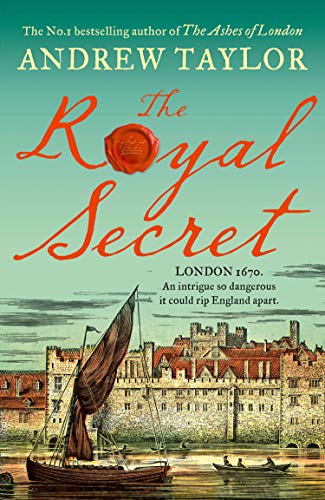
Can’t-Wait Wednesday: The Royal Secret by Andrew Taylor

Can’t-Wait Wednesday is a weekly meme hosted by Wishful Endings, to spotlight and discuss the books we’re excited about that we have yet to read. Generally they’re books that have yet to be released.

I love Andrew Taylor’s James Marwood and Cat Lovett series, historical fiction set during the reign of Charles II. So I was delighted when I was invited to read the latest instalment, The Royal Secret, due to be published on 29 April.

Description

From the No.1 bestselling author of The Last Protector and The Ashes of London comes the next book in the phenomenally successful series following James Marwood and Cat Lovett during the time of King Charles II.

Two young girls plot a murder by witchcraft. Soon afterwards a government clerk dies painfully in mysterious circumstances. His colleague James Marwood is asked to investigate – but the task brings unexpected dangers.
 
Meanwhile, architect Cat Hakesby is working for a merchant who lives on Slaughter Street, where the air smells of blood and a captive Barbary lion prowls the stables. Then a prestigious new commission arrives. Cat must design a Poultry House for the woman that the King loves most in all the world.
 
Unbeknownst to all, at the heart of this lies a royal secret so explosive that it could not only rip apart England but change the entire face of Europe…

~~~

The earlier books are – The Ashes of London (set in 1666, six years after Charles II was reinstated as King) and The Fire Court (set in 1667, eight months after the Great Fire of London), The King’s Evil (set seven months later), and The Last Protector (set in 1668 as the exiled Richard Cromwell, son of Oliver, heavily in debt, has returned in disguise to England.)

It is not necessary to read the earlier books as I think they all work well as standalones, but I think it really helps if you do.

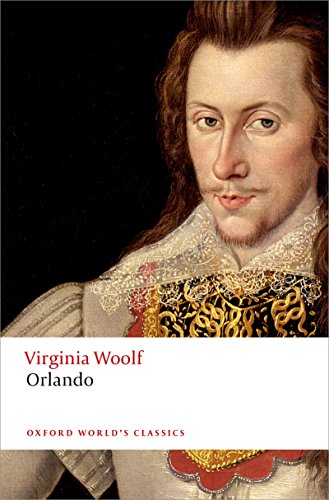
Orlando by Virginia Woolf

Rating: 4 out of 5.

Orlando: a Biography has been on my TBR shelves for nearly five years now, so I was glad it came up in the Classics Club spin as this gave me the push to actually read it. I won Orlando in one of Heaven Ali’s Woolfalong giveaways in May 2016 and I’m sorry that I haven’t read it before now. I did start it when I first got it, but found it a bit ‘difficult to get into it’ and left it on my bookshelves for while – the while turned out to be nearly five years!

I’ve read some of Virginia Woolf’s books before – Mrs Dalloway, To The Lighthouse, Kew Gardens (a short story), Flush: a biography of Elizabeth Barrett Browning’s dog, A Room of One’s Own and The Three Guineas (in one volume and more recently, I’ve read The Voyage Out, and Death of a Moth and other essays.

Synopsis:

Orlando tells the tale of an extraordinary individual who lives through centuries of English history, first as a man, then as a woman; of his/her encounters with queens, kings, novelists, playwrights, and poets, and of his/her struggle to find fame and immortality not through actions, but through the written word. At its heart are the life and works of Woolf’s friend and lover, Vita Sackville-West, and Knole, the historic home of the Sackvilles. But as well as being a love letter to Vita, Orlando mocks the conventions of biography and history, teases the pretensions of contemporary men of letters, and wryly examines sexual double standards.

My thoughts:

Orlando is a fictionalised biography of Vita Sackville-West, based on her life. They had met in 1922 when Woolf was 40 and Vita was 30, when Wolf described her as ‘lovely’ and ‘aristocratic’. I was a bit overwhelmed at times reading Orlando – such a fantastical novel, spanning 500 years. There are copious literary, historical, and personal allusions and despite continually referring to the Explanatory Notes at the end of the book I’m sure I missed a lot of them. And it makes for a fragmentary reading experience, having to stop reading and flip backwards and forwards between the text and the notes, so that I was a bit confused about the story and what happened when.

But having said that the plot is extraordinary, beginning towards the end of Elizabeth I’s reign when Orlando is a young nobleman, and continuing for the next five hundred years to the start of the twentieth century. You have to completely suspend your disbelief, not just for the length of his life, but also for his/her gender as in the late 17th century whilst he is an ambassador for Charles II he falls into a trance for seven days, only to find when he comes to that ‘he’ has become a young woman. As a woman she lives with a group of Turkish gypsies and then returns to England in the 18th century, when she has difficulty in being identified as a woman. In the 19th century she falls in love with a young romantic traveller, finally finding freedom in finishing the poem she began in the 16th century and in experiencing the delights of motoring in the early years of the 20th century.

What I’ve described here is just the bare bones of the book, because there are many vivid passages – such as her description of the ‘Great Frost’ of 1608, when the Thames was frozen for six weeks and Frost Fairs were held on the ice. It hit the country people the hardest:

But while the country people suffered the extremity of want, and the trade of the country was at a stand still, London enjoyed a carnival of the utmost brilliance. The Court was at Greenwich, and the new King seized the opportunity that his coronation gave him to curry favour with the citizens. He directed that the river, which was frozen to a depth of twenty feet and more for six or seven miles on either side should be swept, decorated and given all the semblance of a park or pleasure ground with arbours, mazes, alleys, drinking booths, etc at his expense. For himself and his courtiers, he reserved a certain space immediately opposite the Palace gates; which railed off from the public only by a silken rope, became at once the centre of the most brilliant society in England. (pages 22-23)

She also writes about writing and about books, about the nature of gender, and about the position of women in society over the centuries. One theme that fascinates me is her depiction of the passage of time, particularly in the final section of the book set as the 20th century reached 1928 (the year Orlando was published). Overall it is a book steeped in history showing how the passage of time had changed both the landscape and climate of England along with its society – and I have only scratched the surface in this post. It is a book packed with detail that deserves to be read more than once to appreciate it fully.

  • Publisher : OUP Oxford; 2nd edition (11 Dec. 2014)
  • Language : English
  • Paperback : 288 pages
  • ISBN-10 : 019965073X
  • ISBN-13 : 978-0199650736