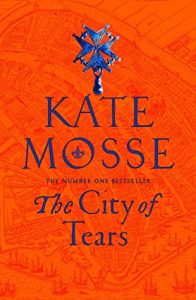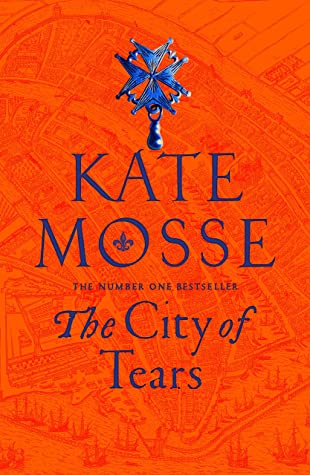
The City of Tears by Kate Mosse

Rating: 5 out of 5.

Pan Macmillan, Mantle| 19 January 2021 | 562 pages|e-book |Review copy|4*

Kate Mosse sets out in her Historical Note the history of the French Wars of Religion that took place between Huguenots (Protestants) and Catholics from 1562 and 1598 and explains that The City of Tears is the second book in The Burning Chambers series of novels set against the backdrop of 300 years of history from 16th century France and Amsterdam to the Cape of Good Hope in the 18th and 19th centuries. And there is a useful list of the principal characters and the historical characters at the beginning of the book, that helps in remembering who was who and how they were connected.

It’s been four years since I read The Burning Chambers, the first book in The Burning Chambers series, and time has moved on ten years since the events in that first book. You don’t have to read the first book before reading The City of Tears as with four years between the two books I didn’t find it hard to pick up the story, but I do think you need to read the Historical Note to get the background details of the French Wars of Religion first.

There is now a precarious peace in the French Wars of Religion and it looks as though that peace could be maintained as the queen mother, Catherine de Medici, has negotiated a marriage between her Catholic daughter Margot and the Huguenot Henri of Navarre. But that union is opposed by the hardline Catholic faction led by the Duke of Guise. As the novel opens Minou Joubert and Piet Reydon, now married and living in their castle in south west France, are preparing for their visit to Paris for the wedding.

This is a complicated story centred on Minou and Piet Reydon and their family. The wedding took place followed by the St Bartholomew’s Day Massacre on 24 August 1572 when thousands of Protestants were murdered by Catholic troops, in Paris and across France. I’m not going to go into any more detail about the story other than to say it’s a compelling story of chaos and fear as Minou and her family escape, though suffering dreadful losses, including the disappearance of her seven year old daughter, and almost losing their lives. There’s murder, conspiracies, stolen relics and innumerable secrets are brought to light.

It is an enjoyable book, but because of its length it does lose pace in parts. It is not a book you can or would want to read quickly. The strength of the book for me is in the characterisation and the settings. Kate Mosse has thoroughly researched the period and the locations, rooting it firmly in the time it was set. What I particularly like is that she identifies that the characters and their families, apart from the historical ones, are imagined, inspired by ‘the kind of people who might have lived: ordinary women and men , struggling to live, love and survive against a backdrop of religious war and displacement.’ Just as devastating today, as it was then.

It is also a book that is strong on developing the characters, so that you feel for them as they struggle to survive all that is thrown at them, as it is certainly a tragic story. Having said that the ending is a positive one, except for cliff hanger on the last page that hints at what is to come in the third book, The Ghost Ship, a sweeping historical epic about love in a time of war, due out in July this year.

WWW Wednesday: 15 February 2023

WWW Wednesday is run by Taking on a World of Words.

The Three Ws are:

What are you currently reading?
What did you recently finish reading?
What do you think you’ll read next?

Currently I’m reading three books:

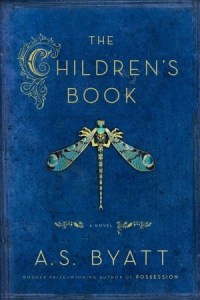
The Children’s Book by A S Byatt. This is one of my oldest TBRs, a book I’ve owned since 2009. I did start reading it as soon as I got (it was a birthday present) but I didn’t get very far! It’s a big book with 624 pages and at the time I was in the middle of reading Wolf Hall and I couldn’t cope with to such long and complicated books, so I temporarily put down The Children’s Book to read later – then other books got in the way. It begins in 1895 in the South Kensington Museum (now the Victoria and Albert Museum) and ends with the end of the Great War. There are lots of characters and it’s about children, about books, about art, about the writing of children’s books, about the telling of children’s stories, and about the clash between life and art. It’s detailed and richly descriptive full of fascinating facts. I’ve only the first three chapters so far and I’m loving it.

I’m also reading The City of Tears by Kate Mosse, one of my NetGalley books that I ‘should’ have read long before now. It’s another long book, the second in The Burning Chambers trilogy. I’ve read the first book, which began slowly and developed into a fast moving story with a dramatic climax. There’s a huge cast of characters and it continues the story of Minuo Reydon-Joubert and Piet Reydon during the Catholic and Huguenot conflicts in the sixteenth century. It looks to be just as good as The Burning Chambers (my review).

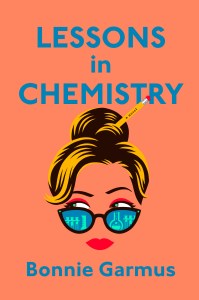
The other book I’m reading is Lessons in Chemistry by Bonnie Garmus. I usually avoid hyped books, but this one interested me. It’s about Elizabeth Zott, who is described as ‘not your average woman’. I had a look at the sample and liked the beginning so I borrowed it from the library. It’s also described as ‘laugh-out-loud funny’, but I’m not finding that at all and I’ve read 13 chapters so far. In fact I’m finding it a bit irritating.

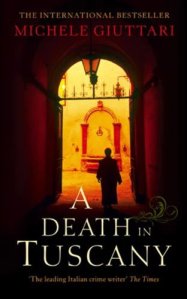
The last book I read is A Death in Tuscany by Michele Giuttari. Chief Superintendent Michele Ferrara, head of Florence’s elite Squadra Mobile, is investigating the death of a young girl, whose body was found in the picturesque Tuscan hill town of Scandicci, lying by the edge of the woods.When he delves deeper he believes the girl was murdered, And then his close friend Massimo Verga is accused of murder and has disappeared, so Ferrara is desperate to find him, and it appears both the Freemasons and the Mafia are involved.

Next I’ll be reading – It’ll be a while before I’ve finished the books I’m currently reading so it’s too soon to decide what I’ll read next.

Although this is a weekly meme I’m only taking part occasionally.

Books Read in January

I read 8 books in January, enjoying some much more than others. I am hoping to write about the three books I haven’t reviewed but in case I don’t get round to it I’ve written a few words about them here.

1. The Stroke of Winter by Wendy Webb 2.5*

2. The Girl Who Died by Ragnar Jonasson 3*

3. Ghost Walk by Alanna Knight 3*

4. Aftermath by Peter Robinson 3*

5. Underworld by Reginald Hill 5* – the 10th Dalziel and Pascoe crime fiction novel, set in the Yorkshire mining town of Burrthorpe in 1986, two years after the Miners’ Strike. I thoroughly enjoyed this. For now I’ve copied the summary from Fantastic Fiction because this is a complex book that needs more description than just a few lines:

When young Tracey Pedley vanished in the woods around Burrthorpe, the close-knit community had their own ideas about what had happened, but Deputy Chief Constable Watmough has it down as the work of a child-killer who has since committed suicide — though others wondered about the last man to see her alive and his fatal plunge into the disused mine shaft. Returning to a town he left in anger, Colin Farr’s homecoming is ready for trouble, and when a university course brings him into contact with Ellie Pascoe, trouble starts… Meanwhile Andy Daziel mutters imprecations on the sidelines, until a murder in Burrthorpe mine forces him to take action that brings him up against a hostile and frightened community…

6. Lion by Conn Iggulden 4*

7. The Last Rose of Shanghai by Weina Dai Randel 3* – historical fiction set Japanese-occupied Shanghai, this is a World War Two romance, the story of Aiyi Shao, a young heiress and the owner of a glamorous Shanghai nightclub and Ernest Reismann, a penniless Jewish refugee who had fled from Germany. I loved the beginning of this book but the rest of the book was not so good – too much ‘telling’ and I’d have liked less focus on the romance, which to me was barely believable So, 5* for the first 40%, 2* for the rest, so 3* overall. But plenty of other readers love this book.

8. Shroud of Darkness by E C F Lorac 4* – a Golden Age crime fiction beginning with five passengers on a train from Cornwall to London. When it arrives at Paddington Station in thick fog, one of the passengers is brutally attacked and left for dead. Chief Inspector MacDonald first has to identify the victim, whose pockets had been rifled and then discover why he was attacked and who did it. Another book I really enjoyed, trying to work out what had happened and failed – I was completely baffled, as much in the dark as the fog-bound passengers.

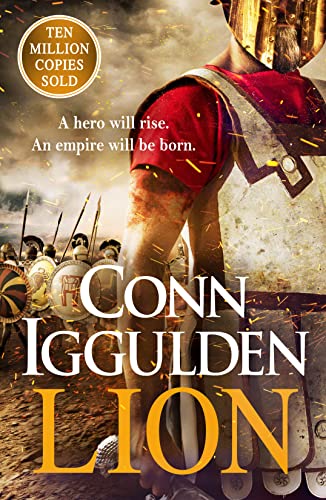
Lion by Conn Iggulden – the First in The Golden Age series

Penguin| 26 May 2022| 416 pages| Review Copy| 4*

Ancient Greece, 5th century BC

The age of myths and legends has given way to the world of men. In the front rank stands Pericles, Lion of Athens.
Behind Pericles lies the greatest city of the ancient world. Before him, on land and at sea, stands the merciless Persian army. Both sides are spoiling for war.

Though still a young man, Pericles knows one thing: to fight a war you must first win the peace

It’s time for a hero to rise.

For his enemies to tremble.

And for Athens, a city of wisdom and warriors, to shine with glory . . .

I was so pleased when I started reading Lion as I realised straight away I was going to enjoy it. It’s been a long time since I read anything set in Ancient Greece, so a lot was new to me, including the characters as well as the historical setting. This is the first book in Conn Iggulden’s Golden Age series set in the 5th century BCE. I thoroughly enjoyed it which surprised me as generally speaking I’m not keen on reading battle scenes and the book starts and ends with battles. But I had no problem with following the action of the battles between the Greeks and the Persians, and was able to visualise what was going on without any difficulty. The characters’ names took me a little while to get clear in my mind but I soon got used to them.

The two main characters are both young men, Cimon the older of the two has more authority than Pericles, the younger man. Lion is the story of their early careers. Iggulden covers the capture of Eion under Cimon’s leadership of the Delian League, an alliance of Greek states, and of Scyros where Cimon found the bones of Theseus and returned them to Athens. He then captured Cyprus and destroyed a Persian fleet on the Eurymedon River. Below the age of thirty little is known of Pericles’ life, but the likelihood is that he was with Cimon for these events.

The middle section of Lion forms an interlude between the battles and is about Pericles’ marriage to Thetis, and his involvement in the theatre in Athens and the Festival of Dionysus. Pericles was the ‘choregos’ (producer) of Aeschylus’ plays made up of three tragedies and a ‘satyr’ play. I found this part of the book just as fascinating as the battle scenes.

Iggulden adds a useful historical note and recommends reading Pericles: a Biography in Context by Thomas R Martin for more information.

The next book in the Golden Age series is Empire, which will be released on May 25, 2023.

My thanks to the publishers for a review copy via NetGalley.

Ghost Walk by Alanna Knight

The 4th book in Alanna Knight’s Rose McQuinn historical crime fiction series, Ghost Walk is set in 1897 mainly in Eildon, a village in the Scottish Borders.

Three years have passed since Rose McQuinn’s husband, Danny, disappeared in Arizona, whilst working for Pinkerton’s Detective Agency. During that time she has become a Lady Investigator and is about to marry her lover, Detective Inspector Jack Macmerry of the Edinburgh Police. But when a nun from the local convent claims to have received a letter from Danny she is anxious to find out if he is still alive. Rose hopes Danny’s older relative, Father McQuinn, a priest living in the village of Eildon in the Scottish Borders will be able to tell her more.

Rose lives in Solomon’s Tower, a (fictional) tower at the foot of Arthur’s Seat, an old volcano in Edinburgh. A mysterious deerhound, Thane lives somewhere on Arthur’s Seat and often accompanies her. There is a deep bond between the two of them and he often seems to read her mind and understand when she is in danger. As the novel begins Rose and Thane go to Eildon, to meet her future in-laws, just before the wedding, which will also give her an opportunity to talk to Father McQuinn. However, before she can ask him about Danny, he dies under mysterious circumstances and Rose becomes convinced that both his death and that of his housekeeper are in fact murders.

But the main focus of this book is not the murder mystery, nor the suspicions about a Fenian plot to assassinate Queen Victoria during the Jubilee celebrations, but the relationships between Rose and Jack, who has to stay in Edinburgh to testify at a trial, and also between Rose and Jack’s parents, particularly his mother who refuses to acknowledge that Rose is a widow. It also highlights the position of women in a country village during that period. I wanted to know more about Thane, particularly his role at the end of the book – how did he escape with his life?

I liked Rose for her determination to discover the truth and her persistence in being a Lady Detective, despite much opposition. There are nine books in the Rose McQuinn series. I’ve read the first one as well as Ghost Walk and hope to read the others to find out more about her.

  • Publisher ‏ : ‎ Allison & Busby (6 Sept. 2012)
  • File size ‏ : ‎ 537 KB
  • Print length ‏ : ‎ 288 pages
  • My own copy
  • Rating: 3*

Historical Fiction Challenge 2023

Marg at The Intrepid Reader hosts the Historical Fiction Reading Challenge. Each month, a new post dedicated to the HF Challenge will be created where you can add the links for the books you have read.

Everyone can participate! If you don’t have a blog you can post a link to your review if it’s posted on Goodreads, Facebook, or Amazon, or you can add your book title and thoughts in the comment section if you wish.

Any sub-genre of historical fiction is accepted (Historical Romance, Historical Mystery, Historical Fantasy, Young Adult, History/Non-Fiction, etc.)

During the following 12 months you can choose one of the different reading levels:

20th Century Reader – 2 books
Victorian Reader – 5 books
Renaissance Reader – 10 books
Medieval – 15 books
Ancient History – 25 books
Prehistoric – 50+ books

I love historical fiction so in 2023 I’m hoping to reach the Medieval level, that is to read 15 books.