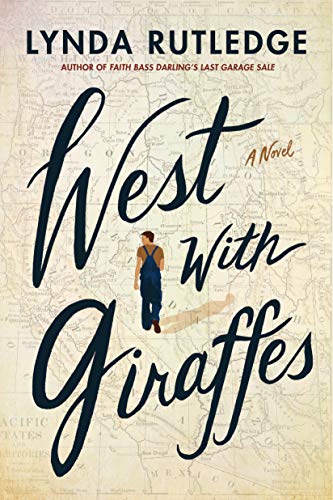
West with Giraffes by Lynda Rutledge

Lake Union Publishing| 2001| 346 pages| e-book| I bought it| 5*

Description on Amazon:

An emotional, rousing novel inspired by the incredible true story of two giraffes who made headlines and won the hearts of Depression-era America.

“Few true friends have I known and two were giraffes…”

Woodrow Wilson Nickel, age 105, feels his life ebbing away. But when he learns giraffes are going extinct, he finds himself recalling the unforgettable experience he cannot take to his grave.

It’s 1938. The Great Depression lingers. Hitler is threatening Europe, and world-weary Americans long for wonder. They find it in two giraffes who miraculously survive a hurricane while crossing the Atlantic. What follows is a twelve-day road trip in a custom truck to deliver Southern California’s first giraffes to the San Diego Zoo. Behind the wheel is the young Dust Bowl rowdy Woodrow. Inspired by true events, the tale weaves real-life figures with fictional ones, including the world’s first female zoo director, a crusty old man with a past, a young female photographer with a secret, and assorted reprobates as spotty as the giraffes.

Part adventure, part historical saga, and part coming-of-age love story, West with Giraffes explores what it means to be changed by the grace of animals, the kindness of strangers, the passing of time, and a story told before it’s too late.

My thoughts:

I read West with Giraffes by Lynda Rutledge in September this year but didn’t get round to writing about it then. I don’t think I need to add anything to the description shown above other than to say that I loved this story. I didn’t really expect to like it as much as I did – that took me by surprise. It has a colourful cast of characters, all fictional apart from the owner of the San Diego Zoo, Mrs Belle Benchley, a remarkable woman. In the Historical Notes at the end of the book she’s described as ‘an early glass-ceiling breaker‘. She began working at the zoo in 1925 as a civil servant bookkeeper, and working her way through a number of different roles eventually becoming known in the late 1930s as ‘the only female zoo director in the world‘. She believed that the only way people would care about wild animals was to meet them.

Not knowing much about American history I found the Historical Notes very helpful, particularly those about the Great Hurricane of 1938, the most destructive storm to strike New England in recorded history until 2012’s Hurricane Sandy. The journey the giraffes took was primarily the Lee Highway, the more southern, of the transcontinental routes at the time, designed to be a southern counterpart to the northern Lincoln Highway. The author’s website is fascinating giving lots of information about the book, photos from newspaper articles and details about her writing process.

It conjures up a vivid picture of America in 1938 during the Great Depression, the Dust Bowl, hobo cards, nomadic workers taking jobs where they could, desperate Hooverville dwellers in shanty towns, sundown town racism, and circus animal cruelty. But of course, it is the giraffes that are the two main characters. It is a remarkable book and if you like historical fiction based on fact, books about travel and an exciting story I think you’d enjoy it too.

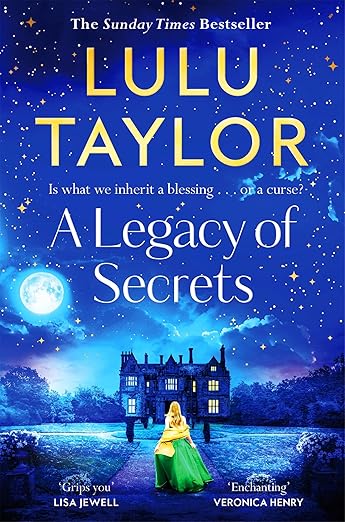
A Legacy of Secrets by Lulu Taylor

Pan Macmillan| 4 December 2025| 445 pages| e-book| Review copy| 3*

Description:

Is the truth a legacy worth inheriting?

Flick Templeton seems to have it all: money, a renowned family name, brains and talent. But her wealth and status seem an obstacle to the real love she longs for. Guided by passion, she seeks her soulmate while finding her own path – but will the legendary family curse of tragedy and loss always thwart her?

Etta, Flick’s daughter, inherits her own share of the family blessings along with its darkness. Growing up, she is pulled between caring for her mother and finding her own identity. As Etta unravels the threads of Flick’s secrets, she starts to learn the truth about who she really is . . .

But can Flick and Etta ever break truly free from the shadows of a painful past, and the curse that seems to hang over every generation of their family?

This is the first book I’ve read by Lulu Taylor, so I wasn’t sure I would enjoy it. But when I had an invitation from Pan Macmillan to read this book I thought I’d read it, based on the blurb.

Once I’d started reading it I found it gripping and compelling, but I also found that it’s full of emotion, from ecstasy to the depths of despair about a dysfunctional family, with some truly awful characters.They believe their family is cursed. It’s a dramatic family saga, verging on melodrama, high on romance, intermingled with mystery and intrigue. It’s also very long encompassing three generations, over different time lines. I did find the structure of the plot rather muddled, so it’s definitely a book you have to read carefully to keep track of the characters over the years from 1952 to 1992.

The main character is ‘little girl lost‘ Flick (Felicity) Templeton, the daughter of the fabulously rich and glamorous, Gloria, who is so unbelievably selfish, self-centred, and controlling, a perfectly horrible person. The novel begins in 1952 with Brinsley and Flick’s eighteenth birthday party to celebrate their coming-of-age, when Brinsley would take possession of Caundle Court. This puzzled me as in 1952 the date when a young person became an adult was 21 and it was not until 1969 that it was lowered to 18. I know this book is fiction, but this is so incorrect that it made me wonder if I wanted to carry on reading. Nevertheless I did because a mystery always intrigues me. However, as I read on it soon became clear what the secret was and it wasn’t too hard to work it out well before it was revealed, over 400 pages later. I had been tempted to jump to the end to see if I was right but because I received this book via NetGalley to review I thought it was only fair to read the whole book.

Despite my misgivings I did find enough that I liked to give A Legacy of Secrets 3 stars. I enjoyed the details of life in the 1950s when Flick went to a finishing school in Oxford and her brother went to Magdalen College to read history. I liked Flick’s daughter a lot, and determination to uncover the family’s secrets. I also liked the descriptions of all the locations and the interaction between the characters showing how misunderstandings arise and the difficulties of mother/daughter relationships. I could feel the heartbreak and sadness as the characters experience all the setbacks that are thrown at them. It’s a complex and emotional book, one that I liked rather than loved.

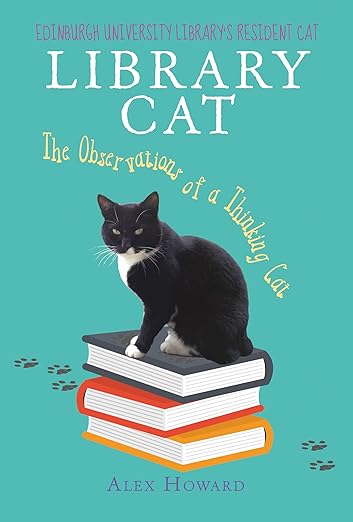
Two Novellas for Novellas in November The Library Cat & the Ghost Cat by Alex Howard

Novellas in November, is a challenge hosted by Cathy at 746 books and Rebecca at Bookish Beck, books under 200 pages long.

Here are two novellas by Alex Howard that I really enjoyed reading.

Rating: 4 out of 5.

Library Cat The Observations of a Thinking Cat by Alex Howard (161 pages Black & White Publishing 2016) Winner of the People’s Book Prize 2017 Beryl Bainbridge Award for Best First Time Author.

Library Cat, the resident cat of the University of Edinburgh’s Main Library, is not like other cats. He is a thinking cat. You can tell by the canny glint in his eye, his disdainful whiskers and his unrelenting interest in books and piles of paper.

This is a book for cat lovers as well as library lovers – that’s me for one, so although I thought the beginning of this book was rather slight I was soon captivated by the Library Cat. He is black and white, with one ‘white paw and one black paw with a white tip that makes it look like it has been dipped into a churn of fresh milk.’

This is a story about Library Cat’s thoughts and his own search for completeness in this fractured world. It is a funny, witty and irreverent look at the world, seen through the unusually observant eyes of Edinburgh University Library’s resident cat. The chapters are quite short to start off with, getting longer towards the end, as he thinks about life, muses on the strange behaviour of humans, particularly of students and ponders the work of Nietzsche. At the end of each chapter there’s a list of Recommended Reading, notes on the food he ate, his Mood, and he Discovers about Humans.

I enjoyed this light, yet philosophical little book complete with the Library Cat’s Bibliography, listing all the recommended books.

Rating: 5 out of 5.

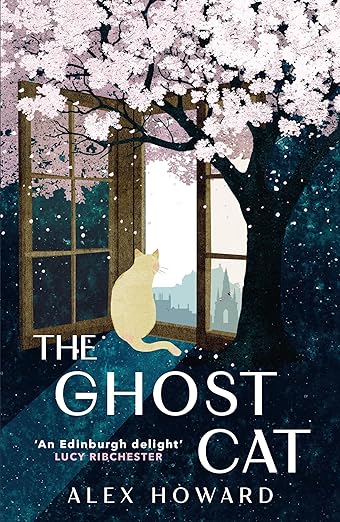
The Ghost Cat by Alex Howard ( 192 pages & White Publishing 2023}

I preferred this one as it is more developed, following Grimalkin’s life after his mother abandoned him as a kitten, in 1887, through his nine lives in Edinburgh. He was found, near to death in an icy stable, by Eilidh, a maid servant to Mr Calvert who lived at 7/7 Marchmont Crescent.

A cat has nine lives. For three he plays, for three he strays and for the last three he stays. ~ English proverb.

His death came in 1902 as he lay sleeping in front of the fire and ‘as the rising flames beat their warmth upon his fur, the twist of his thoughts fell silent for the last time ever in this life.’ (page 14)

From then on the story follows Grimalkin as he experiences the rest of his nine lives and witnesses the changes of the next 120 years, prowling unseen among the inhabitants of an Edinburgh tenement, while unearthing some startling revelations about the mystery of existence, the unstoppable march of time and the true meaning of feline companionship.

He found himself in another world and with a new existence and meets the Cat-sith,* a huge cat that walks on its hind legs. The Cat-sith has missed his death, thus depriving him of his nine lives. The only way he can make amends is to give Grimalkin a choice of passing over to oblivion immediately or to return to earth and spend his remaining eight lives observing its future. However, although this would prevent him from experiencing physical pain it wouldn’t guard him against a great many painful emotions, albeit with many more positive ones. All these live and 2022s will take place in the supernatural realm. He becomes a Ghost Cat.

This is history as seen through the eyes of a cat from 1902 to 2022. I’m not going to go into detail about his remaining lives, other than to say he witnessed events in 1909, 1935, 1942, 1969, 1997, 2008 and 2022. As well as the main story there are Grimalkin’s observations and notes explaining various events and technological changes that had taken place in each period.

I was fascinated and just loved it, such a novel experience, informative and full of emotion right to the end. I shall certainly look out for more of Alex Howard books – the next book is The Ship’s Cat, described as an epic new adventure for feline fans. The Ship’s Cat is the Odyssey with cats – a heroic yet feel-good tale of unlikely friendship on the high seas.

*According to Wikipedia the Cat-sith is a fairy or spirit creature from Celtic mythology, said to resemble a large black cat with a white spot on its chest that walks on its hind legs. Legend has it that the spectral cat haunts the Scottish Highlands.

Alex Howard is an author, editor and theatre professional from Edinburgh. His TikTok page, Housedoctoralex, has nearly 300,000 followers and his been featured on television and in the national press.

A doctoral graduate of English literature, Alex wrote his first book Library Cat (B&W Publishing) while completing his PhD. It won the People’s Book Prize in 2017, and has been translated into French, Korean and Italian. He also writes poetry, which has been published in New Writing Scotland, Gutter and The London Magazine, among others, and his academic book Larkin’s Travelling Spirit was published in 2021 by Palgrave McMillan.

Alex works at Capital Theatres as a creative engagement coordinator and editor while renovating his Edinburgh tenement flat at weekends, with his cat Tabitha, son Sasha and wife, Ellie.

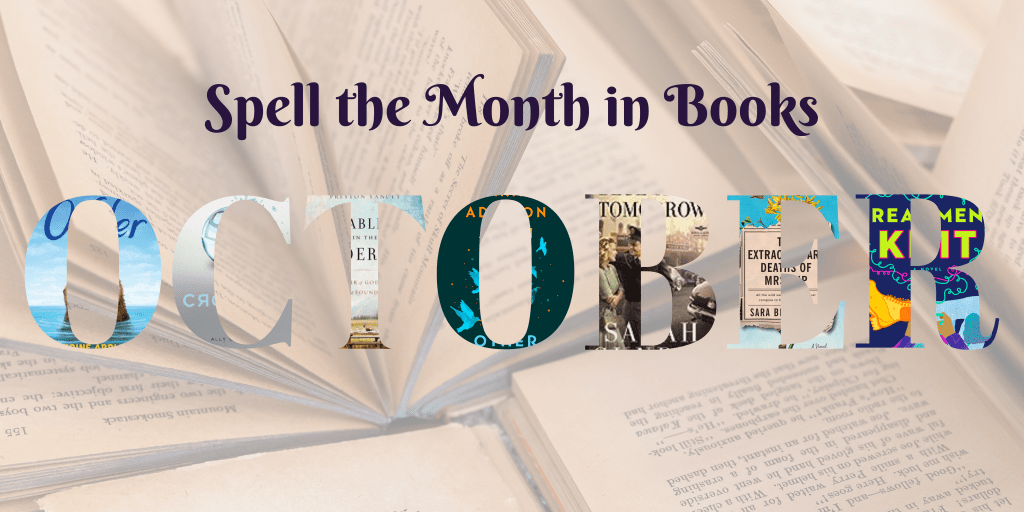
Spell the Month in Books – October 2025

Spell the Month in Books is a linkup hosted by Jana on Reviews From the Stacks on the first Saturday of each month. The goal is to spell the current month with the first letter of book titles, excluding articles such as ‘the’ and ‘a’ as needed. That’s all there is to it! Some months there are optional theme challenges, such as “books with an orange cover” or books of a particular genre, but for the most part, any book you want to use is fair game!

This month’s theme is Trick or Treat: books that you feel strongly about, whether positively or negatively.

I don’t like tricks so my books are all books I’ve enjoyed – real treats!

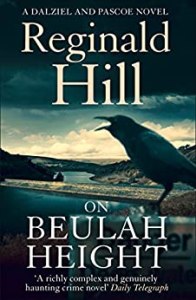
O is for On Beulah Height by Reginald Hill

Reginald Hill’s 17th Dalziel and Pascoe novel, set in a Yorkshire village, Dendale. Three little girls had gone missing from the village one summer. Their bodies were never found, and the best suspect, a strange lad named Benny Lightfoot, was held for a time, then released. Fifteen years later another little girl, Lorraine, aged seven went out for a walk one morning with her dog before her parents got up and didn’t return home, reviving memories of the missing children from fifteen years earlier. It was a case that has haunted Dalziel.

This book is tightly plotted with many twists that made me change my mind so many times I gave up trying to work out who the murderer was and just read for the pleasure of reading. Hill’s descriptive writing is rich and full of imagery. The main characters are fully rounded people and the supporting cast are believable personalities, often described with wry humour.

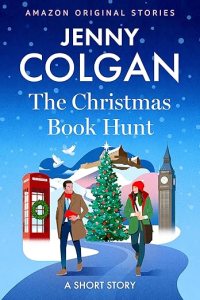
C is for The Christmas Book Hunt by Jenny Colgan.

Mirren is looking for a copy of A Child’s Garden of Verses by Robert Louis Stevenson, a particular one that had belonged to her Great Aunt Violet. It was a special edition, with hand-drawn plates by Aubrey Beardsley and now Great Aunt Violet, who is in hospital seriously ill would love to see the book for Christmas. I loved that book as a child, so this is what made the story irresistible for me. She went to the book town Hay-on-Wye, bookshops in Edinburgh and a secondhand bookshop in Northumberland that sounds very like Barter Books in Alnwick, my favourite bookshop. She bumps into mysterious, charming Theo, who, unbeknownst to her, is searching for the same book for reasons of his own…


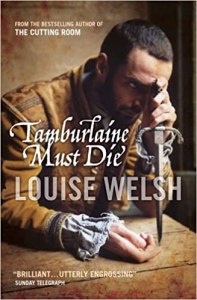
T is for Tamburlaine Must Die by Louise Welsh

It was a real treat to read Tamburlaine Must Die, a short book of only 140 pages, that I read in a day. Weaving together fact and fiction and set in 1593 this is a tense, dramatic story of the last days of Christopher Marlowe, playwright, poet and spy. Accused of heresy and atheism, his death is a mystery, although conjecture and rumours abound. It has an immediacy, that drew me into the late Elizabethan world.

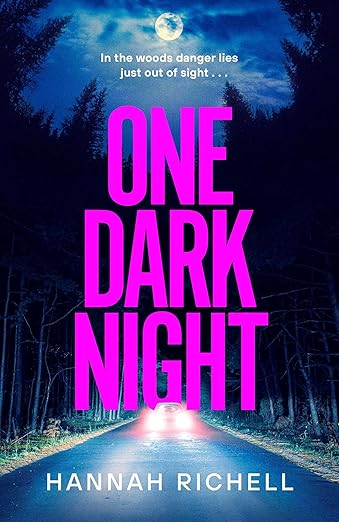
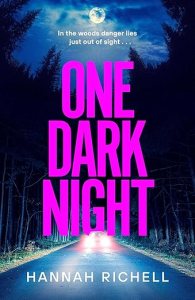
O is for One Dark Night by Hannah Richell

I loved the spooky, tense atmosphere and as soon as I started reading it knew I was going to enjoy this book. The settings are vividly described, the characters come across as real people, and the plot is amazing, multi- layered, with plenty of suspects for the murder and numerous twists and turns to throw me off the scent. For quite a while you don’t even know the name of the victim, who was found in the woods, called ‘Sally in the Wood’. It’s a police procedural centred on Ellie, a pupil at the private school, where her mother Rachel works as the school counsellor and her father, Ben, a detective sergeant who is on the investigation team

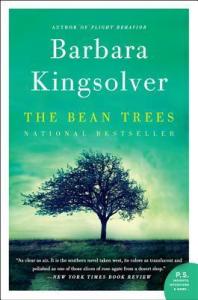
B is for The Bean Trees by Barbara Kingsolver

I loved this book. Barbara Kingsolver writes in such a way that I can easily visualise the scenes, beginning with the opening paragraph in which she describes a tractor tire blowing up, flinging a man up in the air and throwing him over the top of a Standard Oil sign. Taylor (originally called Marietta/Missy) grew up in rural Kentucky. She left home when she had saved enough to buy a car, an old VW. She changed her name to Taylor after the first place where she ran out of petrol, which just happened to be Taylorville. She drove on until the car broke down in the middle of nowhere, on land owned by the Cherokee tribe. And it was there at a garage that an Indian woman abandoned a baby girl in Taylor’s car – she called the baby, Turtle.

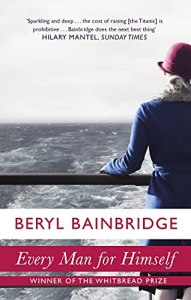
E is for Every Man For Himself by Beryl Bainbridge.

This the story of Morgan’s voyage on the Titanic, divided into four days as he tells it. It’s mainly about the young rich people as they drink and party their way across the Atlantic. Morgan is part of the crowd but he is not rich, and although he has connections, he’s a young American who has to earn his living. Day four is the day the Titanic sank. I could easily imagine what it was like to be a passenger, people rushing about the boat, trying to get on the lifeboats and being separated from friends and family. And the final scenes bring home the reality that it really was a case of every man for himself with the callous attitude towards the steerage passengers, the lack of lifeboats and the disregard of the ice warnings. And so the boat described as unsinkable, sank.

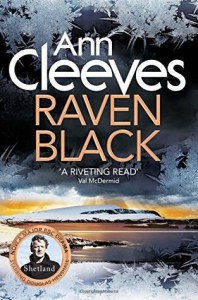
R is for Raven Black by Ann Cleeves, the first in her Shetland series, crime novels set in the Shetland Islands, to the north of mainland Scotland. This is a murder mystery investigated by Inspector Jimmy Perez.

It begins on New Year’s Eve as Magnus Tait is seeing the new year in on his own, until two teenage girls knock on his door to wish him a Happy New Year. A few days later one of the girls is found dead in the snow not far from Magnus’s house, strangled with her own scarf.

The book has a strong sense of location and a terrific atmosphere – the landscape, the sea, the weather, the circling ravens and the spectacle of Up Helly Aa (the Fire Festival), all anchor the story and bring the book to life.

Upcoming Themes

November 1: Nostalgia

December 6: Giftable – Books you would give or would like to receive as a gift

January 3, 2026: New Books – Ones you have received recently or are looking forward to reading or seeing published this year

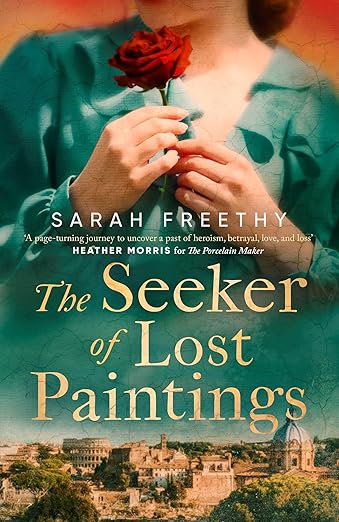
The Seeker of Lost Paintings by Sarah Freethy

Simon & Schuster UK| 11 September 2025| 400 pages| e-book| Review copy| 5*

Blurb:

Rome 1939
Arriving in Rome to work for the wealthy Montefalco family, Maddalena is homesick and alone. She finds solace – and love – in the beauty of the city, but as the war in Nazi-occupied Italy rages, she must make a devastating choice.

London, 1997
After her mother Maddalena’s death, Beatrice Fremont discovers a fragment of a painting and a letter that sends her on a hunt to Rome. Helping her is art dealer Jude Adler, who’s convinced they are looking for a lost Caravaggio. For Jude, this could be the find of a lifetime; but for Beatrice their search uncovers a shocking secret and the answer to a mystery kept hidden for years.

I’ve not read Sarah Freethy’s first novel, so I wasn’t sure what to expect from her latest book, The Seeker of Lost Paintings. I am delighted to say I loved it. It’s historical fiction set in two timelines, one in the 1940s in Italy and the other in 1997 in London and Italy. It appealed to me because of the mystery surrounding a lost Carravagio and I really enjoyed that aspect. I’ve read quite a lot of historical fiction set during the Second World War, but I don’t think I’ve read any set in Italy during the Nazi occupation before and it was this part of the story that I enjoyed the most.

The book begins with a Prologue set in Naples in 1610 with an unnamed artist as he starts a painting. Who he is and what he is painting only becomes clear later in the book. The narrative then flies forward to July 1997 and a hot day in London when Beatrice Fremont, yearning to be in Italy where both of her parents were born, is waiting for Jude Adler to arrive to value her late father’s art and photography collections. Her mother, Maddalena is seriously ill and they need to sell his collections to secure the family home.

When Jude spots a small painting, hanging on Maddalena’s bedroom wall, he is convinced he’d seen the image somewhere before. It reminds him of Caravaggio’s painting of St John the Baptist in Youth with a Ram. Caravaggio’s followers had made many copies of that painting and Jude is convinced that if it is one of those it could be worth tens of thousands. But Maddalena wants Beatrice to reunite the painting with its rightful owner. And so after Maddalena’s death, the search to find out more about the painting begins, taking Beatrice and Jude to Italy.

Back in 1939, Maddalena was working as a cook at the home of Conte Luca Montefalco, at the Villa Velare in Rome. Luca’s older brother Roberto had renounced his title and taken up Holy Orders, and is working at the Vatican where he is responsible for an art collection that must be preserved and removed from the Vatican in preparation for the impending war. It was a remarkably tense and difficult time in Italy, under Mussolini and the Fascists, and the local people suffered immensely under the Nazi occupation.

Sarah Freethy’s beautiful descriptive writing and characterisation transported me back to that period, almost as though I was there witnessing what life was like for the ordinary Italians during the war years – the dangers and privations they faced. It really is a remarkable book, drawing together the two strands of the story, both in the past and the present and ending in a satisfying conclusion.

Many thanks to the publishers, via Netgalley for my review copy and I’d love to read more of Sarah Freethy’s books.

WWW Wednesday 8 October 2025

WWW Wednesday is run by Taking on a World of Words.

The Three Ws are:

What are you currently reading?
What did you recently finish reading?
What do you think you’ll read next?

I haven’t done a WWW Wednesday post since July! Where has the time gone? We’re now in October and it’s definitely Autumn – colder but stil some bright sunny days. The leaves are now falling, soon our garden will be covered by them – we have a lot of trees.

Currently I’m reading one of Donna Leon’s Commissario Brunetti novels – Blood from a Stone, which I’m thoroughly enjoying. I’m not surprised by that as I’ve enjoyed all of the Brunetti books I’ve read. He is one of my favourite detectives, maybe even the favourite.

In this one Brunetti is investigating the death of one of the vu cumprà, illegal immigrants selling fake designer handbags from sheets on the ground. He was killed one cold night near Christmas when two men entered Venice’s Campo Santo Stefano and shot him five times. The only witnesses are some American tourists.

I’m also reading Gulliver’s Travels by Jonathan Swift (1667-1745), which I think is such a strange book, definitely not a children’s book as I had thought. First published in 1726, it’s a satire on human nature and the imaginary travellers’ tale literary subgenre about Lemuel Gulliver, a ship’s surgeon who travels to four strange and distant lands. I’ve nearly finished it and I’ll write more about it in a later post.

The last book I read was West with Giraffes by Linda Rutledge, a novel based on a true story which I loved.

Description from Goodreads

Woodrow Wilson Nickel, age 105, feels his life ebbing away. But when he learns giraffes are going extinct, he finds himself recalling the unforgettable experience he cannot take to his grave.

It’s 1938. The Great Depression lingers. Hitler is threatening Europe, and world-weary Americans long for wonder. They find it in two giraffes who miraculously survive a hurricane while crossing the Atlantic. What follows is a twelve-day road trip in a custom truck to deliver Southern California’s first giraffes to the San Diego Zoo. Behind the wheel is the young Dust Bowl rowdy Woodrow. Inspired by true events, the tale weaves real-life figures with fictional ones, including the world’s first female zoo director, a crusty old man with a past, a young female photographer with a secret, and assorted reprobates as spotty as the giraffes.

What will I read next? It could be The Case of the Canterfell Codicil Anty Boisjoly Mysteries Book 1) by P.J. Fitzsimmons, a locked room mystery.

Description from Goodreads

In The Case of the Canterfell Codicil, Wodehousian gadabout and clubman Anty Boisjoly takes on his first case when his old Oxford chum and coxswain is facing the gallows, accused of the murder of his wealthy uncle. Not one but two locked-room mysteries later, Boisjoly’s pitting his wits and witticisms against a subversive butler, a senile footman, a single-minded detective-inspector, an irascible goat, and the eccentric conventions of the pastoral Sussex countryside to untangle a multi-layered mystery of secret bequests, ancient writs, love triangles, revenge, and a teasing twist in the final paragraph. 

But when the time comes to start another book it could be something completely different.