Two Chief Inspector Macdonald Books by E C R Lorac

E C R Lorac was a pen name of Edith Caroline Rivett (1894-1958) who was a prolific writer of crime fiction from the 1930s to the 1950s, and a member of the prestigious Detection Club. She formed her pseudonym by using her initials and for the surname, the first part of her middle name spelled backwards. She also wrote under the name of Carol Carnac.

I’ve read just a few of her Chief Inspector Robert Macdonald books., written under the name E C R Lorac – Bats in the Belfry (1937) , Fell Murder (1944), Murder by Matchlight (1945) and Fire in the Thatch (1946).

And recently I’ve read two more : Checkmate to Murder, first published in 1944 and Murder in the Mill Race, first published in 1952. These have been recently re-published by the British Library as part of the British Library Crime Classics, with introductions by Martin Edwards.
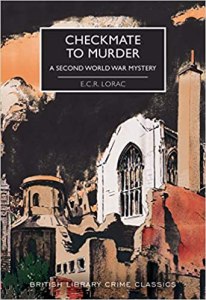
On a dismally foggy night in Hampstead, London, a curious party has gathered in an artist’s studio to weather the wartime blackout. A civil servant and a government scientist match wits in a game of chess, while Bruce Manaton paints the portrait of his characterful sitter, bedecked in Cardinal’s robes at the other end of the room. In the kitchen, Rosanne Manaton prepares tea for the charlady of Mr. Folliner, the secretive miser next door.

When the brutal murder of ‘Old Mr. F’ is discovered by his Canadian infantryman nephew, it’s not long before Inspector Macdonald of Scotland Yard is called to the scene to take the young soldier away. But even at first glance the case looks far from black-and-white. Faced with a bevy of perplexing alibis and suspicious circumstances, Macdonald and the C.I.D. set to work separating the players from the pawns to shed light on this toppling of a lonely king in the dead of night.

What I found fascinating in this book is the insight into what life was like in wartime London, complete with the London fog and the details of the blackout and although the Blitz was over there were still plenty of bangs and noise so that a gunshot wasn’t easily heard. The setting in a large studio that opens the book is a quiet scene as Bruce paints his sitter dressed as Cardinal Richelieu and two friends play a game of chess. Roseanne, Bruce’s sister is busy in the kitchen cooking their supper.Their evening is disrupted when a Special Constable bursts in with a young soldier in tow, claiming that he had killed his great-uncle in the next door building. This turns out to be more complicated than it first seemed. Even with just a limited number of suspects I couldn’t didn’t work out who the murderer was, nor how the murder had been committed. Macdonald explains it all at the end, having worked out ‘a reconstruction of the possibilities.’

~~~
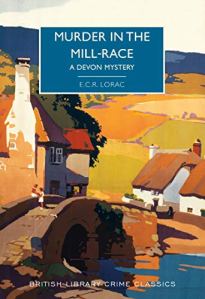
When Dr Raymond Ferens moves to a practice at Milham in the Moor in North Devon, he and his wife are enchanted with the beautiful hilltop village lying so close to moor and sky. At first they see only its charm, but soon they begin to uncover its secrets – envy, hatred and malice.

Everyone says that Sister Monica, warden of a children’s home, is a saint – but is she? A few months after the Ferens’ arrival her body is found drowned in the mill race. Chief Inspector Macdonald faces one of his most difficult cases in a village determined not to betray its dark secrets to a stranger.

One of the things I think that Lorac excelled in was her settings. Each one is described so that you can easily picture the scenery and the landscape. And that is important in this book as Sister Monica drowned in the mill race, the stream leading into the water mill. She sets out through Macdonald exactly how that could have happened. She also conveys the atmosphere and the social interactions of an isolated village in Devon in the years just after the end of the Second World War. On the surface this is an idyllic village, but it is just like any other community, with a cross-section of personalities, and a mix of neighbourliness and an undercurrent of envy, hatred and malice. Sister Monica, a formidable woman, revered by some, is in charge of a children’s home, which she rules with a rod of iron and knows everything about everybody. Others regard her with caution, as the bailiff, Sanderson tells Anne Ferens, the doctor’s wife:

She is one of those people who can not only lie plausibly and with conviction, but she can tell a lie to your face without batting an eyelid, knowing that you know it’s a lie, and it’s very hard to bowl her out. (page 34)

But the village close ranks when she is found dead in the mill race and it is hard for Macdonald and Detective Inspector Reeeve to get the villagers to open up and and talk about what she was really like. It appears to be suicide, but is it?

My Friday Post: Checkmate to Murder by E C R Lorac

Every Friday Book Beginnings on Friday is hosted by Gillion at Rose City Reader where you can share the first sentence (or so) of the book you are reading. You can also share from a book you want to highlight just because it caught your fancy.

This week I’m featuring one of the books I’m currently reading, Checkmate to Murder: a Second World War Mystery by E C R Lorac, first published in 1944. One of the things I like about this book is the setting and atmosphere of wartime London, when details such as blackouts, fire-watching and air raid precautions were everyday events.

It begins:

The vast studio had two focus points of light; between two pools of radiance was a stretch of shadows, colourless, formless, empty. At one end of the long, barn-like structure, where the light was most strongly concentrated, was a model’s platform. A high-backed Spanish chair stood upon it, with a dark leather screen as background. On the chair sat a man arrayed in the superb scarlet of a Cardinal’s robe, the broad-brimmed Cardinal’s hat upon his head.

Also every Friday there is The Friday 56, hosted by Freda at Freda’s Voice. *Grab a book, any book. *Turn to Page 56 or 56% on your  ereader . If you have to improvise, that is okay. *Find a snippet, short and sweet, but no spoilers!

These are the rules:

  1. Grab a book, any book.
  2. Turn to page 56, or 56% on your eReader. If you have to improvise, that is okay.
  3. Find any sentence (or a few, just don’t spoil it) that grabs you.
  4. Post it.
  5. Add the URL to your post in the link on Freda’s most recent Friday 56 post.
  1. Grab a book, any book.
  2. Turn to page 56, or 56% on your eReader. If you have to improvise, that is okay.
  3. Find any sentence (or a few, just don’t spoil it) that grabs you.
  4. Post it.
  5. Add the URL to your post in the link on Freda’s most recent Friday 56 post.

Page 56:

“Deceased was a miser, one of the real old-fashioned storybook misers. I won’t say I haven’t met one before – I have, though they are getting less common than they used to be. D’you remember old Simple Simon, who was always getting run-in for begging on the Embankment – £525 we found under the boards in his bedroom when he died, and another fifteen pounds odd in his filthy bedding. He died of starvation at last.”

~~~

About the book:

On a dismally foggy night in Hampstead, London, a curious party has gathered in an artist’s studio to weather the wartime blackout. A civil servant and a government scientist match wits in a game of chess, while Bruce Manaton paints the portrait of his characterful sitter, bedecked in Cardinal’s robes at the other end of the room. In the kitchen, Rosanne Manaton prepares tea for the charlady of Mr. Folliner, the secretive miser next door.

When the brutal murder of ‘Old Mr. F’ is discovered by his Canadian infantryman nephew, it’s not long before Inspector Macdonald of Scotland Yard is called to the scene to take the young soldier away. But even at first glance the case looks far from black-and-white. Faced with a bevy of perplexing alibis and suspicious circumstances, Macdonald and the C.I.D. set to work separating the players from the pawns to shed light on this toppling of a lonely king in the dead of night.

What do you think – would you read this book?

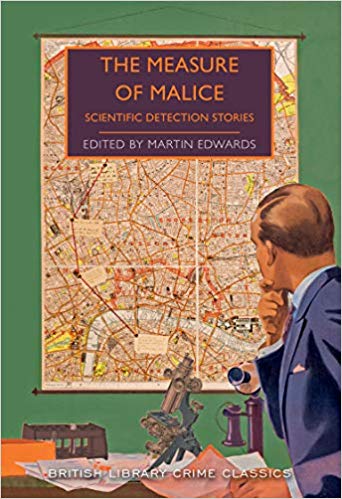
Measure of Malice: Scientific Detection Stories edited by Martin Edwards

The Measure of Malice edited by Martin Edwards is one of the more enjoyable short story collections that I’ve read. It contains 14 stories in which scientific/technological methods are used in the detection of crime. There is an excellent introduction by Martin Edwards with information about the authors, five of whom were doctors, two were engineers and one was an academic chemist.

As always with short story collections some stories are better than others. I’m highlighting a few of the better ones here:

The Boscombe Valley Mystery by A Conan Doyle was originally published in the Strand Magazine in October 1891, and is the first short story to feature Inspector Lestrade. It’s a solid story, solved by Sherlock Holmes by inspecting and analysing the footprints and signs at the scene of the crime.

The Horror of Studley Grange by L T Meade and Clifford Halifax (1894), from Stories for the Diary of a Doctor, originally published in the Strand Magazine. I enjoyed this one although it was pretty easy to predict. Ostensibly a ghost story, the solution involves the use of a laryngoscope.

After Death the Doctor by J J Connington, a Scottish professor of chemistry. This one was first published in 1934, involving a contemporary scientific gadget. The doctor in question is Doctor Shefford who together with Sergeant Longridge, investigate the murder of old Barnaby Leadburn, found dead with his throat cut.

The next two are the ones I enjoyed the most:

The Broken Toad by H C Bailey, first published in 1934, featuring the surgeon and Home Office Consultant, Reggie Fortune as he considers the death of a police constable from poisoning. I enjoyed all the detailed complications and Bailey’s literary mannered style of storytelling.

In the Teeth of the Evidence by Dorothy L Sayers, first published in 1939, about forensic dentistry, which starts as Lord Peter Wimsey is sitting in his dentist’s chair. The police had just visited the surgery, wanting to see his predecessor’s records to identify the victim of a burnt out garage. An upper right incisor crown and the filling in a molar provided the clues to his death. Gory if you actually visualise what is involved!

  • Publisher : Poisoned Pen Press (4 Feb. 2020)
  • Language: : English
  • Paperback : 336 pages
  • ISBN-10 : 1492699624
  • ISBN-13 : 978-1492699620
  • Source: The Poisoned Pen Press via NetGalley
  • My Rating: 3.5*

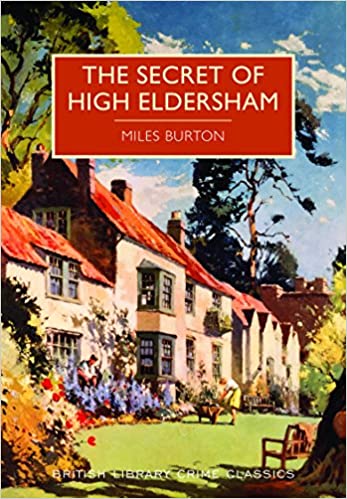
The Secret of High Eldersham by Miles Burton

Rating: 4 out of 5.

The Secret of High Eldersham by Miles Burton was first published in 1930. Miles Burton is a pseudonym. His real name was Cecil John Charles Street (1884 – 1964) and he also wrote under the names of John Rhode and Cecil Way. I like these names – variations on the word ‘street’. This edition was published by the British Library in 2016 and is one of my TBRs.

It’s not an easy book to write about. There is a murder – that of the landlord of the Rose and Crown Inn in the village of High Eldersham. He was found dead slumped in a chair, having been stabbed in the neck. The local police don’t feel able to deal with the murder so call in help from Scotland Yard.

But when Detective Inspector Young arrives he discovers that there is something very strange about the village and its inhabitants. Like a lot of small and remote villages the local people keep themselves to themselves and are very wary of strangers – they’re not made welcome and they don’t stay very long. But it’s more than that. Strange things are happening, and Young’s theory to account for the queerness of the place seemed to him (and to me) ‘so impossible, so utterly fanciful, that to entertain it was to doubt his own sanity.’ It concerns ancient legends and customs with a supernatural element. And this is what makes it difficult to write about because to say anything more about this ‘queerness‘ would be to give away a major part of the plot.

Young decides he can’t deal with this on his own and he contacts his friend, Desmond Merrion, a brilliant individual from the intelligence branch of the Admiralty, he had met during the war. He writes to Merrion inviting him to the inquest into the Inn’s landlord death, where he meets a war-time acquaintance, Laurence Hollesley.

From that point on the novel branches into two stories – the murder mystery and a thriller full of danger, drama and pace, plus a damsel in distress and spot of smuggling thrown into the mix. I enjoyed it. It’s easy to read, even if I find it difficult to write about, with clearly identifiable characters and a good sense of location. There’s suspense and the tension rises as the mystery reaches its climax.

Merrion also appears in the one other book I have by Miles Burton – Death in the Tunnel, which I hope to read soon.

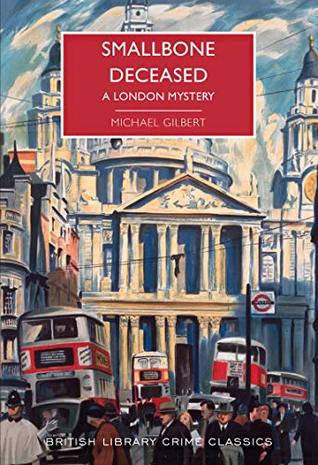
Smallbone Deceased by Michael Gilbert

Rating: 4 out of 4.

Smallbone Deceased by Michael Gilbert, first published in 1950, was his fourth Inspector Hazelrigg novel. It’s the first one I’ve read, although I have read two of his other books. There is an excellent introduction by Martin Edwards, which gives details of Gilbert’s career as a a solicitor and as a mystery writer. He wrote 30 novels and 185 short stories, as well as work for radio, television and stage.

As the title tells you Smallbone is dead. He was one of the trustees of the Ichabod Stokes Trust together with Abel Horniman, the senior partner of a London law firm, Horniman, Birley and Craine. After the recent death of Abel, whilst looking for the deeds relating to the Trust, Marcus Smallbone’s body was discovered in the Trust’s deed box, a large, hermetically sealed box.

Inspector Hazelrigg runs the police investigation. It’s obviously an inside job and with the help of Henry Bohun, a newcomer to the firm, the police investigate each of the suspects until by process of elimination the culprit is identified. Of course it’s not that straight forward, as each person’s motive, opportunity and alibi is considered and there are a number of red herrings that did baffle me a little. There is rather too much detail about the finances of the firm for my liking, but apart from that the book moves along swiftly.

The setting in the solicitors’ office after the end of the Second World War is well done and reflects the differences between the male professionals and the female admin staff with their intrigues, rivalries and flirtations. I think Bohun is the most interesting character, although they are all individually distinguishable. Bohun is not just new to the firm, but also a newly qualified solicitor. He has para-insomnia and never gets a full night’s sleep, averaging about ninety minutes a night. It doesn’t make him feel tired, but means he has lots of time to help Inspector Hazelrigg and still carry out his job, as well as doing a good deal of reading, walking the streets and even working as a night watchman. It’s written with a light touch and a sense of humour and I enjoyed it very much.

Now, I’d like to read more of Gilbert’s work, maybe starting with some of his short stories as Bohun appeared in nine short stories and also in a six-part radio thriller and Hazelrigg featured in nineteen short stories as well as in six novels.

Michael Gilbert

Michael Gilbert (1912-2006) wrote thrillers, police procedurals and espionage novels that rank among the highest and most varied achievements of British crime writing in the second half of the twentieth century. A founding member of the Crime Writers’ Association, Gilbert was for many years partner in a London law firm and drew on his knowledge of the law in writing his most acclaimed novel. For more information about Michael Gilbert see this article by Martin Edwards.

Format: Kindle Edition
File Size: 5145 KB
Print Length: 236 pages
Page Numbers Source ISBN: 0755119193
Publisher: British Library Publishing (22 Jan. 2019)
Source: I bought it

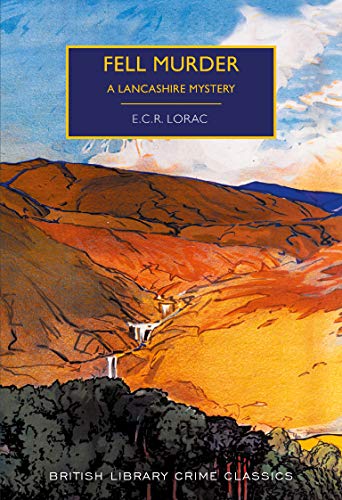
Fell Murder: a Lancashire Mystery by E C R Lorac (British Library Crime Classics)

‘…this crime is conditioned by the place. To understand the one you’ve got to study the other.’

Fell Murder

Poisoned Pen Press|6 January 2020|223 pages|e-book |Review copy|4.5*