Looking Good Dead by Peter James

looking good dead

I’ve read a few books by Peter James, but only three of his Roy Grace books, Simply Dead, the first book in the series, Not Dead Enough, the third one and now Looking Good Dead, the second book (and one of my TBRs).

Synopsis from Fantastic Fiction

Tom Bryce did what any decent person would do. But within hours of picking up the CD that had been left behind on the train seat next him, and attempting to return it to its owner, he is the sole witness to a vicious murder. Then his young family are threatened with their lives if he goes to the police. But supported by his wife, Kellie, he bravely makes a statement, to the murder enquiry team headed by Detective Superintendent Roy Grace, a man with demons of his own – including his missing wife – to contend with. And from that moment, the killing of the Bryce family becomes a mere formality – and a grisly attraction. Kellie and Tom’s deaths have already been posted on the internet. You can log on and see them on a website. They are looking good dead. ‘Destined for the bestsellers’ – “Independent on Sunday”. ‘A terrific tale of greed, seduction and betrayal’ – “Daily Telegraph”.

My thoughts:

It really is necessary to read these books in order because although each one is a complete murder mystery, they tell the continuing story of Roy Grace’s personal life and the mystery of his missing wife, Sandy. She had disappeared eight years earlier than the events described in the first book and had never been found. When all the usual sources had failed to find her he had turned to psychics and mediums for help, which he does again in this case.

As I wrote in my WWW Wednesday this book is set in Brighton and Peter James describes the setting in detail which slows the action down somewhat, but apart from that it’s fast paced. Tom is on a disastrous course as soon as he puts the CD into into his computer in an attempt to identify the man who left it on the train. The CD directs him to a site where he witnesses a murder and then he and his family also become targets for the killer and the tension immediately rises and culminates in the most terrifying scenes by the end of the book. I raced through it, trying not to visualise the gruesome details and impatient whenever the action moved away from the murder mystery, keen to find out whether Tom and his family would survive.

  • Format: Kindle Edition
  • File Size: 2117 KB
  • Print Length: 428 pages
  • Publisher: Pan; New Edit/Cover edition (4 Sept. 2008)
  • My Rating: 3.5*
  • Source: I bought it

The 16th book in this series, Find Them Dead will be published in July.

WWW Wednesday: 13 May 2020

IMG_1384-0

I’m writing this on my husband’s iPad, which is much easier for me than on my PC, especially with predictive text – less painful for my hand. I am feeling much happier!

WWW Wednesday is run by Taking on a World of Words.

The Three Ws are:

 What are you currently reading?
What did you recently finish reading?
What do you think you’ll read next?

Currently reading:

Recently I’ve been picking up book after book finding it difficult to settle on just one or two. These are some of the books that I’ve got on the go at the moment:


The Mirror and the Light
by Hilary Mantel, the final book in Hilary Mantel’s Thomas Cromwell trilogy about the boy from Putney who climbed his way up to become Lord Cromwell, Secretary to King Henry VIII. It is heavy, weighing in at 2lbs 13ozs with almost 900 pages and as my wrist and hand are still so painful I’ve had to put this on one side.

So then I tried an ebook, one of my NetGalley books, The Lost Lights of St Kilda by Elizabeth Gifford, described a ‘a sweeping love story that crosses oceans and decades. It is a moving and deeply vivid portrait of two lovers, a desolate island and the extraordinary power of hope in the face of darkness.’ I’ve read about a third of it and it isn’t appealing to me much at the moment and so the book I’ve settled on right now is:

The Guardians by John Grisham, a hardback book that isn’t as heavy to hold as The Mirror and the Light. An innocence lawyer and minister, Cullen Post, takes on Quincy Miller’s case. He’s been in prison for 22 years for the murder of Keith Russo, a lawyer in a small Florida town.

Recently Finished: 

looking good dead

Looking Good Dead by Peter James. This is one of my TBRs, the second book in the Detective Superintendent Roy Grace series and can easily be read as a stand alone. It’s dark murder mystery and it is gory in parts, although not too gory if you read it quickly. It’s set in Brighton and Peter James describes the setting in detail which slows the action down somewhat, but apart from that it’s fast paced about a man who puts himself and his family in great danger after he picked up a CD that another passenger had left on the train – it’s a snuff movie – enough said.

Reading Next:

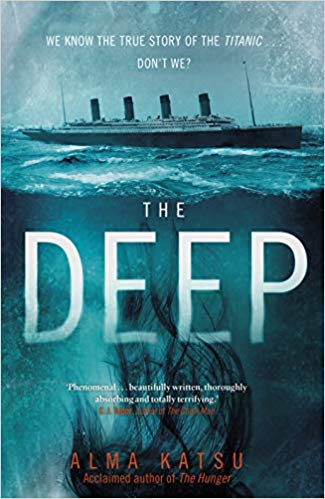
I just don’t know. It might be another Roy Grace book, Deadman’s Footsteps, or one of my NetGalley books, maybe The Deep by Alma Katsu, a story with a supernatural twist set on the Titanic, or A Thousand Moons by Sebastian Barry, which is a follow up to Days Without End, a book I loved.  Set after the end of the American Civil War it tells the story of Union soldiers, Thomas McNulty and John Cole, who have ‘adopted’ a young Indian girl.

What do you think – which one would you read next?

Six Degrees of Separation: from The Road to The Dogs of Riga

It’s time again for Six Degrees of Separation, a monthly link-up hosted by Kate at Books Are My Favourite and Best. Each month a book is chosen as a starting point and linked to six other books to form a chain. A book doesn’t need to be connected to all the other books on the list, only to the one next to it in the chain.

The Road film tie-in

This month the chain begins with The Road by Cormac McCarthy. This is one of my TBRs. It’s one of those books that I’m wary of reading and maybe now is not the right time – it’s a post-apocalyptic novel about a father and son walking alone through burned America, heading through the ravaged landscape to the coast.

So I’m beginning my chain by linking to the word ‘road’ in the title – Where Three Roads Meet by Salley Vickers. It’s one of the Canongate Myths series, modern versions of myths told by a number of different authors. It’s the Oedipus myth as told to Sigmund Freud during his last years when he was suffering from cancer of the mouth.

Another book that retells ancient myths is The Labours of Hercules by Agatha Christie. These were set for the Hercules by King Eurystheus of Tiryns as a penance. On completing them he was rewarded with immortality. Hercule Poirot sees himself as a superior modern day version of Hercules.

Also by Agatha Christie is Why Didn’t They Ask Evans? by Agatha Christie. The main character is Bobby Jones who is playing golf with Dr Thomas on a golf course on a misty day by the sea. They find a dying man, who had fallen off a cliff. He has no identification on him so Bobby has to discover the dead man’s true identity, with the help of Inspector Williams.

There is also a character called Bobby in Saving Missy by Beth Morrey – this Bobby is a dog, a splendid companion to Missy, a lonely old lady. But can Missy let go of the past and the guilt that is crippling her emotions?

Another book that looks at loneliness is After the Fire is Henning Mankell’s compelling last novel, set on an isolated island in the an isolated island in the Swedish archipelago. Fredrik, a retired doctor, is devastated by the fire which destroyed the house he had inherited from his grandparents. The main focus is not on crime but on Fredrik’s reflections on life, death, ageing, and loneliness.

Henning Mankell brings me to the last link in my chain –  and to a more traditional crime fiction novel – The Dogs of Riga It’s an Inspector Wallander book. A little raft is washed ashore on a beach in Sweden. It contains two men, shot dead. They’re identified as criminals, victims of a gangland hit. Wallander’s investigation takes him to Latvia.

~~~

My chain began with a dystopian novel and moved to books retelling ancient myths to crime fiction and books about loneliness.

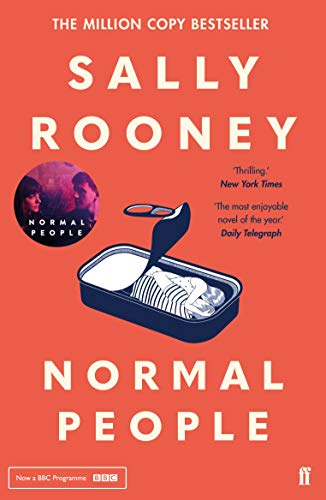
Next month (June 6, 2020), the chain begins with Sally Rooney’s best seller (and now a TV series), Normal People.

The Last Protector by Andrew Taylor

London, 1668 – A dangerous secret lies beneath Whitehall Palace…

The Last Protector HarperCollins|2 April 2020|419 pages|ebook |Review copy via NetGalley|4* The Last Protector is the fourth book in Andrew Taylor’s series featuring James Marwood, a government agent and Cat (Catherine) Lovett, set in Restoration England. The year is 1668 and the exiled Richard Cromwell, son of Oliver, heavily in debt, has returned in disguise to England. Charles’ extravagant life style and licentious behaviour has now lost him the support of the people and many are hankering after the old days under Oliver Cromwell and then his son, Richard as Lord Protectors. He needs Parliament to vote him the funds to pay off his debts, maintain his court and fund the expansion of the navy and is relying on the Duke of Buckingham for support. However Marwood’s masters suspect that Buckingham is secretly conspiring against the King and assign him to spy on him.  Cat, a regicide’s daughter, is married to Simon Hakesby, an elderly and ailing surveyor and architect. She knew Richard’s daughter Elizabeth as a child and finds herself drawn into the Cromwells’ plan to recover a package Richard’s mother had hidden in the Cockpit in the gardens of the Palace of Whitehall just before her death; a package Richard hopes would be sufficient to clear his debts. He turns to the Duke of Buckingham for support in gaining access to the Cockpit. Buckingham is keen to use Richard in his plans to gain power. Cat, who now is unhappy in her marriage, resentful of Simon’s demands on her, is reluctant to get involved but unfortunately for her Simon is eager to help, and they soon find themselves in great danger. She is reluctant to ask for Marwood’s help fearing they could be charged with treason. Like the earlier books in the series this is a gripping story, full of historical detail, complications, intrigue and danger. The characterisation is brilliant with memorable characters such as Ferrus, a mazer-scourer’s labourer, who lives a terrible life, forced to sleep in a kennel with Windy, a vicious dog that guards the kitchen yard at the Cockpit. Treated brutally by his master, Ezra Reeves, his job is to clean the sewers. He is starved so he can squeeze himself down unto the foul stinking mess of the sewers, bending his long thin arms and legs. The stench of London comes across very vividly in this novel. Then there is Chloris, the kind-hearted prostitute, who helps Marwood.  This is a book full of action too, with a swiftly moving plot and a climatic ending. It is full of suspense and surprises. Andrew Taylor is a supreme storyteller, combining fact and fiction – his novels are full of historical details that slot seamlessly into his stories. I’ve read all  the earlier books and loved them too – The Ashes of London (set in 1666, six years after Charles II was reinstated as King) and The Fire Court (set in 1667, eight months after the Great Fire of London), and The King’s Evil (set seven months later). It is not necessary to read the earlier books as I think they all work well as standalones, but I think it really helps if you do. Many thanks to the publishers, HarperCollins for my review copy.

Bookshelf Travelling for Insane Times

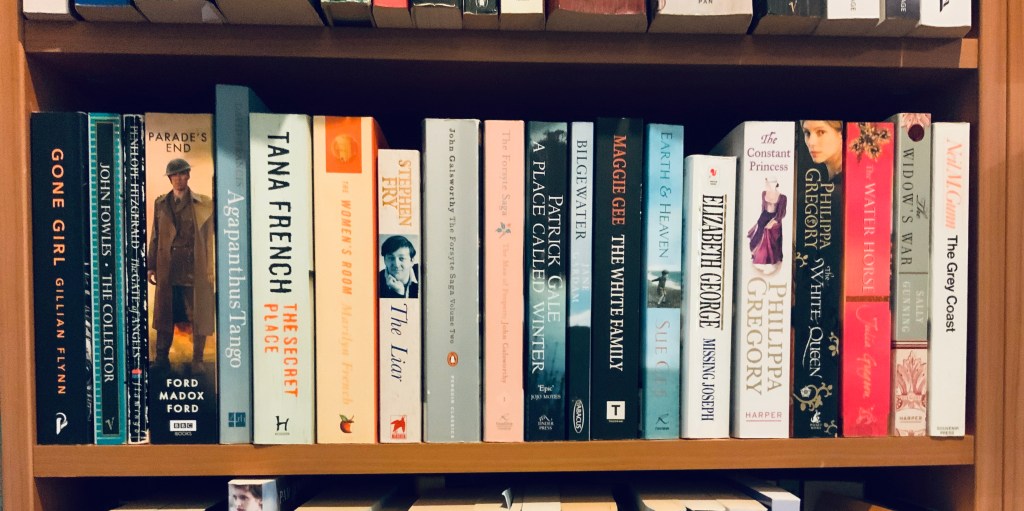
Judith at Reader in the Wilderness hosts this meme – Bookshelf Travelling for Insane Times.  I am enjoying this meme, looking round my actual bookshelves and re-discovering books I’ve read or am looking forward to reading. The idea is to share your bookshelves with other bloggers.

This is really a Friday meme, but once more I’m late writing my post!

For this week’s post I’ve been looking through some of my oldest books.

The Secret Garden

First is a book from my childhood, The Secret Garden by Frances  Hodgson-Burnett. It is now yellowing and a bit battered, but still in one piece. In the description at the front of the book the editor writes: Girls like it most, and between the ages of nine and fourteen – and, be warned, keep your copy carefully. You will want to go back and read it over and over again. I can’t remember how old I was, but the editor was right – I did read it over and over again.  I’ve wanted a walled garden ever since I read about the secret garden that Mary found at her Uncle’s house, Misselthwaite Manor in Yorkshire. It’s about the magic of nature, that makes plants and people grow and develop, the magic of the power of positive thinking and prayer, of the healing power of the mind, and of laughter and love.

Mist over PendleNext a book I read as a teenager – Mist Over Pendle by Robert Neill. Set in rural Lancashire in the early 17th century it tells the story of Margery Whitaker, an orphan who went to live with her relatives on the Lancashire and Yorkshire border. People have died, apparently from belladonna poisoning and two old crones are suspected of witchcraft. Margery and her cousin Roger investigate whether they really were witches. I found it fascinating and it was probably the book that started me off reading historical fiction.

YogaI began doing yoga when I was in my thirties and Yoga by Ernest Wood is one of several books I bought at the time. It’s not just a book about the yoga breathing practices or the yoga postures – and there are no photos demonstrating them – it’s more about the classical background of yoga and its goals – the awakening of the higher spirit, bodily and mental health and the benefits of yoga in daily life. So, there are chapters on the ethics and morality of yoga, yoga and the intellect, yoga and vitality and the basic philosophy of yoga.

Lark Rise mineAnd finally a book I read in my forties. I’d had a really bad case of flu which meant that I couldn’t even lift my head off the pillow, never mind pick up a book! But when  I was recovering I read and loved Flora Thompson’s book Lark Rise to Candleford. It’s a trilogy including in addition to Lark Rise, Over to Candleford and Candleford Green. It’s a record of country life at the end of the 19th century, based on the author’s experiences during childhood and youth. It chronicles May Day celebrations and forgotten children’s games as well as the daily lives of farmworkers and craftsmen, and her friends and relations.

Catching Up

I’ve found that this lockdown period has affected my blogging as I haven’t been writing about the books I’ve read recently. I’ve been doing posts that don’t really need much concentration – lists of books, book beginnings and so on. So now I have a few books that I’ve read but not reviewed. Here’s what I thought about two of them. These are just brief reviews – more like notes really.

Queen Lucia

Queen Lucia has been on my radar for years ever since I began blogging and I bought a copy several years ago. When I saw that Simon and Karen were hosting the 1920 Club I realised it would be ideal as it was first published in 1920. However, time got the better of me and I finished reading it too late to add it the 1920 Book Club – but better late than never. 

I know other bloggers love E F Benson’s Mapp and Lucia books, but they have never really appealed to me. I don’t read many comic novels. But I did enjoy it more than I thought I would, although I think his style of writing is an acquired taste, using satire, irony, exaggerations and ridicule to expose people’s stupidities or vices – not my usual genre of books.  However, it is easy reading and it took my mind off the horrors of the coronavirus whilst I was reading. It is a book of its time and definitely not PC by today’s standards.

Queen Lucia is actually Mrs Emmeline Lucas, who presides over the residents of the village of Riseholme as its self-appointed queen. She is a most unlikeable character, totally self-centred and manipulative, aided by her friend, George Pillson who worships her. But as the events described in the novel unfold he rebels and works to undermine her. I disliked her pretentious tastes and her lust for power. She irritated me immensely with her baby talk, her pretence that she can speak Italian and her methods of riding roughshod over everyone. A rather more sympathetic character is Daisy Quantock, who introduces a mysterious Indian guru to the village before Lucia managed to present him as her protege.

The whole book has an artificial and silly feel about it but about half way through I found I was just going with the flow as I really  wanted to know what happened next. There are five more Mapp and Lucia novels, and as I’ve found an e-book containing all six for just 49p – Make Way for Lucia, I shall probably read more of them sometime.

The Dutch House

I decided to read The Dutch House by Ann Patchett as so many other bloggers have written glowing reviews, but I wasn’t as keen on it as others. Its about a dysfunctional family.  The Conroys, Danny, Maeve and their mother, Elna and father, Cyril  who lived in the Dutch House, but when Danny was just three his mother left home.  Cyril remarried, and his second wife, Andrea, the mother of two young girls, was the epitome of the  wicked stepmother. When their father dies he leaves the Dutch House, to Andrea.  She shows her true  colours and insists Danny and Maeve have to move out of their home. The house itself is described in detail. It was built by a Dutch couple called VanHoebeek in 1922 when it was in the open country just outside Philadelphia and their presence is still a strong influence on  the Conroy family.

The novel moves backwards and forwards in time, from 1946 to the present, and at times I was not sure what happened when (probably my lack of concentration caused my confusion). Danny and Maeve are both obsessed with the house, to the detriment of their own lives. Their mother, Elna meanwhile had a totally different reaction to the house, never liking it and I was intrigued about her – what made her leave her children – and I was suspicious about that had happened to her and even if she was she still alive. The pain her children felt when she left to be replaced by a wicked stepmother is immense. But it is the loss of their inheritance rather than the loss of their mother, that has left them with bitterness, and anger.

I thought the book began well, but somewhere in the middle and definitely towards the end I did get rather bored with the story, so much so that I was relieved to finish it. It was not just such a good choice of book for me – or maybe it was the wrong time for me to read it.