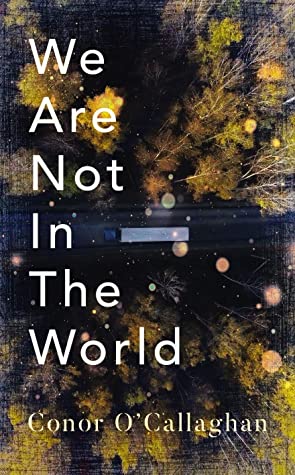
We Are Not In The World by Conor O’Callaghan

Transworld Publishers| 18 February 2021 |272 pages | Kindle review copy via NetGalley/ 2*

Heartbroken after a long, painful love affair, a man drives a haulage lorry from England to France. Travelling with him is a secret passenger – his daughter. Twenty-something, unkempt, off the rails.

With a week on the road together, father and daughter must restore themselves and each other, and repair a relationship that is at once fiercely loving and deeply scarred.

As they journey south, down the motorways, through the service stations, a devastating picture reveals itself: a story of grief, of shame, and of love in all its complex, dark and glorious manifestations.

My thoughts:

A strange, confusing and depressing book that I read as though I was in fog, never really getting to grips with the plot. It meanders and drifts through the characters, shifting between the past, the near past and the present, and from place to place, as Paddy drives the lorry from England down to the south of France. I was often not sure what was happening, when or where it was happening and to whom it was happening. It’s a stream of consciousness, as the various characters move in and out of focus.

There were times when I wondered why I was reading this, it was like a dream where the scenes move randomly through a number of sequences, and you wake up with that fearful feeling that something dreadful has been going on inside your head that was disturbing, and unsettling. There’s a sense of timelessness and of detachment from the day to day reality – they are not in the world. And yet I was compelled to read on, if only just to get to the end and see if my suspicions about what had actually happened were right. They were, although there is a little twist at the very end that I hadn’t expected.

The fairy tale of Oisin, a tale Paddy tells his daughter, interests me. Oisin was a warrior who fell in love with a fairy named Niamh. He takes her home to Tir na nOg, where they will stay forever young, but he can never return home. After three years he is homesick and returns on a magic horse, on the condition that he has to stay on the horse on pain of death. But three hundred years have actually gone by, not three, and everyone he knew is dead. He meets an old man who knew his father and moving to help him he slips off the horse, touches the ground and dies in an instant. He repeats this story several times to his daughter as they travel through France. It links with Tir na nOg, the name of his family home, now neglected and empty after his mother’s death three years earlier.

This is not an easy read, as you have to concentrate on all the different strands. Paddy’s life is a complete mess, he has lost everything: his family, his home and his sense of belonging. He looks back at the broken relationships with his parents, his brother, ex-wife, daughter, and ex-lover. It’s told in fragments and you have to read between the lines to understand it. I didn’t enjoy the book, and found it difficult to follow. It is too vague, and as soon as I thought I’d begun to understand it, it drifted away into obscurity. and I was left floundering.

My thanks to the publishers and to NetGalley for my advance review copy.

  • ASIN : B08119RXD6
  • Publisher : Transworld Digital (18 Feb. 2021)
  • Language : English
  • Print length : 264 pages
  • Page numbers source ISBN : 0857526855
  • Source: Review copy
  • My rating: 2*

My Friday Post: Then She Was Gone by Lisa Jewell

Every Friday Book Beginnings on Friday is hosted by Gillion at Rose City Reader where you can share the first sentence (or so) of the book you are reading, along with your initial thoughts about the sentence, impressions of the book, or anything else the opener inspires.

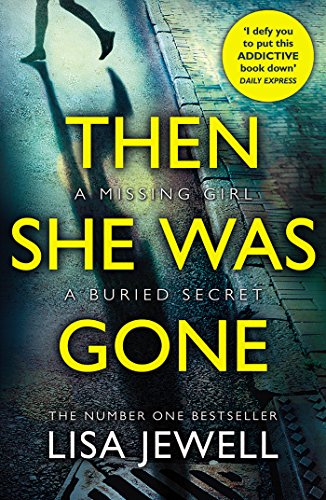
This week I’m featuring Then She Was Gone by Lisa Jewell, one of my TBRs that I bought two years ago. It’s a standalone book, first published in 2017.

It begins with a Prologue:

Those months before she disappeared were the best. .

Chapter One begins:

Laurel let herself into her daughter’s flat. It was, even on this relatively bright day, dark and gloomy. The window at the front was overwhelmed by a terrible tangle of wisteria while the other side of the flat was completely overshadowed by the small woodland it backed onto.

Also every Friday there is The Friday 56, hosted by Freda at Freda’s Voice.

  1. Grab a book, any book.
  2. Turn to page 56, or 56% on your eReader. If you have to improvise, that is okay.
  3. Find any sentence (or a few, just don’t spoil it) that grabs you.
  4. Post it.
  5. Add the URL to your post in the link on Freda’s most recent Friday 56 post.

Page 57 (page 56 is blank):

Laurel was alone. Her family was broken. There was nothing left. Literally nothing.

Blurb:

She was fifteen, her mother’s golden girl.
She had her whole life ahead of her.
And then, in the blink of an eye, Ellie was gone.

Ten years on, Laurel has never given up hope of finding Ellie. And then she meets a charming and charismatic stranger who sweeps her off her feet. But what really takes her breath away is when she meets his nine-year-old daughter. Because his daughter is the image of Ellie. Now all those unanswered questions that have haunted Laurel come flooding back.

What really happened to Ellie? And who still has secrets to hide?

Can’t-Wait Wednesday: The Girl Who Died by Ragnar Jónasson

Can’t-Wait Wednesday is a weekly meme hosted by Wishful Endings, to spotlight and discuss the books we’re excited about that we have yet to read. Generally they’re books that have yet to be released.

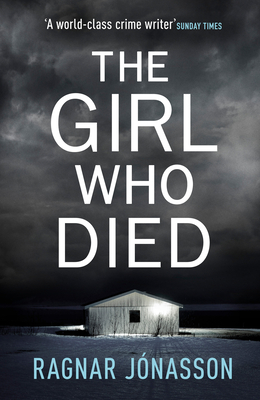
This week I’m featuring The Girl Who Died by Ragnar Jónasson, release date 3 June 2021. I’ve read just two of Ragnar Jónasson’s books in his Icelandic Hulda series and enjoyed both of them. So, I’m keen to read this one, which is a standalone novel.

Description


‘TEACHER WANTED ON THE EDGE OF THE WORLD . . .’
.

Una knows she is struggling to deal with her father’s sudden, tragic suicide. She spends her nights drinking alone in Reykjavik, stricken with thoughts that she might one day follow in his footsteps.

So when she sees an advert seeking a teacher for two girls in the tiny village of Skálar – population of ten – on the storm-battered north coast of the island, she sees it as a chance to escape.

But once she arrives, Una quickly realises nothing in city life has prepared her for this. The villagers are unfriendly. The weather is bleak. And, from the creaky attic bedroom of the old house where she’s living, she’s convinced she hears the ghostly sound of singing.

Una worries that she’s losing her mind.

And then, just before midwinter, a young girl from the village is found dead. Now there are only nine villagers left – and Una fears that one of them has blood on their hands . . .

What upcoming release are you eagerly anticipating?

My Friday Post: Not Dark Yet by Peter Robinson

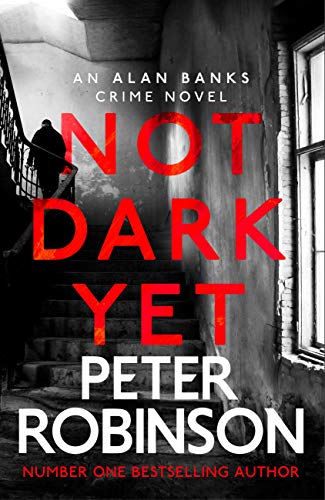
Yesterday Peter Robinson’s latest Inspector Banks book, Not Dark Yet was published and once I’d read the opening pages I decided to abandon any plans I had for what to read next and started to read it properly. So this is my choice this week for Book Beginnings on Friday and the Friday 56.

Every Friday Book Beginnings on Friday is hosted by Gillion at Rose City Reader where you can share the first sentence (or so) of the book you are reading, along with your initial thoughts about the sentence, impressions of the book, or anything else the opener inspires.

The book begins in Moldova:

Zelda hadn’t visited Chișinău since she had been abducted outside the orphanage at the age of seventeen. And now she was back. She wasn’t sure how she was going to find the man she wanted – she had no contacts in the city – but she did have one or two vague ideas where to begin.

Also every Friday there is The Friday 56, hosted by Freda at Freda’s Voice.

  1. Grab a book, any book.
  2. Turn to page 56, or 56% on your eReader. If you have to improvise, that is okay.
  3. Find any sentence (or a few, just don’t spoil it) that grabs you.
  4. Post it.
  5. Add the URL to your post in the link on Freda’s most recent Friday 56 post.

Page 56:

Banks found himself with a lot to think about as he made his way back to Vauxhall Underground station. He had originally intended to do some shopping while he was in London, check out the big Waterstones in Piccadilly, visit FOPP in Cambridge Circus, but decided he couldn’t face it. Like everyone else, he did most of his shopping online these days. London was too hot and too crowded today; he just wanted to go home.

My thoughts exactly each time I’ve been to London – I can’t stand crowds.

This is the 27th Inspector Banks books and I’ve read I’ve several of them, totally out of order, which doesn’t seem to matter – they work well as stand alone books. I’ve also watched the TV series, which I enjoy even though they are different from the books and my vision of Banks is nothing like Stephen Tompkinson who plays him. In fact, the characters are clearly meant to be different versions of the same person; they look different, have different personalities and meet different fates in different worlds.

The 1936 Club

I read about the 1936 Club on Karen’s blog, BookerTalk. It’s being hosted by Karen at kaggsy’sbookishramblings and Simon at stuckinabook and is scheduled for 12-18 April. It’s been a while since I joined in one of their Club Reading Weeks, but when I looked at the books I’ve read and the books that I have waiting to be read I found that quite a lot of them were first published in 1936.

There is just one of these that I haven’t read – Murder in Piccadilly by Charles Kingston. But I would like to re-read Agatha Christie’s Murder in Mesopotamia that I first read in May 2012, because I never wrote a review post about it. And there are some short stories, first published in 1936 that I haven’t read yet, such as Problem at Sea, which is included in the short story collection, Poirot’s Early Cases.

Girl in the Walls by A J Gnuse

Fourth Estate | 18 March 2021 |323 pages | Kindle review copy via NetGalley/ 4*

Description:

She doesn’t exist. She can’t exist.

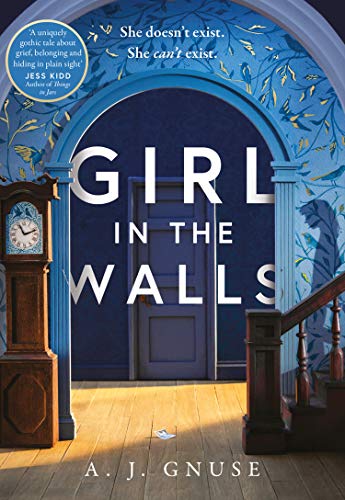
‘A uniquely gothic tale about grief, belonging and hiding in plain sight’ Jess Kidd, author of Things in Jars

Those who live in the walls must adjust, must twist themselves around in their home,
stretching themselves until they’re as thin as air. Not everyone can do what they can.
But soon enough, they can’t help themselves. Signs of their presence remain in a house.
Eventually, every hidden thing is found.’

Elise knows every inch of the house. She knows which boards will creak. She knows where the gaps are in the walls. She knows which parts can take her in, hide her away. It’s home, after all. The home her parents made for her. And home is where you stay, no matter what.

Eddie calls the same house his home. Eddie is almost a teenager now. He must no longer believe in the girl he sometimes sees from the corner of his eye. He needs her to disappear. But when his older brother senses her, too, they are faced with a question: how do they get rid of someone they aren’t sure even exists?

And, if they cast her out, what other threats might they invite in?

My thoughts:

Set in south Louisiana, Girl in the Walls wasn’t quite what I expected from the book description, but I did enjoy its sense of strangeness and ‘the other’. It’s set in an old house that’s full of strange creaks and scary noises as though someone or some thing is creeping around. It’s a house like no other that I know or have read about. It’s a balloon frame house – that is a house with a timber frame within its outer walls, so there are spaces between the inner and outer walls, beneath the floor and in the attic. Spaces where a young person can crawl and exist. So, Elise is not a ghost but a real eleven year old girl, who lives in these spaces, only coming out when the Masons, the family who live in the house, are asleep or out of the house. And she manages to keep her presence in the house a secret, at least for a while.

Elise is an orphan and has returned to her family home, having escaped from the foster care system. At first, Eddie, the younger son, is the only one of the Masons who senses her presence, feeling that he is being watched and almost catching glimpses of Elise out of the corner of his eye. Eventually his older brother, Marshall too feels that there is some one else in the house, raiding the pantry, taking things and moving things and they decide they have to do something about it. First of all they can’t believe she is actually real and fear what they will find. Elise fears that they will find her.

Their fear is intense as the story takes a terrifying turn, and to make matters worse it is the hurricane season. From a slow start it builds up to a intense nightmare scenario. I think that to say much more would spoil the plot. The characterisation is good, the house is integral to the plot and the setting is brilliantly described. But you do have to suspend your disbelief to enjoy this book – I did!

This is a story about loss, and grief, about safety and security, intermingled with the strange beauty of the landscape and the fears and hopes we all experience. I loved the references to Norse mythology and legends that Elise reads about – Odin, the One-Eyed and how he became the wisest of the gods and about his sons, Thor and Loki.

A J Gnuse explains at the end of the book that he was inspired to write this story after talking to a friend about the strange noises his friend had heard in his apartment and remembered that he had spent much of his childhood in an old creaky house wondering whether someone was sneaking around at night, feeling scared and vulnerable. The house in the book is based on his parents’ house in South Louisiana, where he grew up, where the sea levels are rising as the coast is eroding and the coast is hit by hurricanes,

I wasn’t surprised that he lists Charles Dickens as one of the authors who have influenced his work – there is one particular character in his book who I haven’t mentioned, the monstrous villain who is larger than life and very scary, who wouldn’t have been out of place in a Dickens’ novel. He also lists other authors including, Daphne du Maurier and the Bronte sisters whose descriptive writing captured the eerie beauty of an old house.

Girl in the Walls is described as a ‘gothic’ tale. Gnuse explains that he has been influenced by the literary tradition of the Southern Gothic novel – which is largely unknown to me – referring to writers like Flannery O’Connor – describing its ‘uniquely Gothic sense of the strangeness of decay, of the past latched onto people like vines grown around their legs.‘ I think I need to find out more about this genre of fiction.

My thanks to the publishers and to NetGalley for my advance review copy.