Books Read in August 2021

August was a busy month for me and it didn’t leave much time for reading or writing reviews! But I did read 5 books, and as both Framley Parsonage (684 pages) and Dead Tomorrow (663 pages) are very long books, it took me over half of August to read just those two!

  1. Framley Parsonage by Anthony Trollope 4* – see my review
  2. The Queen’s Spy by Clare Marchant 4*
  3. The Madness of Crowds by Douglas Murray 3*
  4. Dead Tomorrow by Peter James 3*
  5. Moon Over Soho by Ben Aaronovitch 4*

The only book I reviewed was Framley Parsonage. So, before I begin September’s books here are just a few brief thoughts on the other 4 books.

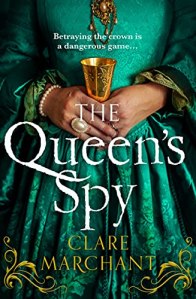
The Queen’s Spy by Clare Marchant – historical fiction with a dual timeline set in 1584 and 2021. I read this quickly drawn along by the plot and keen to know the links between the two main characters, Mathilde in the present day and Tom in the 16th century. I was more interested in Tom’s story. He is deaf and dumb, but he can lip read. He is an apothecary and also a spy, working for Sir Francis Walsingham, Elizabeth I’s spymaster, during the period leading up to the Babbington Plot. Mathilde has inherited a medieval mansion, Lutton Hall, and she is surprised to find that she has family there she had never heard of before. The two timelines interlink as Mathilde discovers the secrets hidden at Lutton Hall.

The Madness of Crowds: Gender, Race and Identity by Douglas Murray. Crowd behaviour fascinates me, so I hoped this book would cast some light on the subject – it certainly did. There are sections on sexuality, gender, technology and race, including a chapter on transgender, which I found the most enlightening. The synopsis describes how Murray “reveals the astonishing new culture wars playing out in our workplaces, universities, schools and homes in the names of social justice, identity politics and ‘intersectionality’.” Some of it I found shocking and infuriating.

Dead Tomorrow by Peter James – the 5th book in his Detective Superintendent Roy Grace series. Grace and his team investigate the deaths of three teenagers found by a dredger at the bottom of the English Channel, which leads them to a gang of human traffickers operating from Eastern Europe. Parallel with their investigation a desperate mother is fighting for her daughter’s life. One of the things I like about the Roy Grace series is the continuing story of Grace’s personal life. But what I find irritating is the way Peter James describes what all his characters are wearing and the details of all the little details of their surroundings. And this book in particular is far too long and drawn out.
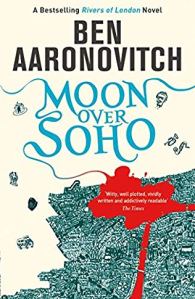
Moon Over Soho by Ben Aaronovitch, the second Rivers of London novel. I loved the first book, Rivers of London. These are fast-paced police procedurals of a very different kind – urban fantasy, set in the real world of London, a mix of reality and the supernatural. You could probably read them as standalones, but I really think it’s best to read them in order to get the full background to what is going on and what has already happened to the main characters.

DC Peter Grant is assigned to work with Detective Chief Inspector Thomas Nightingale (who is the last wizard in England) as part of a special and secret branch of the Met, dealing with all things magical and supernatural. Moon Over Soho begins with the murder of Cyrus Wilkinson, a part-time jazz saxophonist, who had apparently dropped dead of a heart attack just after finishing a gig in a Soho jazz club. Peter can hear music coming from his corpse. What follows is a complicated story full of twists and turns, humour, and some gruesome and unusual murders.
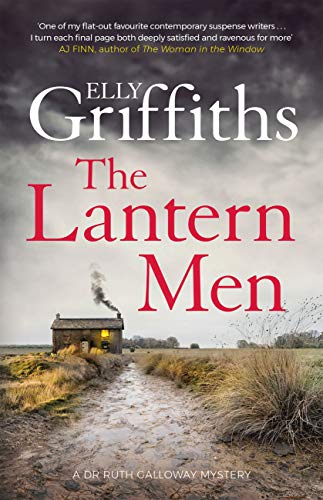
Book Beginnings & The Friday 56: The Lantern Men by Elly Griffiths

Every Friday Book Beginnings on Friday is hosted by Gillion at Rose City Reader where you can share the first sentence (or so) of the book you are reading. You can also share from a book you want to highlight just because it caught your fancy.

I’ve been looking through my TBR books on my Kindle and came across The Lantern Men by Elly Griffiths, the 12th in her Ruth Galloway series. I’ve read most of the series, so, I think I’ll read this next.

It begins with a Prologue:

10 July 2007

She has been walking for a long time. It’s funny but she hadn’t thought that there was so much space in England.

Also every Friday there is The Friday 56, hosted by Freda at Freda’s Voice. *Grab a book, any book. *Turn to Page 56 or 56% on your  ereader . If you have to improvise, that is okay. *Find a snippet, short and sweet, but no spoilers!

These are the rules:

  1. Grab a book, any book.
  2. Turn to page 56, or 56% on your eReader. If you have to improvise, that is okay.
  3. Find any sentence (or a few, just don’t spoil it) that grabs you.
  4. Post it.
  5. Add the URL to your post in the link on Freda’s most recent Friday 56 post.

Page 56:

It’s a note, scrawled on a folded piece of lined A4 paper.

‘If you want to know more about Ivor March meet me at The Hanged Man on Newnham Rd tonite at 7.30. Ask for John.’

Blurb:

Everything has changed for Dr Ruth Galloway.

She has a new job, home and partner, and is no longer North Norfolk police’s resident forensic archaeologist. That is, until convicted murderer Ivor March offers to make DCI Nelson a deal. Nelson was always sure that March killed more women than he was charged with. Now March confirms this, and offers to show Nelson where the other bodies are buried – but only if Ruth will do the digging.

Curious, but wary, Ruth agrees. March tells Ruth that he killed four more women and that their bodies are buried near a village bordering the fens, said to be haunted by the Lantern Men, mysterious figures holding lights that lure travellers to their deaths.

Is Ivor March himself a lantern man, luring Ruth back to Norfolk? What is his plan, and why is she so crucial to it? And are the killings really over?

Of course, now I want to know more. Do you?

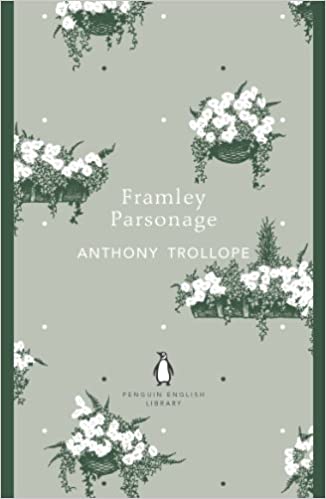
Framley Parsonage by Anthony Trollope

Framley Parsonage is my current Classics Club spin book. Although I read my previous spin book, Little Dorrit , I didn’t write a post about it. So, I decided to make an early start with Framley Parsonage to make sure I finished it before the 22nd August deadline – which I did!

Synopsis – Goodreads

A brilliant depiction of social climbing and scandal, Framley Parsonage tells the story of Mark Robarts, a young clergyman with ambitions beyond his small country parish of Framley. In a naive attempt to mix in influential circles, he makes a financial deal with the disreputable local Member of Parliament, but is instead brought to the brink of shame and ruin.

One of Trollope’s most enduringly popular novels, Framley Parsonage is an evocative portrayal of country life in nineteenth-century England, told with great compassion, humour and an acute insight into human nature. 

It is the fourth book in Anthony Trollope’s series, the Chronicles of Barsetshire, first published in serial form in the Cornhill Magazine in 1860, then in book form in 1861.

This is a long book – 688 pages in the Penguin classics edition – and begins slowly. It took me a while to settle into reading it and to sort out who all the characters are and how they relate to each other, There are several plot lines – there’s the clergyman Mark Robarts, the Vicar of Framley, and his attempts to climb up the church hierarchy. Mark through naivety, is bamboozled by Nathaniel Sowerby, a member of parliament. He guarantees a three-month bill of Sowerby’s for £400 (making Mark liable if Sowerby does not pay a £400 debt within that time) and then a further bill for £500. This does not go well for Mark!

Another plot line is that relating to Mark’s sister, Lucy and her on/off romance with Lord Lufton, much to the disapproval of his mother, Lady Lufton. Mark and Lord Lufton were childhood friends and Lady Lufton is Mark’s patroness, which causes problems all round, especially as she would much prefer her son to marry Griselda Grantley, the daughter of Doctor Theophilus Grantly, the Archdeacon of Barchester. There’s also a subplot involving Mrs Grantly and Mrs Proudie, Bishop Proudie’s wife, and their rivalry over their daughters’ marriages. There’s another marriage in the offing, that of the outspoken heiress, Martha Dunstable, to Doctor Thorne, the eponymous hero of the preceding novel in the series, Doctor Thorne.

Framley Parsonage is full of lifelike and interesting characters engaged in their everyday life and inevitable class inequalities and power struggles, described with a fair amount of wit and humour. Interspersed between the plotlines Trollope introduces several sections of political commentary on the Parliamentary shenanigans of the day, which I have to admit were less interesting to me. But it seems that not much has changed in the way the political parties carried on both in parliament and in their relationship with the press. The next book in the series is The Small House at Arlington, which I expect I’ll eventually get round to reading.

Book Beginnings & The Friday 56: The Miniaturist by Jessie Burton

Every Friday Book Beginnings on Friday is hosted by Gillion at Rose City Reader where you can share the first sentence (or so) of the book you are reading. You can also share from a book you want to highlight just because it caught your fancy.

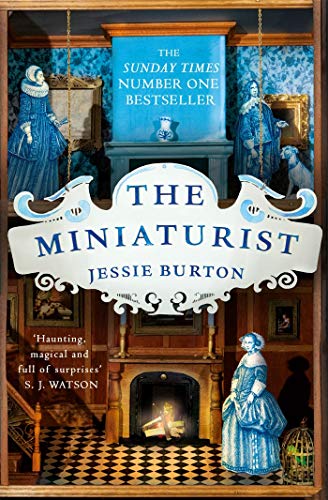
Today I’m featuring The Miniaturist by Jessie Burton. It’s set in Amsterdam in 1686/7. Nella Oortman marries a rich merchant, but life in her new home is unfulfilled. Even her cabinet house brings a mystery to the secretive world she has entered as the lifelike miniatures somehow start eerily foreshadowing her fate.

I watched the TV series a few years ago and thought I’d like to read the book – just getting round to reading it!

The Old Church, Amsterdam: Tuesday 14th January 1687

The funeral was supposed to be a quiet affair, for the deceased had no friends. But words are like water in Amsterdam, they flood your ears and set the rot, and the church’s east corner is crowded.

Also every Friday there is The Friday 56, hosted by Freda at Freda’s Voice. *Grab a book, any book. *Turn to Page 56 or 56% on your  ereader . If you have to improvise, that is okay. *Find a snippet, short and sweet, but no spoilers!

  1. Grab a book, any book.
  2. Turn to page 56, or 56% on your eReader. If you have to improvise, that is okay.
  3. Find any sentence (or a few, just don’t spoil it) that grabs you.
  4. Post it.
  5. Add the URL to your post in the link on Freda’s most recent Friday 56 post.

Page 56:

In daylight, it now seems ridiculous, but the rules of this house are written in water. I must either sink or swim, Nella thinks. Her bruise, day-old, like a small splash of wine, truly hurts when she presses it.

I was struck by the use of water imagery in both these extracts.

A Line to Kill by Anthony Horowitz

Random House UK, Cornerstone Digital| 19 August 2021| 368 pages| Review copy| 4*

Synopsis:

There has never been a murder on Alderney.

It’s a tiny island, just three miles long and a mile and a half wide. The perfect location for a brand new literary festival. Private Investigator Daniel Hawthorne has been invited to talk about his new book. The writer, Anthony Horowitz, travels with him.

Very soon they discover that not all is as it should be. Alderney is in turmoil over a planned power line that will cut through it, desecrating a war cemetery and turning neighbour against neighbour.

The visiting authors – including a blind medium, a French performance poet and a celebrity chef – seem to be harbouring any number of unpleasant secrets. When the festival’s wealthy sponsor is found brutally killed, Alderney goes into lockdown and Hawthorne knows that he doesn’t have to look too far for suspects.

There’s no escape. The killer is still on the island. And there’s about to be a second death…

A Line to Kill is the third in Anthony Horowitz’s Hawthorne and Horowitz Mystery series. I have read the earlier books, The Word is Murder and The Sentence is Death and I think it really it best if you read these books in order to fully understand the main characters and their relationship. Daniel Hawthorne, an ex-policeman, is now a private investigator, who the police call in to help with their more complicated cases. Anthony Horowitz himself plays a major role as one of the main characters, recruited by Hawthorne to write a book about him and the cases he investigates and he’d agreed to a three-book contract with Hawthorne.

This third book is about the third case they investigate. I loved the setting on the island of Alderney where the literary festival is being held. I enjoyed the interplay between Hawthorne and the fictional Horowitz, a somewhat difficult relationship as Hawthorne is particularly secretive about his personal life and about the reason he left the police force. In a way he is a Sherlock Holmes type of character keeping Horowitz very much in the dark about what he thinks about the identity of the murder. He is not an easy person to like, single minded with a somewhat superior air about him, but he does get results.

Like the two earlier books this is a complicated murder mystery, with a type of ‘locked room’ puzzle to be solved. As you would expect it is full of red herrings and multiple twists and turns. I was soon totally immersed in this fascinating novel. The characters are fully formed, all with secrets they want to keep hidden and clues are all there, but so well hidden that I was once again totally bemused by it all.

The fictional Horowitz is by now, thoroughly intrigued by Hawthorne himself – just what is he keeping hidden about himself, why did he really leave the police force? Will the writer Horowitz reveal the secret is his next book – if there is to be one? I do hope so.

Thank you to Anthony Horowitz, Random House and NetGalley for an ARC of A Line to Kill.

My Friday Post: Book Beginnings & The Friday 56

Every Friday Book Beginnings on Friday is hosted by Gillion at Rose City Reader where you can share the first sentence (or so) of the book you are reading. You can also share from a book you want to highlight just because it caught your fancy.

This week my book is one of the books I’m currently reading, The Queen’s Spy by Clare Marchant, a dual time period novel set in Elizabeth England in 1584 and in the present day.

June 2021

The loud noise as she exhaled sharply, a violent ‘pssw’ of air and spittle, echoed around the almost empty, cavernous border control area. A cathedral of modern age, welcoming all to its hallowed halls. Or possibly not all, Mathilde thought as she stood before the sour faced man in front of her. Incongruously, behind him a dusty sign announced: ‘Welcome to England’.

Also every Friday there is The Friday 56, hosted by Freda at Freda’s Voice. *Grab a book, any book. *Turn to Page 56 or 56% on your  ereader . If you have to improvise, that is okay. *Find a snippet, short and sweet, but no spoilers!

Page 56, set in 1584 :

Tom shuddered as what Hugh had explained, sank in. Being at court had felt like an honour but the memory of fleeing to France when his adopted father fell foul of the monarch reminded him of exactly how precarious it could be.

From Amazon:

1584: Elizabeth I rules England. But a dangerous plot is brewing in court, and Mary Queen of Scots will stop at nothing to take her cousin’s throne.

There’s only one thing standing in her way: Tom, the queen’s trusted apothecary, who makes the perfect silent spy…

2021: Travelling the globe in her campervan, Mathilde has never belonged anywhere. So when she receives news of an inheritance, she is shocked to discover she has a family in England.

Just like Mathilde, the medieval hall she inherits conceals secrets, and she quickly makes a haunting discovery. Can she unravel the truth about what happened there all those years ago? And will she finally find a place to call home?