Old God’s Time by Sebastian Barry

Rating: 4 out of 5.

Faber and Faber Ltd| 2 March 2023 | 228 pages|e-book |Review copy|4*

Synopsis:

Have you ever been the custodian of a story no one else believed?’
‘Oh yes,’ he said.
‘You have?’
‘Yes,’ he said.
‘Then I can tell you.’

Recently retired policeman Tom Kettle is settling into the quiet of his new home, a lean-to annexed to a Victorian castle overlooking the Irish Sea. For months he has barely seen a soul, catching only glimpses of his eccentric landlord and a nervous young mother who has moved in next door. Occasionally, fond memories return, of his family, his beloved wife June and their two children.

But when two former colleagues turn up at his door with questions about a decades-old case, one which Tom never quite came to terms with, he finds himself pulled into the darkest currents of his past.

A beautiful, haunting novel, in which nothing is quite as it seems, Old God’s Time is about what we live through, what we live with, and what may survive of us.

My thoughts:

I’ve enjoyed all Sebastian Barry’s books and Old God’s Time is no exception. It’s set in Dalkey, a small coastal town south of Dublin, where Tom, a recently retired policeman is living in a tiny flat annexed to a Victorian castle. One afternoon he was sitting in a sun-faded wicker chair, enjoying a cigarillo, listening to the sound of the sea below. He was quite content to just gaze out, watching the cormorants on the rocks to the left of Dalkey Island, when two of his former colleagues disturbed his peaceful afternoon, asking for his help on a cold case he had worked on. He doesn’t want to, knowing it will open up painful memories he would rather forget.

So this appears to be a detective story, but the main focus is Tom, himself as the narrative reveals in streams of consciousness. It soon becomes clear that his memories are unreliable and for a while I was confused, not knowing what was going on, whether Tom was remembering, or imagining what had happened in his life. It is beautifully written, showing the beauties of the landscape. It takes us right inside Tom’s mind, highlighting the horrors that Tom had experienced both in his childhood and family life as well as in his professional life. The past had not been kind to him. But now it was as though enough time had gone by and it was as if it had never happened; it had receded away into ‘old God’s time’, and Tom didn’t want to reach back into those memories. They were locked away, preserved in the long-ago.

It is a tragic story, not shying away from describing the horrific details of child abuse, nor the despair and sadness as the details of Tom’s family life are gradually revealed. It is a harrowing book, made even more so as I had to read it slowly making sure I fully understood what I was reading, even going back to re-read some passages. It is bleak, but Tom’s story is also one of love and immeasurable happiness, of strength and goodness, alongside grief and pain.

The City of Tears by Kate Mosse

Rating: 5 out of 5.

Pan Macmillan, Mantle| 19 January 2021 | 562 pages|e-book |Review copy|4*

Kate Mosse sets out in her Historical Note the history of the French Wars of Religion that took place between Huguenots (Protestants) and Catholics from 1562 and 1598 and explains that The City of Tears is the second book in The Burning Chambers series of novels set against the backdrop of 300 years of history from 16th century France and Amsterdam to the Cape of Good Hope in the 18th and 19th centuries. And there is a useful list of the principal characters and the historical characters at the beginning of the book, that helps in remembering who was who and how they were connected.

It’s been four years since I read The Burning Chambers, the first book in The Burning Chambers series, and time has moved on ten years since the events in that first book. You don’t have to read the first book before reading The City of Tears as with four years between the two books I didn’t find it hard to pick up the story, but I do think you need to read the Historical Note to get the background details of the French Wars of Religion first.

There is now a precarious peace in the French Wars of Religion and it looks as though that peace could be maintained as the queen mother, Catherine de Medici, has negotiated a marriage between her Catholic daughter Margot and the Huguenot Henri of Navarre. But that union is opposed by the hardline Catholic faction led by the Duke of Guise. As the novel opens Minou Joubert and Piet Reydon, now married and living in their castle in south west France, are preparing for their visit to Paris for the wedding.

This is a complicated story centred on Minou and Piet Reydon and their family. The wedding took place followed by the St Bartholomew’s Day Massacre on 24 August 1572 when thousands of Protestants were murdered by Catholic troops, in Paris and across France. I’m not going to go into any more detail about the story other than to say it’s a compelling story of chaos and fear as Minou and her family escape, though suffering dreadful losses, including the disappearance of her seven year old daughter, and almost losing their lives. There’s murder, conspiracies, stolen relics and innumerable secrets are brought to light.

It is an enjoyable book, but because of its length it does lose pace in parts. It is not a book you can or would want to read quickly. The strength of the book for me is in the characterisation and the settings. Kate Mosse has thoroughly researched the period and the locations, rooting it firmly in the time it was set. What I particularly like is that she identifies that the characters and their families, apart from the historical ones, are imagined, inspired by ‘the kind of people who might have lived: ordinary women and men , struggling to live, love and survive against a backdrop of religious war and displacement.’ Just as devastating today, as it was then.

It is also a book that is strong on developing the characters, so that you feel for them as they struggle to survive all that is thrown at them, as it is certainly a tragic story. Having said that the ending is a positive one, except for cliff hanger on the last page that hints at what is to come in the third book, The Ghost Ship, a sweeping historical epic about love in a time of war, due out in July this year.

WWW Wednesday: 15 February 2023

WWW Wednesday is run by Taking on a World of Words.

The Three Ws are:

What are you currently reading?
What did you recently finish reading?
What do you think you’ll read next?

Currently I’m reading three books:

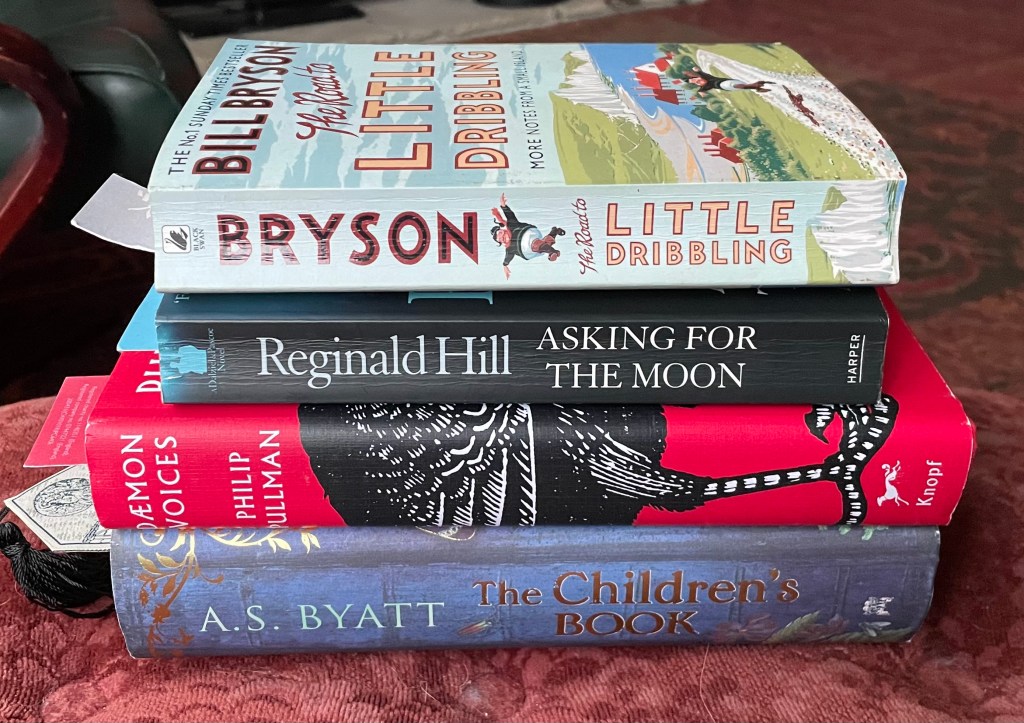
The Children’s Book by A S Byatt. This is one of my oldest TBRs, a book I’ve owned since 2009. I did start reading it as soon as I got (it was a birthday present) but I didn’t get very far! It’s a big book with 624 pages and at the time I was in the middle of reading Wolf Hall and I couldn’t cope with to such long and complicated books, so I temporarily put down The Children’s Book to read later – then other books got in the way. It begins in 1895 in the South Kensington Museum (now the Victoria and Albert Museum) and ends with the end of the Great War. There are lots of characters and it’s about children, about books, about art, about the writing of children’s books, about the telling of children’s stories, and about the clash between life and art. It’s detailed and richly descriptive full of fascinating facts. I’ve only the first three chapters so far and I’m loving it.

I’m also reading The City of Tears by Kate Mosse, one of my NetGalley books that I ‘should’ have read long before now. It’s another long book, the second in The Burning Chambers trilogy. I’ve read the first book, which began slowly and developed into a fast moving story with a dramatic climax. There’s a huge cast of characters and it continues the story of Minuo Reydon-Joubert and Piet Reydon during the Catholic and Huguenot conflicts in the sixteenth century. It looks to be just as good as The Burning Chambers (my review).

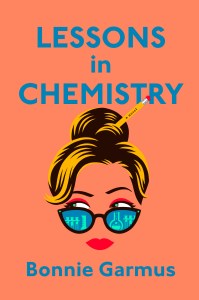
The other book I’m reading is Lessons in Chemistry by Bonnie Garmus. I usually avoid hyped books, but this one interested me. It’s about Elizabeth Zott, who is described as ‘not your average woman’. I had a look at the sample and liked the beginning so I borrowed it from the library. It’s also described as ‘laugh-out-loud funny’, but I’m not finding that at all and I’ve read 13 chapters so far. In fact I’m finding it a bit irritating.

The last book I read is A Death in Tuscany by Michele Giuttari. Chief Superintendent Michele Ferrara, head of Florence’s elite Squadra Mobile, is investigating the death of a young girl, whose body was found in the picturesque Tuscan hill town of Scandicci, lying by the edge of the woods.When he delves deeper he believes the girl was murdered, And then his close friend Massimo Verga is accused of murder and has disappeared, so Ferrara is desperate to find him, and it appears both the Freemasons and the Mafia are involved.

Next I’ll be reading – It’ll be a while before I’ve finished the books I’m currently reading so it’s too soon to decide what I’ll read next.

Although this is a weekly meme I’m only taking part occasionally.

Underworld by Reginald Hill

Rating: 5 out of 5.

Deadheads is the 10th Dalziel and Pascoe novel first published in 1988, set in the small mining town of Burrthorpe (a fictional town) in Yorkshire. The setting is excellent and Hill paints a compelling account of the mining community and gives a convincing insight into the period a few years after the Miners’ Strike of 1984. The majority of the book is about the miners, their families, their hatred of the bosses, and their distrust and dislike of the police.

There are two mysteries facing Dalziel and Pascoe. One is current and the other is a case that had appeared to have been resolved several years earlier, when Tracy Pedley, a young girl disappeared. Her body was never discovered and some of the residents believed that Billy Farr, who was the last person to see her alive, was responsible for her death. But then Donald Pickford committed suicide leaving a letter confessing to killing several young girls in the area and although he hadn’t mentioned Tracy by name, she was counted as a probable victim. Even so, some people still thought Billy was guilty and their suspicions were confirmed when later on it appeared that he committed suicide when he fell to his death in an abandoned mineshaft.

Matters are brought to boiling point when the local newspaper serialises the memoirs of ex-Deputy Chief Constable Neville Whatmough, who had been in charge of the Pickford case. This incenses Colin Farr, Billy’s son. And then another man is found dead in the mine …

Dalziel has just a minor role as Pascoe leads the investigation. Ellie, Pascoe’s wife, also plays a major role. Her involvement comes about when she tutors some of the miners as part of the union-sponsored day release courses and meets Colin Farr, Billy’s son. He is an angry young man and Ellie is attracted both to his intelligence and his physical masculinity, despite the strength of her feminist views. She really is an irritating character, an angry young woman and for most of the book it looked as though the Pascoes’ marriage was about to come to an end. It’s left to Dalziel to bring a touch of humour to the book and his down to earth approach to the miners gets more results than Pascoe’s middle class attempts to understand them.

I thoroughly enjoyed Underworld.

Note:

The title appears as ‘Under World‘ in some editions and as ‘Underworld‘ on others. On the front cover of the paperback I read it is ‘Under World‘ but on the title page it is one word -‘Underworld‘. The Underworld or Hades in ancient Greek and Roman Mythology was where the souls of the dead resided. Hill divides Underworld into three parts and begins each part with verses from Dante’s The Divine Comedy, thus equating the mine with hell.

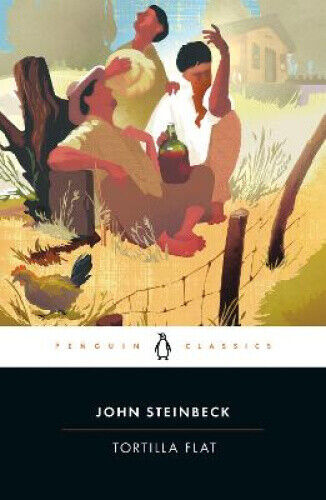
Book Beginnings & The Friday 56: A Death in Tuscany by Michele Giuttari, translated by Howard Curtis

Every Friday Book Beginnings on Friday is hosted by Gillion at Rose City Reader where you can share the first sentence (or so) of the book you are reading. You can also share from a book you want to highlight just because it caught your fancy.

One of the books I’m currently reading is A Death in Tuscany by Michele Giuttari. I’ve not read anything by him before and am really enjoying it.

My Book Beginning:

Florence, 2001

The girl, little more than a child, was found on the edge of a wood on the road above Scandicci, scantily dressed, without papers, and dying of an overdose, at dawn on Sunday 29 July, and was taken to the Ospedale Nupvo. But it wasn’t until almost a week later that Chief Superintendent Michele Ferrara, head of the Florence Squadra Mobile, really became involved with the case.

Also every Friday there is The Friday 56, hosted by Freda at Freda’s Voice, where you grab a book and turn to page 56 (or 56% of an eBook), find one or more interesting sentences (no spoilers), and post them.

Page 56:

Worse still: the whole weekend would be ruined. But Ferrara realised that Anna was making an exception for him, and he couldn’t refuse. Especially as it had something to do with the investigation into the dead girl, which he was taking increasingly to heart.

From the back cover:

In the picturesque Tuscan hill town of Scandicci, the body of a girl is discovered. Scantily dressed, she is lying by the edge of the woods. Chief Superintendent Michele Ferrara, head of Florence’s elite Squadra Mobile, takes on the case. Because toxins were discovered in the girl’s body, many assume that she dies of a drug overdose. But Ferrara quickly realises that the truth is darker than that: he believes the girl was murdered.

And when he delves deeper, there are many aspects to the case that convince Ferrara that the girl’s death is part of a sinister conspiracy – a conspiracy that has its roots in the very foundations of Tuscan society.

Written by former Florence police chief Michele Giuttari, it gives a unique insight into life and police work in Tuscany.

This is a detailed police procedural and, although it is fast-paced, it is not a book you can read quickly.

What do you think, does it appeal to you? What are you currently reading?

Throwback Thursday: When Will There Be Good News? by Kate Atkinson

Today I’m linking up with Davida @ The Chocolate Lady’s Book Review Blog for Throwback Thursday. It takes place on the Thursday before the first Saturday of every month (i.e., the Thursday before the monthly #6Degrees post). The idea is to highlight one of your previously published book reviews and then link back to Davida’s blog.

When Will There Be Good News by Kate Atkinson is probably my favourite of her books. I first reviewed it on February 18, 2009. I’d borrowed it from the library and at the time was thinking of re-reading it but I had to return the book before I had time to read it again. It’s the third novel in her Jackson Brodie series. I still haven’t read it again – I’d love to though.

My review begins:

Complex but so very satisfying!  This has had very mixed reviews on Amazon which just goes to show that you have to make up your own mind about a book. I read it very quickly because I loved it. I know I missed bits – just when did Jackson lose his jacket? I’ve tried to track it down but I can’t spot it, so I’m thinking of reading it again before I have to take it back to the library.

Click here to read my full review

The next ThrowbackThursday post is scheduled for March 1, 2023.