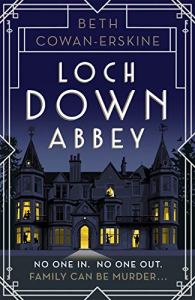
Loch Down Abbey by Beth Cowan-Erskine

Hodder & Stoughton| April 2021| 300 pages| ebook| Review copy| 4*

Description

It’s the 1930s and a mysterious illness is spreading over Scotland. But the noble and ancient family of Inverkillen, residents of Loch Down Abbey, are much more concerned with dwindling toilet roll supplies and who will look after the children now that Nanny has regretfully (and most inconveniently) departed this life.

Then Lord Inverkillen, Earl and head of the family, is found dead in mysterious circumstances. The inspector declares it an accident but Mrs MacBain, the head housekeeper, isn’t so convinced. As no one is allowed in or out because of the illness, the residents of the house – both upstairs and downstairs – are the only suspects. With the Earl’s own family too busy doing what can only be described as nothing, she decides to do some digging – in between chores, of course – and in doing so uncovers a whole host of long-hidden secrets, lies and betrayals that will alter the dynamics of the household for ever.

Loch Down Abbey is a light, quick and easy read that kept me entertained. The pun in the title suggested to me that it would be an amusing novel and the publishers describe it as a playful, humorous novel set in 1930s Scotland. I think it’s quite like a cross between a P G Wodehouse novel and a country house mystery, with elements of farce.

Loch Down Abbey, is a large rambling house with 125 rooms, not including the servants’ quarters, and 5 thousand acres of land on the shores of Loch Down. It has been the home of the Ogilvy-Sinclair Clan for six centuries. I found it quite bewildering at first as there are so many characters. I had to keep going back to the List of Characters to remind myself who they all were.

It’s partly a cozy, historical murder mystery, but mostly a family saga. Lord Hamish Inverkillen is found dead, and at first it looks like an accident, but the housekeeper Mrs MacBain thinks it could be murder. It becomes clear that the Abbey, as well as their whisky distillery is in debt, so much so that the only way they can survive is to sell the house, the distillery and land. There’s a mysterious illness known as Virulent Pernicious Mauvaise spreading around the country. Loch Down Abbey has to go into lockdown! Most of the servants catch the disease and have to be isolated away from the family, meaning that the family have to make their own breakfasts, light the fires in the bedrooms and make their own beds – unheard of for aristocrats! And as Nanny has died the children run wild causing all sorts of mayhem.

As Mrs MacBain and Inspector Jarvis investigate Hamish’s death, lots of secrets and scandals are revealed. I really liked the descriptions of the Abbey itself complete with secret passages, reminding me of Enid Blyton’s novels and I thought the ending, though a bit unbelievable, was inevitable.

My thanks to the publishers for a review copy via NetGalley.
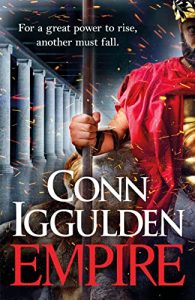
Empire by Conn Iggulden

Penguin| May 2023| 409 pages| ebook| Review Book| 5*

Pericles is more than a hero. He’s the leader of Athens. The empire’s beacon of light.

But even during times of peace, the threat of Sparta – Athens’s legendary rival – looms large on the horizon. When a sudden catastrophe brings Sparta to its knees, Pericles sees a golden opportunity to forever shift the balance of power in his city’s favour.

For sometimes, the only way to win lasting peace is to wage war. Sparta may be weak, but their power is far from extinguished. Soon a ruthless young boy steps forward to lead the Spartans back to greatness.

As the drums of battle draw closer, can Pericles rise once more?

Or will the world’s greatest empire fall under his watch?

My thoughts

Empire is the second in the Golden Age series, continuing the story told in Lion. Pericles is the main character, now the leader of Athens, appointed as a strategos (a military general). Iggulden brings the period to life as he details the continuing struggle for power between Athens and Sparta. The earthquake that struck around 464 BC destroyed most of the city of Sparta. After the Spartans rejected the Athenians’ offer of help Pericles realised that war between them was inevitable and he decided to rebuild the walls around the city to keep it safe. When the Spartans heard that the walls were rising they demanded they be taken down. The Athenians ignored this demand which, of course, led to war, with the Spartans laying siege to Athens.

Lion is an action packed and a gripping story. Iggulden tells the story, seamlessly incorporating his research into the narrative so that this doesn’t read like a textbook but as a fascinating and gripping epic tale of war and death between the states of Athens and Sparta. It’s an amazing tale of political intrigue and bloodthirsty battles. Equally as fascinating as the story is Iggulden’s Historical Note, in which he expands on the background and detail of the historical record. He also explains how he has compressed some of the years and has omitted some ‘actions, skirmishes, insults and general breakdown of good relations between the two states and their allies.’

I think it’s an entertaining and very readable book and I thoroughly enjoyed it.

My thanks to the publishers for a review copy via NetGalley.

My Blog Break is over & The Man With No Face

I’m back home and looking forward to getting back into blogging. I was in hospital for three weeks – but now I’m recovering, trying to get back to ‘normal’.

It has been very odd as I lacked the desire to read, or concentrate on anything really. I’ve read just one book so far this month – The Man With No Face by Peter May, which I’d started before I went into hospital. This was first published in 1981. May made ‘some very minor changes’, before it was republished in 2018.

Rating: 5 out of 5.

Description from Goodreads:

A POWERFUL AND PRESCIENT THRILLER FROM THE MILLION-SELLING AUTHOR OF I’LL KEEP YOU SAFECOFFIN ROAD AND THE BLACKHOUSE.

A REPORTER WITH NO FEAR

Jaded Edinburgh journalist Neil Bannerman is sent to Brussels, intent on digging up dirt. Yet it is danger he discovers, when two British men are found murdered.

A CHILD WITH NO FATHER

One victim is a journalist, the other a Cabinet Minister: the double-assassination witnessed by the former’s autistic daughter. This girl recalls every detail about her father’s killer – except for one.

THE MAN WITH NO FACE

With the city rocked by the tragedy, Bannerman is compelled to follow his instincts. He is now fighting to expose a murderous conspiracy, protect a helpless child, and unmask a remorseless killer.

I did find it a bit repetitive, which for once was good as it kept reminding me what was going on. It’s a complex plot told mainly from Bannerman’s perspective with insights into the hired assassin’s and daughter’s viewpoints. It’s called ‘The Man with no Face’ because Tania, the daughter is a talented artist and she draws the scene with the assassin’s face left blank.

There’s a lot more I could say about the book. It’s a thriller with some violence but nothing I couldn’t cope with – and I’m squeamish! I thoroughly enjoyed it with all its twists and turns and increasing level of danger right up to the climax. Highly recommended!

Book Beginnings on Friday and The Friday 56: A Winter Grave by Peter May

Every Friday Book Beginnings on Friday is hosted by Gillion at Rose City Reader where you can share the first sentence (or so) of the book you are reading. You can also share from a book you want to highlight just because it caught your fancy.

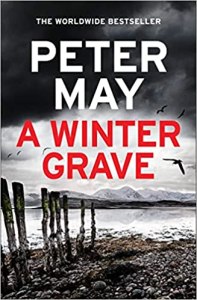
A Winter Grave is the last book I bought and is Peter May’s latest novel. I’ve enjoyed the other books of his I’ve read, so I’m hoping this one will be just as good. It is cli-fi, about the effects of climate change on human society, set in 2051.

Cli-fi, short for climate fiction, is  a form of fiction literature that features a changed or changing climate. It is rooted in science fiction, but also draws on realism and the supernatural.


Little will heighten your sense of mortality more than a confrontation with death. But right now such an encounter is the furthest thing from Addie’s mind, and so she is unprepared for what is to come.

Also every Friday there is The Friday 56, hosted by Freda at Freda’s Voice, where you grab a book and turn to page 56 (or 56% of an eBook), find one or more interesting sentences (no spoilers), and post them.

Page 56:

In the early photos, when Addie was just a baby, Mel had been happy and radiant, and he lingered over them. But the increasingly haunted face she presented to the world in later years made him scroll more quickly by.

Description from Amazon:

A TOMB OF ICE

A young meteorologist checking a mountain top weather station in Kinlochleven discovers the body of a missing man entombed in ice.

A DYING DETECTIVE

Cameron Brodie, a Glasgow detective, sets out on a hazardous journey to the isolated and ice-bound village. He has his own reasons for wanting to investigate a murder case so far from his beat.

AN AGONIZING RECKONING

Brodie must face up to the ghosts of his past and to a killer determined to bury forever the chilling secret that his investigation threatens to expose.

Set against a backdrop of a frighteningly plausible near-future, A WINTER GRAVE is Peter May at his page-turning, passionate and provocative best.

~~~

What do you think, does it appeal to you? What are you currently reading?

The Light Between Oceans by M L Stedman

Please be aware that there are spoilers in my post. I couldn’t write it any other way without it ending up just a mere outline. And in any case the description on Goodreads tells you as much if not more than this.

Rating: 4 out of 5.

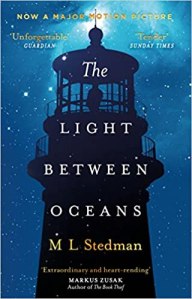
The Light Between Oceans is the story of Tom, a lighthouse keeper on an isolated island, Janus Rock, and his wife Isabel. Janus Rock is nearly half a day’s journey from the coast of Australia, where the Indian Ocean washes into the Great Southern Ocean. When a boat washes up on the shore of the island it holds a dead man – and a crying baby. Tom and his wife have a devastating decision to make.

Tom is a veteran of World War One and a man of high moral principles. He loves his job, meticulously and accurately recording all the daily details of his work on the lighthouse, keeping it all according to the rules and regulations. From his time during the war he had realised that rules are what separate a man from a savage. He wants to report the man and infant immediately. But Isabel has had two miscarriages and a still birth and is desperate to keep the baby. So he is torn, he loves Isabel and although he is not happy about the ease with which she made her decision, against his own judgement, they claim her as their own and name her Lucy. When she is two, Tom and Isabel return to the mainland and are reminded that there are other people in the world. Their choice has devastated one of them, but by then there is no right answer – justice for one person is another’s tragic loss.

As for the dilemma that Tom and Isabel faced I’ve never been in Isabel’s position, but initially I did take sides, agreeing with Tom. But as time went on and Lucy grew older it became more difficult and as M L Stedman explores all the emotions all the characters are experiencing I could understand Isabel’s position a bit more. But then there’s the birth mother not knowing if her husband and baby are dead, but convinced they will return to her. It was heart breaking to read. An impossible situation.

I enjoyed the setting on Janus Rock, thinking it was a real island. But I was surprised to find it is entirely fictitious. In this interview M L Stedman explains that the region where the Great Southern Ocean and the Indian Ocean meet is real, and the climate, weather and the landscape are more or less as she has described them. She wrote some of the book there and describes as a very beautiful, if sometimes fierce, part of the world. I thought the ending was rushed, condensed into a few pages and I wondered if the story was based on fact. But there are no Historical Notes, so I’m assuming it is purely fictional. And this is borne out by the interview in which she says:

I write fairly instinctively, just seeing what comes up when I sit down at the page. For this story, it was a lighthouse, then a woman and a man. Before long, a boat washed up on the beach, and in it I could see a dead man, and then a crying baby. Everything that happens in the book stems from this initiating image—a bit like the idea of ‘Big Bang’—an initial point that seems tiny turns out to be incredibly dense, and just expanded outward further and further. 

It’s set mainly in 1926, but does that make it historical fiction – I can’t decide, what do you think?

Catching Up

This year has been a good time for reading books, but not a good time as far as writing reviews goes and I am way behind. This is my third set of mini reviews in an attempt to catch up with the backlog.

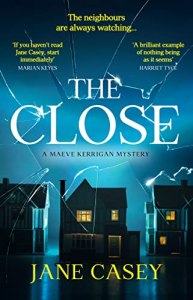
The Close by Jane Casey 2*

I read The Close because I’ve read and previously enjoyed Jane Casey’s Maeve Kerrigan books. Maeve is a Detective Sergeant with the Metropolitan Police – in the first six books she was a detective constable. She and her boss Detective Inspector Josh Derwent are the two main characters. They have a confrontational working relationship and their spiky relationship is a recurring theme in the books.  They are all police procedurals, fast-paced novels, with intriguing and complex plots. I thought that the Maeve/Josh relationship took a significant turn in the 9th book and I wondered what would happen next!

But it was simply disappointing. Maeve and Josh went undercover, carrying out surveillance in Jellicoe Close, whilst posing as a couple. As the synopsis describes it there are some dark secrets behind the neat front doors, and hidden dangers that include a ruthless criminal who will stop at nothing. What I really did not expect was that this would result in their relationship becoming such an abusive one.

Piece of My Heart by Peter Robinson 4*

I really enjoyed this book, the 16th Inspector Banks, but I think it reads well as a standalone book. This is the summary from Amazon:

As volunteers clean up after a huge outdoor rock concert in Yorkshire in 1969, they discover the body of a young woman wrapped in a sleeping bag.

She has been brutally murdered. The detective assigned to the case, Stanley Chadwick, is a hard-headed, strait-laced veteran of the Second World War. He could not have less in common with – or less regard for – young, disrespectful, long-haired hippies, smoking marijuana and listening to the pulsing sounds of rock and roll. But he has a murder to solve, and it looks as if the victim was somehow associated with the up-and-coming psychedelic pastoral band the Mad Hatters.

In the present, Inspector Alan Banks is investigating the murder of a freelance music journalist who was working on a feature about the Mad Hatters for MOJO magazine. This is not the first time that the Mad Hatters, now aging rock superstars, have been brushed by tragedy.

Banks finds he has to delve into the past to find out exactly what hornets’ nest the journalist inadvertently stirred up
.

This must be one of the longest of the Inspector Banks books, helped along by Robinson’s descriptive writing of the countryside which I love, and also details of the music Banks listens to (in this case a lot of 1960s music). He also goes into detail describing what each character looks like and the clothes they are wearing. I liked the movement between the two time periods, which highlights the differences in police procedure.

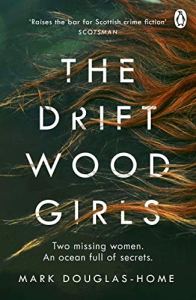
The Driftwood Girls by Mark Douglas-Home 4*

This is the synopsis on Goodreads:

Kate and Flora have always been haunted by a mystery – their mother, Christine, vanished without trace when they were children. But now Kate has a more urgent problem: Flora has disappeared too. In desperation, she searches Flora’s house, and finds a scrap of paper with a name scribbled on it: Cal McGill.

Cal is a ‘sea detective’: an expert in the winds and the tides, and consequently adept at finding lost things – and lost people. Can Cal find Flora?

And might he even know the secret of what happened to their mother, all those years ago . . . ?

My thoughts:

I enjoyed reading the first three Sea Detective novels, my favourite being The Malice of Waves, the 3rd book. So I was expecting to enjoy The Driftwood Girls, the 4th book. Cal McGill is an oceanographer who tracks floating objects, including dead bodies, using his knowledge of tides, winds and currents to solve mysteries no-one else can. I was disappointed as the sea detection plays only a small part in this book. It’s unevenly paced, introducing several seemingly unconnected characters and for a while I found it difficult to distinguish between them, having to keep checking back who was who. In the earlier books I noted that Cal is a strong independent character, but in this he seems to have become even more of a loner in this book, even more remote and withdrawn.

It certainly isn’t as gripping as the other books, but I did want to find out how it would end. It was only in the second part of the book that I began to get an idea of what was happening with each set of characters and how they could be connected. Thus the plot consists of several stories interwoven and told through several points of view. It is complicated and convoluted and as the plot unfolds it all ties together too neatly, in my opinion, with too many coincidences and improbabilities.

The settings are the best parts as it has a great sense of location, whether it is in Scotland or Texel, the most southerly and largest of the West Frisian Islands lying off the Dutch mainland between the North and Wadden Seas. The characters on Texel, particularly Olaf, are the most intriguing and for most of the book I had no idea how they were relevant to the rest of the characters. Olaf, like Cal is a loner, spending his days beachcombing and making driftwood figures with no mouths from the flotsam washed up on the beach.