Awakening by Sharon Bolton: a Book Review

I read Awakening  very quickly because once I started reading I didn’t want to stop.

If you don’t like snakes this book won’t help you get over your phobia! Clare Benning is a wildlife vet who’d rather be with animals than with people. She was facially disfigured in a traumatic childhood accident, which isn’t explained until nearly the end of the book. She has recently moved to a quiet country village in Dorset, where she is soon drawn into more contact with other people than she had bargained for, when a man dies following a supposed snake bite.

To make matters worse this snake is not a native British snake but a  highly poisonous snake from Australia, a taipan:

Taipans can be very aggressive snakes. They’re fast and strong. Each one of them has enough venom to kill a whole battalion of policemen. People die within hours of being bitten. (page 62, Location 998)

Then more, and more snakes surface and it gets really scary. There is an awful lot of information in Awakening about snakes and yet none of it is out of place, nor does it slow down this fast-paced novel – it adds to the tension. And it’s not just because of the snakes – there are some very strange people and unexplained events that scare Clare, but she is relentless in her search for the truth. I really liked Clare; Bolton has depicted her so well drawing out how her physical scarring has caused her emotional fragility and how she deals with it. The relationships between the characters is also believable and the setting is very dark and atmospheric.

  • Format: Kindle Edition
  • File Size: 595 KB
  • Print Length: 544 pages
  • Page Numbers Source ISBN: 0312381875
  • Publisher: Transworld Digital (23 April 2009)
  • Sold by: Amazon Media EU S.à r.l.
  • Language English
  • ASIN: B0031RS22C
  • Source: I bought it

H is for Hardy

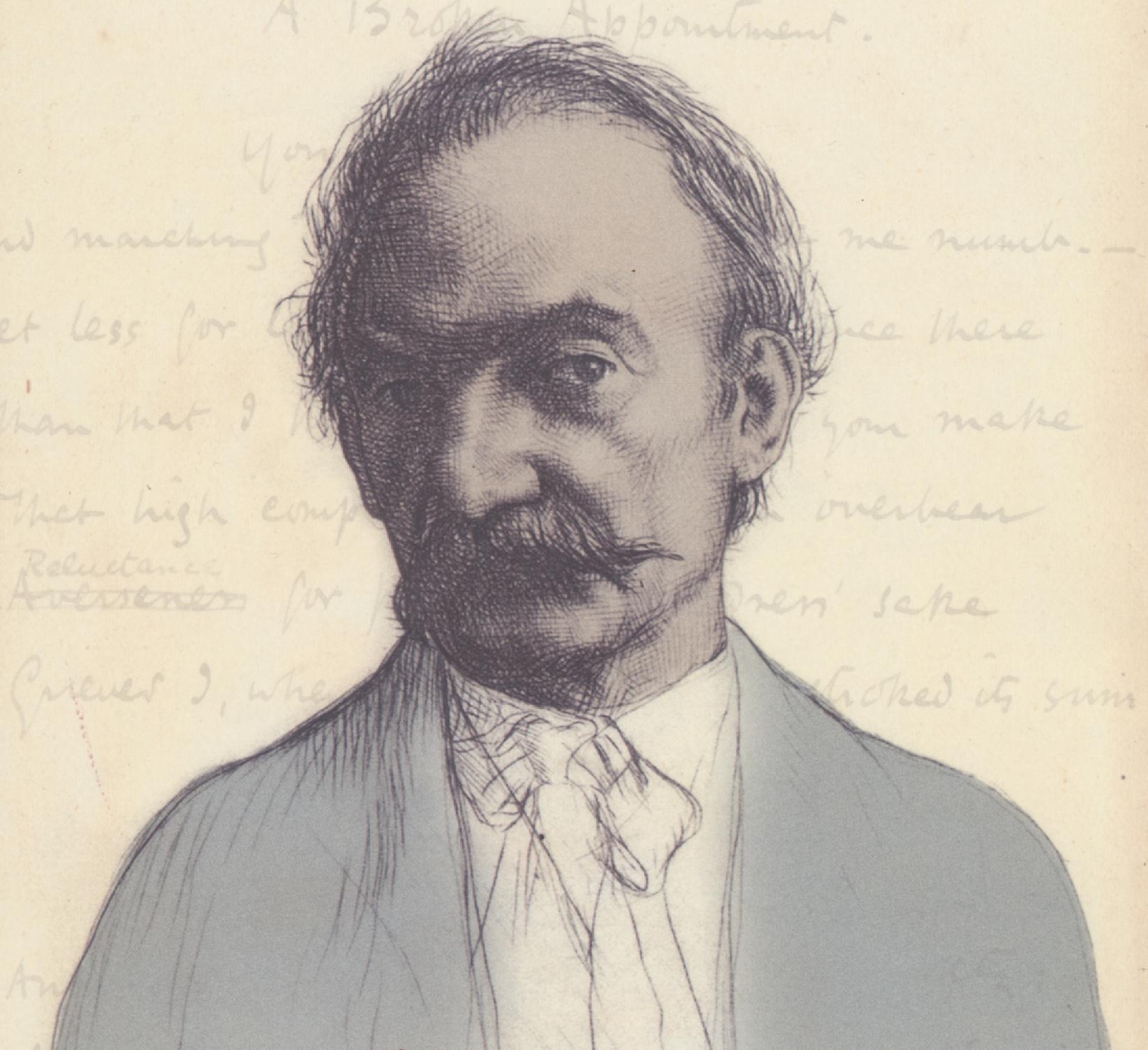
Thomas Hardy 001 (2018_05_20 15_18_26 UTC)

Thomas Hardy is one of my favourite authors. He was born in 1840 at Upper Bockhampton near Dorchester. What I love most about Hardy’s books are his lyrical descriptions of nature and the countryside and all his books show his great love and knowledge of the countryside in all its aspects. They also show his almost pagan sense of fate and the struggle between man and an omnipotent and indifferent fate. Hardy was a pessimist – man’s fate is inevitable, affected by chance and coincidence. It cannot be changed, only accepted with dignity. This is illustrated in his poem – Hap, written in 1866:

If but some vengeful god would call to me

From up the sky, and laugh: ‘œThou suffering thing,

Know that thy sorrow is my ecstasy,

That thy love’s loss is my hate’s profiting!’

Then would I bear, and clench myself, and die,      

Steeled by the sense of ire unmerited;

Half-eased, too, that a Powerfuller than I

Had willed and meted me the tears I shed.

But not so. How arrives it joy lies slain,

And why unblooms the best hope ever sown?

‘”Crass Casualty obstructs the sun and rain,

And dicing Time for gladness casts a moan’¦.

These purblind Doomsters had as readily strown

Blisses about my pilgrimage as pain

The first book by Thomas Hardy that I read was The Trumpet Major – I think it was in the second year at secondary school. I remember very little about it, except that it was set during the Napoleonic Wars and I wasn’t too impressed. Then I read The Mayor of Casterbridge for A level GCE and thought it was wonderful.

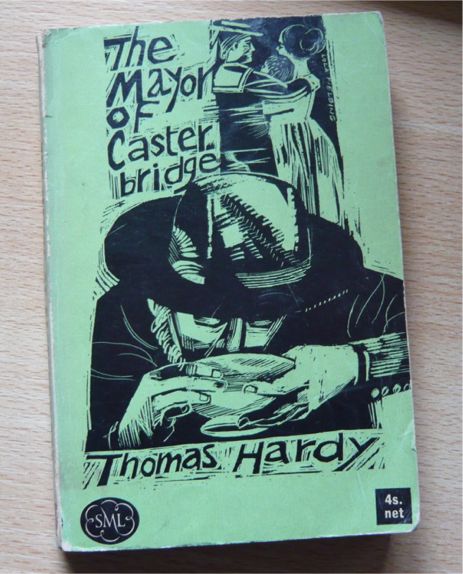
Hardy Casterbridge

I still have my copy, with passages underlined and notes at the tops of pages – all in pencil.It’s full title is The Life and Death of the Mayor of Casterbridge: A Story of a Man of Character. It tells the tragic tale of Michael Henchard, a man of violent passions, proud, impulsive with a great need for love. It opens dramatically as he sells his wife and child to a sailor at a fair. By his own hard work over the years he eventually became the rich and respected Mayor of Casterbridge. But then the re-appearance of his wife and her daughter sets off a train of events finally bringing Henchard to ruin and degradation.

Because I enjoyed The Mayor over the years I’ve read more of Hardy’s books, including Tess of the D’Urbervilles and Jude the Obscure, both dramatic tragedies. In Jude Hardy attacked the Church and the marriage state, which received a mixed reception at the time – the Bishop of Wakefield burned his copy of the book and W H Smith withdrew it from their circulating library, but the public bought 20,000 copies, whether or not due to the scandal it aroused.  These books were considered masterpieces by some and scandalous by others.

Of the two I prefer Jude to Tess and having re-read them both more recently I still feel the same, but now I’m less impatient with the way Hardy presents Tess as a helpless victim than I had been before.  She is an innocent, raped by Angel Clare, the man she loves and Hardy highlights the hypocrisy of the times in condemning the ‘fallen woman’.

In Thomas Hardy, the Time-Torn Man Claire Tomalin writes not only about his life but also how he became a writer, poet and novelist. I began reading this book a few years ago and every now and then think I really must finish it. I stopped, as usual, overtaken by the desire to read other books- including more by Hardy himself.

The Thomas Hardy Society is an excellent source of information on the man and his works.

This is an ABC Wednesday post for the letter H.

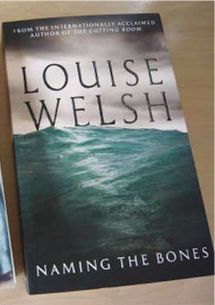
Naming the Bones by Louise Welsh: A Book Review

I’d planned to read Naming the Bones by Louise Welsh, which is from my to-be-read books and it seemed appropriate to include it in the books I’ve selected for the RIP IV Challenge. But as I read it I began to wonder if it really fitted into that category. Although the blurb on the back cover says it is ‘Loaded with Welsh’s trademark wit, insight and gothic charisma‘ the gothic elements are not evident in the first half or so of the book. It’s only as the story unfolds that the mystery element emerges and just a touch of the gothic and the occult comes to the fore.

Naming the Bones2
I found it a slow start as Dr. Murry Watson, an English literature professor from Glasgow University researches the life of a largely unknown poet Archie Lunan. Lunan had died thirty years earlier, presumed drowned off the island of Lismore, although his body had never been discovered. As Murray investigates Lunan’s life, talking to people who had known him, he begins to suspect that Archie’s death may not have been the suicide it seemed and as more deaths come to his attention the mystery grows and becomes more sinister.

Murray’s personal life is in a mess; his relationship with his brother has broken down following their father’s death and his work life is complicated by his affair with his boss’s wife. This is a detailed book, the characters are vivid and memorable and  each location is beautifully described, not only the sights and sounds but smells too:

Murray pulled back his hood. The scent of wood smoke mingled with the falling rain and the damp rising from the sodden earth. It was an ancient smell, the same one the earliest islanders who could be resting, preserved beneath the peat, had known a millennia or so ago. (pages 327-8)

It is when Murray arrives on the island of Lismore in Loch Linnhe on the west coast of Scotland that the pace picks up, and the tension builds. Here Murray finally meets Archie’s girlfriend, Christie and begins to piece together what had happened thirty years ago. The book ends with some ambiguities still to be explained, an ending which I found perfectly in keeping with the story.

I was taken with Welsh’s handling of biography, describing it as

… a paper facsimile of life hurtling towards death. (page 128)

Murray is hoping to discover how much Archie’s life had influenced his art, whereas his former tutor, Professor James, had insisted on the importance of divorcing writers’ lives from their work, thinking it to be reductive and simplistic. It is the work itself that is important and Murray wonders whether this is right and whether he should limit himself to a discussion of the poetry, rather than the man. Again Welsh leaves this open to the reader to decide.

Naming the Bones isn’t the book I thought it was going to be – it isn’t really ‘gothic’, or dark, or about the occult. It isn’t really crime fiction, either. Nor is it anything like the only other book by Louise Welsh that I’ve read – The Cutting Room, which is really gothic and dark. Once I’d got over my expectations I enjoyed the book for what it is – a mystery and a good one too.

  • Paperback: 389 pages
  • Publisher: Canongate Books Ltd (3 Feb 2011)
  • Language English
  • ISBN-10: 1847672566
  • ISBN-13: 978-1847672568
  • Souce: I bought it

Blonde by Joyce Carol Oates: a Book Review

Blonde is a work of fiction, not a biography of Marilyn Monroe. I had to keep reminding myself of that as I was reading, because it was so easy to believe in the characters.

Joyce Carol Oates makes it crystal clear in her Author’s Note:

Blonde is a radically distilled “life” in the form of fiction, and, for all its length, synecdoche is the principle of appropriation. In place of numerous foster homes in which the child Norma Jeane lived, for instance, Blonde explores only one, and that fictitious; in place of numerous lovers, medical crises, abortions and suicide attempts and screen performances, Blonde explores only a selected, symbolic few.

… Biographical facts regarding Marilyn Monroe should not be sought in Blonde, which is not intended as a historic document, but in biographies of the subject.

As you would expect it’s a tragic story, intense and shocking in parts. It begins with a Prologue – 3 August 1962 with Death hurtling along towards 12305 Fifth Helena Drive, Brentwood, California. It then follows Norma Jeane Baker’s life in chronological sections from The Child 1932 – 1938 to The Afterlife 1959 – 1962. It switches from one narrator to the next, and from third person to first person perspective throughout. It’s brutal, tender and both lyrical and fragmented.

It focuses on need, on Norma/Marilyn’s need for love and acceptance – to be loved as a person and acknowledged as an actress. She wanted to be good. ‘Marilyn Monroe’ was a role she had to play:

A light must have shone in Norma Jeane’s eyes. An electric current must have run through her supple, eager girl’s body. She was “Marilyn” – no she was “Angela” – she was Norma Jeane playing “Marilyn” playing “Angela” – like a Russian doll in which smaller dolls are contained by the largest doll which is the mother … (pages 256-7)

She took drugs to help her sleep, and drugs to give her energy.She couldn’t cope with ordinary life, it baffled her without a script to follow and no guidance about what was happening, or why. She was driven, desperate to have a baby, desperate to know her father, calling her husbands ‘Daddy’, moody, childlike, fragile, always wanting to do and be better.

Joyce Carol Oates has got really inside this character, so much so that I could believe she’d had access to Norma/Marilyn’s thoughts and feelings. The other characters are intriguing, sometimes just given initials, Mr Z, W, C and so on, others are recognizable through their nicknames – The Ex-Athlete, The Playwright, The Prince and the President for example. But Marilyn is the star. In the Author’s Note Oates lists the sources she has consulted, not just biographies but also books about American politics, Hollywood and books on acting. Marilyn had kept a journal and also written poems, two lines of which are included in the final chapter; the other poems apparently by her are invented. Some of the text is taken from interviews and some is fictitious. But it’s all woven together so skilfully that it’s hard to tell what is from real life and what is not.

For me this ranks as one of Joyce Carol Oates best books, although I have by no means read all her books. The ones I’ve read have all had the power to move me. In addition to the ones I’ve written about on this blog I’ve also read The Tattooed Girl, Middle Age, Solstice and The Falls.

Evil Under the Sun by Agatha Christie: a Book Review

In Evil Under the Sun Poirot is on holiday in Devon staying in a seaside hotel – a seaside mystery instead of a country house mystery!

Here’s the blurb:

It was not unusual to find the beautiful bronzed body of the sun-loving Arlena Stuart stretched out on a beach, face down. Only, on this occasion, there was no sun! she had been strangled. Ever since Arlena’s arrival at the resort, Hercule Poirot had detected sexual tension in the seaside air. But could this apparent ‘crime of passion’ have been something more evil and premeditated altogether?

My thoughts:

It’s August, the sun is hot, people are enjoying themselves, swimming and sunbathing and yet Poirot remarks that the sight of the recumbent figures on the beach reminds him of the Morgue in Paris, ‘the bodies – arranged in slabs – like butcher’s meat!’  The other guests remark it’s an unlikely setting for crime but Poirot disagrees:

‘It is romantic, yes,’ agreed Hercule Poirot. ‘It is peaceful. The sun shines. The sea is blue. But you forget Miss Brewster, there is evil everywhere under the sun.’

And so it turns out, with the discovery of Arlena’s dead body. Arlena, who Major Barry describes as ‘a personification of evil’.

‘She’s the world’s first gold-digger. And a man-eater as well! If anything personable in trousers comes within a hundred yards of her, it’s fresh sport for Arlena!’

Her step-daughter, Linda hates her and wants to kill her, wishing she would die.

Arlena was strangled. Poirot  maintains that her murder has resulted from her character, and his investigations revolve around understanding exactly what type of person she was. The suspicion of guilt is cast over one person after another; either a man or a woman could have been strong enough to strangle Arlena and there are plenty of suspects. And even Poirot is puzzled because from the beginning it had seemed to him that one person was clearly indicated as the murderer but at the same time it seemed impossible for that person to have committed the crime.

Poirot describes the murder as a ‘very slick crime‘ and indeed it was perfectly planned and timed. At the end he explains at length how he collected together all the isolated significant facts and events to make a complete pattern to discover the identity of the murderer. Although I enjoyed this book I did think the explanation was too long and the characters  were a bit sketchy and sterotypical. It all seemed to be more of a puzzle solving exercise, than a captivating mystery.

Agatha Christie wrote Evil Under the Sun during 1938 and it was published in 1941, having first appeared as a serial in the USA at the end of 1940. I read it on my Kindle.

  • Format: Kindle Edition
  • File Size: 416 KB
  • Print Length: 320 pages
  • Publisher: Harper (14 Oct 2010)
  • Sold by: Amazon Media EU S.à r.l.
  • Language English
  • ASIN: B0046H95QS
  • Source: I bought it

Reading this book completes the What’s in a Name 4 challenge.

Book Beginnings

Today I finished reading Blonde by Joyce Carol Oates. It has taken me several weeks to read it and I fancy a complete change and a shorter book!

So, I’m thinking of reading No Longer at Ease by Chinua Achebe, which begins:

For three or four weeks Obi Okonkwo had been steeling himself against this moment. And when he walked into the dock that morning he thought he was fully prepared. He wore a smart palm-beach suit and appeared unruffled and indifferent. The proceeding seemed to be of little interest to him. Except for one brief moment at the very beginning when one of the counsel had got into trouble with the judge. (page 1)

This is my copy which I bought several years ago from a second-hand bookshop somewhere, after reading its predecessor Things Fall Apart, whose hero was Obi’s grandfather. I thought Things Fall Apart was an amazing book and one that had made a great impression on me, so why haven’t I read No Longer at Ease before now?

From the blurb on the back cover I see that Obi has returned to Nigeria from studying in England. He is a civil servant with a respectable job and a fiancée, but despite the expectations of his family and tribe he falls victim to the corruption of Lagos. It promises to be a study of the cultural change in Nigeria during the 1950s.

Book Beginnings on Friday is hosted by Katy, at ‘˜A Few More Pages’.