Dumb Witness by Agatha Christie: a Book Review

I found it wasn’t too difficult to work out who the murderer was in Agatha  Christie’s Dumb Witness, because there is a rather obvious clue at one point, but that didn’t spoil my enjoyment of this book. In fact I felt it added to my satisfaction and there was a further development which I hadn’t thought of at the end, which surprised me.

From the back cover:

Everyone blamed Emily’s accident on a rubber ball left on the stairs by her frisky terrier. But the more she thought about her fall, the more convinced she became that one of her relatives was trying to kill her. On April 17th she wrote her suspicions in a letter to Hercule Poirot. Mysteriously he didn’t receive the letter until June 28th … by which time Emily was already dead!

Dumb Witness is set in the small country town of Market Basing (a fictional name) where Miss Emily Arundell lived in Littlegreen House. Part of Poirot’s problem is that he doesn’t actually have a murder to investigate because Miss Arundell’s death was certified by her doctor as a death from natural causes from a long standing medical condition. But he thought he was under an obligation from Miss Arundell to investigate. He uses subterfuge to find out more information, pretending to be writing a biography of General Arundell, Emily’s father. And from some very slender facts he reconstructs the sequence of events leading up to her death.

As usual there are a number of suspects, mostly the members of her family, her nephew and niece Charles and Theresa Arundell and her married niece Bella and her husband Doctor Tanios. Then there is her companion, the rather ineffectual Miss Wilhelmina Lawson, and the servants. Poirot considers each one in turn. He also considers the character of the murderer, as he explains to Captain Hastings, the narrator, who is completely baffled as he assists Poirot in looking at the evidence:

‘Since at the moment, it is only suspicion and there is no definite proof, I think I must leave you to draw your own deductions, Hastings. And do not neglect the psychology – that is important. The character of the murderer – that is an essential clue to the crime.’

‘I can’t consider the character of the murderer if I don’t know who the murderer is!’

‘No, no, you have not paid attention to what I have just said. If you reflect sufficiently on the character – the necessary character of the murder – then you will realize who the murderer is!’ (page 184)

The ‘dumb witness’of the title is Bob, Emily’s wire-haired terrier in what is described as ‘the incident of the dog’s ball.’ Agatha Christie dedicated Dumb Witness to her wire-haired terrier, Peter, describing him as ‘most faithful of friends and dearest companion, a dog in a thousand‘. Bob plays an important part in the plot and indeed Agatha Christie gives him some dialogue!

I didn’t think I knew anything about Dumb Witness before I read it – I didn’t even know the title. But after I read it I checked the entry in wikipedia and found that Dumb Witness  had been adapted for television in 1996 as one of the episodes of Agatha Christie’s Poirot with David Suchet playing the role of Hercule Poirot. I then remembered watching it and being surprised because it was set in the Lake District, which I thought was most unusual for an Agatha Christie book.  Now I’ve read the book I can see that the TV adaptation differed considerably from the original story. As I hadn’t read it when I watched the adaptation that didn’t bother me in the slightest. It would have done the other way round!

NB: take care reading because if you haven’t read earlier books featuring Poirot, in chapter 18 he gives away the names of the murderers in four of his earlier cases.

First published in Great Britain in 1937
published in the US as Poirot Loses a Client, also known as Mystery at Littlegreen House or Murder at Little Green House.
This edition published by Harper Collins 1994
ISBN: 9780006168089
251 pages
Source: My own copy

The Cosy Knave by Dorte Hummelshoj Jakobsen

Last week I read The Cosy Knave: A Gershwin and Penrose Mystery by fellow blogger Dorte Hummelshøj Jakobsen. I always find her blog fresh and interesting and as I expected her book also has those same qualities. It is, as the title suggests, a ‘cosy’ mystery and it’s an easy, fun read. But it’s not as simple as it seems for I was completely baffled about who the killer could be until very near the end. I swayed towards one character and another until I realised that’s who did it. And then there was a final revelation that I hadn’t foreseen at all!

The book is set in the Yorkshire village of Knavesborough and begins with the return of Colonel Baldwin’s son, Mark. This causes quite a stir because Mark has bought Netherdale Manor. He had become a famous violinist and was now calling himself Sir Marco Bellini.

The FIFA World Cup has just started and a group of locals, including Sir Marco are gathered at Ye Cosy Knave, the village tearoom to watch the England/Germany match on Tuxford Wensleydale’s new flat screen TV.  During the match nosey-parker Rose Walnut-Whip was stabbed to death and no one heard or saw anything. It’s down to Constable Archibald Penrose to discover who killed her, helped by his fiancée, the enthusiastic vicar’s daughter, Rhapsody Gershwin. More crimes and another murder follow before Rhapsody and Archie uncover the murderer.

The Cosy Knave is peopled with whimsically-named characters, including the retired headmistress Miss Olivia Cadbury-Flake, the Kickinbottom family and Rhapsody’s sisters, Psalmonella and Harmonia. It’s the relationship between the characters that holds the key to the mystery. It’s not often that I enjoy humorous crime fiction, but with this book Dorte has gone a long way to convert me. It’s a most entertaining mystery.

The book is available from Smashwords in a variety of eBook formats and here’s a coupon code, provided by the author, which brings the price down to $2.99US: PN22N

Read in July & A Glimpse of The Cosy Knave

It doesn’t look as though I’ve read many books in July going by the number of books I’ve finished:

  1. Whistling for the Elephants by Sandi Toksvig
  2. The Tinder Box by Minette Walters (library book)
  3. Murder on the Orient Express by Agatha Christie (library book)
  4. Wilful Behaviour by Donna Leon (library book)
  5. Gently by the Shore by Alan Hunter (library book)

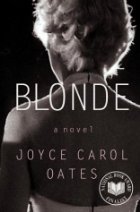
but I’ve also been reading Blonde by Joyce Carol Oates which is as long as about two/three  books in itself. it will be a while before I finish it.

The links on the titles go to my posts on the books. I wrote about the opening of Whistling for the Elephants by Sandi Toksvig in a Book Beginnings post. I was rather disappointed by it – I didn’t think it was funny or even very humorous. It’s about Dorothy, an English girl of 10 who has gone to live with her parents in Sassapaneck, New York in 1968. She finds it difficult to fit in – not only because she has to learn about America and the basics of school life, so different from what she knew, but also she has to work out what opinions she should have and whether she is a boy of a girl.

Whistling for the Elephants is packed with eccentric people, but it was hard to distinguish between some of the characters and it was only at the end that I had  discovered who they all were, so the characterisation isn’t too good. And I never really cared much about any of them either. The story kept getting submerged in facts about a variety of different topics, as though this is a collection of short essays or stories roughly linked together to make a book.

I think my book of the month, by a whisker, is Agatha Christie’s Murder on the Orient Express, which I thoroughly enjoyed even though I knew the plot and who did the murder.

I’ve have a few other books on the go at the moment including Dorte Jakobsen’s new e-book The Cosy Knave. Dorte blogs at djkrimiblog and her book is released today. I’ll write about it when I’ve finished it – all I can say so far is that I’m enjoying the story very much and am completely  baffled about who the murderer can be! For more details see Dorte’s blog – here.

Teaser Tuesday – Blonde

Currently I’m reading Blonde by Joyce Carol Oates. I’ve been reading it for a while as it’s a long book of over 700 pages. I’m about a third of the way into it. It’s a fictionalised account of Norma Jeane Baker – also known as Marilyn Monroe and it is absolutely fascinating.

No doubt I’ll be writing more about this book. For now here is a little teaser quotation:

Her problem wasn’t she was a dumb blonde, it was she wasn’t a blonde and she wasn’t dumb. (page 232)

Teaser Tuesdays is a weekly event hosted by MizB of Should be Reading.

My Sunday Selection

Today I’m looking at my recent selection of library books.

When I went to my local library this week the librarian had just finished processing a pile of new additions and passed them over to me to look at. I love new library books, so clean and fresh. I chose two out of the pile and then browsed the rest of the books. These are the ones that I brought home:

The two new books are:

Great House by Nicole Krauss. I have her earlier book, The History of Love in my to-be-read piles and I’ve read one or two reviews of this book on book blogs recently and thought it sounded interesting. It’s a story centred around ‘a desk of many drawers that exerts a power over those who possess it or give it away‘ (taken from the book cover).

Being Polite to Hitler by Robb Foreman Dew. I’ve never heard of this book, or the author but the title caught my attention and I wondered what it could be about. It’s set in Ohio in mostly the 1950s and follows the experiences of a widowed schoolteacher and those around her. Described on the book cover as a ‘moving, frank and surprising portrait of post- World War Two America.’

I had gone to the library, specifically to look for books by Nigel Tranter, a Scottish author whose books I’d read many years ago. Reading Katrina’s post on Pining for the West about Right Royal Friend by Nigel Tranter reminded me how much I’d enjoyed them and I wondered if I’d still like them. Tranter wrote very many books, mostly historical fiction based on real people and events. There were several of his books on the shelves and I chose Envoy Extraordinary, set in the 13th century following the lives of Patrick III, Earl of Dunbar and Alexander III. Patrick played a major part in Scotland’s affairs, although he was more interested in the welfare of his people and ‘encouraging the wool production of his sheep-strewn Lammermuir Hills‘. I chose this book because the Lammermuir Hills are not too far from where we live.

The other two books I chose are:

Rivers of London by Ben Aaronovitch, a book that had Annie of Senior Common Room ‘hooked’. She wrote:

Aaronovitch brings just the right amount of cynicism about both the police service and the current social climate to his writing and as a result the book is not only very funny but also, despite the magic, recognisably about the world in which we live.  It is also, if you happen to know the parts of London about which he is writing, very well researched.

It’s a mixture of crime and fantasy – Detective Constable Peter Grant is also a trainee wizard, dealing with ‘nests of vampires, warring gods and goddesses of the River Thames and digging up graves in Covent Garden.

A Kind Man by Susan Hill, another one of her novellas, described as ‘a parable of greed and goodness and an extraordinary miracle.’ It’s set in an unspecified time period, but before the National Health Service was set up. I know from the book cover that it is the story of the marriage of Tommy Carr and his wife Eve. Tragedy strikes when their little daughter dies.

The Tinder Box by Minette Walters: Book Review

I really enjoyed this novella by Minette Walters. Being a short mystery it is succinctly written and yet I could still imagine the characters and settings from the descriptions. The Tinder Box is aptly named – about a situation set to burst into flames at any moment.

Description from the book cover:

In the small Hampshire village of Sowerbridge, Irish labourer Patrick O’Riordan has been arrested for the brutal murder of elderly Lavinia Fanshaw and her live-in nurse, Dorothy Jenkins. As shock turns to fury, the village residents form a united front against Patrick’s parents and cousin, who report incidents of vicious threats and violence.

But friend and neighbour Siobhan Lavenham remains convinced that Patrick has fallen victim to a prejudiced investigation and, putting her own position within the bigoted community in serious jeopardy, stands firmly by his family in defence of the O’Riordan name.

Days before the trial, terrible secrets about the O’Riordans’ past are revealed to Siobhan, and the family’s only supporter is forced to question her loyalties. Could Patrick be capable of murder after all? Could his parents’ tales of attacks be devious fabrications? And if so, what other lies lurk beneath the surface of their world?

As the truth rapidly unfurls, it seems that Sowerbridge residents need to be very afraid. For beneath a cunning façade, someone’s chilling ambition is about to ignite . . .

My thoughts:

In some ways this is a theme-heavy book, dwelling as it does on prejudice, incitement to violence and vigilantism as the inhabitants of the village unite in their dislike of the O’Riordan family living in their midst. As the story unfolds it becomes clear that misunderstanding and ignorance are really the problem. I liked the way Minette Walters has structured The Tinder Box using flashbacks,  moving between events that lead up to Patrick’s arrest and the aftermath.

For such a short book it is remarkably complex and layered and the ending with its alternative scenarios is excellent. I think I enjoyed it so much because it is so condensed – it made a refreshing change from the long and detailed books I’ve been reading recently.

  • Hardcover: 128 pages
  • Publisher: Macmillan (14 Jun 2004)
  • Language English
  • ISBN-10: 1405048557
  • ISBN-13: 978-1405048552
  • Source: Library book