Today I’ve not done much reading because I’ve been doing an index to my ABC Wednesday posts. Clicking on the link goes to the page and it is also linked in the Indexes tab at the top of the blog.
Other than that I’ve been reading Wherever You Go by Joan Leegant. I’ll be writing my thoughts about the book later on, but for the time being there is a discussion about it on Carrie’s Books and Movies blog.
I’ve read some more of Faulks on Fiction by Sebastian Faulks. So far I’ve read his thoughts on Robinson Crusoe, Tom Jones and Becky Sharp – all very interesting. I didn’t see the TV programmes, so it’s all new to me, although I have read these three books.
I also been looking through the newbooks magazine which came a couple of days ago. It’s time to decide which of the ‘free’ books to choose or indeed whether to pick any of them. Two of them are collections of short stories – not my favourite genre. The other two books look interesting – French Lessons by Ellen Sussman, but it’s written in the present tense, so I won’t bother with that. The last choice is more promising – Dark Matter: a Ghost Story by Michelle Paver. I’ve seen some good reviews of this, so I’ll read the extract and make up my mind later on.
I’d forgotten I’d pre-ordered Ian Rankin’s latest book The Impossible Dead, so it was a nice surprise yesterday when it was delivered. I don’t often buy a hardback book so that’s an additional pleasure, even if at nearly 400 pages it is quite heavy.
It is, of course, the follow-up book to The Complaints, starring D I Malcolm Fox and his team investigating other cops. I thoroughly enjoyed The Complaints and am hoping this will be as good if not even better.
From the back cover:
Asked to take on a simple case of police abuse, Malcolm Fox suddenly finds himself digging up a macabre death from the eighties. Little does he know that the answers he finds in that dark period of Scottish history will lead him to the highest echelons of power …
Now officially called Professional Ethics and Standards (you only need to add Team to the title to get the acronym PESTS!) they still call themselves The Complaints at least among themselves and other cops are never happy to see them or cooperate either.
I first started to read The Turn of the Screw by Henry James a few years ago soon after I bought it. I stopped reading, mainly, I think, because it seemed so slow to get going with long, convoluted sentences that seem to drag the story down. So, it was with low expectations that I began once more to read it. I was surprised. This time the story didn’t drag, the sentence structure didn’t bother me and I became engrossed in the tale. It’s an ideal book for the RIP Challenge.
But is it a ghost story or a psychological study? Either way there are creepy, disturbing things going on. It’s a story within a story, told as a ghost story to a group of people as they sit gathered round a fire in an old house. It tells of two children and their governess. She has been employed by their uncle who wants nothing to do with them. Their previous governess had died under mysterious circumstances (was it in childbirth?). The older child, Miles, was away at school and soon after the new governess arrives Miles returns home, expelled from school for some terrible unexplained offence.
The children seem to the governess to be beautiful, little angels, but are they as innocent as they seem? And can they see the ghosts or not? Is the governess imagining them, peering in menacingly through the windows, standing silently and staring from the top of a tower, or gazing intently across a lake. Are they the ghosts of Miss Jessel, the previous governess and Peter Quint, also a previous employer? What relationship did they have with the children? Do they still have a hold over the children? These questions are never fully answered and the governess, aided (or not?) by the housekeeper, Mrs Grose, becomes increasingly unhinged by all the events. I think it’s all the better for the ambiguity.
The story is dark and melodramatic, about good and evil and with hints of sexual relations, reflecting the Victorian society of the time. The Turn of the Screw is based on a ghost story told to James by the Archbishop of Canterbury, Edward White Benson. It was first published in 12 instalments in Collier’s Weekly, a popular, illustrated New York magazine in 1898. By that time his wrist was too painful to actually write the story and he dictated it to his secretary, William MacAlpine, who typed as James spoke.
My copy of the book is in the Case Studies in Contemporary Criticism series, edited by Peter G Beidler. It contains not just the text, but critical essays from four contemporary critical perspectives, plus explanations of the biographical, historical and cultural contexts. I haven’t yet read much of the additional material as I wanted to see what I made of it myself. Just scanning the essays I think they show the widely different interpretations and controversies this book has aroused and should prove very interesting reading.
The Ireland Reading Challenge is being run by Carrie at Books and Movies. It involves reading any book written by an Irish author, set in Ireland, or involving Irish history or Irish characters. It can be fiction, non-fiction, poetry, audiobooks, children’s books ‘“ all of these apply.
I have now completed the first level, Shamrock, by reading these two books, both by Irish authors:
The Luck o’ the Irish is next level of the Challenge, and it involves reading another two books. With a bit of luck I should manage this by the end of the year! :) Oops just realised the Challenge ends at the end of November!
My choice of books, from my stock of to-be-read books is this:
Anybody Out There by Marian Keyes
The Gathering by Anne Enright
Gulliver’s Travels by Jonathan Swift
Sovereignty of Good by Iris Murdoch
Ulysses by James Joyce ‘“ if I read that next year I’ll be really pleased (and surprised)!
The Vicar of Wakefield by Oliver Goldsmith
Watchman by Ian Rankin
Whitethorn Woods by Maeve Binchy
I might try Iris Murdoch’s Sovereignty of Good next – a bit of philosophy, that should make a change!
I finished reading The House of Stairs, the third psychological thriller by Barbara Vine yesterday. It is a most remarkable book, in that it turns a murder mystery upside down, as it were. It is clear from the start that there has been a murder and the murderer is known – she has just been released from prison. But who did she murder? Why, where, when and how? The other characters all know – but not the reader.
The crime is only revealed very gradually, building up the suspense and tension in a series of flashbacks, as you realise the how, the where and the when, but only by inference – guesswork on my part really. The why too, can be worked out, but as for the who – I kept changing my mind, only finally deciding it must be this person, just a few pages before the denouement. Ruth Rendell writing as Barbara Vine certainly sets a puzzle, a tangled web of characters, situations, and psychological profiles. And, of course, there is a certain ambiguity right at the end. It’s not a book you can read quickly, but it certainly kept me turning the pages wanting to know what had happened.
The first person narrator is Elizabeth, who is told a terrible secret about her mother and lives her life as a consequence in fear of inheriting the family disease. At the beginning of the book she sees her old friend Bell, and follows her at a short distance, not sure it really is her. It gives her a sense of unease and a quiver of panic bringing back memories of earlier events that had resulted in Bell’s imprisonment for murder fourteen years ago.
She and Bell and a number of other characters (who come and go) lived with Cosette in the House of Stairs, so called because it’s a big house on five floors with a staircase of 106 stairs. Cosette had been married to Elizabeth’s mother’s cousin and they came to view each other as mother and daughter. Cosette is a caring character, very tolerant and easy-going, one who welcomes other people into her home, who listens to them and leaves them feeling revitalized. Bell, however, is cold and uncaring. The menace is felt as Bell climbs the stairs to her room on the top floor, the 104th step creaking as she does so and enters the room, the room with the dangerous window that came down to no more than six inches or so from the floor (page 121).
There is so much I could write about this book. For one thing there are various allusions to Henry James’s work, which Elizabeth is studying hoping to write a thesis about James – to say any more would be to reveal too much. Another allusion is to Tennyson’s poem Mariana and one that interested me greatly to a painting by Bronzino of Lucrezia Panciatichi, dressed in a beautiful red gown. It reminds Elizabeth of Bell, and when she wears a similar red dress found in Cosette’s belongings the resemblance is striking. I found a reproduction of the painting on Wikipedia:
Portrait of Lucrezia Panciatichi (circa 1540), Galleria degli Uffizi, Florence
Elizabeth has a thought, which struck me as particularly chilling. She looks at people
… wondering which of them, if any, are like her. I mean like her in that they have killed someone and been sent to prison for it, served their sentence and come out again. It is a new phenomenon. Murderers used to be hanged.
Now they are set free and come back to live among us. Or to exist. I look at people and I wonder. … ordinary people looking like everyone else, having ordinary jobs, perhaps living next door. (page 212)
The House of Stairs:
Paperback: 282 pages
Publisher: Penguin 1989
Source: I bought the book (a secondhand copy)
Rating 4/5
Barbara Vine’s earlier psychological thrillers are:
What’s the oddest book you’ve ever read? Did you like it? Hate it? Did it make you think?
I’ve read plenty of odd books, some of which I’ve not liked, and some I’ve enjoyed immensely. They certainly make me think. Actually I think a lot of books I read can be classed as ‘odd’, in one way or another, but as for the oddest – that’s very hard to decide.
One that came to mind as an odd subject is The People’s Act of Love by James Meek. I read this before I’d started this blog and just have a brief note saying that I thought it was ‘strange’. My memory tells me it was chilling, disgusting in parts yet compelling reading in others. Anyway, I finished it, so it can’t have been that bad. There’s an enthusiastic reviewby Irvine Welsh in the Guardian 9 July 2005.
Another one is Lambs of Godby Marele Day, one I enjoyed much more than the Meek book. It’s another book I read in my pre-blog days. On the back cover it’s described as
a mesmerising novel with the power of all the best fiction – that of shining an oddly angled and penetrating light on the real world. This is the conflict of the church of the primitive saints and the church of worldliness and simony; the struggle between them is as gripping as a thriller.
I thought it was very strange, about three nuns who, for example have a Haircut Day, once a year, followed by Shearing Day for the sheep they look after. I fancy re-reading it – if only I had time!
 I also been looking through the newbooks magazine which came a couple of days ago. It’s time to decide which of the ‘free’ books to choose or indeed whether to pick any of them. Two of them are collections of short stories – not my favourite genre. The other two books look interesting – French Lessons by Ellen Sussman, but it’s written in the present tense, so I won’t bother with that. The last choice is more promising – Dark Matter: a Ghost Story by Michelle Paver. I’ve seen some good reviews of this, so I’ll read the extract and make up my mind later on.
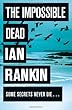 I’d forgotten I’d pre-ordered Ian Rankin’s latest book


 I finished reading The House of Stairs, the third psychological thriller by Barbara Vine yesterday. It is a most remarkable book, in that it turns a murder mystery upside down, as it were. It is clear from the start that there has been a murder and the murderer is known – she has just been released from prison. But who did she murder? Why, where, when and how? The other characters all know – but not the reader.


 One that came to mind as an odd subject is The People’s Act of Love by James Meek. I read this before I’d started this blog and just have a brief note saying that I thought it was ‘strange’. My memory tells me it was chilling, disgusting in parts yet compelling reading in others. Anyway, I finished it, so it can’t have been that bad. There’s an
  Another one is
  BooksPlease