Best Crime Fiction Reads 2011

Kerrie at Mysteries in Paradise is collecting lists of best crime fiction reads for 2011 – the books don’t have to have been published in 2011, but must be crime fiction.

These are the books that I’ve rated with 5 and 4.5 stars:

  1. Exit Lines by Reginald Hill 5/5
  2. Drawing Conclusions by Donna Leon 5/5
  3. The Janus Stone by Elly Griffiths 5/5
  4. Blood Harvest by S J Bolton 5/5
  1. Wycliffe and the Last Rites by W J Burley 4.5/5
  2. The Silent World of Nicholas Quinn by Colin Dexter 4.5/5
  3. The Art of Drowning by Frances Fyfield 4.5/5
  4. The Stabbing in the Stables by Simon Brett 4.5/5
  5. Gently Does It by Alan Hunter 4.5/5 (Kindle)
  6. Cop Hater by Ed McBain 4.5/5
  7. The Case of the Lame Canary by Erle Stanley Gardner 4.5/5
  8. Intimate Kill by Margaret Yorke 4.5/5
  9. Murder on the Orient Express by Agatha Christie 4.5/5
  10. Dumb Witness by Agatha Christie 4.5/5
  11. The Hanging Wood by Martin Edward (Kindle) 4.5/5
  12. Awakening by S J Bolton (Kindle) 4.5/5
  13. Dandy Gilver and the Proper Treatment of Bloodstains by Catriona McPherson 4.5/5 – review to follow


A Trio of Maigret Books

Recently I’ve been reading Maigret books – three on the run – The Madman of Bergerac, The Hotel Majestic and The Friend of Madame Maigret – by Georges Simenon.

First, The Madman of Bergerac, which I enjoyed the most of the three. It’s an early Maigret novel first published in 1932. There is a deranged killer on the loose, who pierces his victims’ hearts with a needle. Maigret is on the train on his way to visit Leduc, an old colleague near Dordogne, when he finds himself sharing a compartment with a restless stranger who jumps off the train. On an impulse Maigret follows and ends up being shot in the shoulder and laid up in bed for two weeks at a Bergerac hotel, the Hotel d’Angleterre.

He conducts his inquiries from his bed, helped by Leduc and his wife, Madame Maigret. He reflects:

There is something slightly intoxicating about a narrow escape from death. and then to lie in bed and be cosseted … Especially in an atmosphere of unreality …

To lie in bed and let your brain work  of itself, just for the fun of it, studying a strange place and strange people through a sunlit window … (page 23)

It’s a complicated story and I had no idea who the murderer was. It’s a short book, quickly and easily read and a satisfying mystery. I liked the personal aspects, the insight into some of Maigret’s mind, his analysis of the crime and the local people, and his relationship with his wife – who cooks his meals for him at the hotel.

My rating: 4/5

Next, The Hotel Majestic, first published in 1942. Another complicated mystery for Maigret to solve. The body of Mrs Clark, the wife of a wealthy American is found strangled in the basement of the Hotel Majestic. Suspicion falls on Prosper Donge, a hotel employee, who finds the body and Maigret travels to a nightclub in Cannes to find out more about his background – and Mrs Clark’s.

I found this book a little frustrating as Maigret’s intuitive powers leads him to the solution. He has hunches, which are not made clear to the reader and spends time pondering the psychology of the characters. At times I felt very like Mr Clark, who doesn’t speak French and has to keep asking ‘what’s he on about?’

My rating: 3/5

Finally, The Friend of Madame Maigret, first published in 1950. What I particularly liked about this book is Madame Maigret’s involvement in the story. She actually does some detective work! It begins when Madame Maigret is sitting on a bench in a square when a young woman in a blue suit and white hat asks her to mind her little boy. She doesn’t return for several hours, then snatches the child from Madame Maigret and drives off in a taxi.

Meanwhile, Maigret is investigating a reported murder, although there is no corpse, just two human teeth in the ashes of Monsieur Steuvels’s furnace. Steuvals is the obvious suspect, but acting for him is the young lawyer, Liotard, who treats Maigret as his special enemy, claiming Maigret is out of date:

… a detective of the old school, of the period when the gentlemen of the Quai des Orfèvres could, if they chose, give a man the third degree until exhaustion drove him to make a confession, keep him in their hands for weeks, pry shamelessly into people’s private lives, in fact a period when any kind of trick was considered fair play. (pages 56-7)

Are these two stories connected? It seems unlikely at first. Maigret is dissatisfied, with too many people mixed up in the cases,which get ever more complicated and new characters appearing about whom Maigret knows almost nothing. He just wants to start the investigations again. It’s only when Madame Maigret comes up with a vital clue that he is able to make any headway.

My rating: 3.5/5

Reading these three books, one after the other has given me a much more rounded picture of Maigret than if I’d read them in isolation. Maigret is a big man, who smokes a pipe, actually he has many pipes, wears a bowler hat – often on the back of his head, who works mainly by intuition and analysis of the facts, is a bit handy with his fists, and has a happy home life. The stories are intricate, with many characters, have well developed plots, a great sense of location and at under 200 pages are quick, satisfying books.

Georges Simenon (1903 – 1989) was a Belgian writer who wrote nearly 200 books, 75 of them featuring Maigret, from 1931 to 1972.

Faulks on Fiction by Sebastian Faulks

I didn’t watch the TV series Faulks on Fiction but was interested enough to buy the book. It seemed a good idea to trace the history of the novel through a selection of fictional characters. To a certain extent Sebastian Faulks has done that, but the book is really about the characters and only touches on the development of the novel. Faulks, he reveals in the Acknowledgements, would prefer his book to be called Novel People, which I think would be better.

And if you haven’t read the books and don’t want to know the plot don’t read this book, because Faulks gives these in detail. There are 28 characters, categorised into Heroes, Lovers, Snobs and Villains. It is a very personal book as Faulks himself features in his descriptions, telling of when he first read a book and what he thought on reading it and his impressions on re-reading. I liked that. He also discusses the way literary criticism has changed in that over the last twenty years the author’s life and its bearing on the works has become an issue:

The bad news was that it opened the door to speculation and gossip. By assuming that all works of art are an expression of the authors’ personality, the biographical critics reduced the act of creation to a sideshow. It has now reached such a pass that the only topic some literary journalists seem able to approach with confidence is the question of whom or what people and events in novels are ‘based on’. (page 2)

Accordingly, Faulks focuses on the plot and the characters rather than on the authors, although oddly enough he does indulge in some ‘based on’ descriptions, eg in his chapter on Graham Greene’s The End of the Affair where he discusses whether or not the character of Sarah was ‘based on’ a real life lover of Greene’s.

Faulks is rather disparaging about monthly book groups where the topic is not the novel but a discussion about the author’s life and how it is reflected in the book, together with how this is borne out by the ‘readers’ own experience of such matters’. (page 6) His book aims to show how novelists ‘create – from nothing, or from imagination’. It’s hard to imagine that novels are so divorced from life!

However, despite this and despite not agreeing with all of his interpretations – it would be strange if we all agreed about everything – I enjoyed reading this book. I’d read the majority of the books he discusses and enjoyed being reminded of them – books such as Pride and Prejudice, although Faulks fails to see the attraction of Mr Darcy, who he places in the section on Lovers, describing him as a  ‘rude and gloomy man‘, a ‘manipulative, hypocritical, self-centred depressive‘ and considers that Elizabeth is his ‘lifelong Prozac‘.  I really must re-read Pride and Prejudice, because my memory of Darcy and Elizabeth is very different from Faulks’s picture of them.

Other books he discusses include Robinson Crusoe, Vanity Fair, Wuthering Heights, Lady Chatterley’s Lover, The Prime of Miss Jean Brodie, Clarissa and Great Expectations, to name but a few.

I haven’t read Wilkie Collins’s The Woman in White and as I  want to read it without Faulks’s opinion in my mind I haven’t read the chapter on Count Fosco in the section on Villains.

As for the other books I haven’t read, which he describes, I think I don’t need or want to read them, such as Lucky Jim by Kingsley Amis, Money by Martin Amis,or The Line of Beauty by Alan Hollingsworth. I also don’t want to read Faulks’s new James Bond book, Devil May Care, which he plugs in the section on Snobs. But maybe I’m being too dismissive, because as I didn’t agree with all his views on the books I have read, so maybe I should read the books for myself.

  • Paperback: 384 pages
  • Publisher: BBC Books (1 Sep 2011)
  • Language English
  • ISBN-10: 1846079608
  • ISBN-13: 978-1846079603
  • Source: I bought the book
  • My Rating: 3/5

Tea and Books

Part of the pleasure of reading is choosing books to read. So when I read about The Tea and Books Challenge I went to my bookshelves to see what would fit this challenge.

Birgit at The Book Garden blog was inspired by C.S. Lewis’ famous words, “You can never get a cup of tea large enough or a book long enough to suit me.”

She writes that ‘in this challenge you will only get to read … wait for it … books with more than 700 pages. I’m deadly serious. We all have a few of those tomes on our shelves and somehow the amount of pages often prevents us from finally picking them up. You may choose novels only, no short story collections or anthologies, and in case you’re trying a short cut by picking large print editions of a book, well I’m sorry, those do not qualify for this challenge! Let’s battle those tomes that have been collecting dust on our shelves, so no re-reads, please! 

Both physical and eBooks are allowed, though personally I feel that especially the Tea & Books Reading Challenge is more fun with real books.Reviews of the books read are not mandatory’.

I do like tea, but I like books more and at one time I thought the longer the book the better. These days I like to vary my reading but I still have quite an armful (or two) of big books to read.

There are 4 levels, reading either 2, 4, 6 or 8 or more books. Six books qualifies for the Earl Grey Aficionado level and at the moment I think these are the books I’ll be reading:

 From top to bottom they are

  • This Thing of Darkness by Harry Thompson (750 pages)
  • Our Mutual Friend by Charles Dickens (794 pages)
  • A Place of Greater Safety by Hilary Mantel (872 pages)
  • The Count of Monte Cristo by Alexandre Dumas (894 pages)
  • Helen of Troy by Margaret George (755 pages)
  • Mary Queen of Scots by Antonia Fraser (758 pages)

I do have more books that would qualify, so the following books are also possibilities which I could substitute or even add (some are on Kindle) and so I may ‘upgrade’ levels to the Sencha Connoisseur level (but I doubt this) :

  • Little Dorrit by Charles Dickens (848 pages)
  • Nicholas Nickleby by Charles Dickens (800 pages)
  • Martin Chuzzlewit by Charles Dickens (800 pages)
  • Dreams of Innocence by Lisa Appignanesi (712 pages)
  • Ulysses by James Joyce (944 pages)
  • No Name by Wilkie Collins (784 pages)
  • The Woman in White by Wilkie Collins (720 pages)
I think I have quite a good mix of books – old and not so old, classics and biographical fiction, plus one biography. I’ve listed some of these books before as books I want to read, so it would be good to finally read them, but I have a feeling that some (Ulysses, for example, which I have started before) will still be unread by the end of next year.


Book or Film? The Help

I have difficulties with films of books, so I don’t often watch them. I’m usually thinking as I’m watching – ‘it’s not like that in the book’ and irritated when the story is changed, parts are missed out or even worse new scenes/characters added in.

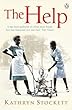
One of the books I’ll be reading in the coming weeks is The Help by Kathryn Stockett (our local book group choice for January). I noticed the film was on at our local cinema and with some reservations decided to see it. I thought that if I saw the film first it might not spoil my appreciation of the book. The book is described on the back cover as

Outstanding, immensely funny, very compelling, brilliant. (Daily Telegraph)

Enter a vanished world: Jackson, Mississippi, 1962. Where black maids raise white children, but aren’t trusted not to steal the silver …

I can’t be that good, I thought, normally I wouldn’t read a book with so much hype.

We went last night – in a howling gale! I was completely wrong in my expectations – the film was that good! I just hope the book can live up to it. The audience laughed, and then sighed at the poignant moments as the film rolled on and even if I couldn’t quite catch all the words I thought it was brilliant. It’s essentially a female, domestic look at segregation, with brief glimpses of the contemporary political scene.

I was engrossed in the film and now just want to read the book. So much so that I got it off the bookshelf when I got home and began to read it. Actually I began at the back with Too Little, Too Late – Kathryn Stockett, in her own words, in which she writes about her upbringing and personal experiences. She writes that The Help is ‘by and large fiction’ and wondered what her family and Demetrie, their maid would think of it:

I was scared, a lot of the time, that I was crossing a terrible line, writing in the voice of a black person. I was afraid that I would fail to describe a relationship that was so intensely influential in my life, so loving, so grossly stereotyped in American history and literature. …

Regarding the lines between black and white women, I am afraid I have told too much. I was taught not to talk about such uncomfortable things, that it was tacky, impolite, they might hear us.

I am afraid I have told too little. Not just that life was so much worse for many black women working in the homes in Mississippi, but also that there was so much more love between white families and black domestics than I had the ink or time to portray. (pages 450 -451)

She doesn’t presume to know what is felt like to be a black woman in that place at that time, but thinks

… trying to understand is vital to our humanity.

From my perspective I think she has achieved that.


The Crocodile Bird by Ruth Rendell: a Book Review

I posted the opening sentences of The Crocodile Birdlast Friday. It really grabbed my attention and got me wondering what had caused Liza’s world fall apart. The cause is revealed when Eve, Liza’s mother tells her she has to leave home because Eve is liable to be booked for murder in the morning. Liza is nearly seventeen but has been brought up with practically no knowledge of the world outside the little gatehouse to Shrove House, where she has lived in seclusion, never having been on a bus or train or having any contact with other children. As Liza explained, Eve had wanted to protect her:

The world had treated her so badly, it was so awful out there, that I wasn’t to be allowed to go through any of that. I was to be sheltered from the world, hence no school and no visits to town, no meeting other people, other people kept down to a minimum, a totally protected childhood and youth. (page 116)

Liza, however, has a secret lover, Sean and when she leaves home she to goes to live with him in his caravan. She tells him the story of her life in a series of tales each night, just like Scheherazade in One Thousand and One Nights, culminating in how her mother is now on trial for murder. It seems, moreover, that she has killed more than once. Eve’s passion and obsession is for Shrove House, owned by Jonathan Tobias. Eve and Jonathan had grown up together and she had once thought they would marry and Shrove House would be hers. She would do anything to stay there.

This really a psychological study, rather than a straightforward crime fiction novel. It’s written in a simple style matching Liza’s childlike naivety.  To some extent, I thought that reduced the tension, although as Liza’s eyes were opened and she realised the meaning of events she had witnessed as a child, the tension mounted. It seemed that she might be following in her mother’s murderous footsteps!

The Crocodile Bird is an easy book to read and one that I enjoyed. The title intrigued me for most of the book, as I wondered where the bird comes into the story. The explanation is as Liza explains to Sean that just as the crocodile bird is able to feed safely from the mouth of a crocodile, so whatever Eve did to others (and she did some terrible things) Liza, like the bird, was always safe with her.

  • Paperback: 368 pages
  • Publisher: Arrow; New edition edition (29 Sep 1994)
  • Language English
  • ISBN-10: 0099303787
  • ISBN-13: 978-0099303787
  • Source: I bought the book
  • My Rating: 3.5/5