Sunday Selection, or what to read next?

This morning I finally finished reading A Place of Greater Safety by Hilary Mantel. I enjoyed it, but it was with a sense of release that I read the final pages, because at 872 pages it’s taken me over a month to read it and I’m looking forward to reading something shorter, snappier and more succinct. I’ll write my thoughts about this mammoth book on the French Revolution later on.

So, I picked up Wycliffe and the Cycle of Death by W J Burley, which is much shorter at 192 pages and easier to read – and to handle. It’s a murder mystery about the death of Matthew Glynn a respectable bookseller.

But I’m also thinking ahead about what to read next. I have started The Meaning of Night by Michael Cox, but I’m thinking of leaving it for now as it too is another long book. So, the possibilities are:

Fresh from the Country by Miss Read, (219 pages) about Anna Lacey plunged into her first teaching job in London. I’ve read most of Miss Read’s Thrush Green and Fairacre novels, but this one is new to me. Dora Jessie Saint, who wrote under the pen-name Miss Read, died earlier this month at the age of 98. She wrote over 30 books, gentle and unsentimental observations of English country and village life and I’ve loved each one I’ve read.

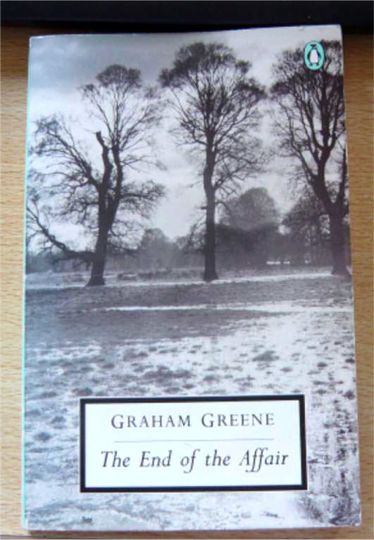
The End of the Affair by Graham Greene. This was my face-to-face book group choice this month, but I missed the meeting because it was the same day as our grandson’s birthday, and I hadn’t read the book anyway. I’d like to read it, though, because the group disagreed about the book – with some people disliking it and others who thought it was good. Maurice and Sarah had begun a love affair during the London Blitz and then Sarah had broken off the relationship. Maurice, driven by obsessive jealousy and grief sends a private detective to find out the truth. It would also be good to read it as it fits into the Classics Challenge.

And looking further ahead, I’ve been trying to decide whether or not to get any of the ‘free’ books offered in newbooks magazine, which arrived recently. I’ve narrowed my choice down to two books:

The Somnambulist by Essie Fox. This is set in Victorian England. Seventeen year old Phoebe takes a job as companion to Mr Samuel’s wife and encounters betrayal, loss and regret as she tries to adjust to life away from home.

The Thoughts and Happenings of Wilfred Price, a debut novel by Wendy Jones. In 1924 Wilfred lives in rural Pembrokeshire where he runs the local funeral parlour. He fantasises about Grace, the daughter of the local doctor and on the spur of the moment he proposes to her. But then he realises that this is a mistake and tries to undo it.

Another book that has caught my eye recently is:

The Unlikely Pilgrimage of Harold Fry, a debut novel by Rachel Joyce. I saw this in a local bookshop and nearly bought it then. It’s about Harold who walks from his home in Devon to Berwick-upon-Tweed in Northumberland to see a dying friend. It’s the idea of a journey along the length of England that I find appealing, but the thought of the friend dying from cancer may be too close to home.

One thing is certain, I’ll never run out of books I’d like to read.

Ninepins by Rosy Thornton

I finished read Rosy Thornton’s book Ninepins a few days ago.  It’s a remarkable book about mothers and daughters, about growing up and relationships. It’s quite difficult to describe – it’s not exactly a thriller, although there is a mystery element to it and the tension  and suspense gradually build throughout the book. And it’s not exactly a romance, although there is a love story in there too. It’s about people, but there is a satisfying plot and beautiful descriptions of the locations – I learnt a lot about the Cambridgeshire Fens.

It rings true to life, with all the anguish and angst of bringing up children as Laura, a divorced single mum struggles to cope as her daughter Beth turns twelve. They live in an old tollhouse, called Ninepins – there used to be a bridge across the lode and the toll was 9d (nine pence), which over time morphed into ‘Ninepins’. To help out with her finances she rents out the self-contained pumphouse, converted from a fen drainage station, to students. Her new lodger is Willow, a 17-year-old student, with a troubled past. She has been in a care home and still needs Vince, her social worker for support. Laura is not sure what influence Willow will have on Beth, who is having difficulties making friends at her new school. When Beth gets into trouble at school, Laura becomes even more anxious and she doesn’t seem able to do right for doing wrong. Then there is Willow’s mother whose appearance on the scene brings about devastation.

This is a darker book than Rosy’s other books that I’ve read and it captures perfectly the precarious relationships between parents and children as they begin to grow up and feel independent. Just how much leeway should Laura give Beth, how much should she intervene in her life, how much should she monitor what Beth is doing are questions that Laura is trying to resolve. Willow’s and Vince’s appearance in their lives bring changes that Laura had just not considered.She knows a little about Willow’s background and what she does know bothers her immensely. It’s the relationships in this book that are the focal point as Laura, Beth and Willow come to terms with their situations. A gripping story that held my interest throughout.

  • Paperback: 320 pages
  • Publisher: Sandstone Press Ltd (16 April 2012)
  • Language English
  • ISBN-10: 1905207859
  • ISBN-13: 978-1905207855
  • Source: Author review copy
  • My Rating: 4.5/5

Book Beginnings

Some books sit unread on my bookshelves for quite a long time before I read them. Then when I do pick them up I wonder why on earth I’ve left them so long – they look so good.

The Meaning of Night by Michael Cox is one of these many unread books of mine. I am shocked to see from my LibraryThing catalogue that I’ve had this book since August 2007, not long after I started writing this blog – no doubt I’d read about it on another book blog.

It begins:

After killing the red-haired man, I took myself off to Quinn’s for an oyster supper.

It had been surprisingly – almost laughably – easy.

The first chapter is called Exordium and a footnote explains that this means ‘an introduction to a treatise or discourse’. A second footnote tells me that ‘Quinn’s’ is a shell fishmonger and supper house at 40, Haymarket. So, not only is this a dramatic opening the first few lines tell me this is an historical murder mystery set in London, most likely to be in the Victorian period, all of which makes me want to read on.

Reading the back cover it seems that this book is following on in the tradition of Wilkie Collins and Charles Dickens, described as a ‘tale of obsession, love and revenge, played out amid London’s swirling smog’, an ‘extraordinary story of Edward Glyver, book lover, scholar and murderer.’

I think one of the reasons I haven’t read it before now is that not only is it nearly 600 pages long, my copy is printed in a small font!

Book Beginnings ButtonSee more Book Beginnings on Friday at Gilion’s blog Rose City Reader.


The Hanging Valley by Peter Robinson: a Book Review

There are 20 books in Peter Robinson’s Inspector Banks series (listed at Fantastic Fiction). I’ve read a few of them, completely out of order, but it doesn’t seem to matter too much as each one stands alone, although I suspect I’d get a better idea of Banks’s personal life if I had read them in order!

The Hanging Valley is the fourth one in the series.

Synopsis (from the back cover):

A faceless corpse is discovered in a tranquil, hidden valley below the village of Swainshead. And when Chief Inspector Alan Banks arrives, he finds that no-one is willing to talk. Banks’s frustration only grows when the identity of the body is revealed. For it seems that his latest case may be connected with an unsolved murder in the same area five years ago. Among the silent suspects are the Collier brothers, the wealthiest and most powerful family in Swainsdale. When they start use their influence to slow down the investigation, Inspector Alan Banks finds himself in a race against time…

My view:

As well as the Collier brothers, there are other suspects, including John Fletcher, a taciturn farmer, Sam Greenock and his wife Katy who own the local Bed and Breakfast guest house. There’s something not quite right about Katy, she’s obviously troubled and hiding something, and she is dominated by Sam. As I read on I thought the killer was first one character, then another and never really worked out who it was until quite near the end. I enjoyed the puzzle.

Detective Chief Inspector Alan Banks had been transferred to Eastvale from London two years earlier and is still getting to know the area. He’d moved from London because of the sheer pressure of the job and the growing confrontation between the police and citizens in the capital had got him down. Crime in Eastvale had been slack until this murder happened. And it’s complicated, the locals close ranks and Banks has to work hard to get information, first of all to discover who the victim was and why he had been killed. The trail leads him abroad to Toronto before Banks discovers the truth.

The Hanging Valley is rich in description, both of the Yorkshire Dales and of Toronto. (Peter Robinson was born in Yorkshire and now lives in Toronto.) The hanging valley sounds a beautiful spot, a small, secluded wooded valley with unusual foliage:

… the ash , alders and sycamores … seemed tinged with russet, orange and earth brown. It seemed … like a valley out of Tolkien’s ‘Lord of the Rings’.

… the valley clearly had a magical quality. It was more luxuriant than the surrounding area, its ferns and shrubs more lush and abundant, as if, Neil thought, God had blessed it with a special grace. (page 5)

All of which makes the discovery of the corpse so shocking, with its flesh literally crawling. So, I enjoyed this book on two levels – the mystery and the writing itself. I did think, though, that it could have been shorter and more concise, and some of the characters were rather indistinguishable which is why I rated it 3/5.

  • Paperback: 324 pages
  • Publisher: Pan; New edition (8 Nov 2002)
  • Language English
  • ISBN-10: 0330491644
  • ISBN-13: 978-0330491648
  • Source: I bought it

Daphne du Maurier: Fact and Fiction

Recently I’ve had a bit of a run on books by and about Daphne du Maurier. First of all I read The Parasites, which reminded me that I’d had Justine Picardie’s novel, Daphne sitting on my bookshelves unread, so I immediately got it down. Then I just had to read My Cousin Rachel, a book I’ve had for years and never got round to reading before now. After that I read Daphne du Maurier: a Daughter’s Memoir by Flavia Leng, just because it was one of the books Justine Picardie consulted in writing her novel. I’ve previously read Margaret Forster’s biography Daphne du Maurier and Daphne du Maurier’s The ‘Rebecca’ Notebook and Other Memories, which is mainly autobiographical.

Daphne by Justine Picardie (2008) – synopsis (from the back cover):

It is 1957. As Daphne du Maurier wanders alone through her remote mansion on the Cornish coast, she is haunted by thoughts of her failing marriage and the legendary heroine of her most famous novel, Rebecca, who now seems close at hand. Seeking distraction, she becomes fascinated by Branwell, the reprobate brother of the Bronte sisters, and begins a correspondence with the enigmatic scholar Alex Symington in which truth and fiction combine. Meanwhile, in present day London, a lonely young woman struggles with her thesis on du Maurier and the Brontes and finds herself retreating from her distant husband into a fifty-year-old literary mystery.

My view: 4/5

This book merges fact and fiction so well that it’s hard to differentiate between the two. I much preferred the story of Daphne herself and her search for information about Branwell. I had to go back to Forster’s biography of Daphne to compare the accounts of her life, which matched up pretty well. I was less keen on the modern day story of a young woman, the second wife of an older man. It had too many obvious parallels with Rebecca for my liking. And if you haven’t read Rebecca, this book gives away the plot. There are also references to My Cousin Rachel, which I glossed over in case there were any spoilers there too (I don’t think there were). All in all, a very satisfying mystery about Daphne and the missing Bronte documents.

My Cousin Rachel by Daphne du Maurier (1951) – synopsis (Amazon):

Orphaned at an early age, Philip Ashley is raised by his benevolent older cousin, Ambrose. Resolutely single, Ambrose delights in Philip as his heir, a man who will love his grand home as much as he does himself. But the cosy world the two construct is shattered when Ambrose sets off on a trip to Florence. There he falls in love and marries – and there he dies suddenly. In almost no time at all, the new widow – Philip’s cousin Rachel – turns up in England. Despite himself, Philip is drawn to this beautiful, sophisticated, mysterious woman like a moth to the flame. And yet …might she have had a hand in Ambrose’s death?

My view: 4/5

I thoroughly enjoyed this book, completely taken in by the characters and loving the setting in an old mansion in Cornwall. The story is narrated by Philip, so the other characters are seen through his eyes. The tension mounts as Philip becomes obsessed with Rachel and I was never quite sure what was real and what to believe. He is not a stable character and as Rachel’s own thoughts are not revealed it’s not clear if she can be believed either, whether she is sincere or evil and manipulative.

Daphne du Maurier: a Daughter’s Memoir (1994) – synopsis (from the back cover):

In this moving and revealing memoir, Flavia Leng paints a powerful portrait of her mother, Daphne du Maurier. She presents an account of an unusual and often lonely childhood spent in London and especially Cornwall, at her mother’s beloved home, Menabilly. Family friends included Nelson and Ellen Doubleday, Gertrude Lawrence and Noel Coward. However, at the centre of this story is Daphne du Maurier herself. The book reveals a writer with a deep attachment to Cornwall, where she put down her roots and found inspiration for her novels, and who spent much of her life as a recluse, withdrawn not only from the outside world but also from members of her own family. A picture emerges of a woman who lived in a world of her own creation that was beyond the comprehension of those around her.

My view: 3.5/5

In the epilogue Flavia Leng, Daphne du Maurier younger daughter, explained that she began to write this memoir of her childhood two years before her mother died in 1989 and it was never meant for publication – it was just for the family. And that to me epitomises this memoir – it’s an account of her childhood and of her family as seen through a child’s eyes. It seems a lonely childhood, despite being the middle child. As children Flavia and her older sister Tessa didn’t get on and both she and Tessa saw that their mother lavished more affection on her beloved son, Christopher who they called Kits. But a picture emerges of Daphne, who they called Bing, as a solitary person, closeted away with her typewriter or lost in her world of ‘never, never land’, peopled by the characters she invented, with little time for her children, who were looked after by Nanny and then ‘Tod’, their governess.

Like her mother Flavia has a great love of Cornwall which shines through the book – she was never happier than when alone in Menabilly and the surrounding woodlands. It’s a sad memoir ending with Flavia feeling she had no roots left after her parents died:

I have heard it said that a person only really grows up when both parents have gone; what I do know is that life will never be quite the same again. Cornwall no longer holds the enchantment it once did. Gone is the excitement of driving down those leafy, winding roads to the lovely old houses, my beloved Menabilly, and then later Kilmarth where Bing lived out her years.

The Village by Marghanita Laski: A Book Review


Persephone edition endpapers

The Village was first published in 1952 and chronicles life in an English village immediately after the end of the Second World War. It begins with two women meeting to go on duty at the Red Cross post as they had done throughout the war. They are from different ends of the village, Wendy Trevor from up the hill where  the gentry live and Edith Wilson from Station Road where the working-class live.  Both knew that the breaking down of social barriers had just been one of those things that happened during a war. Mrs Wilson acknowledged that she would miss the camaraderie:

‘There’s a lot of us will miss it’, Edith said. ‘We’ve all of us felt at times, you know, how nice it was, like you and me being able to be together and friendly, just as if we were the same sort, if you know what I mean.’ (page19)

But the war had changed much and the social barriers were rising, but when Wendy’s daughter, Margaret, falls in love with Edith’s son, Roy, the Trevors are horrified and refuse to give their permission for the couple to marry. Margaret does not have the same attitude as her parents:

‘The trouble with you, Miss Margaret, is that you’ve got no sense of class.’ (page 113)

I thought at first that this book was not as good as Laski’s Little Boy Lost, which I loved, but as I read on I realised the simple direct style of writing contained depth and complexity and  by the end I was convinced I was living in the village, amongst these people at the end of the war. It’s not as heart-rending as Little Boy Lost, but it is absorbing reading.

The Village is not only a love story, it’s a novel exploring the issues of class and social mobility, family relationships, parental control and the position of women. Although the Trevors and the Wilsons are the main characters, it’s a novel about the whole community,with a list of all the characters at the beginning of the book, including their station in life.

Included in the mix are the Wetheralls, Ralph and his American wife, Martha. They provide an interesting perspective on the complex British class system, comparing it with the American attitudes to different groups of people. Ralph, a business man, explains to Martha because they’re in ‘trade’, the Trevors who are gentry but hard up, still look down on them – and class is still most important. Martha wants to help Margaret and can’t understand that class doesn’t go by money, until Ralph points out that it was the same in America – ‘Plenty of your old Boston families are nearly as poor as the Trevors, but they still look down their noses at everyone else.’ (page 166)

He goes even further comparing the position of the working-classes in Britain to that of negroes in the United States, not the southern states but in the ‘enlightened North‘:

‘Many’s the time I’ve sat in your mother’s apartment in New York and heard you all talking in a broadminded way about treating the negro properly, but I’ve never come in and found a black man dropped in casually for cocktails, and I wouldn’t expect it, any more that I’d expect to find the Trevors  accepting Roy Wilson as a son-in-law.

Honestly now, you wouldn’t have married a negro, would you? You’d do your best to stop your daughter from marrying a negro. Well, you take my word for it, the Trevors will feel just the same way about Margaret marrying Roy Wilson, if there’s any question of it, which I very much doubt.’ (pages 231-2)

It ‘s certainly a book I’d like to re-read.

  • Paperback: 312 pages
  • Publisher: Persephone Books Ltd; First Edition edition (22 Sep 2004)
  • Language English
  • ISBN-10: 1903155428
  • ISBN-13: 978-1903155424
  • Source: I borrowed the book from a friend, and now want my own copy!
  • My Rating: 5/5

I wrote about the beginning of The Village here.