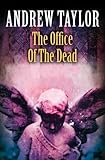
The Office of the Dead

The Office of the Dead by Andrew Taylor is the third book in the Roth Trilogy. I read the first two, The Four Last Things and The Judgement of Strangers a couple of years ago and I wish I’d read this one straight afterwards, because I had to refresh my memory before I started The Office of the Dead.

It’s set in the 1950s, some twenty years earlier than The Judgement of Strangers, and completes the story of the Byfield and Appleyard families. I absolutely loved it. As it says on the back cover this is a chilling novel of crime and retribution. It works perfectly well on its own, but is even better if you’ve read the first two books. The way Andrew Taylor has constructed this trilogy, working backwards in time is just perfect.

Synopsis from Andrew Taylor’s website:

It’s 1958, and the party’s over for Wendy Appleyard: she finds herself penniless, jobless and on the brink of divorce. So she runs to her oldest friend Janet Byfield, who seems to have everything Wendy lacks: a handsome husband, a lovely little daughter, Rosie, and a beautiful home in the Cathedral Close of Rosington. David Byfield is on the verge of promotion, and Janet is the perfect wife for an ambitious young clergyman.

But perfection has always been dangerous, and gradually the idyll sours. Old sins come to haunt the present and breed new sins in their place. The shadow of death seeps through the Close, and with it comes a double mystery stretching back to turn-of-the-century Rosington, to a doomed poet-priest called Francis Youlgreave.

Only Wendy, the outsider looking in, glimpses the truth. But can she grasp its dark and twisted logic in time to prevent the coming tragedy?

My view:

The Office of the Dead answers many of the questions I had from the other two books – questions about David Byfield, the theologian who can barely control his emotions; Reverend Francis Youlgreave, the turn of the century canon librarian and poet, and most of all about Rosie, David and Janet’s daughter. In this book she is a small and very self absorbed little girl who has her 5th birthday during the course of the book. She calls herself ‘Nobody‘, because ‘Nobody’s perfect‘ and she can’t be parted from her doll, Angel.

There is also an excellent portrayal of senile dementia in Janet’s father – John Treevor. Janet says he is ‘getting a bit confused‘, but at times he was capable of acting perfectly rationally and at times not – which made it all the more difficult to know what was true and what only took place in his mind, and so all the more tense and sinister. Did John Treevor commit suicide or was he murdered and if so, was it the stranger he said was watching the house, or someone else?

Running alongside the story of the Byfields are several other inter-connecting strands, Wendy (who is the narrator) and her estranged husband, Henry; the man with the bald spot roughly the shape of a map of Africa, who is following Wendy – who is he working for and why is he interested in Canon Youlgreave. Youlgreave, a character from the past who had died in 1903? He is described by old Mrs Gotobed as a ‘good man‘, but he had been forced to resign after he had ‘lost all touch with reality ‘ and had caused a scandal.

In fact the overall mood of the book is about the difficulties in remembering, or is it twisting, the past, about mental breakdowns and about the effect the past had on the future. In that respect I think it’s best to read the books in order.

I’ve just seen that there is a new short story, The Long Sonata of the Dead, about the continuing legacy of Francis Youlgreave, due to be published on Kindle on 1 April. I’m looking forward to reading it.

And then I’d like to read the first two books in reverse order and see what it effect that has on the story. There is so much more I could write about this book – about the characters (totally convincing), about the setting and the writing (well written etc) and about the pace – the creation of tension and suspense etc (just right), but really all I need to say is that I thought it was brilliant!

New-To-Me Books

Just eleven days left to go before the end of March and the end of the TBR Triple Dog DareThe basic idea of the Triple Dog Dare is to spend the first three months of the year cleaning house by reading only books in your TBR stack as of midnight, Dec. 31 and with a few allowed exceptions I’m still on track. But I’ve downloaded books onto Kindle and got some books from Barter Books over these last three months and I’m really looking forward to reading them from April onwards. I wrote about some of them in an earlier post.

Here are some more of the ‘physical’ books I have waiting not-so-patiently to be read:

Sweet Thursday P1090384

  •  Sweet Thursday by John Steinbeck – because I loved Cannery Row and this is the follow-up story. ‘Set in Monterey, on the California Coast, Sweet Thursday is what they call the day after Lousy Wednesday, which is one of those days that’s just naturally bad.’ I was really pleased to find this on the shelves at Barter Books – it just jumped out at me.
  • The Last Girl by Jane Casey – because I’ve read good things about her books, crime fiction of the thrilling kind. It’ll probably be a while before I read this book as I haven’t read the first in the Maeve Kerrigan series and this one is the third.
  • A Medal for a Murderer by Frances Brody – because I enjoyed the first Kate Shackleton mystery, Dying in the Wool. This is the second in the series, set in the 1920s in Harrogate where the leading lady in a play at the theatre is found dead in a doorway.
  • The Day of the Lie by William Brodrick – because I’ve read two of the earlier Father Anselm books and enjoyed them. In this one Anselm investigates events in Eastern Europe in the grip of the Cold War.

The books on Kindle include these:

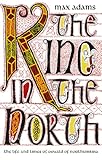
Books on Kindle P1090385The one I’m most interested in is The King in the North: the Life and Times of Oswald of Northumbria by Max Adams – because it’s history of the area where I live, set in the 7th century about Oswald, a prince of the Northumbrian royal house. He reigned briefly, from 634 – 642, but during that time he re-united and re-Christianized the North-East; forged a hybrid culture of Briton, Irish, Scot and Anglo-Saxon; and founded a monastery on Lindisfarne. He was the first British king to die a Christian martyr. Max Adams is a biographer, archaeologist,  traveller and writing coach who lives in North-east England.

I think I’ll be reading this book very soon!

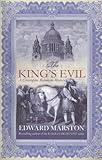
The King's Evil by Edward Marston

I’m still reading from my own unread books and turned to The King’s Evil for some historical crime fiction. It’s the first in Edward Marston’s Restoration series, featuring Christopher Redmayne, an architect and Jonathan Bale, a parish constable.
The King’s Evil is set in London in September 1666, just as the Great Fire of London has begun, eventually devastating a large part of the old medieval City of London. I liked Marston’s description of the fire, conjuring up the sights and sounds, the fear and panic it caused and the efforts to stop its spread – although I’m sure they didn’t use ‘dynamite’ to blow up houses to create a fire break. Anyway this anachronism didn’t spoil my enjoyment of this book.

Redmayne, a Royalist – a supporter of the Court and King Charles II – has designed a new house for Sir Ambrose Northcott and Bale is a Puritan who views Charles with great disapproval and is wondering if the fire is a consequence of the corruption in society as a result of the Restoration of the Crown:

England was once more ruled by a Stuart king. A monarchy which Jonathan had been pleased to see ended was now emphatically restored. As a result, London was indeed a wicked city and nobody was better placed to see the extent of its depravity than someone who patrolled the streets in the office of constable. Jonathan was a God-fearing man who always sought guidance from above and he was bound to wonder if the conflagration really was a sign of divine anger. There were Biblical precedents of cities being punished for their corruption. (page 26)

The two men are brought together with the discovery of Sir Ambrose’s dead body in the cellars of his partly built new house. It’s a good story with some interesting characters, including Jesus-Died-To-Save-Me Thorpe and Redmayne’s older brother Henry, elegant, fashionable and a dissipated rake, who had introduced Christopher to Sir Ambrose. But it’s the setting in time and place that interested me most – the period when Christopher Wren was the leading architect in rebuilding London – the bustle and energy of the times and the lingering conflict between Royalists and Parliamentarians.

The mystery of who killed Sir Ambrose moves along swiftly, with a few surprises along the way, as you would expect, but nothing too surprising. Redmayne travels to Sir Ambrose’s country house, Priestfield Place in Shipbourne, Kent and crosses the Chanel to Paris following the trail of the killer. It’s the ending of the book that let it down somewhat for me – it’s all a bit rushed and abrupt, but overall I enjoyed it and will read more in the series.

Edward Marston, who also writes under the name of Keith Miles, is a prolific author. He is a former chairman of the Crime Writers’ Association. He has several series of books, listed on his website and also on Fantastic Fiction.

The King’s Evil fits into several challenges I’m doing – The Mount TBR Reading Challenge, TBR Triple Dog Dare,the Historical Fiction Challenge, My Kind of Mystery Challenge and What’s in a Name (royalty category).

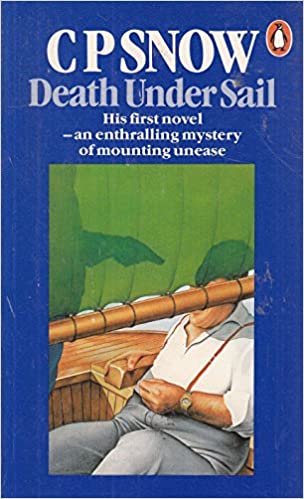
Death Under Sail by C P Snow

I didn’t know that C P Snow had written crime fiction. I’d read some of his books many years ago – the Strangers and Brothers series, in which he had coined the phrase ‘the corridors of power‘. I won Death Under Sail, Snow’s very first novel, in one of Bev’s Mount TBR Checkpoints at My Reader’s Block last year! It was first published in 1932, when Snow was 26 and a research scientist at Cambridge.

This is a classic mystery, a type of ‘country house’ mystery, but set on a wherry (a sailing boat) on the Norfolk Broads, where Roger Mills, a Harley Street specialist, is taking a group of six friends on a sailing holiday. When they find him at the tiller with a smile on his face and a gunshot through his heart, all six fall under suspicion.

The book is narrated by Ian Capel, who is older than the other friends and has joined the party a week later than the others. They are all old friends, with the exception of Tonia, Philip’s new girl friend, who all get on very well together; Avril and Christopher are engaged and William is a young doctor, a colleague of Roger’s. Ian describes them as ‘some of the pleasantest people whom I had ever known‘ – but are they, because one of them must be the murderer?

Ian asks his old friend Finbow, a civil servant home on leave from Hong Kong, to help them discover who did it. Meanwhile the police are also investigating the murder in the form of Detective Sergeant Aloysius Birrell. Finbow and Birrell provide an interesting contrast in the way they work – Finbow looks at the crime from a psychological and philosophical point of view, ruling out suspect after suspect, whereas Birrell looks for facts and evidence – even down to diving into the river himself to look for the missing gun and Roger’s log book. It’s ingenious!

C P Snow (1905 – 1980) was an English novelist and physicist. He was knighted in 1957 and made a life peer in 1964. His last novel, A Coat of Varnish is also crime fiction.

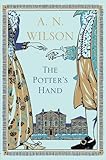
Book Beginnings: The Potter's Hand by A N Wilson

Whilst I’ve been reading from my own book shelves this year so far, I’ve accumulated a pile of library books that are tempting me away from them. One of these books is The Potter’s Hand by A N Wilson.

It begins:

The unoiled hinge joined its melancholy whine to the opium-dosed whimper of the patient who st gagged in his chair, and to the swift rasping of the saw. The door creaked ajar in the very moment that the doctor sawed off the leg of Sukey’s pa.

Such a dramatic opening that immediately grabbed my attention, conjuring up such a vivid picture complete with sound effects! The year is 1768. Sukey (Susannah), who later became the mother of Charles Darwin, was the daughter of Josiah Wedgwood,  an English potter and founder of the Wedgwood company.

The Potter’s Hand is a novel about Josiah Wedgwood and his family. Wilson explains in an Afterword that the broad outlines of the story and most of the details are true, but he has altered dates and rearranged historical events and nearly all the letters are invented. It is ‘meant to be read as fiction, even thought it is intended in part, as an act of homage to one of the great men of our history.’

I’ve read the first two chapters and think I’ll have to read on soon, after I’ve finished Death Under Sail by C P Snow, a crime fiction novel, if not sooner.

Every Friday Gilion at Rose City Reader hosts Book Beginnings on Friday, where you can share the first sentence (or so) of the book you are reading, along with your initial thoughts about the sentence, impressions of the book, or anything else the opener inspires.

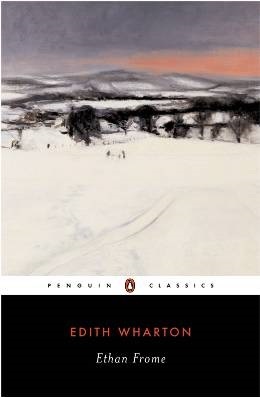
Ethan Frome by Edith Wharton

Ethan FromeWhat a fantastic book. Ethan Frome is a beautifully told tale – a tragedy, signalled right from the beginning of the book, when the unnamed narrator first saw Ethan Frome and was told he had been disfigured and crippled in a ‘smash up’, twenty four years earlier. Life had not been good to him:

Sickness and trouble: that’s what Ethan’s had his plate full up with ever since the very first helping.

I was a bit wary as I began reading Ethan Frome because I’d not long finished reading Doris Lessing’s The Grass is Singing and didn’t want to sink into another bleak and dismal book. I needn’t have worried, even though Ethan Frome is a tragedy there is light to contrast the darkness, and there is love and hope set against repression and misery. It’s another book (like The Grass is Singing) where I hoped the ending would be a happy one, although I knew it couldn’t be. 

It’s a short book (just over 120 pages) and deceptively simple to read, but there is so much packed into it. I enjoyed it very much.  As well as striking and memorable characters the setting is  beautifully described – a ‘mute and melancholy landscape, an incarceration of frozen woe‘, in the isolated village of Starkfield (a fictional New England village). Trapped in an unhappy marriage, Ethan’s life had changed when his father died and he had had to give up his studies to work on the farm. His wife Zeena had always been ill and needing help in the house, which was why her cousin Mattie came to live with them. At first it worked out quite well, but Ethan can’t shrug off a sense of dread, even though he could

… imagine that peace reigned in his house.

There was really even now, no tangible evidence to the contrary; but since the previous night a vague dread had hung on the sky-line. It was formed of Zeena’s obstinate silence, of Mattie’s sudden look of warning, of the memory of just such fleeting imperceptible signs as those which told him, on certain stainless mornings, that before night there would be rain.

His dread was so strong that, man-like, he sought to postpone certainty.

Edith Wharton (1862 – 1937) was an American author. Ethan Frome was first published in 1911 and is in contrast to some of her other books about the New York society of the 1870s to 1920s. It’s a rural tragedy of inevitable suffering and sadness that reminded me of Thomas Hardy’s books.

This book was the Classics Club Spin book for February/March and qualifies in the What’s in a Name 2014 in the Forename/Name category. It’s also a book I’ve owned before 1 January 2014 so is another book for the Mount TBR challenge.