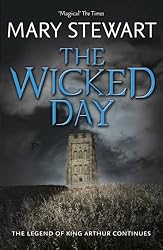
The Wicked Day by Mary Stewart

The Wicked Day is a sequel to Mary Stewart’s Merlin trilogy, telling the story of Mordred, King Arthur’s illegitimate son, who was foretold by Merlin as Arthur’s bane. It blends together fact and fiction as Mary Stewart explains in her afterword, Arthur was a real historical figure and she based her books on him using Geoffrey of Monmouth’s History of the Kings of Britain, written in the twelfth century and Sir Thomas Malory’s Le Morte d’Arthur, written in the fifteenth. Mordred, however, is probably as fictional as Lancelot.

I liked most of this book, the first part about Mordred’s early life is the best part. He grows up in the Orkneys, living with foster parents, until he is taken to the court of King Lot and his wife Queen Morgause as one of Lot’s bastard sons, unaware that Morgause, Arthur’s half-sister, is his real mother. This part of the book parallels the ending of The Last Enchantment but told from Mordred’s perspective.

All the characters from the legends are there, with the exception of Merlin – the High King Arthur, his beautiful Queen, Guinevere, his knights, Gawain and his brothers, AgravainGaheris and Gareth (Arthur’s nephews) and the sorceress, Morgause, still plotting against Arthur. Mordred is portrayed as a good person, courageous but misunderstood and controlled by his destiny:

If Merlin saw it written in the stars that you would be Arthur’s doom, then how can you escape it? There will come a day, the wicked day of destiny, when all will come to pass as he foretold. (page 240)

After a good opening third the book lost some of its appeal for me. Unlike the earlier books, The Wicked Day is narrated in the third person, which is probably why it seems less engaging to me. With the exception of the Epilogue, the passion and the magic are missing from the last part of the book which is a dry account of battles.

I wondered how Mary Stewart was going to resolve the story because in her version of it Arthur and Mordred, who is traditionally depicted as the villain, become reconciled to each other and Arthur acknowledges Mordred as his son and heir. Mordred is no villain, but not exactly a hero either. So, how come they ended up as enemies? She managed a plausible conclusion but I thought it was rather an anti-climax.

This is my third book for Carl’s Once Upon A Time VIII challenge and also qualifies for the Historical Fiction Reading challenge and the Read Scotland 2014 Challenge.

Added 17 May 2014:

Mary Stewart died in 10 May 2014 aged 97 – her obituary in The Telegraph describes her as an ‘author of romantic thrillers who wrote for love not money, and had an intuitive feel for the past.’

Adding to the TBR Shelves

A few days ago I rearranged my bookshelves – and now I’ve got to make space for a few more books, because I went to Barter Books in Alnwick on Tuesday and came home with more books to add to the TBR shelves.

Dead Scared pile I really enjoy going to Barter Books, wandering around the shelves and browsing. But I also take with me lists of books I want to look at including a list of the Agatha Christie books I haven’t read and don’t already own. There is always a good selection of books, the stock regularly changes, so there are always ‘new’ books to look at. (Barter Books is, as its name indicates, a sort of exchange of used books; you take some in and choose others in exchange. You can, of course, just buy the books if you haven’t any credit.)

I’m very pleased with this little pile of books because I’ve been on the look out for some of them for quite a while, although one of them is a book (Talking to the Dead) that I only read about on Tuesday morning on Alex’s blog Thinking in Fragments. They are (from top to bottom):

  • The Floating Admiral – this wasn’t on my list of books to look for, but it was filed with the Agatha Christie books (I always look there first) and I thought it looks good. It’s a collaboration by Agatha Christie, Dorothy L Sayers and ten other crime writers from the Detection Club, with a prologue by G K Chesterton. It was originally published in 1931 and this new edition published in 1911 has an introduction by Simon Brett.
  • The Mysterious Mr Quin by Agatha Christie, featuring Mr Satterthwaite and Mr Quin, the man ‘who appears from nowhere‘ and ‘unravels mysteries that seem incapable of solution’. It is one of the early Christie books, first published in 1930. This edition is one of the Penguin Crime fiction books in green and white reprinted in 1961 for 2/6. This fills a gap in my reading of her earliest books.
  • The Mousetrap and Selected Plays by Agatha Christie. There are three other plays in this collection – And Then There Were None, Appointment with Death and The Hollow, adapted by Agatha Christie from her novels, which, with the exception of Appointment with Death, I have read, so it’ll be interesting to see how they differ from the originals.
  • The Queen of the Tambourine by Jane Gardam. This is the only non crime fiction book in the pile, by the author of Old Filth, which I loved. It’s described on the front cover as ‘Brilliant, wickedly comic … masterly and hugely enjoyable‘. It’s about a do-gooder and promises to be a refreshing change from the crime fiction.
  • Talking to the Dead by Harry Bingham – the book recommended by Alex. It’s the first in the Fiona Griffiths series, a crime thriller in which police woman Fiona Griffiths investigates the death of a woman and her six-year old daughter. It is described on the back cover as ‘a stunner with precision plotting, an unusual setting, and a deeply complex protagonist … breathtaking.’
  • Dead Scared by S J Bolton. I like S J Bolton’s books and I’ve been looking out for this one, the second in her Lacey Flint series ever since I read the first book, Now You See Me. This is another crime thriller featuring a police woman, this one investigating a spate of suicides – all female university students.

Classics Club Spin: Result

The Classics ClubYesterday the Classics Club announced the result of the latest spin – list 20 books from your Classics Club list and the number picked in the spin is the book you read by 7 July 2014. The number came out as number 1.

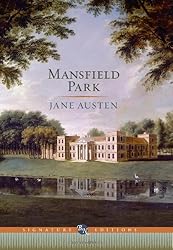
And for me that is Mansfield Park by Jane Austen.

I’d included this book in my list as a re-read. I thought I’d read this book before many years ago, but I couldn’t remember much (if anything about it) and I haven’t watched any of the TV adaptations. I thought I had a copy, but when I looked for it I couldn’t find one, so I downloaded a copy on Kindle and now I look at it I’m sure I haven’t read it before!! So I’m really looking forward to reading it.

If you’re taking part in the spin this time, which book did you get?

The Lost Army of Cambyses by Paul Sussman

The combination of the legendary ancient mystery about the disappearance of a whole army in Egypt’s western desert in 523 BC, and a modern murder mystery caught my imagination. So I was attracted to reading The Lost Army of Cambyses by Paul Sussman.
The Lost Army of Cambyses is his first book, featuring Inspector Yusuf Khalifa of the Luxor police. It is an action packed adventure story, an easy escapist read, although the ancient mystery element definitely plays second fiddle to the modern murder mystery, with a terrorist plot thrown in the mix.

I enjoyed it. It began well, in Cairo, September 2000, where a mutilated corpse is washed up on the banks of the Nile at Luxor, an antiques dealer is savagely murdered in Cairo, and an eminent British archaeologist is found dead at the ancient necropolis of Saqqara. But as I read on I was less convinced.

Where the book came alive for me was through the character of Yusuf Khalifa, and especially the historical/archaeological aspects of the book highlighted in his meetings with his old teacher and mentor, Professor al-Habibi at Cairo’s Museum of Egyptian Antiquities. Khalifa had wanted to be an archaeologist, but circumstances had meant he’d been unable to complete his studies and he had joined the police force. However he had remained fascinated by the history of his country:

He remembered as a child standing on the roof of their house watching the sunrise over the pyramids. Other children had taken the monuments for granted, but not Khalifa. For him there had always been something magical about them, great triangles looming through the morning mist, doorways to a different time and world. Growing up beside them had given him an insatiable desire to learn more about the past.

… There was something mystical about it, something glittering, a chain of gold stretching all the way back to the dawn of time. (pages 100 – 102)

The other characters were less convincing, becoming stereotypical particularly the ‘bad’ characters, and the violence was a little too violent for my liking. But it still managed to keep me hooked and wanting to know how it would end.

I’d like to read more of Paul Sussman’s books – I much preferred his second book, The Last Secret of the Temple. I’ve yet to read the third book featuring Inspector Khalifa, The Labyrinth of Osiris. More details of his books are on Paul Sussman’s website, which is now being updated by his wife after Paul died very suddenly from a ruptured aneurysm in May 2012.

The Big Four by Agatha Christie

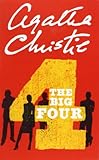
I’ve read a lot of Agatha Christie’s books, most of which I’ve really enjoyed, but I’m not too keen on her books that involve spies and gangs of international criminals who are seeking world domination. And The Big Four, first published in 1927, is one of those books.
Basically it’s a collection of short stories (derived from a series of stories that first appeared in The Sketch, a weekly magazine) in which Hercule Poirot and Captain Hastings lock forces with a vast organisation of crime led by four individuals, in the course of which they uncover the identity of the ‘Big Four’. The aim of the Four is ‘to destroy the existing social order, and to replace it with an anarchy in which they would reign as dictators.’  They are a Chinese man, Li Chang Yen, an American multi-millionaire, a French woman and ‘the Destroyer’, an Englishman. Poirot is convinced that they are behind everything:

The world-wide unrest, the labour troubles that beset every nation, and the revolutions that break out in some. There are people, not scaremongers, who know what they are talking about, and they say that there is a force behind the scenes which aims at nothing less than the destruction of civilisation. (page 25)

In the course of their investigations Poirot and Hastings find themselves in many dangerous  situations, all melodramatic and a little far-fetched, from which they miraculously escape certain death. The Big Four is action packed, with Poirot uncharacteristically chasing off after the criminals, still using his ‘little grey cells’ of course, whilst Hastings is knocked out and kidnapped, and Li Chang Yen threatens to abduct and torture Hasting’s wife, whom he had left behind in their ranch in the Argentine.

This is not one of my favourite Agatha Christie books. But perhaps it is not so surprising that The Big Four is far from her best. It was in  December 1926 that Agatha Christie disappeared after her husband, Archie Christie had told her he wanted a divorce and in 1927 she was still recovering from this. It was her brother-in-law’s suggestion that the last Poirot short stories she had published could be re-written to ‘have the appearance of a book‘ as a ‘stop-gap‘ – and the result was The Big Four, which, I think, suffers from being a loosely connected collection of episodes. Agatha explained in her Autobiography that Campbell Christie had helped her with linking the short stories as she was ‘unable to tackle anything of the kind.‘ (Autobiography page 365)

Knavesborough Stories by Dorte Hummelshoj Jakobsen

Recently Dorte Hummelshoj Jakobsen kindly made two of her short stories available to me (e-books) for review. They are both about the Gershwin family in Knavesborough, a fictional village in Yorkshire, namely Ding Dong Bell, the Kitten in the Well and Green Acres. I often find short stories lack the necessary depth to be convincing – either weak plots and/or characterisation, but these short stories are both convincing and satisfying. Maybe it helps that they are continuations of other stories, or in the case of Ding Dong Bell, the Kitten in the Well, a prequel.

Ding Dong Bell, the Kitten in the Well goes back in time to Rhapsody Gershwin’s childhood in the early 1990s. Rhapsody is the vicar’s daughter first featured in The Cosy Knave. In this short story Rhapsody and her sisters are worried about the disappearance of the black kitten they have called Black Pete. The last time they had seen him was when they had played in old Ursula Abbot’s garden and they wondered if he had he got locked in her cottage. Ursula had died but as she was nearly ninety it wasn’t entirely an unexpected death … but she had been in good health. Is Ursula’s death connected to Black Pete’s disappearance?Rhapsody helps to solve the mystery.
Green Acres* takes us to the latest in the Gershwin and Penrose Mysteries series. Green Acres, once a country mansion, has been converted into a home for the elderly. Rhapsody visits Rowan Dougal, a farmer who has broken his hip and is currently living at Green Acres. Lavinia Banbury staying in the room next to Rowan dies in her sleep. Nothing unusual in an old people’s home, but is her death really a natural one?

Green Acres* was originally published in the anthology The Red Shoes. This is a new and longer version.

I like these stories. They’re humorous crime fiction, with colourful characters all with quirky names. There’s no blood and gore and each story has an unexpected twist at the end. In other words, they are cosy crimes (if any crime could really be considered as ‘cosy’, that is).

Dorte Hummelshoj Jakobsen is Danish. After many years as a teacher she is now concentrating on a writing career, publishing in both Danish and English. As well as writing her cosy mysteries she has also written a full length psychological murder mystery novel, Anna Marklin’s Family Chronicles, which I thoroughly enjoyed too – see my post here.