The Discourtesy of Death by William Brodrick

William Brodrick’s Father Anselm books never fail to meet my expectations. They are thought provoking and philosophical concerning moral dilemmas and on top of all that they’re crime fiction – an ideal combination for me. The Discourtesy of Death is the fifth Father Anselm novel and there is nothing simple or easy to solve in this book, be it the ethics or the crime, or whether Jennifer’s death was actually a crime at all.
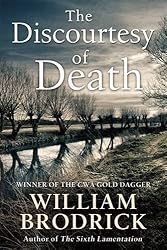
Jennifer Henderson, a young woman, an acclaimed ballet dancer, was paralysed after a fall and later diagnosed with terminal cancer. She died and for two years her death was accepted as a peaceful death, a result of the cancer. But then an anonymous letter casts doubt on the matter – was her death assisted suicide, or murder?

Father Anselm, the lawyer-turned-monk, is asked by his Prior, who had received the letter, to investigate, even though there is no evidence of murder and on the face of it no suspects. So, this is by no means an ordinary investigation and Anselm has to work hard to get to the truth. Jennifer’s family and friends are the focus of his search and as he reviews the details of Jennifer’s last day he realises that any of them could have done something to her; but who, what and why?

The book explores the philosophical, moral and theological issues of the right-to-die, the questions about the nature of life and the choices available, whether mercy killing to stop another person’s suffering can ever be justified. Because of this the pace is slow, almost leisurely, even with the added drama of Jennifer’s father’s actions as part of the SAS in Northern Ireland, which continues to haunt him.

I was drawn into some of the red herrings, but in the end it was the question of what Anselm would decide to do with what he had discovered that exercised me. It left me wondering about the issues raised, which are thoroughly explored throughout the book with the implications of the various outcomes clearly stated.

One final thought about life and death comes from Anselm as he watched the fleeting appearances of the fish in the river, their flashes of bright silver disappearing so quickly before his eyes:

And, elevating his mind above carp and trout, Anselm thought that the glory of life – even brief and trimmed down to the point of seeming insignificance – remained utterly breathtaking. That death, with all its power, would always be the one who came afterwards, the latecomer who’d missed the party.

Whilst I don’t think The Discourtesy of Death is quite as good as the third Father Anselm book, A Whispered Name, which I thought was brilliant, it is still an excellent book, that I thoroughly enjoyed.

There are five Father Anselm novels, and I’ve read them out of order, so I’ve still got the fourth book, The Day of the Lie left to read.

  1. The Sixth Lamentation (2003)
  2. The Gardens of the Dead (2006)
  3. A Whispered Name (2008)
  4. The Day of the Lie (2012)
  5. The Discourtesy of Death (2013)
The Sixth LamentationThe Gardens of the DeadA Whispered NameThe Day of the Lie
The Discourtesy of Death
I

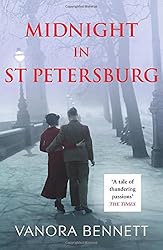
Midnight in St Petersburg by Vanora Bennett

Sometimes I get requests from authors/publishers to review books and occasionally a book just turns up in the post unannounced. Over a year ago now I unexpectedly received a copy of Midnight in St Petersburg by Vanora Bennett and although it appealed to me I put it to one side whilst I finished other books. It has taken me until now to get round to actually reading it.

And I’m glad I did as it is an interesting book – historical fiction beginning in 1911 in pre-revolutionary Russia with Inna Feldman travelling by train to St Petersburg to escape the pogroms in Kiev hoping to stay with her distant cousin, Yasha Kagan. She is welcomed into the Leman family where she and Yasha are apprentices in their violin-making workshop. Inna is a talented, albeit shy, violinist and she falls in love with Yasha through their shared love of music.

The book is split into three sections – September – December 1911, 1916-17 and 1918-19 as Russia enters the First World War and is plunged into Revolution and life becomes increasingly dangerous for them all. Inna is torn between her love for Yasha, wildly rebellious and an activist in the revolution, and the older and more secure Englishman, Horace Wallick who works for the jeweller, Faberge, painting miniatures. It’s a story of survival under extreme conditions.

I liked the way Vanora Bennett intermingled Inna’s personal story with the historical characters of the time, including Father Grigory, Prince Youssoupoff and Lenin. I particularly liked the Father Grigory sections. Inna first met him on the train to St Petersburg when he helped her and I had my suspicions about who he really was, although it was a while before Inna discovered his identity. I also thought the details of violin-making were fascinating and I really liked the sections about Horace and his work for Faberge. What is perhaps even more fascinating is that Horace Wallick was a real person, Vanora Bennett’s great-great-uncle who really did work for Faberge from 1910 to 1919, which makes the story all the more authentic.

However, I thought the pace of the novel wasn’t very well structured as after an attention grabbing opening I thought it dragged a bit in the middle and that it was drawn to a too hasty conclusion. Overall, though I thought this portrayal of the Russian Revolution and the effect it had on ordinary people was well done and I did enjoy it.

This is the second of Vanora Bennett’s books I’ve read – the first was Portrait of an Ordinary Woman the story of Sir Thomas More’s fall from Henry VIII’s favour and that of his adopted daughter Meg Giggs. I shall look out for more of her books.

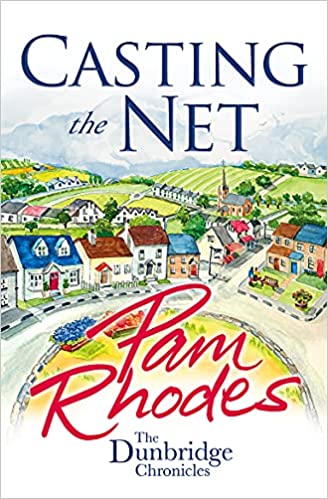
Casting the Net by Pam Rhodes

Blurb:

Heart-warming English comedy of manners, featuring the trials and tribulations of newly ordained minister, Neil FisherIn part two of the Dunbridge Chronicles, Neil Fisher returns from ordination inspired by his sense of ministry, but determined to distance himself from the two ladies in his life. This is not altogether well received, and a wide segment of the congregation of St Stephen’s, Dunbridge–including the music group–points Neil to the error of his ways.

Meanwhile Neil’s close friend Colin and his wife Jeannie are delighted by the birth of a daughter, but is all well with the baby? Neil’s mother Iris continues to meddle, to his irritation. Churchwarden Peter has said a relieved farewell to his flighty wife Glenda–or has he? Dunbridge is not as peaceful as it seems. 

My thoughts:

I liked this light easy-to-read book that deals with serious issues from the Christian perspective. Life in Dunbridge is far from peaceful and the Neil, the curate has many crises to face, not the least being his vicar’s loss of faith. It’s full of interesting characters, painting a picture of life in a small town.

  • Publisher ‏ : ‎ Lion Fiction; 1st New edition (21 Feb. 2014)
  • Language ‏ : ‎ English
  • Paperback ‏ : ‎ 256 pages
  • ISBN-10 ‏ : ‎ 1782640622
  • ISBN-13 ‏ : ‎ 978-1782640622
  • My Rating: 3*

Mansfield Park by Jane Austen

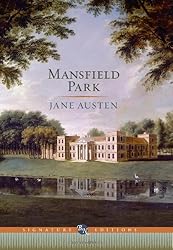
For years I’ve thought I’d read all of Jane Austen’s books, apart from Lady Susan/The Watsons/Sanditon, but then last year I wondered about Mansfield Park, and I realised I couldn’t remember much about it. At first I thought it was one of those books I must have read years ago and forgotten the detail. So, I thought I’d have a look at it again to refresh my memory, but when I looked for my copy I couldn’t find it and slowly I began to think I hadn’t read it at all and bought one. And, lo and behold it was totally new to me – I hadn’t even watched the TV version!

On the surface Mansfield Park is a simple story about a family and their relationships. Fanny Price, as a child of 10 goes to live with her wealthy aunt and uncle, Sir Thomas and Lady Bertram at Mansfield Park, where as the poor relation she is not treated badly, but not as cared for or as kindly as her cousins, but more as an unpaid servant dependent on the family for her welfare – a sort of Cinderella story.

But through the story, Jane Austen reveals the complicated interaction of society, shows the development of Fanny’s character and the depiction of a heroine who is good and gentle who matures throughout the novel. Fanny is an unassuming character who at first appears to be too self-effacing and timed, but who grows in strength of character. I think it’s a very clever portrayal because the reader sees things through Fanny’s eyes. Whilst at first I wanted to give her a shake and say pull yourself together, you’re being a doormat, I realised that Jane Austen was drawing a realistic portrait and waited to see how she would develop.

Like the other novels, Mansfield Park is full of detail of everyday life, its boredom as well as its entertainments and pleasures, the  balls and dinners. There is much in it about the houses and gardens, not only of the wealthy but also of the lower classes, such as Fanny’s parents home in Portsmouth – but they have servants themselves, so it is only comparative poverty. Seen mainly through Fanny’s eyes, it’s a study of morals, the damage caused by being unwanted and unloved.

There is, of course, so much more to say about this book – Mrs Norris’s snobbery, her obsession with  penny-pinching and her nasty, spiteful behaviour; the opinion of clergymen, seen through Mary Crawford’s mercenary eyes as she thinks about Edmund Bertram’s position; the flirty behaviour of the ‘charming’ Henry Crawford; the apparent coldness of Sir Thomas and his family’s distance from him; Lady Bertram’s languid life from her sofa; the disruption caused by the play and so on. There is also a gentle strain of humour and satirical observations about contemporary values, and even, with Mary Crawford’s pun on ‘Rears and Vices‘, a bawdy note.

Yes, I definitely like Mansfield Park and pleased it came up for me in the Classics Club Spin, which gave me the necessary push to read it in June.

Once Upon a Time VIII Challenge Completed

Once upon a time viiiCarl’s Once Upon a Time Challenge for this year ended on 21 June and I exceeded my expectations – well, it wasn’t hard as I aimed very low with The Journey, which was to read at least one book within one of the four categories of Fairy Tale, Folklore, Fantasy and Mythology. So I went on to the First Quest which was to read at least 5 books that fit somewhere within those categories.

Quest the first

I read:

  1. The Last Enchantment by Mary Stewart
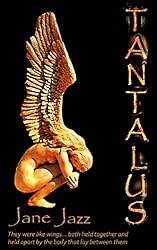
  2. Tantalus by Jane Jazz
  3. The Wicked Day by Mary Stewart
  4. The Graveyard Book by Neil Gaiman
  5. The Book of Lost Things by John Connolly

I initially wanted to read from my own to-be-read books, but as usual I actually read books that appealed to me at the moment of choosing what to read next, but two of them were books I’ve owned for some years – The Last Enchantment, an excellent book and The Book of Lost Things, not such an excellent book in my opinion.

Choosing a favourite out of these books is not easy but by a short head it’s Jane Jazz’s début novel TantalusThere is so much in this book that I loved €“ the characters, the story, the charged emotions and longing, the setting (in Yorkshire and Tuscany), and the art €“ the paintings and the sculpture. 

Tantalus is a perfect title for the novel as according to Greek myth Tantalus was famous for eternal punishment by being made to stand in a pool of water beneath a fruit tree with low branches, with the fruit ever eluding his grasp, and the water always receding before he could take a drink.

Thanks to Carl for hosting and I’m already looking forward to September and his R.I.P. Challenge.

The Book of Lost Things by John Connolly

I like fantasy, so when I came across The Book of Lost Things, a modern version of traditional fairy tales that has glowing reviews from various sources, I was keen to read it. Fairy tales are full of bad things happening to people, wicked stepmothers, evil witches, wolves and trolls, fantasy characters, damsels in distress and magic and enchantments, but in the end good overcomes evil and they live happily ever after.

The Book of Lost Things begins at the start of World War Two, with David, a boy of twelve, who is mourning the death of his mother, resenting his father’s new wife, Rose and his new baby brother, George. Alone in his bedroom he hears the books on the shelves murmuring and whispering in the darkness, and his fantasy world becomes peopled with the characters from his books and he dreams of the Crooked Man, waiting for him out in the woods beyond the house.

One night his dreams and nightmares become reality as he sees through a fissure in his room into another realm beyond. He falls unconscious and coming to he hears his mother calling out him to save her, saying she is not dead but trapped in a strange place. He climbs out of his window and then as a bomber crashes in the garden David escapes through the sunken garden into a different world, a world peopled by the characters from the stories he has been reading. Told that the king has a ‘Book of Lost Things’ that will help him find the way back to his own world, he is met with the most terrible and gruesome opposition.

As well as stomach churning and excruciatingly toe-curling grisly detail there are some very dark episodes in this book with an element of moralising within the story from a number of ‘father figures’ David meets, for example the Woodsman and the knight Roland who tells him that life is filled with threats and dangers.

It is indeed filled with danger but the book becomes a sequence of ‘this happened and then that happened’, of showing rather than telling. The writing is flat; there is no sense of suspense, David is attacked and goes on to fight battle after battle as the characters helping him are killed off. There are his battles against the Loups, wolves who dress like men. He has to answer a riddle to choose the right bridge to cross a chasm thronged with harpies. He meets seven dwarves  dominated by an obese Snow White, her face caked with white make-up (this story is quite funny actually with its references to communism). He comes across a peasant village terrorised by a monstrous loathsome worm which gives birth in mid-battle. He eventually finds the castle of thorns where his mother may be imprisoned, and then finally the great castle of the ancient and now dying king, the guardian of the ‘book of lost things’. And behind it all is the sinister and evil Crooked Man.

I quite liked the concept of this book, it promised much, but I didn’t like its gruesomeness, the torture chambers, the animal and human experimentations, the sexual innuendos, nor did I like the ending, which I thought was weak. These details didn’t leave me with a chill down my spine, but just feeling rather sick.

Still, it seems an appropriate book to include in the Once Upon a Time Challenge, which ended yesterday and certainly for the Mount To Be Read Challenge as it has sat unread on my shelves for 7 years. Maybe fairy stories are no longer magical for me, this one wasn’t.

I can almost hear the rest of my books muttering, well thank goodness that one’s on its way out of the house.