Classics Club Spin Result

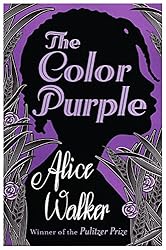
The Spin number is 19, which for me is The Color Purple by Alice Walker – to be read by 1 February 2016.

‘One of the most haunting books you could ever wish to read … it is stunning – moving, exciting, and wonderful’, Lenny Henry.
I’m looking forward to reading it. I watched the film starring Whoopi Goldberg many years ago, which I thought was an excellent film.

Did you take part in the Classics Spin? What will you be reading?

Five of the Best for November 2011-2015

This was originally Cleo’s idea (Cleopatra Loves Books). It’s to look back over your reviews of the past five years and pick out your favourite books for each month from 2011 ‘“ 2015. I like it so much it inspired me to do the same.

I really enjoy looking back over the books I’ve loved reading. These are some of my favourite books for each November from 2011 to 2015 (click on the titles/covers to see my original reviews). November is apparently the month where the crime fiction books I’ve read have been my favourite reads.

Three of the five books are Ian Rankin’s Rebus books – November is the month he’s published his latest books and November is the month I read them.  Ian Rankin is one of my favourite authors and his Rebus books never fail to impress me both with their ingenuity and the quality of their plots and characterisations.

2011

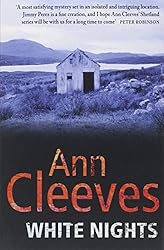
White Nights by Ann Cleeves – the second in her Shetland Quartet, featuring Detective Jimmy Perez, set mainly in Biddista, a fictional village of a few houses, a shop, an art gallery and restaurant called the Herring House, and an old Manse. A man’s body is found, hanging in the hut where the boat owners of the village of Biddista keep their lines and pots. Perez recognises the dead man ‘“ he’s the mystery man who had caused a scene the previous evening at the opening of Bella Sinclair’s and Fran Hunter’s art exhibition.

This book is not only full of believable characters, each one an individual in their own right, it also has a nicely complicated plot and a great sense of location. It’s the place, itself, that for me conveyed the most powerful aspects of the book. The ‘˜white nights’ are the summer nights when the sun never really goes down. They call it the ‘˜summer dim’, the dusk lasts all night, and in contrast to the bleak, black winters, fills people with ‘˜a kind of frenzy‘˜.

2012

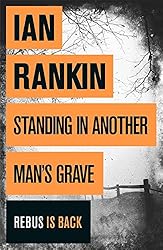
Standing in Another Man’s Grave by Ian Rankin. This is the first book after Rebus’s retirement in which he is working for SCRU ‘“ the Serious Crime Review Unit, a Cold Case unit of retired police officers, investigating the disappearance of a young woman missing since 1999, and linking it with later cases of missing women all in the vicinity of the A9. He also clashes with Malcolm Fox of Edinburgh’s internal affairs unit – their dislike is mutual.

I  was gripped by this book and liked the way Rankin included characters from earlier books, such as Big Ger Caffety, Siobhan Clarke, now a DI, and in particular Malcolm Fox.

2013

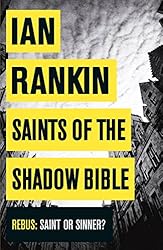
Saints of the Shadow Bible by Ian Rankin. I think this is one of his best ‘“ a realistic and completely baffling mystery. a complex, multi-layered case, linking back to one of Rebus’s early cases on the force as a young Detective Constable. Rebus is now back on the force, the rules on retirement age having changed, but as a Detective Sergeant. Once more he is under scrutiny by Malcolm Fox. There are suspicions that Rebus and his colleagues, who called themselves ‘˜The Saints of the Shadow Bible’ were involved in covering up a crime, allowing a murderer to go free.

The interaction between Rebus and Fox is one of the joys of this book. Beneath his controlled exterior Fox is just as much a loose cannon as Rebus, he’s not a team player either and it is fascinating to see how Rebus gets under his skin and reveals Fox’s true nature.

2014

And now for a different author, but still crime fiction:

Blue Heaven by C J Box. I loved this book, the first one of C J Box’s books that I’ve read. The action takes place over four days in North Idaho one spring. It’s a story about two children, Annie and William who decide to go fishing without telling their mother, Monica, and witness a murder in the woods. One of the killers sees them and they run for their lives.

I loved the writing style – straightforward storytelling, with good descriptions of locality and characters; characters that are both likeable and downright nasty, but not caricatures. It’s a book that got right inside my mind so that I found myself thinking about when I wasn’t reading it and keen to get back to it. And the ending was what I hoped, and also dreaded it would be.

2015

Back to Rebus – although I also loved Claire Tomalin’s Mrs Jordan’s Profession.

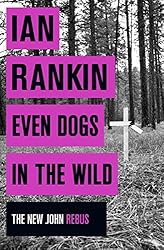
Even Dogs in the Wild –  Now, two years later on from The Saints of the Shadow Bible Rebus is on his second retirement, working in a ‘˜consultative capacity’, albeit not as a cop and with no warrant card or real powers and with no pay. Once more this is a complicated plot, involving Malcolm Fox now seconded to the team of undercover cops from Glasgow, gang warfare, and Big Ger Cafferty. There are so many deaths and twists and turns that my mind was in a whirl as I tried to sort out all the characters.

Rankin, as usual, successfully combined all the elements of the crime mystery with the personal lives of the main characters and at the same time highlighting various current political and social issues.

Is this the last we’ll see of Rebus? Only time and Ian Rankin will tell.

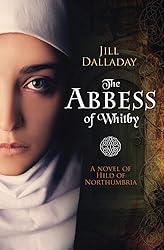
The Abbess of Whitby by Jill Dalladay

The Abbess of Whitby is subtitled A Novel of Hild of Northumbria. As Jill Dalloway explains in her Author’s Note at the end of the book what we know about Hild (St Hilda) comes from the Jarrow monk Bede’s  A History of the English Church and People written 40 years after her death. He gave no information about her between the ages of 13 and 33, so Jill Dalloway has based her fictional account of her life up to the age of 33 on the works of various modern scholars, assuming that like other royal girls of the time she was married for dynastic or political purposes. The major characters are historical, with a few exceptions and Hild’s husband and son are fictional. Hild was born in 614 and died in 680.

Knowing very little about the historical background to the story I found this a fascinating book, but could not have followed it very easily without the list of characters, the family tree of the royal families of Northumbria and the maps showing the Peoples of 7th Century Britain and of Hild’s Northumbria. I was surprised by how much people travelled in the 7th century. It spurred me on to find out more and I am now reading The King in the North: the Life and Times of Oswald of Northumbria by Max Adams. I would also like to read Edwin: High King of Britain and Oswald: Return of the King both by Edoardo Albert.

About two thirds of the book covers Hild’s early life, from the time she was chosen to lead the handmaidens of the fertility goddess  Eostre. It’s a time of transition as people are gradually being converted to Christianity, although at first it appears to be a matter of politics rather than of faith. Her marriage to Cerdic of the Goddodin tribe took her to Din Edin (Edinburgh). When home and family are lost in Oswy’s sack of Edinburgh, she finds herself in enemy hands, but meets the charismatic Aidan (St Aidan of Lindisfarne). The final part of the book covers her life as she helped establish various chapels and finally settled in Whitby as the Abbess there, involved in resolving the Easter dispute at the Synod of Whitby in 664. This settled that the calculations to establish the date of Easter would be according to the customs of Rome, rather than the Celtic customs practised by Irish monks at Iona and also to observe the monastic tonsure.

For me the first two thirds  of the book, showing the disputes between the separate kingdoms in Britain in the 7th century, the  transition from pagan to Christian beliefs and the harsh conditions and plague people had to endure, came to life more successfully than the later chapters.

I received this book for review from the publishers via LibraryThing’s Early Reviewers Program.

  • Paperback: 352 pages
  • Publisher: Lion Fiction; 1st New edition (21 Aug. 2015)
  • Language: English
  • ISBN-10: 1782641548
  • ISBN-13: 978-1782641544

Jill Dalloway is a classicist, historian and former head teacher who pioneered the Cambridge Latin Course. She lives in Whitby.

The Ghost Riders of Ordebec by Fred Vargas

I really enjoyed The Ghost Riders of Ordebec. It’s full of  eccentric and quirky characters, an intriguing mystery beginning with the death of an old woman, killed with breadcrumbs, then a car is burnt out with someone inside, and a pigeon is found with its legs tied together so it can’t fly.

But the main mystery Commissaire* Adamsberg has to solve is the strange tale a woman from Ordebec, a little village in Normandy, presents to him.

Blurb:

‘People will die,’ says the panic-stricken woman outside police headquarters.

She refuses to speak to anyone besides Commissaire Adamsberg. Her daughter has seen a vision: ghostly horsemen who target the most nefarious characters in Normandy. Since the middle ages there have been stories of murderers, rapists, those with serious crimes on their conscience, meeting a grisly end following a visitation by the riders.

Soon after the young woman’s vision a notoriously vicious and cruel man disappears. Although the case is far outside his jurisdiction, Adamsberg agrees to investigate the strange happenings in a village terrorised by wild rumours and ancient feuds.

My thoughts:

This is the 8th book in Fred Vargas’ series of Commissaire Adamsberg books. I’ve previously read two, so I’ve a bit of catching up to do. But although there are obviously events that I don’t know about (the appearance of a son, aged 28, that he hadn’t known about, for one thing) this doesn’t detract from the story. I loved all the strange characters – not just the odd people living in Ordebec, but also Adamsberg’s fellow police officers whom he describes as:

 … a hypersomniac who goes to sleep without warning, a zoologist whose speciality is fish, freshwater fish in particular, a woman with bulimia who keeps disappearing in search of food, an old heron who knows a lot of myths and legends, a walking encyclopaedia who drinks white wine non-stop — and the rest to match. (page 67)

And I also loved the medieval myths and legends forming the basis of the plot: the ghostly army that gallops along the Chemin de Bonneval, led by the terrifying Lord Hellequin.

Adamsberg is a thinker ‘ but a vague thinker ‘ he works mainly on intuition, and in this book his intuition and deductive reasoning have to work overtime. I was thoroughly immersed in this book, enjoying the humour as well as the mystery, intrigued to see how the crimes came together and how the pigeon was rescued. It’s original, and maybe not altogether plausible, but most definitely a treat to read.

Fred Vargas is the pseudonym of the French historian, archaeologist and writer Frédérique Audoin-Rouzeau.

*Commissaire is roughly the equivalent of a British Superintendent. His colleagues’ ranks in descending order are commandant, lieutenant and brigadier.

Agatha Christie Reading Challenge Update

agatha_christie_rcIt’s been a while since I’ve written about where I’m up to in reading my way through Agatha Christie’s crime fiction novels and short stories.  In fact it’s been months since I last read an Agatha Christie book!

The list of the books I’ve already read is on this page. I still have many of the short stories to read but just four novels!!

I’m aiming to read these four remaining novels by the end of this year:

  1. The Murder at the Vicarage – (Miss Marple)
  2. Death Comes as the End
  3. Sparkling Cyanide (Colonel Race)
  4. Destination Unknown

Lolly Willowes by Sylvia Townsend Warner

Lolly Willowes has been on my radar for a few years now and I’ve seen a few other bloggers have been reading it recently – Cath for one at Read Warbler.

From the back cover:

After the death of her adored father, Laura ‘Lolly’ Willowes settles into her role of the ‘indispensable’ maiden aunt of the family, wholly dependent, an unpaid nanny and housekeeper. Two decades pass; the children are grown, and Lolly unexpectedly moves to a village, alone. Here, happy and unfettered, she revels in a new existence, nagged only by the sense of a secret she has yet to discover.

And here is what I thought about it.

Published in 1926, Lolly Willowes is Sylvia Townsend Warner’s first novel. In the Introduction to this edition by Sarah Waters she states that it was an instant hit  with readers and critics and I can see why. On the surface it’s a gentle fantasy, but it’s not at all whimsical, and Sylvia Townsend Warner’s writing is beautiful, lovely lyrical descriptions of both town and country. It’s a book of two parts – the first about Lolly’s existence with her brother’s family in London, where she becomes increasingly disquiet and finds her self indulging in day dreaming about being

‘in the country, at dusk, and alone, and strangely at peace. … Her mind was groping after something that eluded her experience, a something that was shadowy and menacing, yet in some way congenial, a something that lurked in waste places, that was hinted at by the sound of water gurgling through deep channels and by the voices of birds of ill-omen. (page 67)

There’s a bit of a spoiler in this next paragraph.

The second part about her life in the little village of Great Mop, in the Chilterns in the Buckinghamshire countryside is in direct contrast, as she gradually regains the peaceful happy existence she had had growing up. But Great Mop is not just a sleepy backwater because as Laura discovers there are unusual forces at large and she finds herself with her neighbours at a night-time gathering dancing in a continual flux. Her life is changed forever as she meets Satan, who turns out to have a happy relationship with his servants and she enters into a new independence.

So this is a somewhat magical, mystical book and underlying the text is the changing position of women in society in the 1920s,  especially single women financially dependent on their male relatives, who previously were expected to remain within the family looking after elderly relatives, or as in Lolly’s case helping with looking after the children and the running of the household.  In moving away from her family Lolly asserts her independence and enjoys her single life as part of the village community.

So, it’s a book I really enjoyed, for its content, the characters and setting and last but not least Sylvia Townsend Warner’s style of writing. She went on to write more books and poetry, including these novels:

Lolly Willowes (1926)
Mr Fortune’s Maggot (1927)
The True Heart (1929)
This Our Brother (1930)
Summer Will Show (1936)
After the Death of Don Juan (1939)
The Corner That Held Them (1948)
The Barnards of Loseby (1954)
The Flint Anchor (1954)
The Cat’s Cradle (1960)