Diamonds Are Forever by Ian Fleming

Diamonds Are Forever by Ian Fleming has been on my TBR shelves since 2011 and is one of the books I listed to read as part of the To Be Read Pile Challenge 2015.

This is the edition I read

I’ve seen most of the James Bond films but never read any of the books before. It was not as action packed as I expected but full of quite lengthy descriptions of what the characters looked like and the clothes they wore, and about gambling and horse racing. I like description but this got a bit tedious, although I did like Fleming’s descriptions of the locations from the African desert to Hatton Garden jewellers and the casinos of Las Vegas. Here for example is a description of the view from the plane taking Bond to New York, as the sun came up

… over the rim of the world and bathed the cabin in blood.

Slowly with the dawn, the plane came alive. Twenty thousand feet below, the houses began to show like grains of sugar spilt across a brown carpet. Nothing moved on the earth’s surface except a thin worm of smoke from a train, the straight white feather of a fishing boat’s wake across an inlet, and the glint of chromium from a toy motor car caught in the sun; but Bond could almost see the sleeping humps under the bedclothes beginning to stir and, where there was a wisp of smoke rising into the still morning air, he could smell coffee brewing in the kitchens. (page 62)

There is very little action until about half way through the book. It is easy to read and moves at a decent place, once it gets going and despite all the descriptive passages. The plot is quite simple – Bond is assigned to infiltrate and close down a diamond smuggling operation, run by the Spangled Mob, operating from Africa to the UK and the USA. It’s run by a couple of American gangsters, the Spang brothers, and the mysterious character known as ABC.

He meets Tiffany Case, a beautiful blonde, an intelligent and resourceful woman, who was gang-raped as a teenager. By the end of the book she and Bond have fallen in love and survived almost impossibly dangerous situations. Also helping Bond is the American Felix Leiter now no longer working for the CIA,  having lost an arm and a leg in a shark attack, but as a private detective employed by the Pinkerton  Detective Agency.

The James Bond in this book is not quite the James Bond of the movies, but still a very likeable character, with obstinate eyes in a lean brown face – Bond is maybe the one character in this book with not much description. The villains are not as evil and sinister as the movie villains – for example, there’s no Blofeld, or Rosa Kleb or Goldfinger. The Spang brothers are Jack and Serrafimo, who owns a western ranch and ghost town called Spectreville. Then there are a couple of thugs, Wint and Kidd, who come across as caricatures, but they are a serious threat to Bond, who gets quite a severe beating (no gory descriptions), when he is captured, only to  escape with Tiffany, ending in a wild chase across the western desert.

So, overall I think this is an entertaining if not a mind-stretching book. I enjoyed it.
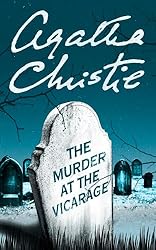
The Murder at the Vicarage by Agatha Christie

Ingenious! That’s what I thought when I’d finished reading The Murder at the Vicarage. Although Agatha Christie had written short stories featuring Miss Marple this is the first full length Miss Marple story, published in 1930.
I’ve been reading my way through Agatha Christie’s crime fiction for a few years now, totally out of order, which is why I’ve only just got round to reading The Murder at the Vicarage. I’d picked up along the way on the fact that Miss Marple uses her knowledge of people to help her solve the mysteries she investigates. And it is in this book that her use of analogy is made absolutely explicit, as she considers who could have killed Colonel Prothero, the unpopular churchwarden, found in the vicar’s study shot through the head. She comes up with seven suspects, all based on examples of human behaviour she has observed in the past.

Miss Marple is not the popular figure she appears in the later books as not everybody likes her. The vicar does, liking her sense of humour, and describing her as ‘a white-haired old lady with a gentle appealing manner’, whereas his wife describes her as ‘the worst cat in the village. And she always knows everything that happens – and draws the worst inference from it.

But it is very helpful to know what is going on in St Mary Mead, about Dr Stone, a well-known archaeologist superintending the excavation of a barrow on Colonel Protheroe’s land and about Mrs Lestrange, a mysterious woman who has recently moved to the village and also about who was coming and going to the vicarage and when.

It’s also helpful to have a a plan of St Mary Mead, showing where the main characters live, and plans of the layout of the vicarage and the vicar’s study, where the murder occurred.

After one of the suspects confesses to the murder Inspector Slack, who shows his contempt for Miss Marple, thinks the case is closed, but Miss Marple is puzzled – the facts seem to her to be wrong. The Murder at the Vicarage has an intricate plot, is full of red herrings and was impossible for me to unravel, but Miss Marple with her knowledge of ‘Human Nature’ solves the mystery.

I enjoyed this book very much, but Agatha Christie writing her Autobiography years later, wasn’t all that pleased with it. She thought it had too many characters and too many sub-plots; she is probably right. But she thought that the main plot was sound and that the village was as real to her as it could be. It’s real to me too.

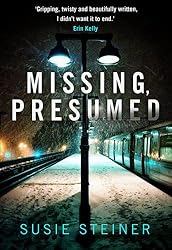
Missing, Presumed by Susie Steiner

I was a bit doubtful that I would like Missing, Presumed by Susie Steiner as it’s written in the present tense, which I usually find irritating. But I needn’t have been concerned because it wasn’t long before I’d completely forgotten the tense and I was totally immersed in the story. And I loved it.

Missing, Presumed is crime fiction, investigating the disappearance of Edith Hind, a beautiful Cambridge post-grad.  Her boyfriend, Will Carter had returned to their flat to find the front door open, coats in disarray and a spatter of blood on the kitchen floor. It’s told from different characters’ viewpoint, each one individually distinct, beginning with DS Manon Bradshaw on the Major Incident Team (her name means ‘bitter’ in Hebrew, but I thought it was Welsh), a lonely disillusioned single woman approaching forty, who overcomes her insomnia by listening to the low murmurings of police reports on her radio.

Edith’s mother, Miriam, Lady Hind, is distraught, wondering if somehow this is fault, her daughter the centre of a drama. Sir Ian Hind, a successful doctor, physician to the Royal Family and a friend of the Home Secretary adds to the pressure the police are under to find Edith. Edith’s friend, Helena comes under suspicion and known offenders are interviewed, but after the first 72 hours she is still missing. The team’s urgency is cooling  as the possibility that Edith is still alive diminishes. Then a dog walker finds a body in the Ouse, near Ely; is it Edith? The search for the killer is intensified.

This has all the ingredients of a successful crime novel for me. My only criticism of the book is that I didn’t think the final section, ‘One Year Later‘ in which the ends are tied up , was necessary. But apart from that I found it gripping and intense. I was intrigued by the multi-layered plot, and thought the characters were fully rounded, believable people, explored with psychological depth – in particular Manon Bradshaw stands out. And, best of all, it is beautifully written.

The Author

Susie Steiner is a novelist and freelance journalist. She began her writing career as a news reporter first on local papers, then on the Evening Standard, the Daily Telegraph and The Times. In 2001 she joined The Guardian, where she worked as a commissioning editor for 11 years. For more information see her website, susiesteiner.co.uk

My thanks to Lovereading for providing an advance proof of this novel, due to be published in February 2016. Missing, Presumed is Susie Steiner’s second book ‘“ the first is Homecoming, which I really must read.

And I do hope she will write more about DS Manon Bradshaw.

Classics Club Spin Result

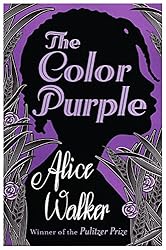
The Spin number is 19, which for me is The Color Purple by Alice Walker – to be read by 1 February 2016.

‘One of the most haunting books you could ever wish to read … it is stunning – moving, exciting, and wonderful’, Lenny Henry.
I’m looking forward to reading it. I watched the film starring Whoopi Goldberg many years ago, which I thought was an excellent film.

Did you take part in the Classics Spin? What will you be reading?

Five of the Best for November 2011-2015

This was originally Cleo’s idea (Cleopatra Loves Books). It’s to look back over your reviews of the past five years and pick out your favourite books for each month from 2011 ‘“ 2015. I like it so much it inspired me to do the same.

I really enjoy looking back over the books I’ve loved reading. These are some of my favourite books for each November from 2011 to 2015 (click on the titles/covers to see my original reviews). November is apparently the month where the crime fiction books I’ve read have been my favourite reads.

Three of the five books are Ian Rankin’s Rebus books – November is the month he’s published his latest books and November is the month I read them.  Ian Rankin is one of my favourite authors and his Rebus books never fail to impress me both with their ingenuity and the quality of their plots and characterisations.

2011

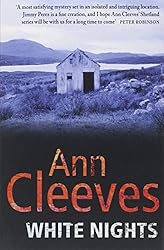
White Nights by Ann Cleeves – the second in her Shetland Quartet, featuring Detective Jimmy Perez, set mainly in Biddista, a fictional village of a few houses, a shop, an art gallery and restaurant called the Herring House, and an old Manse. A man’s body is found, hanging in the hut where the boat owners of the village of Biddista keep their lines and pots. Perez recognises the dead man ‘“ he’s the mystery man who had caused a scene the previous evening at the opening of Bella Sinclair’s and Fran Hunter’s art exhibition.

This book is not only full of believable characters, each one an individual in their own right, it also has a nicely complicated plot and a great sense of location. It’s the place, itself, that for me conveyed the most powerful aspects of the book. The ‘˜white nights’ are the summer nights when the sun never really goes down. They call it the ‘˜summer dim’, the dusk lasts all night, and in contrast to the bleak, black winters, fills people with ‘˜a kind of frenzy‘˜.

2012

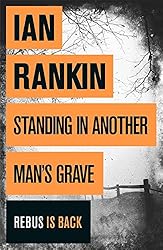
Standing in Another Man’s Grave by Ian Rankin. This is the first book after Rebus’s retirement in which he is working for SCRU ‘“ the Serious Crime Review Unit, a Cold Case unit of retired police officers, investigating the disappearance of a young woman missing since 1999, and linking it with later cases of missing women all in the vicinity of the A9. He also clashes with Malcolm Fox of Edinburgh’s internal affairs unit – their dislike is mutual.

I  was gripped by this book and liked the way Rankin included characters from earlier books, such as Big Ger Caffety, Siobhan Clarke, now a DI, and in particular Malcolm Fox.

2013

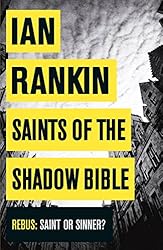
Saints of the Shadow Bible by Ian Rankin. I think this is one of his best ‘“ a realistic and completely baffling mystery. a complex, multi-layered case, linking back to one of Rebus’s early cases on the force as a young Detective Constable. Rebus is now back on the force, the rules on retirement age having changed, but as a Detective Sergeant. Once more he is under scrutiny by Malcolm Fox. There are suspicions that Rebus and his colleagues, who called themselves ‘˜The Saints of the Shadow Bible’ were involved in covering up a crime, allowing a murderer to go free.

The interaction between Rebus and Fox is one of the joys of this book. Beneath his controlled exterior Fox is just as much a loose cannon as Rebus, he’s not a team player either and it is fascinating to see how Rebus gets under his skin and reveals Fox’s true nature.

2014

And now for a different author, but still crime fiction:

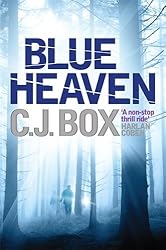
Blue Heaven by C J Box. I loved this book, the first one of C J Box’s books that I’ve read. The action takes place over four days in North Idaho one spring. It’s a story about two children, Annie and William who decide to go fishing without telling their mother, Monica, and witness a murder in the woods. One of the killers sees them and they run for their lives.

I loved the writing style – straightforward storytelling, with good descriptions of locality and characters; characters that are both likeable and downright nasty, but not caricatures. It’s a book that got right inside my mind so that I found myself thinking about when I wasn’t reading it and keen to get back to it. And the ending was what I hoped, and also dreaded it would be.

2015

Back to Rebus – although I also loved Claire Tomalin’s Mrs Jordan’s Profession.

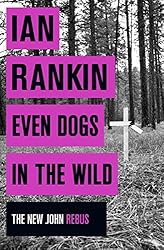
Even Dogs in the Wild –  Now, two years later on from The Saints of the Shadow Bible Rebus is on his second retirement, working in a ‘˜consultative capacity’, albeit not as a cop and with no warrant card or real powers and with no pay. Once more this is a complicated plot, involving Malcolm Fox now seconded to the team of undercover cops from Glasgow, gang warfare, and Big Ger Cafferty. There are so many deaths and twists and turns that my mind was in a whirl as I tried to sort out all the characters.

Rankin, as usual, successfully combined all the elements of the crime mystery with the personal lives of the main characters and at the same time highlighting various current political and social issues.

Is this the last we’ll see of Rebus? Only time and Ian Rankin will tell.

The Abbess of Whitby by Jill Dalladay

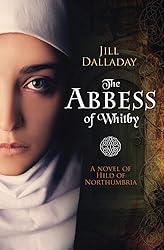
The Abbess of Whitby is subtitled A Novel of Hild of Northumbria. As Jill Dalloway explains in her Author’s Note at the end of the book what we know about Hild (St Hilda) comes from the Jarrow monk Bede’s  A History of the English Church and People written 40 years after her death. He gave no information about her between the ages of 13 and 33, so Jill Dalloway has based her fictional account of her life up to the age of 33 on the works of various modern scholars, assuming that like other royal girls of the time she was married for dynastic or political purposes. The major characters are historical, with a few exceptions and Hild’s husband and son are fictional. Hild was born in 614 and died in 680.

Knowing very little about the historical background to the story I found this a fascinating book, but could not have followed it very easily without the list of characters, the family tree of the royal families of Northumbria and the maps showing the Peoples of 7th Century Britain and of Hild’s Northumbria. I was surprised by how much people travelled in the 7th century. It spurred me on to find out more and I am now reading The King in the North: the Life and Times of Oswald of Northumbria by Max Adams. I would also like to read Edwin: High King of Britain and Oswald: Return of the King both by Edoardo Albert.

About two thirds of the book covers Hild’s early life, from the time she was chosen to lead the handmaidens of the fertility goddess  Eostre. It’s a time of transition as people are gradually being converted to Christianity, although at first it appears to be a matter of politics rather than of faith. Her marriage to Cerdic of the Goddodin tribe took her to Din Edin (Edinburgh). When home and family are lost in Oswy’s sack of Edinburgh, she finds herself in enemy hands, but meets the charismatic Aidan (St Aidan of Lindisfarne). The final part of the book covers her life as she helped establish various chapels and finally settled in Whitby as the Abbess there, involved in resolving the Easter dispute at the Synod of Whitby in 664. This settled that the calculations to establish the date of Easter would be according to the customs of Rome, rather than the Celtic customs practised by Irish monks at Iona and also to observe the monastic tonsure.

For me the first two thirds  of the book, showing the disputes between the separate kingdoms in Britain in the 7th century, the  transition from pagan to Christian beliefs and the harsh conditions and plague people had to endure, came to life more successfully than the later chapters.

I received this book for review from the publishers via LibraryThing’s Early Reviewers Program.

  • Paperback: 352 pages
  • Publisher: Lion Fiction; 1st New edition (21 Aug. 2015)
  • Language: English
  • ISBN-10: 1782641548
  • ISBN-13: 978-1782641544

Jill Dalloway is a classicist, historian and former head teacher who pioneered the Cambridge Latin Course. She lives in Whitby.