February’s Books 2016

I finished reading six books in February and am in the middle of two more, both long books. Just one book from my TBR shelves this month, and no non-fiction. My unfinished books are SPQR: a History of Ancient Rome by Mary Beard and Doctor Thorne by Anthony Trollope – a three part adaptation of this novel begins on ITV on 6 March.

The six books I finished are:

  1. Too Soon a Death by Janet O’Kane (review book) – crime fiction set in the Scottish Borders featuring Dr. Kate Moreland as she is once more involved in solving a murder mystery.
  2. Six Tudor Queens: Katherine of Aragon, the True Queen by Alison Weir (review book) – as the title indicates historical fiction about Henry VIII’s first wife. A detailed fictional biography. My review is to follow.
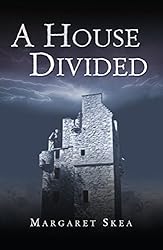
  3. A House Divided by Margaret Skea – historical fiction set in 1597 in Scotland and France, this is the most gripping story of the feuding clans of Cunninghame and Montgomerie. The historical facts blend seamlessly into the narrative, with beautiful descriptive passages.
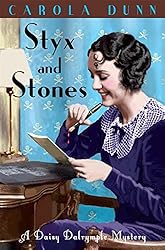
  4. Styx and Stones by Carola Dunn – ‘cosy’ crime fiction in the Daisy Dalrymple series set in England in the 1920s – an entertaining book.
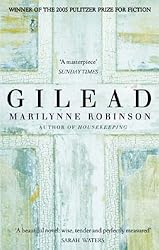
  5. Gilead by Marilynne Robinson (TBR) – fiction of a different style from the other books I read this month, one to make me think. Set in Gilead, Iowa in 1956 this is the Reverend John Ames letter to his young son.
  6. Slade House by David Mitchell (library book) – a mixture of a ghost story, science fiction and horror. Something nasty happens every nine years at the end of October at Slade House. Once I started I had to read to the end.

Although I enjoyed all the books I read in February and was fascinated by Slade House I have absolutely no doubt about my choice of book of the month – it’s the brilliant

A House Divided by Margaret Skea.

Gilead by Marilynne Robinson

This is another short post as I am still trying to catch up with writing about the books I’ve read in February. Gilead by Marilynne Robinson is one of them. It is narrated by the Reverend John Ames as he nears the end of his life. Set in Gilead, Iowa in 1956 John Ames is 76, dying of heart disease, and writing a letter to his young son aged 7 telling him the things he would have told him if he had lived to see him grow up. A letter for his son to read when he is an adult.

Ames writes stories of his brother, and his father and grandfather, including tales of what had happened in Gilead, such as the story of the horse that sank into the ground into one of the tunnels the inhabitants had made and the lengths they had gone to get it out and fill in the hole. He also wrote about his beliefs and his relationship with his friend, also a preacher, Boughton and Boughton’s son, Jack. There is a mystery surrounding Jack, what is the ‘great sin’ he committed, why he had left home, what happened to him and why he had come back. Jack is named after John, who struggles to forgive and understand Jack.

In parts I found this a bit rambling and repetitive, reflecting the fact that Ames wrote over a period of time and probably forgot he’d mentioned things before, or because he was emphasising their importance – such as the first time he met his wife, who is a lot younger than him.

I took my time reading because you do have to concentrate and not rush to find out what happened. I enjoyed it and think I would probably get even more out of it on a second reading, especially for the philosophical and religious ideas.

Reading Challenges: Mount TBR Reading Challenge ( a book I’ve owned for about 8 years).

Slade House by David Mitchell

I was in the middle of reading two books on my Kindle, Doctor Thorne by Anthony Trollope and SPQR: a History of Ancient Rome by Mary Beard, when the battery died and I know I could still have continued reading whilst it was re-charging, but I didn’t. Instead I picked up Slade House by David Mitchell, a book I’d been thinking of reading soon and once I started it I didn’t want to stop. It’s not long, just 233 pages and they just whizzed past my eyes in no time.

Apparently it began as a short story on Twitter – but I didn’t know that – and is a sort of sequel to The Bone Clocks – but I haven’t read that, and there is a character near the end who also appears in The Thousand Autumns of Jacob de Zoet – but I haven’t read that yet either!

None of that mattered. I suppose it’s the sort of book to read at Hallowe’en, but that doesn’t matter either, because I read it, devoured it I could say, yesterday and was thoroughly entertained. It’s a mixture of a ghost story, science fiction and horror. Something nasty happens every nine years at the end of October at Slade House. I read it as a fantasy, something that I couldn’t believe could ever happen (or at least, I hope not) – but that didn’t stop me enjoying it immensely.

It’s not easy to find Slade House. It’s down Slade Alley, which doesn’t normally exist and it only appears to those who have been invited, or are drawn to it. There is a door set into the right hand wall of the alley, a small black iron door with no handle or keyhole, that opens if you’re meant to enter. There you meet a stranger, are invited into the House, and find yourself in a strange and dangerous situation, and there is no way out – eventually you find yourself in a long attic at the top of the stairs – where something terrible happens to you.

The stories begin in 1979 (although in fact it begins much earlier than that) and ends in a strange and mystifying way in 2015. Each story is complete in itself; the people who enter Slade House do not seem to be connected in anyway – a young teenage boy and his mother, a recently divorced Detective Inspector, students on a Paranormal Society field trip, and then the sister of one of the students. The connection is the House and the brother and sister who occupy it – and to say what they were would be to reveal too much. Needless to say that I was hoping each time that the victims would escape their fate. I was gripped both by the individual stories and by Slade House itself, enchanting and darkly sinister. The sense of menace just grew as each victim succumbed and yet tried to warn those who followed.

Now, I’m keen to read both The Thousand Autumns of Jacob de Zoet, which I bought a few years ago and is still sitting in my TBR piles and The Bone Clocks, which I haven’t got yet. It just shows how reading one book can seriously disrupt whatever reading plans I had!

A House Divided by Margaret Skea

One of the best historical fiction books I read last year was Margaret Skea’s debut novel, Turn of the Tide, which captivated me completely transporting me  back in time to 16th century Scotland.  So I approached its sequel, A House Divided, hoping it would be just as good, and it is. Indeed it’s even better. Once more I was whisked back to the world of the feuding clans of Cunninghame and Montgomerie. It is the most gripping story of warring factions in Scotland, the French Wars of Religion, superstition and horrific witchcraft trials.

It’s now 1597, six years after the events in Turn of the Tide. The Munro family are believed to have died in a fire at their home, Broomelaw but Kate Munro and her three children are living at Braidstane in Ayrshire under the protection of the Montgomerie family. They have the assumed the name of ‘Grant’, in hiding from the Cunninghame family, particularly from William Cunninghame, the son of the Earl of Glencairn, head of the Cunninghame clan. Kate’s husband is in France, fighting with the Scots Gardes for the French Henri IV. Meanwhile William Cunninghame has taken possession of Broomelaw and is rebuilding the tower house. And it’s becoming more difficult and dangerous to keep their identity secret; the children are asking questions and the eldest, Robbie, wants to go to join his father in France.

Kate, who has gained a reputation as a ‘wise woman’ from her knowledge and skill in the use of herbs and plants for healing and as a midwife, is called to help Margaret Maxwell, the wife of Patrick, a Cunninghame supporter, with the birth of her baby. When Patrick meets Kate and her daughter, Maggie, he is suspicious. thinking they look familiar, reminding him of Munro’s wife, and so the danger begins. And it increases as Kate’s reputation grows and she is summoned to the Scottish court as Queen Anne (James VI’s wife), having heard of Kate’s expertise, needs her advice in carrying a baby to full-term.  She had been advised to try a number of methods to avoid a miscarriage:

I have eaten crushed orchid leaves, powdered fox’s lungs and crab’s eyes; drunk wolf oil and tincture of foxglove; been bled and leeched till I think I have little blood left; told to lie on my side and on my stomach, even upside down. Few treatments convenient and none effective. (location 3242)

It’s no wonder they failed and a wonder she survived!

There is so much I loved in this book – first of all the story itself, expertly narrated, full of tension and surprise, and then the characters, some based on real historical figures and others fictitious, such as the Munro family. The story is well grounded in research and based on facts – James VI, whilst waiting to inherit the English crown, wanted to bring peace to Scotland and to put an end to the wars between the clans. His interest in, or rather his obsession with witchcraft comes to the fore in this novel as Kate is accused as a witch and brought to trial as part of the Great Scottish Witch Hunt of 1597. Also historically accurate is the Scots involvement in France as under the terms of the ‘Auld Alliance’ they had citizenship rights in France as well as trading agreements and the Scots Gardes were an elite Scottish regiment whose duties included the provision of a personal bodyguard to the French King.

But it’s the personal touches that brought home to me what life was like in the 16th century, what their houses were like, the food they ate, the dangers that faced them in their daily lives, as well as the growing interest in science and medicine as opposed to superstition and religious bigotry and fervour.

This is an excellent book, one of the best I’ve read this year. Not only is the story absolutely fascinating, but it is also well written and well paced. The historical facts all blend seamlessly into the narrative, with beautiful descriptive passages not just of the landscape and the Scottish Court, but also of the grim details of warfare, of the horrors of the witch trials and of sickness, typhoid and plague, of wounds, of childbirth and of death. It’s strong, compelling reading, a book that made me keen to find out what would happen next and at the same time one I didn’t want to end.

  • Format: Kindle Edition – also available as a paperback
  • File Size: 1017 KB
  • Print Length: 480 pages
  • Publisher: Sanderling Books; 1 edition (15 Oct. 2015)
  • Author’s website: Margaret Skea, Writing yesterday, today

Margaret Skea is currently working on her third novel – I’m looking forward to reading it!

Reading Challenges: Read Scotland 2016
Styx and Stones by Carola Dunn

I always intend to write about the books I read soon after I’ve finished them, whilst the details and my reaction are fresh in my mind.  But recently I haven’t managed to do so and now have four books to review. I can deal with one of them quickly because I don’t have much to say about it – Styx and Stones by Carola Dunn. This is the seventh book in the Daisy Dalrymple Mystery series (there are 22 in total so far). I’ve read the first three and have been waiting to find the fourth to read them in order, but gave in when I saw this secondhand copy.

Set in the 1920s this is a cosy mystery that doesn’t tax the brain too much. Daisy’s brother-in-law, Lord John Frobisher, asks her to investigate a series of poison pen letters that many of the local villagers including himself have been receiving. So Daisy and her step-daughter, Belinda, go to stay with her sister and brother-in-law. Lord John is anxious to avoid a scandal, but when a murder is committed the local police have to be informed about the letters. Daisy’s fiancé, Detective Chief Inspector Alec Fletcher of Scotland Yard is concerned about Daisy and Belinda, so he gets involved informally, all the time trying to keep Daisy out of danger. The village is a hotbed of gossip, intrigue and resentment, with plenty of people with possible cause to commit murder. I liked the interaction of the members of the WI, bossed by the vicar’s wife and the way Daisy managed to get each of them to talk to her.
Styx and Stones is a quick and easy read, (although I didn’t guess the identity of the murderer until quite near the end) with the focus on Daisy and Alec’s relationship as well as on the poison pen and murder mysteries.

Lustrum and Dictator by Robert Harris

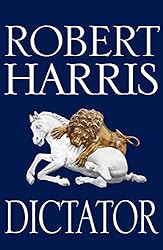
I’d enjoyed the first book in Robert Harris’ Cicero Trilogy, Imperium. So I’d been looking forward to reading Lustrum, the second in the trilogy (published as Conspirata in the US and Italy) . It didn’t fail to live up to my expectations – it surpassed them. I think it’s historical fiction at its best. I immediately went on to read Dictator, the third book in the trilogy, which I also enjoyed very much, but I think Lustrum is the outstanding book of the three.

I had intended to write a more detailed post about Lustrum and Dictator but life and medical issues decided otherwise, so this is just a short post on both books.

Lustrum begins where Imperium finished in 63 BC with a dramatic scene, as the body of a child is pulled from the River Tiber, a child who had been killed as a human sacrifice, grotesquely mutilated. What follows is an account of the five year period (a lustrum) of Cicero’s consulship and the battle for power between him, Julius Caesar, Pompey the republic’s greatest general, Crassus its richest man, Cato a political fanatic, Catilina a psychopath, and Clodius an ambitious playboy. It ends with his exile from Rome.

Once I began reading I was immediately drawn into the world of Cicero. The story is once again narrated by his secretary, the slave Tiro, giving access to Cicero’s thoughts and feelings. Tiro is an interesting character in his own right – he is reported to be the first man to record a speech in the senate verbatim and some of the symbols in his shorthand system are still in use today, such as &, etc, ie, and eg. As in Imperium and in the third book, Dictator, Harris has used Cicero’s actual words, adding to the books’ authenticity. Harris states that he hopes it is not necessary to read the books in order but I think it adds much to the enjoyment if you do.

Dictator covers the last 15 years of Cicero’s life when he was no longer a dominant political figure in Rome. The book begins with Cicero in exile, separated from his wife and children and in constant danger of losing his life. Apart from the first part of the book when Cicero is working towards returning to Rome, I didn’t find it as exciting or as compelling as the first two books. This is mainly because there is so much happening such as the civil war and the downfall of the republic from which Cicero is excluded first because on his return to Rome he is sidelined, and then retired.

All three books are based on extensive research but Harris is such a good story teller that they don’t read like text books. Roman history has always fascinated me and reading this trilogy has revived my interest, so much so that I am now reading Mary Beard’s book, SPQR: a History of Ancient Rome, that goes right back to the beginning describing how Rome grew and became such a dominant power.

When I saw Catilina’s Riddle by Steven Saylor sitting in the mobile library shelves I just had to borrow it. It’s historical crime fiction in which Gordianius the Finder gets involved in the Catilina conspiracy to overthrow the republic.

And I would also like to re-read Colleen McCullough’s Masters of Rome series to compare with Harris’ trilogy, or at least some of the books involving Cicero and Caesar. Oh for more time to read!

Lustrum is one of my Mount TBR Mountain Challenge 2016 books (ie books I’ve owned before 1 January 2016) .