Classics Club Check-In April 2016

Classics Club check inIt’s time for a Classics Club Check-In. Three years ago (next week) I joined The Classics Club, signing up to read and write about at least 50 classic books in at most five years. This is the first time I’ve taken part in a Check-In, although I have joined in with the Classics Club Spins, which I enjoy.

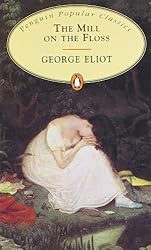
The list is not a fixed list and I have changed it since I started in 2013.This is my current list. I’ve listed the books in a-z author order. I’ve read 18 books, shown in bold, so I’m behind if I’m going to meet my target in the next two years. Currently I’m reading The Mill on the Floss by George Eliot (my current Spin book).

It’s hard to pick a favourite. These books stand out in my mind – Ethan Frome by Edith Wharton, To Kill a Mockingbird by Harper Lee and The Old Curiosity Shop by Charles Dickens.

  1. Lady Susan, The Watsons, Sanditon by Jane Austen ‘“ finished 24 August 2015
  2. Mansfield Park by Jane Austen ‘“ finished 29 June 2014
  3. The Old Wives Tale by Arnold Bennett
  4. Lorna Doone: A Romance of Exmoor by R D Blackmore
  5. Jane Eyre by Charlotte Bronte (a re-read) ‘“ read in November 2014
  6. The Thirty Nine Steps by John Buchan ‘“ finished 21 February 2014
  7. My Antonia by Willa Cather ‘“ finished 26 September 2013
  8. Don Quixote by Miguel de Cervantes Saavedra
  9. The Dead Secret by Wilkie Collins ‘“ finished 30 September 2015
  10. No Name by Wilkie Collins
  11. Lord Jim by Joseph Conrad
  12. Moll Flanders by Daniel Defoe
  13. Barnaby Rudge by Charles Dickens ‘“ finished 29 June 2013
  14. Nicholas Nickleby by Charles Dickens
  15. Little Dorrit by Charles Dickens
  16. Martin Chuzzlewit by Charles Dickens
  17. The Old Curiosity Shop by Charles Dickens ‘“ finished 10 October 2015
  18. Oliver Twist by Charles Dickens
  19. The Adventures of Sherlock Holmes by Arthur Conan Doyle
  20. The Count of Monte Cristo by Alexandre Dumas
  21. Adam Bede by George Eliot ‘“ finished 18 September 2015
  22. The Mill on the Floss by George Eliot
  23. Romola by George Eliot
  24. Silas Marner by George Eliot
  25. Parade’s End by Ford Maddox Ford
  26. The Forsyte Saga (1-3) by John Galsworthy
  27. Mary Barton by Elizabeth Gaskell
  28. North and South by Elizabeth Gaskell
  29. Wives and Daughters by Elizabeth Gaskell
  30. Far from the Madding Crowd by Thomas Hardy
  31. The Return of the Native by Thomas Hardy
  32. Washington Square by Henry James ‘“ finished 17 December 2013
  33. The Man Who Would Be King by Rudyard Kipling
  34. To Kill a Mockingbird by Harper Lee ‘“ finished 16 July 2013
  35. The Call of the Wild by Jack London ‘“ finished 10 December 2014
  36. Love in the Time of Cholera by Gabriel Garcia Marquez
  37. One Hundred Years of Solitude by Gabriel Garcia Marquez
  38. Gone with the Wind by Margaret Mitchell ‘“ finished 20 November 2013
  39. Of Mice and Men by John Steinbeck ‘“ finished 20 September 2015
  40. Travels with a Donkey in the Cevennes by Robert Louis Stevenson
  41. Gulliver’s Travels by Jonathan Swift
  42. Barchester Towers (Barsetshire Chronicles, #2) by Anthony Trollope ‘“ finished 22 February 2015
  43. Doctor Thorne (Barsetshire Chronicles, #3) by Anthony Trollope ‘“ finished 3 March 2016
  44. Framley Parsonage (Barsetshire Chronicles, #4) by Anthony Trollope
  45.  The Small House at Allington (Barsetshire Chronicles, #5) by Anthony Trollope
  46. The Last Chronicle of Barset (Barsetshire Chronicles, #6) by Anthony Trollope
  47. The Time Machine by H G Wells ‘“ finished 29 March 2014
  48. The Age of Innocence by Edith Wharton
  49. Ethan Frome by Edith Wharton ‘“ finished 22 February 2014
  50. The Voyage Out by Virginia Woolf

My Week in Books: 13 April 2016

This Week in Books is a weekly round-up hosted by Lypsyy Lost & Found, about what I’ve been reading Now, Then & Next.

IMG_1384-0

A similar meme,  WWW Wednesday is run by Taking on a World of Words.

Now: Currently I’m reading three books, because I like to vary my reading. So, I have a classic, a crime fiction and a non-fiction book on the go:

Blurb:

George Eliot drew on her own anguished childhood when she depicted the stormy relationship between Maggie and Tom Tulliver. Maggie’s often tormented battle to do her duty and belong on the one hand, and to be  herself, wild and natural, on the other, propels her from one crisis to another. As the Tulliver fortunes decline and fall, the rift between Maggie and her family becomes almost irreconcilable. But Maggie’s biggest mistake of all is to fall in love with Stephen Guest who is engaged to another woman.

Both a sharp and observant picture of English rural life and a profoundly convincing analysis of a woman’s psychology, The Mill on the Floss is a novel that tackles the complexities of morality versus desire.

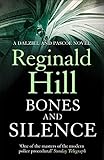
  • Bones and Silence by Reginald Hill – a Dalziel and Pascoe crime fiction novel. It’s book 11 in the series, which I’m reading totally out of order (there are over 20 in the series) and it is really good.

Blurb:

When Detective Superintendent Andy Dalziel witnesses a bizarre murder across the street from his own back garden, he is quite sure who the culprit is. After all, he’s got to believe what he sees with his own eyes. But what exactly does he see? And is he mistaken? Peter Pascoe thinks so.

Dalziel senses the doubters around him, which only strengthens his resolve. To make matters worse, he’s being pestered by an anonymous letter-writer, threatening suicide. Worse still, Pascoe seems intent on reminding him of the fact.

Meanwhile, the effervescent Eileen Chung is directing the Mystery Plays. And who does she have in mind for God? Daziel, of course. He shouldn’t have too much difficulty acting the part’¦

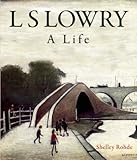
  • L S Lowry: A Life by Shelley Rohde. Lowry is one of my favourite artists, well known for his urban paintings of industrial towns but his work covers a wide range of themes and subjects, from landscapes and seascapes to portraits. This biography is based on collections of private papers held in The Lowry, Salford Quays.
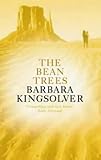
  • Then: I’ve recently finished The Bean Trees by Barbara Kingsolver, her first novel. I’ve read some of her other books –  loved The Poisonwood Bible which I’ve read a few times, and Homeland, a book of short stories, but wasn’t so taken with The Lacuna. I thoroughly enjoyed The Bean Trees – my review will follow shortly:

Blurb:

Plucky Taylor Greer grows up poor in rural Kentucky with two goals: to avoid pregnancy and to get away. She succeeds on both counts when she buys an old car and heads west. But midway across the country motherhood catches up with her when she becomes the guardian of an abandoned baby girl she calls Turtle. In Tuscon they encounter an extraordinary array of people, and with their help, Taylor builds herself and her sweet, stunned child a life.

Next: I really don’t know.

What about you? What are you reading this week?

Stacking the Shelves: 9 April 2016

STSmall

Stacking The Shelves is all about sharing the books you are adding to your shelves. This means you can include ‘˜real’ and ‘˜virtual’ books (ie physical and ebooks) you’ve bought, books you’ve borrowed from friends or the library, review books, and gifts.

I’ve borrowed three library books this week, books by authors whose books I’ve read in the past and enjoyed:

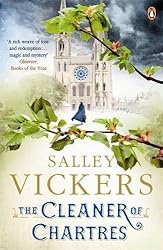
  • The Cleaner of Chartres by Salley Vickers – I borrowed this because I’ve some of Salley Vickers’ books and loved them, in particular Miss Garnet’s Angel and Mr Golightly’s Holiday and Where Three Roads Meet, so I’m hoping I’ll love this one too.

Blurb:

There is something special about the ancient cathedral of Chartres, with its mismatched spires, astonishing stained glass and strange labyrinth. And there is something special too about Agnès Morel, the mysterious woman who is to be found cleaning it each morning.

No one quite knows where she came from – not the diffident Abbé Paul, who discovered her one morning twenty years ago, sleeping in the north porch; nor lonely Professor Jones, whose chaotic existence she helps to organise; nor Philippe Nevers, whose neurotic sister and newborn child she cares for; nor even the irreverent young restorer, Alain Fleury, who works alongside her each day and whose attention she catches with her tawny eyes, her colourful clothes and elusive manner. And yet everyone she encounters would surely agree that she is subtly transforming their lives, even if they couldn’t quite say how.

But with a chance meeting in the cathedral one day, the spectre of Agnès’ past returns, provoking malicious rumours from the prejudiced Madame Beck and her gossipy companion Madame Picot. As the hearsay grows uglier, Agnès is forced to confront her history, and the mystery of her origins finally unfolds.

Blurb:

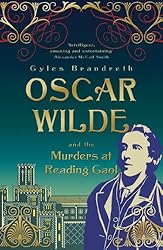
Reading Gaol’s most famous prisoner is pitted against a ruthless and fiendishly clever serial killer. ‘Intelligent, amusing and entertaining’ Alexander McCall Smith It is 1897, Dieppe. Oscar Wilde, poet, playwright, novelist, raconteur and ex-convict, has fled the country after his release from Reading Gaol. Tonight he is sharing a drink and the story of his cruel imprisonment with a mysterious stranger. He has endured a harsh regime: the treadmill, solitary confinement, censored letters, no writing materials. Yet even in the midst of such deprivation, Oscar’s astonishing detective powers remain undiminished – and when first a brutal warder and then the prison chaplain are found murdered, who else should the governor turn to for help other than Reading Gaol’s most celebrated inmate?
In this, the latest novel in his acclaimed Oscar Wilde murder mystery series, Gyles Brandreth takes us deep into the dark heart of Wilde’s cruel incarceration.

Blurb:

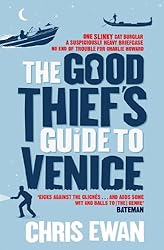
Charlie Howard ‘“ struggling crime-writer by day, talented thief by night ‘“’¯has gone straight. But holing himself up in a crumbling palazzo in Venice in an attempt to concentrate on his next novel hasn’t got rid of the itch in his fingers. And to make matters worse, a striking Italian beauty has just broken into his apartment and made off with his most prized possession, leaving a puzzling calling card in its place.

It looks as though kicking the habit of a lifetime will be much more of a challenge than Charlie thought.

Sneaking out into Venice’s maze of murky canals, Charlie’s attempts to tame a cat burglar embroil him in a plot that is far bigger and more explosive than he could ever have imagined.

We should treasure our libraries.

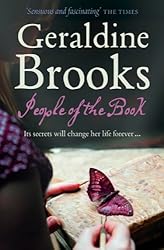
People of the Book by Geraldine Brooks

When I began reading People of the Book by Geraldine Brooks I wondered why I’d left it nearly eight years on my book shelves before I  got round to reading it. I loved it; it’s a real gem! It has joined the ranks of my favourite books and is definitely a book for keeping and (I hope) for re-reading.

How could I not love a book about books, in particular an ancient book, one that was thought to be lost or destroyed, a book that escaped burning by the Inquisition and the Nazis, a book that survived shelling during the Bosnian War in the 1990s, a book known as the priceless Sarajevo Haggadah – a medieval Jewish prayer book containing the illustrated traditional text of the Passover Haggadah which accompanies the Feast of Passover.

In Geraldine Brooks’ Afterword she explains that People of the Book is fiction, inspired by the true story of the Hebrew codex known as the Sarajevo Haggadah. Some of the facts are true to the haggadah’s known history but most of the plot and all of the characters are imaginary. She then goes on to define what is true and what is fictional, which I think is the best way of presenting historical fiction.

Australian Hanna Heath is a rare-book restorer and it’s not only the content of the haggadah that interests her, it is the hidden history of the book that captured her imagination and also mine. She finds tiny clues to its history as she restores the book – a fragment of an insect’s wing, wine stains, salt crystals and a tiny white hair – clues to unlock its mysteries. The story of the book is told in reverse chronological order beginning in 1996 and working back to 1480. Interwoven with each story is Hanna’s own story as she too discovers her roots. It’s a story too of love and war, of family relationships, of Anti-Semitism and of historical religious conflicts as the haggadah survived disaster after disaster. It’s also a novel about preserving the past, its culture and history for future generations. It has depth and breadth and is beautifully written. I was irresistibly engrossed in this book and full of wonder at its stories, reaching back in time from Sarajevo to Vienna, Venice, Tarragona to Seville in 1480 and also Hanna’s story from 1996 to 2002.

There are many descriptions of the haggadah throughout the book, all of which made me eager to know more about it. This is just one example from the chapter on wine stains set in Venice in 1609:

Aryeh released the catches, admiring the work of the silversmith. Each clasp, closed, was in the form of a pair of wings. As the delicate catch released – still smoothly after more than a century – the wings opened to reveal a rosette enfolded within. Aryeh saw at once that the book was a haggadah, but unlike any he had seen before. The gold leaf, the pigments … he stared at the illuminations, opening each page eagerly. He was delighted, yet a little disturbed, to see Jewish stories told in an art so like that of the Christians’ prayer books. (page 163)

And here, by way of contrast, is a description of Arnhem Land in the north east corner of Australia’s Northern Territory, where Hanna is working in the caves studying the Aboriginal rock art to document and preserve it before the uranium or bauxite companies blasted it into rubble:

I stepped out of the cave and blinked in the bright daylight. The sun was a big disc of brilliant madder, reddening the stripes of ore that ran through the sheer black-and-ocher rock face. Down below, the first shoots of new spear grass washed the plain in vivid green. Light silvered the sheets of water left behind by the previous night’s downpour. We’d moved into Gunumeleng – one of six seasons the Aborigines identified in a year that whites simply divided into Wet and Dry. Gunumeleng brought the first storms. In another month, the entire plain would be flooded. The so-called road, which was actually virtually a marginal dirt track, would be impassable. (pages 339-340)

I just had to know more about the Sarajevo Haggadah and found these illustrations (see Wikimedia Commons for more illustrations and these sites for more information –  WikipediaThe Times of Israel and About Haggadah:

Copies of Sarajevo Haggadah in parliament building – from Wikimedia Commons

The Sarejevo Haggadah, 15th century Spain – from Wikimedia Commons
Reading challenges: Mount TBR Reading Challenge 2016

Stacking the Shelves: 2 April 2016

STSmall

Stacking The Shelves is all about sharing the books you are adding to your shelves. This means you can include ‘˜real’ and ‘˜virtual’ books (ie physical and ebooks) you’ve bought, books you’ve borrowed from friends or the library, review books, and gifts.

I bought three books this week.

I loved watching The Night Manager, adapted from John le Carré’s novel, so when I went to Main Street Trading on Tuesday I hoped they would have a copy. They didn’t – but they did have Tinker Tailor Soldier Spy, a book I’ve wanted to read ever since I watched the BBC adaptation many years ago (Alec Guinness was George Smiley).

Blurb:

George Smiley, who is a troubled man of infinite compassion, is also a single-mindedly ruthless adversary as a spy.

The scene which he enters is a Cold War landscape of moles and lamplighters, scalp-hunters and pavement artists, where men are turned, burned or bought for stock. Smiley’s mission is to catch a Moscow Centre mole burrowed thirty years deep into the Circus itself.

Yesterday I went shopping and passing Berrydin in Books I had to go in and, of course, I had to buy a book – well two actually. First another book that I was prompted to read by a TV adaptation in 2012 – Birdsong by Sebastian Foulks.

Blurb:

A novel of overwhelming emotional power, Birdsong is a story of love, death, sex and survival. Stephen Wraysford, a young Englishman, arrives in Amiens in northern France in 1910 to stay with the Azaire family, and falls in love with unhappily married Isabelle. But, with the world on the brink of war, the relationship falters, and Stephen volunteers to fight on the Western Front. His love for Isabelle forever engraved on his heart, he experiences the unprecedented horrors of that conflict – from which neither he nor any reader of this book can emerge unchanged.

And also Citadel by Kate Mosse, because I like time-slip books. The main story is set in 1942-44 in Nazi-occupied  Carcassonne in France and moves back in time to 342, with a monk, Arinus trying to find a hiding place for a forbidden Codex.

Blurb:

1942, Nazi-occupied France. Sandrine, a spirited and courageous nineteen-year-old, finds herself drawn into a Resistance group in Carcassonne – codenamed ‘Citadel’ – made up of ordinary women who are prepared to risk everything for what is right.

And when she meets Raoul, they discover a shared passion for the cause, for their homeland, and for each other.

But in a world where the enemy now lies in every shadow – where neighbour informs on neighbour; where friends disappear without warning and often without trace – love can demand the highest price of all…

As soon as I read some of my TBR books (6 in March) it seems I just have to find more – at least it’s only three this time.

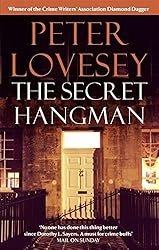
The Secret Hangman by Peter Lovesey

The Secret Hangman is the first book I’ve read by Peter Lovesey and as it’s the 9th in his Peter Diamond series I was hoping it would read OK as a stand alone book – it does. Peter Diamond is a Detective Superintendent with the Bath police.

Blurb:

Peter Diamond, the Bath detective, is having woman trouble. His boss wants him to find a missing person, the daughter of one of her friends in the choir. He is not enthusiastic. Another woman, who calls herself his Secret Admirer, wants to set up a meeting in a local pub. He tries ignoring her. Then there is sexy Ingeborg Smith, the ex-journo detective constable, distracting the murder squad from their duties. No one ignores Ingeborg.

Murder becomes a possibility when a woman’s body is found hanging from a playground swing in Sydney Gardens and a suspicious second ligature mark is found around her neck. Diamond investigates the victim’s colourful past. More hangings are discovered and soon he is certain that a secret hangman is at work in the city . . .

My thoughts:

Diamond’s wife had died three years earlier – as I haven’t read the earlier books I suppose this is a spoiler, but it is important to know this from the start of this book, because he is now beginning to recover from his grief and becomes rather too involved with an attractive woman he met by chance in a carpark. The story of their relationship runs parallel to the investigations into the hangings and the series of ram raids his boss wants him to investigate.

At first there doesn’t appear that there is any connection between the victims and the motive for killing them only becomes clear quite late on in the book. The only similarities are that the victims are all couples – the wives are killed first, followed a few days later by their husbands, and all the bodies are found in public places as though the killer wanted their deaths to be discovered and publicised.

It takes a while before Diamond cottons on to the identity of the killer – and I was there some time before him, but that didn’t spoil my enjoyment of the book. Diamond is not a brilliant detective. He is rather old-school, not above a bit of threatening behaviour (and more) to suspects, not bothered about upsetting his boss, nor is he comfortable with technology. But he is determined and thorough – I liked him and want to read more from the series.

Peter Lovesey is a British writer of historical and contemporary crime novels and short stories. He has written many books, not just the Peter Diamond series, but also a series of books featuring Sergeant Cribb, a Victorian-era police detective based in London – the full list of his books is on his website – there are plenty to read!

————

Reading challenges: Mount TBR Reading Challenge – a book I’ve owned for 7 years, and one I should have read ages ago, but well worth the wait.