Top 5 Tuesday:Top 5 books with no pictures on the cover

Top 5 Tuesday was created by Shanah at Bionic Book Worm, and it is now being hosted by Meeghan at Meeghan Reads. For details of all of the latest prompts for April to June, see Meeghan’s post here.

Today the topic is top 5 books with no pictures on the cover. Meegan writes: I guess this one is more of an anti-scavenger hunt? Also, it’s up to you how far you take this one. Does a pattern count as a picture? What about a single line or spot of colour? Maybe you want to go completely blank with just the words. No matter, please share your top 5 books with no pictures on the cover.

These are all books I’ve read, three nonfiction and two novels.

Nonfiction:
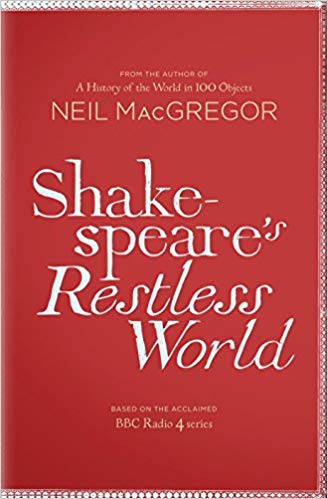
Shakespeare’s Restless World by Neil MacGregor.

A beautiful book recreating Shakespeare’s world through examining twenty objects. It reveals so much about the people who lived then, who went to see Shakespeare’s plays in the 1590s and 1600s, and about their ideas and living conditions. Through looking at each object MacGregor explores a number of topics, including what people ate whilst watching plays, religion, medicine, the plague, magic, city life, treason, and the measuring of time. It’s all fascinating and informative, and easy to read. There are plenty of quotations from Shakespeare’s plays and puts both him and his work into context. For me, it was a new way of seeing into the past,

Of Women in the 21st Century by Shami Chakrabarti, a member of the House of Lords, formerly Labour’s Shadow Attorney General, and the author of On Liberty, a book about human rights violations published in 2014.

Shami Chakrabarti is passionate, and indeed angry, about the need for gender equality in her book. She examines the effects of gender injustice on a wide variety of issues in many parts of the world. In parts it reads like an academic textbook, packed full of statistics and wide ranging examples of gender injustice on a global scale. It becomes more personal however, when she writes about her own experiences her family and her background.

She covers a broad overview of many issues, rather than an in-

depth study, including violence against women, abortion, sanitary products, childcare and sex education and topics such as faith, the concept of home and displaced persons, health, wealth, education, representation, opportunity and insecurity in the 21st century. However, she remains optimistic, concluding that she believes that ‘far greater equality for women and men is realistically within our reach and well worth the stretch.’ I don’t think it is that easy and will need more than a ‘stretch’.
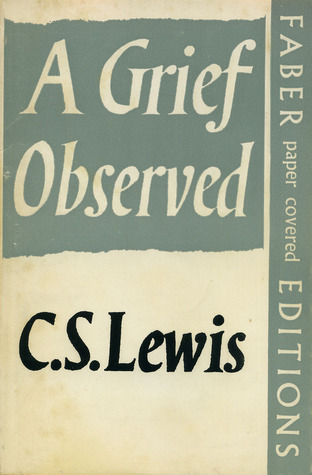
A Grief Observed by C S Lewis, another book I read before I began blogging, so no review.

Written after his wife’s tragic death as a way of surviving the “mad midnight moment,” A Grief Observed is C.S. Lewis’s honest reflection on the fundamental issues of life, death, and faith in the midst of loss. This work contains his concise, genuine reflections on that “Nothing will shake a man — or at any rate a man like me — out of his merely verbal thinking and his merely notional beliefs. He has to be knocked silly before he comes to his senses. Only torture will bring out the truth. Only under torture does he discover it himself.” This is a beautiful and unflinchingly honest record of how even a stalwart believer can lose all sense of meaning in the universe, and how he can gradually regain his bearings. (Goodreads)

Fiction:
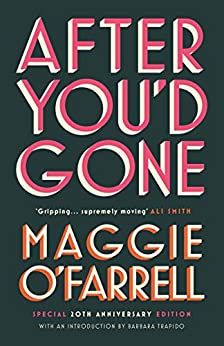
After You’d Gone by Maggie O’Farrell

Alice is in a coma after being in road accident, which may or may not have been a suicide attempt. She has been grieving the death of her husband, John.

It’s quite a complicated story, following the life stories not only of Alice, but also those of her mother, Ann (who I didn’t like much),  her grandmother, Elspeth (who I did like very much), her two sisters and of John. What was it that Alice saw at Edinburgh station that shocked her so much? You don’t find out until the end of the book, although I did have an idea before that what it meant to her and why it was so upsetting. 
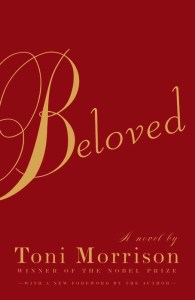
Beloved by Toni Morrison, which I read years ago before I began blogging, so I haven’t reviewed it.

Staring unflinchingly into the abyss of slavery, this spellbinding novel transforms history into a story as powerful as Exodus and as intimate as a lullaby.

Sethe, its protagonist, was born a slave and escaped to Ohio, but eighteen years later she is still not free. She has too many memories of Sweet Home, the beautiful farm where so many hideous things happened. And Sethe’s new home is haunted by the ghost of her baby, who died nameless and whose tombstone is engraved with a single word: Beloved. Filled with bitter poetry and suspense as taut as a rope, Beloved is a towering achievement by Nobel Prize laureate Toni Morrison. (Goodreads)
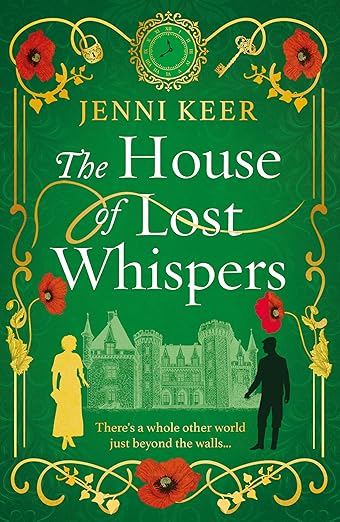
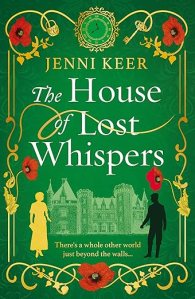
The House of Lost Whispers by Jenni Keer

Boldwood Books|25 April 2025| 378 pages| e-book| Review book| 3*

Summary:

What if another world existed… where the Titanic had never sunk?

When the ill-fated maiden voyage of the Titanic leaves Olivia Davenport orphaned, she’s sent to live with her guardians, the Fairchilds, in their huge Jacobean mansion. But the Fairchilds have more to worry about than a grieving young girl – with war in Europe imminent and four sons to protect.

Olivia feels alone and friendless. Until she hears a voice from behind the wall in her tower bedroom. A voice from a man called Seth. Convinced he’s merely a product of her grieving imagination, it’s not until after the heartbreak of war that Olivia discovers that he exists in an overlapping world, just a shudder in time away from her own. A world where the Titanic never sank… Where everything since has been just slightly… different.

All Olivia wants is to find a way into his reality. And not just to see the faces of her beloved parents once again. But also to meet Seth. Who might just be the love of her life…

I enjoyed reading Jenni Keer’s debut novel, The Hopes and Dreams of Lucy Baker several years ago and thought I’d like to read more of her books. This one is her eighth book, so I missed the books in between. I don’t often read romance or fantasy novels but The House of Lost Whispers has both elements and it’s also historical fiction set before, during and after the First World War. I preferred the historical element, especially the middle section about the War. But I also enjoyed reading the fantasy element about the anomaly in the magnetic field surrounding the earth causing vibrations, disrupting the fabric of space and time. This resulted in the formation of a duplicate earth, one parallel with our world, in which the Titanic did not sink on 12th April 1912.

I think this is a very interesting and possibly original idea, exploring what life would have been like for Olivia and her family if the Titanic had not been sunk. The book also explores loss and grief, family life, friendship and romantic relationships, as well as the devastating and horrific events of the First World War. As described in the blurb Olivia in the ‘real’ world and Seth in the parallel world can hear each other through the wall in her tower bedroom (the whispers), but despite their efforts they cannot break through to meet.

It’s beautifully descriptive, bringing the settings to life and there is also a murder mystery to solve. My only criticisms are that at times I did get a bit confused about Seth’s character and his parallel in the ‘real’ world, and I could have done without the love scenes (too descriptive in places). As I read on I was wondering how it would end and maybe Jenni Keer wondered too because the conclusion seemed rushed and rather neatly sown up. I was a bit disappointed, although I can’t imagine how else it could have ended. But overall it kept me reading, wanting to know what would happen next.

Many thanks to the publishers for a review copy via NetGalley.

WWW Wednesday: 14 May 2025

WWW Wednesday is run by Taking on a World of Words.

The Three Ws are:

What are you currently reading?
What did you recently finish reading?
What do you think you’ll read next?

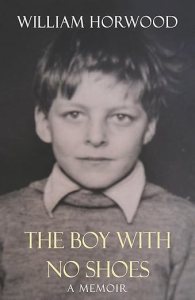
Currently I am reading The Boy With No Shoes: a Memoir by William Horwood, the author of The Duncton Chronicles an allegorical tale about the moles of Duncton Wood. It’s about his childhood in south-east England after the Second World War – the unwanted child of a mother who rejects him, and whose other children bully him.

I’m also reading The House of Lost Whispers by Jennie Kerr, a mix of historical fiction and magical realism. It begins in 1912 when thirteen-year-old Olivia goes to live at Merriford Manor with her guardians after her parents were drowned when the Titanic sank. She hears a voice through her bedroom wall. A voice from a man called Seth. At first she thinks he’s a ghost. But it soon becomes clear that he lives in an overlapping world that is just a shudder in time away from her own. I wasn’t too sure about the mix of genres, but it’s working well so far.

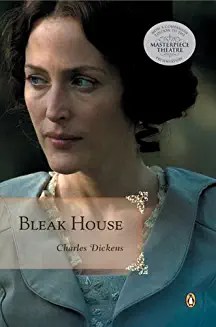
The last book I read was Bleak House by Charles Dickens, which is over 1000 pages full of description and lots of characters, about the complex and long-drawn out lawsuit of Jarndyce v Jarndyce. I’ll be writing more about it in a later post.

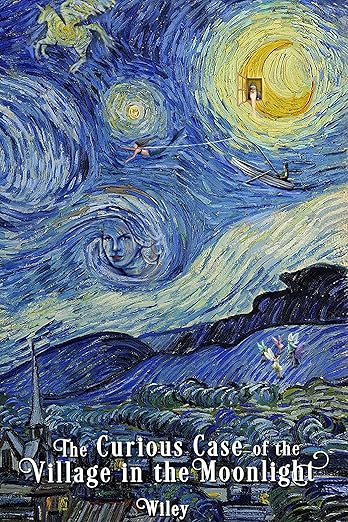
What will I read next? I’m thinking of reading The Curious Case of the Village in the Moonlight by Steve Wiley, a novella about Vincent Van Gogh. Van Gogh painted Starry Night whilst living in an asylum, near the village of Saint-Rémy, where a lamplighter is doing his rounds in the village. It will be his last round before electricity is installed during green hour — an absinthe-drenched celebration in his honour. The curious hour would transform the night from familiar to fantastical, with the village street lamps mysteriously vanishing.

But when the time comes I may find myself reading something different, as the mood takes me.

Top 5 Tuesday:top 5 books with stars on the cover

Top 5 Tuesday was created by Shanah at Bionic Book Worm, and it is now being hosted by Meeghan at Meeghan Reads. For details of all of the latest prompts for April to June, see Meeghan’s post here.

Today the topic is top 5 books with stars on the cover. One of my favourite paintings is Vincent Van Gogh’s Starry Night, so I’ve chosen books about the painting, Van Gogh’s life, about his time in an asylum, historical fiction, and two children’s books.

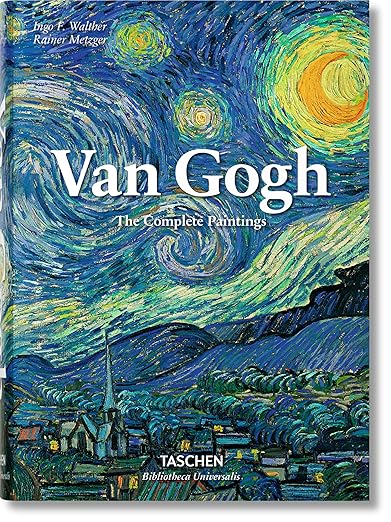
Van Gogh. The Complete Paintings by Ingo F. Walther and Rainer Metzger

Vincent van Gogh’s story is one of the most ironic in art history. Today, he is celebrated the world over as one of the most important painters of all time, recognized with sell-out shows, feted museums, and record prices of tens of millions of dollars at auction.

Yet as he was painting the canvases that would subsequently become these sell-out modern masterpieces, van Gogh was battling not only the disinterest of his contemporary audiences but also devastating bouts of mental illness, with episodes of depression and paralyzing anxiety which would eventually claim his life in 1890, when he committed suicide shortly after his 37th birthday. This comprehensive study of Vincent van Gogh (1853–1890) pairs a detailed monograph on his life and art with a complete catalogue of his 871 paintings.

The Curious Case of the Village in the Moonlight by Steve Wiley.

Newly admitted patient Vincent Van Gogh watched as the first stars of what would become The Starry Night blinked to life over the sleepy village of Saint-Rémy.

In that village lived a lamplighter. That notorious starry night would be his last one on the job. The town was scheduled to be wired with a new and innovative technology called ‘electricity’ the following day. The lamplighter began his last night of work at the village tavern during green hour — an absinthe-drenched celebration in his honor. Green hour would transform the night from familiar to fantastical, with the village street lamps mysteriously vanishing. The lamplighter finds himself swept away on a wonderfully strange adventure to find and light the lost lamps, one that will take him from the depths of wish-filled rivers to the heights of the star-filled sky. Along the way, the lamplighter finds help from a curious cast of characters including the Man in the Moon, an ages-old cypress tree, and the wind itself. It will take all of them to find the lost lamps, and a lost love.

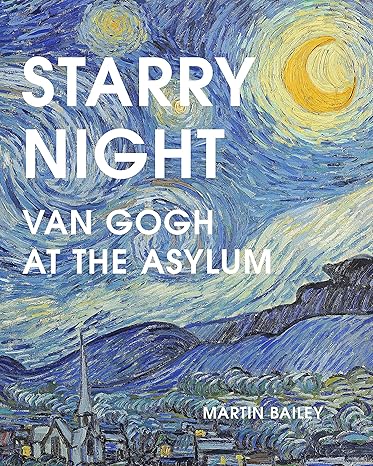
Starry Night: Van Gogh at the Asylum by Martin Bailey

Starry Night is a fascinating, fully illustrated account of Van Gogh’s time at the asylum in Saint-Remy, during which he created some of his most iconic pieces of art.

Despite the challenges of ill health and asylum life, Van Gogh continued to produce a series of masterpieces – cypresses, wheatfields, olive groves and sunsets during his time there. This fascinating and insightful work from arts journalist and Van Gogh specialist Martin Bailey examines his time there, from the struggles that sent him to the asylum, to the brilliant creative inspiration that he found during his time here.

He wrote very little about the asylum in letters to his brother Theo, so this book sets out to give an impression of daily life behind the walls of the asylum of Saint-Paul-de-Mausole and looks at Van Gogh through fresh eyes, with newly discovered material.

An essential insight into the mind of a flawed genius, Starry Night is indispensable for those who wish to understand the life of one of the most talented and brilliant artists to have put paintbrush to canvas.

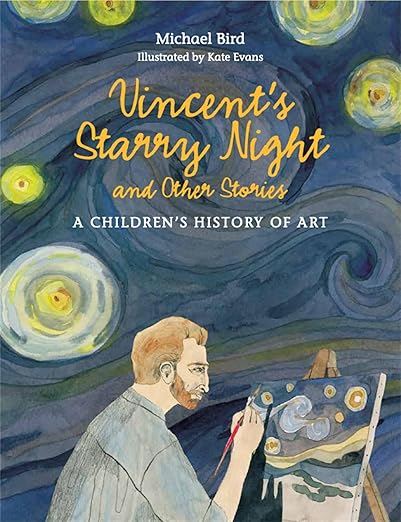
Vincent’s Starry Night and Other Stories: A Children’s History of Art by Michael Bird

An enthralling journey through 40,000 years of art, from prehistoric cave paintings right up to the present day. Discover artists and their art around the world, in exciting and imaginative tales about artists and the way they created their work.
Written by educator and art historian Michael Bird, and illustrated by Kate Evans, the book also features reproductions of the famous artworks discussed, a comprehensive timeline of events, and extra feature spreads on places connected with art.
This is a beautiful and engaging introduction to art for any home or school library.

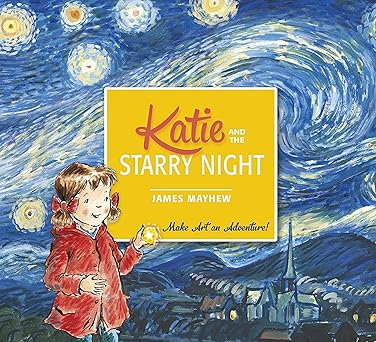
Katie and the Starry Night by James Mayhew

Join Katie as she steps into some of the most famous paintings in the world for an exciting art adventure!

The stars in Vincent van Gogh’s painting are so beautiful that Katie can’t resist reaching in and taking one. But what will she do when all the other stars come tumbling out of the painting, too? Will Katie be able to catch the stars before the gallery guard notices they’ve floated away?

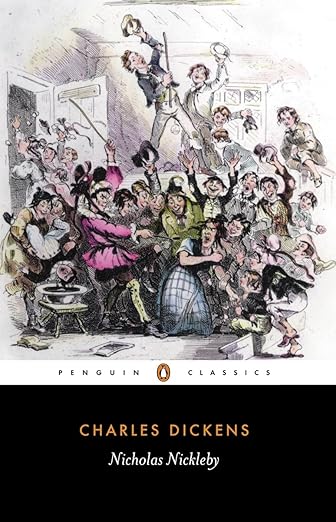
Nicholas Nickleby by Charles Dickens: Book Beginnings on Friday & The Friday 56

Every Friday Book Beginnings on Friday is hosted by Gillion at Rose City Reader where you can share the first sentence (or so) of the book you are reading. You can also share from a book you want to highlight just because it caught your fancy.

I’m getting to the end of reading Bleak House by Charles Dickens, so I’m looking around to find a book to read to replace it. One of the books I might read is Nicholas Nickleby by Charles Dickens.

Nicholas Nickleby is the third novel by Charles Dickens, originally published as a serial from 1838 to 1839 and published in book form in 1839. I know very little about and don’t remember watching any of the adaptations on TV or film.

The book begins:

There once lived, in a sequestered part of the county of Devonshire, one Godfrey Nickleby: a worthy gentleman, who, taking it into his head rather late in life that he must get married, and not being young enough or rich enough to aspire to the hand of a lady of fortune, had wedded an old flame out of mere attachment, who in her turn had taken him for the same reason. Thus two people who cannot afford to play cards for money, sometimes sit down to a quiet game for love.

Also every Friday there is The Friday 56, hosted by Freda at Freda’s Voice, but she is taking a break and Anne at My Head is Full of Books has taken on hosting duties in her absence. You grab a book and turn to page 56 (or 56% of an eBook), find one or more interesting sentences (no spoilers), and post them.

On page 56

‘Stop,’ cried Nicholas hurriedly; pray hear me. This is the grossest and wildest delusion, the completest and most signal mistake, that ever human being laboured under, or committed. I have scarcely seen the young lady half-a-dozen times, but if I had seen her sixty times, or am destined to see her sixty thousand thousand, it would be, and will be, precisely the same.

Description from Goodreads:

When Nicholas Nickleby is left penniless after his father’s death, he appeals to his wealthy uncle to help him find work and to protect his mother and sister. But Ralph Nickleby proves both hard-hearted and unscrupulous, and Nicholas finds himself forced to make his own way in the world. His adventures gave Dickens the opportunity to portray an extraordinary gallery of rogues and eccentrics, such as Wackford Squeers, the tyrannical headmaster of Dotheboys Hall, a school for unwanted boys; the slow-witted orphan Smike, rescued by Nicholas; and the gloriously theatrical Mr. and Mrs. Crummles and their daughter, the ‘infant phenomenon’. Like many of Dickens’s novels, Nicholas Nickleby is characterised by his outrage at cruelty and social injustice, but it is also a flamboyantly exuberant work, revealing his comic genius at its most unerring.

Spell the Month in Books May 2025

Spell the Month in Books is a linkup hosted by Jana on Reviews From the Stacks on the first Saturday of each month. The goal is to spell the current month with the first letter of book titles, excluding articles such as ‘the’ and ‘a’ as needed. That’s all there is to it! Some months there are optional theme challenges, such as “books with an orange cover” or books of a particular genre, but for the most part, any book you want to use is fair game!

This month’s there isn’t a theme. I’ve read the first two of these three books and the third is one of my TBRs.

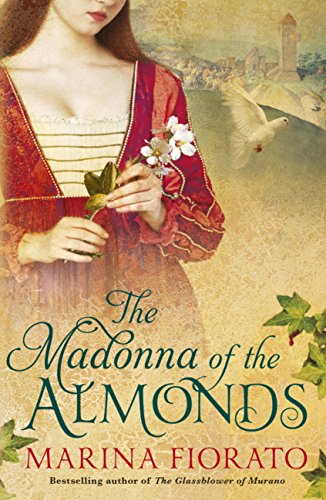
M is for The Madonna of the Almonds by Marina Fiorato, which I read soon after it was first published in 2009. It is a love story above all, but there is so much more as well. It’s set in Italy in the 16th century, about a young widow, Simonetta di Saronno, struggling to save her home, who meets the artist Bernadino, a protege of Leonardo da Vinci. 

Bernardino Luini, favoured apprentice of Leonardo da Vinci, is commissioned to paint a religious fresco in the hills of Lombardy. His eye is caught by the beautiful Simonetta di Saronno, a young noblewoman who has lost her husband to battle, and whose fortune is gone. Captivated by her beauty and sadness, Bernardino paints Simonetta’s likeness, immortalizing her as the Madonna in his miraculous frescoes in Saronno’s church. As the sittings progress, they fall in love, and Simonetta reciprocates Luini’s genius, with the help of a Jew, known as Manodorata (because of the golden hand replacing his own hand that had been chopped off by the Spanish Inquisition) by creating a drink for her lover a delicious liqueur, Amaretto, from the almond trees, the only crop growing on her estate.

I love the story-telling aspects of this book, its rich descriptions of art and the detailed history of the period. I love Italy, history, art history and almonds, especially Amaretto, so this book just could not fail to delight me.

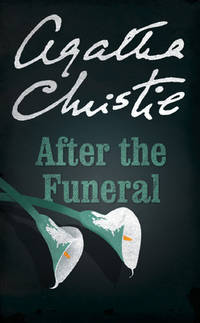
A is for After the Funeral by Agatha Christie, one of her Hercule Poirot murder mysteries. I read this in 2012 and loved it.

When Cora is savagely murdered, the extraordinary remark she made the previous day at her brother’s funeral takes on a chilling significance. At the reading of Richard’s will, Cora was clearly heard to say, “It’s been hushed up very nicely, hasn’t it…But he was murdered, wasn’t he?”  In desperation, the family solicitor turns to Hercule Poirot to unravel what happened next …

I read it quickly and consequently had little idea who had killed Cora. I did spend some time looking at the family tree at the beginning of the book, working out the family relationships and who was present at Richard Abernethie’s funeral and their reaction to Cora’s question. It seemed to me that any of the family could have done it – Agatha Christie goes through the actions and thoughts of each character and there’s cause for suspicion for each one.

Apart from trying to solve the mystery I was interested in the glimpses into life in post-war Britain, where jobs are scarce, servants even more scarce and there are complaints about the economic situation, with high taxation and the prospect of properties such as the Abernethie house being turned into a hotel, or institute, or even worse being pulled down and the whole estate built over.

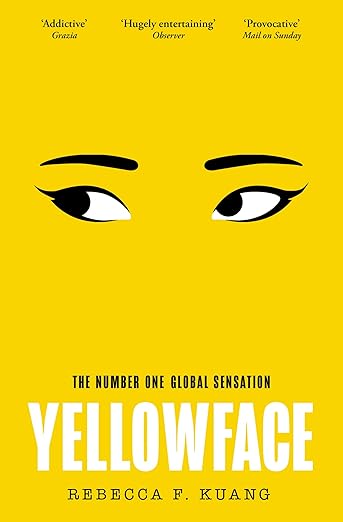
Y is for Yellowface by Rebecca F Yuang, one of my TBRs, which I bought because I’d read positive reviews from other bloggers.

THIS IS ONE HELL OF A STORY.

IT’S JUST NOT HERS TO TELL.

When failed writer June Hayward witnesses her rival Athena Liu die in a freak accident, she sees her opportunity… and takes it.

So what if it means stealing Athena’s final manuscript?

So what if it means ‘borrowing’ her identity?

And so what if the first lie is only the beginning…

Finally, June has the fame she always deserved. But someone is about to expose her…

What happens next is entirely everyone else’s fault.

Next month June 7: reflects the beginning of the library’s Summer Reading program: books that you found or currently see at the library.

The Summer Reading Challenge, delivered in partnership with public libraries across the UK, is back for 2025! Launching in June in Scotland and July in England and Wales, the Challenge invites children to embark on an exciting reading journey, either through their local library or online. This year’s theme, Story Garden, encourages young readers to explore nature and the great outdoors through reading.