Top Ten Tuesday: TTT Rewind: Books On My Spring 2019 TBR Updated

top-ten-tuesday-new

Top Ten Tuesday is a weekly meme created by The Broke and the Bookish and now hosted by Jana at That Artsy Reader Girl. For the rules see her blog.

This week’s topic is TTT Rewind (Pick a previous topic that you missed or would like to re-do/update) So, I’m updating my post Books On My Spring 2019 TBR, first posted on 19th March 2019.

I read three of them!

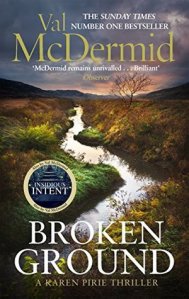
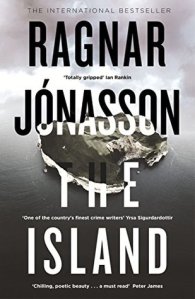
Broken Ground by Val McDermid, On the Beach by Nevil Shute, which I read only this year and have yet to write a review, and The Island by Ragnar Jónasson.

This leaves me with seven left to read:

In Cold Blood by Truman Capote – Capote reconstructs the crime and the investigation into the murders of the four members of the Clutter family on November 15, 1959, in the small town of Holcomb, Kansas.

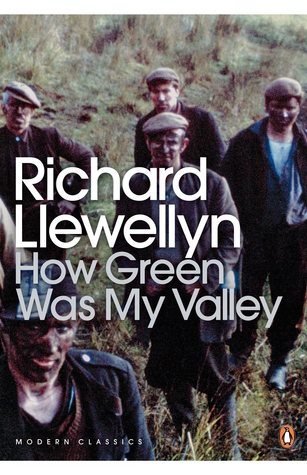
How Green Was My Valley by Richard Llewellyn – a story of life in a mining community in rural South Wales as Huw Morgan is preparing to leave the valley where he had grown up. He tells of life before the First World War.

Iris and Ruby by Rosie Thomas – the story of a teenage girl, Ruby, who runs away from home to live with her grandmother, Iris in Cairo.

Here Be Dragons by Sharon Penman – set in 13th century Wales this is the story of Llewelyn, the Prince of North Wales, and his rise to power and fame and his love for Joanna, the illegitimate daughter of King John. 

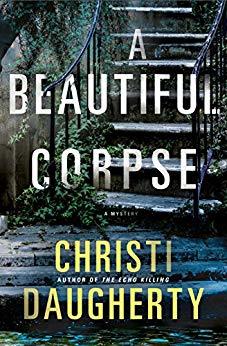
A Beautiful Corpse by Christi Daugherty – crime reporter Harper McClain unravels a tangled story of obsession and jealousy after a beautiful law student is shot in Savannah, Georgia.

A Snapshot of Murder by Frances Brody – set in Yorkshire in 1928, when  amateur detective, Kate Shackleton investigates a crime in Brontë country.

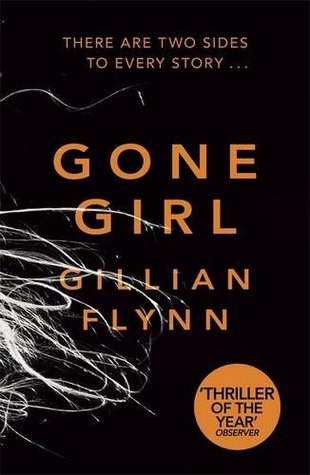
Gone Girl by Gillian Flynn – on the day of Nick and Amy’s fifth wedding anniversary, Amy suddenly disappears. The police suspect Nick. Amy’s friends reveal that she was afraid of him, that she kept secrets from him. He swears it isn’t true.

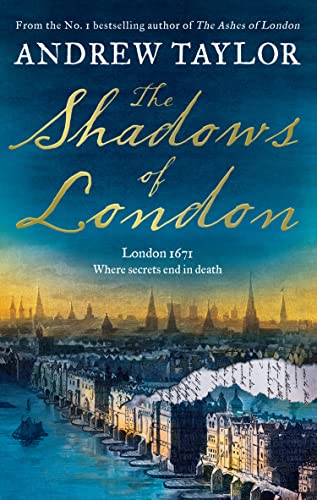
The Shadows of London by Andrew Taylor

Harper Collins| 2 March 2023 | 454 pages|e-book |Review copy|5*

London 1671
The damage caused by the Great Fire still overshadows the capital. When a man’s brutally disfigured body is discovered in the ruins of an ancient almshouse, architect Cat Hakesby is ordered to stop restoration work. It is obvious he has been murdered, and Whitehall secretary James Marwood is ordered to investigate.

It’s possible the victim could be one of two local men who have vanished – the first, a feckless French tutor connected to the almshouse’s owner;
the second, a possibly treacherous employee of the Council of Foreign Plantations.

The pressure on Marwood mounts as Charles II’s most influential courtiers, Lord Arlington and the Duke of Buckingham, show an interest in his activities – and Marwood soon begins to suspect the murder trail may lead right to the heart of government.

Meanwhile, a young, impoverished Frenchwoman has caught the eye of the king, a quiet affair that will have monumental consequences…

My thoughts

The Shadows of London by Andrew Taylor is historical crime fiction, the 6th book in his James Marwood and Cat Lovett Restoration series. I’ve read all of the previous books, set in 17th century England, during the reign of Charles II, and thoroughly enjoyed each one So I was delighted to find that this one is just as good, maybe even better. Although it does work as a stand-alone book I do think it’s best to read them in sequence to get the full background of the Restoration period and the relationship between James Marwood and Cat Hakesbury (formerly Lovett).

At the beginning of the book there is a list of the main characters, which I find very useful. It includes where they live and their professions and relationships with each other, including the real historical characters. There is also a Historical Note at the end of the book in which Taylor explains that the origins of the novel had germinated over a number of years following the Harvey Weinstein and Jeffrey Epstein cases, whilst the catalyst came when he read Dr Linda Porter’s Mistresses: Sex and Scandal at the Court of Charles II. In one chapter Dr Porter focuses on the career of Louise de Keroualle, who became Charles II’s chief mistress during the second half of his reign. In The Shadows of London the story of Louise’s seduction with its political implications, based on fact, is interwoven with the mystery of the murder of the man found dead, brutally killed, in the grounds of a ruined almshouse that Cat’s workman were restoring.

The murder mystery is complicated first of all because the victim had no face, and nothing by which he could be identified. Both the characters and the settings are well described and the mixture of fact and fiction works well. It is fast paced, full of action and intrigue. The narrative is told from both Cat’s and James’s viewpoints switching from one to the other throughout the book. Their relationship continues to develop as they work together to find the culprit and it reaches a turning point in this book. I hope that there will be a 7th book as I really want to know what happens next …

One of the things that I really enjoyed in this book is the picture it paints of John Evelyn, the writer and diarist, bibliophile and horticulturalist. He was a contemporary of Samuel Pepys. His diary covers the years from 1640 to 1706 when he died. And now I want to find out more about him.

Andrew Taylor is a bestselling crime and historical novelist, and the winner of the Diamond Dagger of the Crime Writers Association, the Gold Crown of the Historical Writers Association and many other awards. He’s written nearly fifty books,  listed here, three of which have been televised. I’d leave to see the Marwood and Lovett series adapted for television!

My thanks to the publishers and NetGalley for my review copy.

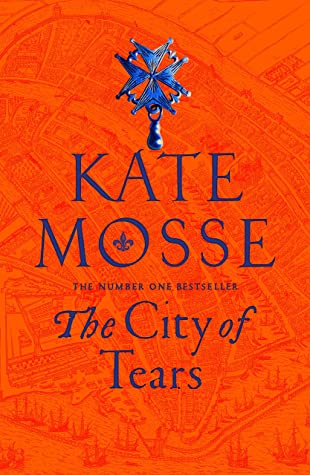
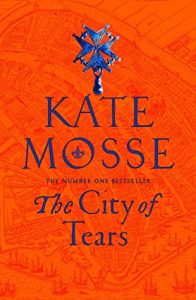
The City of Tears by Kate Mosse

Rating: 5 out of 5.

Pan Macmillan, Mantle| 19 January 2021 | 562 pages|e-book |Review copy|4*

Kate Mosse sets out in her Historical Note the history of the French Wars of Religion that took place between Huguenots (Protestants) and Catholics from 1562 and 1598 and explains that The City of Tears is the second book in The Burning Chambers series of novels set against the backdrop of 300 years of history from 16th century France and Amsterdam to the Cape of Good Hope in the 18th and 19th centuries. And there is a useful list of the principal characters and the historical characters at the beginning of the book, that helps in remembering who was who and how they were connected.

It’s been four years since I read The Burning Chambers, the first book in The Burning Chambers series, and time has moved on ten years since the events in that first book. You don’t have to read the first book before reading The City of Tears as with four years between the two books I didn’t find it hard to pick up the story, but I do think you need to read the Historical Note to get the background details of the French Wars of Religion first.

There is now a precarious peace in the French Wars of Religion and it looks as though that peace could be maintained as the queen mother, Catherine de Medici, has negotiated a marriage between her Catholic daughter Margot and the Huguenot Henri of Navarre. But that union is opposed by the hardline Catholic faction led by the Duke of Guise. As the novel opens Minou Joubert and Piet Reydon, now married and living in their castle in south west France, are preparing for their visit to Paris for the wedding.

This is a complicated story centred on Minou and Piet Reydon and their family. The wedding took place followed by the St Bartholomew’s Day Massacre on 24 August 1572 when thousands of Protestants were murdered by Catholic troops, in Paris and across France. I’m not going to go into any more detail about the story other than to say it’s a compelling story of chaos and fear as Minou and her family escape, though suffering dreadful losses, including the disappearance of her seven year old daughter, and almost losing their lives. There’s murder, conspiracies, stolen relics and innumerable secrets are brought to light.

It is an enjoyable book, but because of its length it does lose pace in parts. It is not a book you can or would want to read quickly. The strength of the book for me is in the characterisation and the settings. Kate Mosse has thoroughly researched the period and the locations, rooting it firmly in the time it was set. What I particularly like is that she identifies that the characters and their families, apart from the historical ones, are imagined, inspired by ‘the kind of people who might have lived: ordinary women and men , struggling to live, love and survive against a backdrop of religious war and displacement.’ Just as devastating today, as it was then.

It is also a book that is strong on developing the characters, so that you feel for them as they struggle to survive all that is thrown at them, as it is certainly a tragic story. Having said that the ending is a positive one, except for cliff hanger on the last page that hints at what is to come in the third book, The Ghost Ship, a sweeping historical epic about love in a time of war, due out in July this year.

WWW Wednesday: 15 February 2023

WWW Wednesday is run by Taking on a World of Words.

The Three Ws are:

What are you currently reading?
What did you recently finish reading?
What do you think you’ll read next?

Currently I’m reading three books:

The Children’s Book by A S Byatt. This is one of my oldest TBRs, a book I’ve owned since 2009. I did start reading it as soon as I got (it was a birthday present) but I didn’t get very far! It’s a big book with 624 pages and at the time I was in the middle of reading Wolf Hall and I couldn’t cope with to such long and complicated books, so I temporarily put down The Children’s Book to read later – then other books got in the way. It begins in 1895 in the South Kensington Museum (now the Victoria and Albert Museum) and ends with the end of the Great War. There are lots of characters and it’s about children, about books, about art, about the writing of children’s books, about the telling of children’s stories, and about the clash between life and art. It’s detailed and richly descriptive full of fascinating facts. I’ve only the first three chapters so far and I’m loving it.

I’m also reading The City of Tears by Kate Mosse, one of my NetGalley books that I ‘should’ have read long before now. It’s another long book, the second in The Burning Chambers trilogy. I’ve read the first book, which began slowly and developed into a fast moving story with a dramatic climax. There’s a huge cast of characters and it continues the story of Minuo Reydon-Joubert and Piet Reydon during the Catholic and Huguenot conflicts in the sixteenth century. It looks to be just as good as The Burning Chambers (my review).

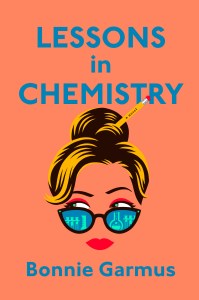
The other book I’m reading is Lessons in Chemistry by Bonnie Garmus. I usually avoid hyped books, but this one interested me. It’s about Elizabeth Zott, who is described as ‘not your average woman’. I had a look at the sample and liked the beginning so I borrowed it from the library. It’s also described as ‘laugh-out-loud funny’, but I’m not finding that at all and I’ve read 13 chapters so far. In fact I’m finding it a bit irritating.

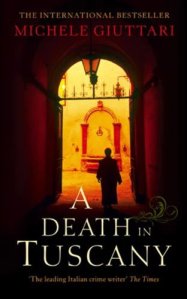
The last book I read is A Death in Tuscany by Michele Giuttari. Chief Superintendent Michele Ferrara, head of Florence’s elite Squadra Mobile, is investigating the death of a young girl, whose body was found in the picturesque Tuscan hill town of Scandicci, lying by the edge of the woods.When he delves deeper he believes the girl was murdered, And then his close friend Massimo Verga is accused of murder and has disappeared, so Ferrara is desperate to find him, and it appears both the Freemasons and the Mafia are involved.

Next I’ll be reading – It’ll be a while before I’ve finished the books I’m currently reading so it’s too soon to decide what I’ll read next.

Although this is a weekly meme I’m only taking part occasionally.

Books Read in January

I read 8 books in January, enjoying some much more than others. I am hoping to write about the three books I haven’t reviewed but in case I don’t get round to it I’ve written a few words about them here.

1. The Stroke of Winter by Wendy Webb 2.5*

2. The Girl Who Died by Ragnar Jonasson 3*

3. Ghost Walk by Alanna Knight 3*

4. Aftermath by Peter Robinson 3*

5. Underworld by Reginald Hill 5* – the 10th Dalziel and Pascoe crime fiction novel, set in the Yorkshire mining town of Burrthorpe in 1986, two years after the Miners’ Strike. I thoroughly enjoyed this. For now I’ve copied the summary from Fantastic Fiction because this is a complex book that needs more description than just a few lines:

When young Tracey Pedley vanished in the woods around Burrthorpe, the close-knit community had their own ideas about what had happened, but Deputy Chief Constable Watmough has it down as the work of a child-killer who has since committed suicide — though others wondered about the last man to see her alive and his fatal plunge into the disused mine shaft. Returning to a town he left in anger, Colin Farr’s homecoming is ready for trouble, and when a university course brings him into contact with Ellie Pascoe, trouble starts… Meanwhile Andy Daziel mutters imprecations on the sidelines, until a murder in Burrthorpe mine forces him to take action that brings him up against a hostile and frightened community…

6. Lion by Conn Iggulden 4*

7. The Last Rose of Shanghai by Weina Dai Randel 3* – historical fiction set Japanese-occupied Shanghai, this is a World War Two romance, the story of Aiyi Shao, a young heiress and the owner of a glamorous Shanghai nightclub and Ernest Reismann, a penniless Jewish refugee who had fled from Germany. I loved the beginning of this book but the rest of the book was not so good – too much ‘telling’ and I’d have liked less focus on the romance, which to me was barely believable So, 5* for the first 40%, 2* for the rest, so 3* overall. But plenty of other readers love this book.

8. Shroud of Darkness by E C F Lorac 4* – a Golden Age crime fiction beginning with five passengers on a train from Cornwall to London. When it arrives at Paddington Station in thick fog, one of the passengers is brutally attacked and left for dead. Chief Inspector MacDonald first has to identify the victim, whose pockets had been rifled and then discover why he was attacked and who did it. Another book I really enjoyed, trying to work out what had happened and failed – I was completely baffled, as much in the dark as the fog-bound passengers.

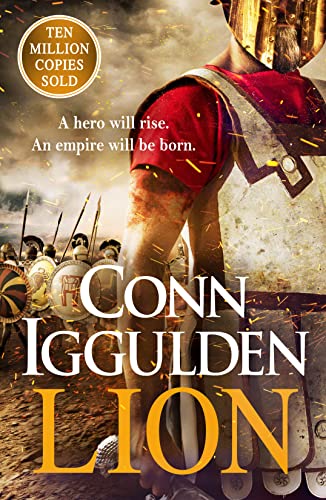
Lion by Conn Iggulden – the First in The Golden Age series

Penguin| 26 May 2022| 416 pages| Review Copy| 4*

Ancient Greece, 5th century BC

The age of myths and legends has given way to the world of men. In the front rank stands Pericles, Lion of Athens.
Behind Pericles lies the greatest city of the ancient world. Before him, on land and at sea, stands the merciless Persian army. Both sides are spoiling for war.

Though still a young man, Pericles knows one thing: to fight a war you must first win the peace

It’s time for a hero to rise.

For his enemies to tremble.

And for Athens, a city of wisdom and warriors, to shine with glory . . .

I was so pleased when I started reading Lion as I realised straight away I was going to enjoy it. It’s been a long time since I read anything set in Ancient Greece, so a lot was new to me, including the characters as well as the historical setting. This is the first book in Conn Iggulden’s Golden Age series set in the 5th century BCE. I thoroughly enjoyed it which surprised me as generally speaking I’m not keen on reading battle scenes and the book starts and ends with battles. But I had no problem with following the action of the battles between the Greeks and the Persians, and was able to visualise what was going on without any difficulty. The characters’ names took me a little while to get clear in my mind but I soon got used to them.

The two main characters are both young men, Cimon the older of the two has more authority than Pericles, the younger man. Lion is the story of their early careers. Iggulden covers the capture of Eion under Cimon’s leadership of the Delian League, an alliance of Greek states, and of Scyros where Cimon found the bones of Theseus and returned them to Athens. He then captured Cyprus and destroyed a Persian fleet on the Eurymedon River. Below the age of thirty little is known of Pericles’ life, but the likelihood is that he was with Cimon for these events.

The middle section of Lion forms an interlude between the battles and is about Pericles’ marriage to Thetis, and his involvement in the theatre in Athens and the Festival of Dionysus. Pericles was the ‘choregos’ (producer) of Aeschylus’ plays made up of three tragedies and a ‘satyr’ play. I found this part of the book just as fascinating as the battle scenes.

Iggulden adds a useful historical note and recommends reading Pericles: a Biography in Context by Thomas R Martin for more information.

The next book in the Golden Age series is Empire, which will be released on May 25, 2023.

My thanks to the publishers for a review copy via NetGalley.