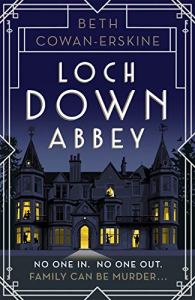
Loch Down Abbey by Beth Cowan-Erskine

Hodder & Stoughton| April 2021| 300 pages| ebook| Review copy| 4*

Description

It’s the 1930s and a mysterious illness is spreading over Scotland. But the noble and ancient family of Inverkillen, residents of Loch Down Abbey, are much more concerned with dwindling toilet roll supplies and who will look after the children now that Nanny has regretfully (and most inconveniently) departed this life.

Then Lord Inverkillen, Earl and head of the family, is found dead in mysterious circumstances. The inspector declares it an accident but Mrs MacBain, the head housekeeper, isn’t so convinced. As no one is allowed in or out because of the illness, the residents of the house – both upstairs and downstairs – are the only suspects. With the Earl’s own family too busy doing what can only be described as nothing, she decides to do some digging – in between chores, of course – and in doing so uncovers a whole host of long-hidden secrets, lies and betrayals that will alter the dynamics of the household for ever.

Loch Down Abbey is a light, quick and easy read that kept me entertained. The pun in the title suggested to me that it would be an amusing novel and the publishers describe it as a playful, humorous novel set in 1930s Scotland. I think it’s quite like a cross between a P G Wodehouse novel and a country house mystery, with elements of farce.

Loch Down Abbey, is a large rambling house with 125 rooms, not including the servants’ quarters, and 5 thousand acres of land on the shores of Loch Down. It has been the home of the Ogilvy-Sinclair Clan for six centuries. I found it quite bewildering at first as there are so many characters. I had to keep going back to the List of Characters to remind myself who they all were.

It’s partly a cozy, historical murder mystery, but mostly a family saga. Lord Hamish Inverkillen is found dead, and at first it looks like an accident, but the housekeeper Mrs MacBain thinks it could be murder. It becomes clear that the Abbey, as well as their whisky distillery is in debt, so much so that the only way they can survive is to sell the house, the distillery and land. There’s a mysterious illness known as Virulent Pernicious Mauvaise spreading around the country. Loch Down Abbey has to go into lockdown! Most of the servants catch the disease and have to be isolated away from the family, meaning that the family have to make their own breakfasts, light the fires in the bedrooms and make their own beds – unheard of for aristocrats! And as Nanny has died the children run wild causing all sorts of mayhem.

As Mrs MacBain and Inspector Jarvis investigate Hamish’s death, lots of secrets and scandals are revealed. I really liked the descriptions of the Abbey itself complete with secret passages, reminding me of Enid Blyton’s novels and I thought the ending, though a bit unbelievable, was inevitable.

My thanks to the publishers for a review copy via NetGalley.
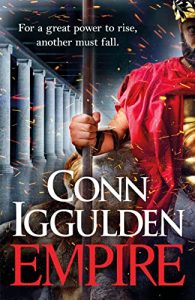
Empire by Conn Iggulden

Penguin| May 2023| 409 pages| ebook| Review Book| 5*

Pericles is more than a hero. He’s the leader of Athens. The empire’s beacon of light.

But even during times of peace, the threat of Sparta – Athens’s legendary rival – looms large on the horizon. When a sudden catastrophe brings Sparta to its knees, Pericles sees a golden opportunity to forever shift the balance of power in his city’s favour.

For sometimes, the only way to win lasting peace is to wage war. Sparta may be weak, but their power is far from extinguished. Soon a ruthless young boy steps forward to lead the Spartans back to greatness.

As the drums of battle draw closer, can Pericles rise once more?

Or will the world’s greatest empire fall under his watch?

My thoughts

Empire is the second in the Golden Age series, continuing the story told in Lion. Pericles is the main character, now the leader of Athens, appointed as a strategos (a military general). Iggulden brings the period to life as he details the continuing struggle for power between Athens and Sparta. The earthquake that struck around 464 BC destroyed most of the city of Sparta. After the Spartans rejected the Athenians’ offer of help Pericles realised that war between them was inevitable and he decided to rebuild the walls around the city to keep it safe. When the Spartans heard that the walls were rising they demanded they be taken down. The Athenians ignored this demand which, of course, led to war, with the Spartans laying siege to Athens.

Lion is an action packed and a gripping story. Iggulden tells the story, seamlessly incorporating his research into the narrative so that this doesn’t read like a textbook but as a fascinating and gripping epic tale of war and death between the states of Athens and Sparta. It’s an amazing tale of political intrigue and bloodthirsty battles. Equally as fascinating as the story is Iggulden’s Historical Note, in which he expands on the background and detail of the historical record. He also explains how he has compressed some of the years and has omitted some ‘actions, skirmishes, insults and general breakdown of good relations between the two states and their allies.’

I think it’s an entertaining and very readable book and I thoroughly enjoyed it.

My thanks to the publishers for a review copy via NetGalley.

WWW Wednesday: 5 April 2023

WWW Wednesday is run by Taking on a World of Words.

The Three Ws are:

What are you currently reading?
What did you recently finish reading?
What do you think you’ll read next?

Currently I’m reading four books:

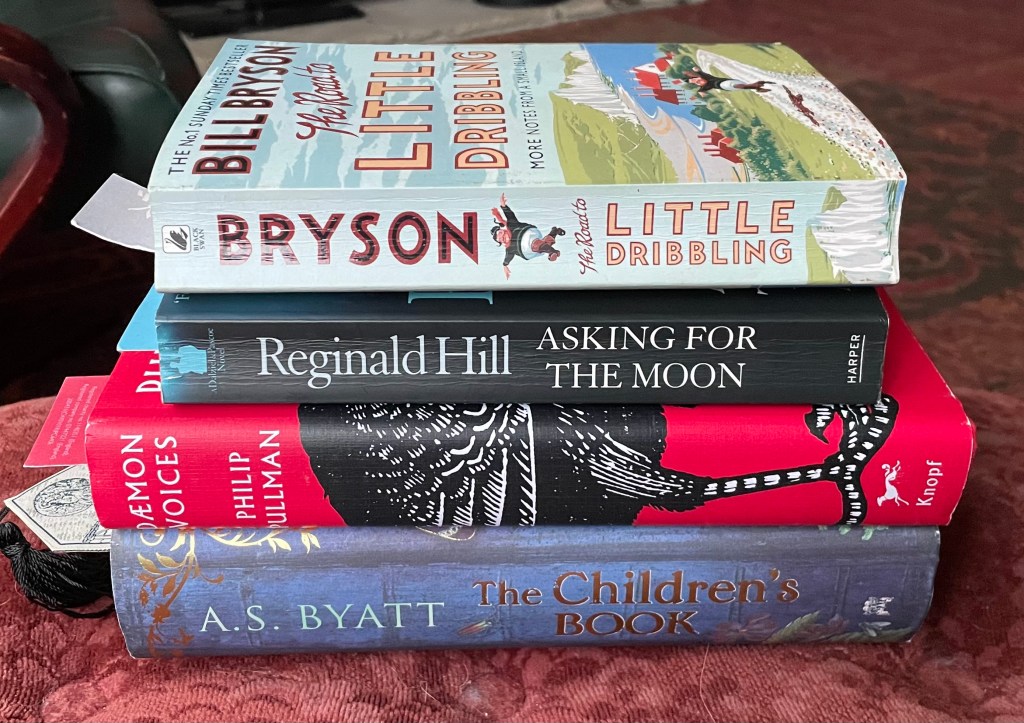
The Children’s Book by A S Byatt. I started this in February and am taking it slowly. It spans the Victorian era through the World War I years, and centres around a famous children’s book author and the passions, betrayals, and secrets that tear apart the people she loves. I’m still not very far into this book (chapter 7). I’m also reading Daemon Voices: On Stories and Storytelling by Philip Pullman, a beautiful book my son bought me for Mother’s Day. It’s a collection of his essays and I’m dipping into it choosing an essay at random. The third book I’m reading is Asking for the Moon by Reginald Hill, four novellas about Dalziel and Pascoe. I’ve read the first one, The Last National Service Man which is about their first meeting. And the final book is The Road to Little Dribbling by Bill Bryson, a follow-up to his Notes from a Small Island, seeing how Britain had changed twenty years later. I’m nearing the end of this book

The last book I read (on Kindle) is Snow Country by Sebastian Faulks, set mainly in Austria from the years before the First World War to 1933. I found parts of it very slow with too much about Freud. Anton and Lena are the main characters and I much preferred Lena’s story. I may write about it in more detail later on.

Next I’ll be readingTortilla Flat by John Steinbeck, my Spin book for the Classics Club.

Although this is a weekly meme I’m only taking part occasionally.

Top Ten Tuesday: Books for People Who Like Historical Crime Fiction

Top Ten Tuesday is a weekly meme created by The Broke and the Bookish and now hosted by Jana at That Artsy Reader Girl. For the rules see her blog.

This week’s topic is Books for People Who Liked Author X but I’m changing it a bit to Books for People Who Like Historical Crime Fiction/thrillers. I haven’t included any of the authors I listed in an earlier TTT post on historical fiction.

  1. Death Comes as the End by Agatha Christie, set in 2000 BC Egypt, a novel of anger, jealousy, betrayal and murder in 2000 BC. A young woman, Nofret, is found dead, apparently having fallen from a cliff. More deaths follow.
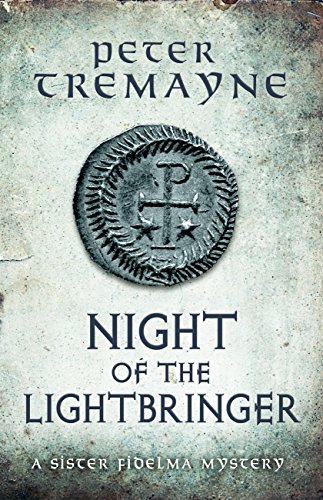
  2. Night of the Lightbringer by Peter Tremayne – one of the Sister Fidelma mystery series, a medieval murder mystery, set in Ireland in AD 671 on the eve of the pagan feast of Samhain. featuring a Celtic nun who is also an advocate of the ancient Irish law system. (TBR)
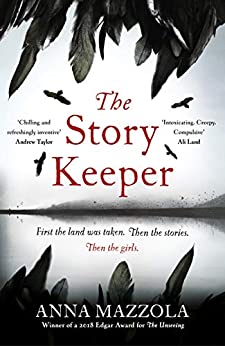
  3. The Story Keeper, set on the Isle of Skye in 1857 where Audrey Hart has been employed to collect the folklore and fairy tales of the local community. One by one young girls go missing from their homes and the locals believe they have been taken by the spirits of the unforgiven dead.
  4. An Expert in Murder by Nicola Upson, set in the theatrical world of  the 1930s, one of her novels featuring novelist Josephine Tey (Elizabeth Mackintosh 1896-1952).
  5. The Franchise Affair by Josephine Tey, set in a post Second World War England but based on a real case from the 18th century of a girl who went missing and later claimed she had been kidnapped.
  6. Murder on the Eiffel Tower by Claude Izner, the Eiffel Tower opened in 1889. Eugénie Patinot and her nephew and niece sign the visitors’ book, and then Eugénie collapses and dies, apparently from a bee-sting. Victor Legris, a bookseller is determined to find out what had really happened. 
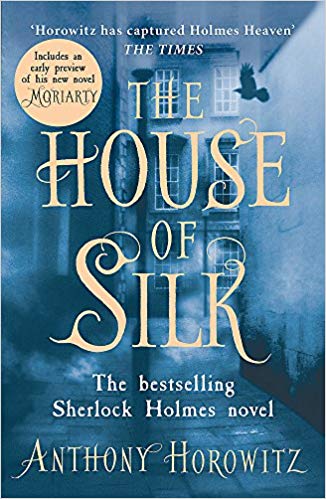
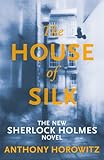
  7. The House of Silk by Anthony Horowitz, set in the late 19th century, capturing the spirit and tone of Conan Doyle’s original stories while devising a new mystery for modern readers. Horowitz’s plot is cunning, full of twists and turns, with allusions to Conan Doyle’s stories.
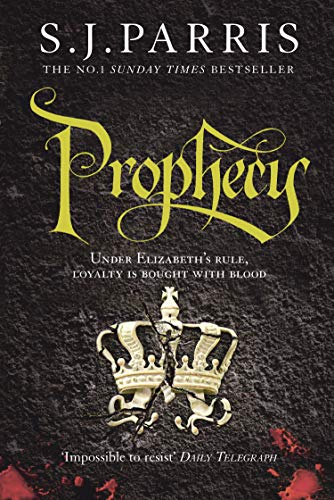
  8. Prophecy by S J Parris – one of the Giordano Bruno series of historical thrillers, set in Elizabethan England. Giordano Bruno was a 16th century heretic philosopher and spy. This book begins in the autumn of 1583, when Elizabeth’s throne is in peril, threatened by Mary Stuart’s supporters scheme to usurp the rightful monarch.
  9. The Seven Deaths of Evelyn Hardcastle by Stuart Turton – set in a 1920s English country house, where Evelyn Hardcastle, the young and beautiful daughter of the house, is killed. But Evelyn will not die just once as the day will repeat itself, over and over again. Every time ending with the fateful pistol shot. (a TBR)
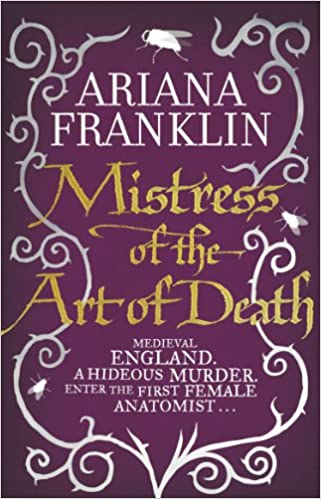
  10. The Mistress of the Art of Death by Ariana Franklin, a murder/mystery book set in Cambridge in 1170 during the reign of Henry II. A child has been murdered and others have disappeared (also found murdered). The Jews are suspected and have been held in the castle for their own safety. 

Book Beginnings & The Friday 56: The Collaborators by Reginald Hill

Every Friday Book Beginnings on Friday is hosted by Gillion at Rose City Reader where you can share the first sentence (or so) of the book you are reading. You can also share from a book you want to highlight just because it caught your fancy.

I enjoy Hill’s Dalziel and Pascoe crime fiction, but he also wrote thrillers, historical novels, science fiction and, later, a smaller humorous series set in Luton, featuring the black private detective Joe Sixsmith.

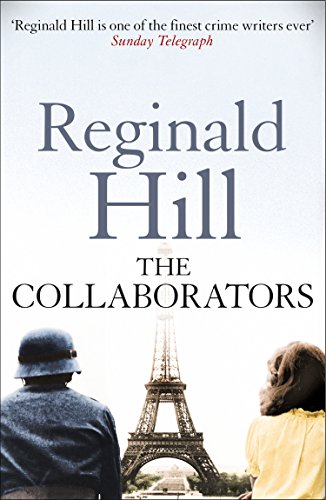
This week the book I’m highlighting is The Collaborators by Reginald Hill, a standalone novel of wartime passion, loyalty – and betrayal. It is set in Paris from 1940 to 1945, when Janine Simonian stood accused of passing secret information to the Nazis that led to the arrest and torture of several members of the French Resistance.

My Book Beginning:

March 1945

She dreamt of the children.

They were picnicking on the edge of a corn field. Pauli hiding from his sister, Céci giggling with delight as she crawled through the forest of green stalks. Now too she was out of sight, but her happy laughter and her brother’s encouraging cries drifted back to their mother, dozing in the warm sunshine.

Also every Friday there is The Friday 56, hosted by Freda at Freda’s Voice, where you grab a book and turn to page 56 (or 56% of an eBook), find one or more interesting sentences (no spoilers), and post them.

Page 56:

‘It’s a worrying time for her what with the children being ill and no news of Jean-Paul’, said her husband.

‘If you ask me, she’ll be better off if she never gets any news of him,’ said the woman.

Publisher’s Weekly

First published in England in 1987, this novel departs from Hill’s usual mystery oeuvre ( Ruling Passion ). With thoughtfulness and insight that call to mind le Carre, Hill reconsiders an aspect of the German occupation of France during WW II that many Frenchmen would prefer to forget–the collaboration.

Set primarily in Paris, the novel follows the lives of Jean-Paul and Janine Simonian, he a Jew, she a boulanger’s daughter married against her parents’ wishes. Upon his release from a military hospital after France’s humiliating defeat in 1940, Jean-Paul joins the Resistance. For her part, Janine worries–about her two children and the husband who has become emotionally so dark and distant. Gunther Mai, an otherwise kindly German officer in the Abwehr, befriends Janine and uses her as a source of information on her husband’s activities–a relationship that works well until he falls in love with her.

What Hill portrays so successfully is the conflict between social and personal responsibility. Through a wonderful range of secondary characters, he skillfully characterizes the collaborator in his various guises–from the self-serving black marketeer to the loving mother and wife. Best of all, Hill captures the collapse of morality in occupied France.

What do you think, does it appeal to you? What are you currently reading?

Book Notes: Trying to Catch Up

It’s been too long since I read these books to write detailed reviews, so here are a few notes them.

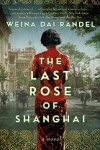
The Last Rose of Shanghai by Weina Dai Randel 3* – historical fiction set in Japanese-occupied Shanghai, this is a World War Two romance, the story of Aiyi Shao, a young heiress and the owner of a glamorous Shanghai nightclub and Ernest Reismann, a penniless Jewish refugee who had fled from Germany. I loved the beginning of this book but the rest of the book was not so good – too much ‘telling’ and I’d have liked less focus on the romance, which to me was barely believable So, 5* for the first 40%, 2* for the rest, so 3* overall. But plenty of other readers love this book.

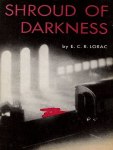
Shroud of Darkness by E C R Lorac 4* – a Golden Age crime fiction beginning with five passengers on a train from Cornwall to London. When it arrives at Paddington Station in thick fog, one of the passengers is brutally attacked and left for dead. Chief Inspector MacDonald first has to identify the victim, whose pockets had been rifled, and then discover why he was attacked and who did it. Another book I really enjoyed, trying to work out what had happened and failed – I was completely baffled, as much in the dark as the fog-bound passengers.

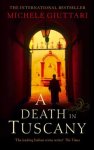
A Death in Tuscany by Michele Giuttari 4* – crime fiction, set in Florence and the surrounding area. It’s a detailed police procedural, the second in a series of seven detective novels featuring Chief Superintendent Michele Ferrara. It’s written with authenticity, as Michele Guittari is a former Florence police chief 1995-2003), where he was responsible for re-opening the ‘Monster of Florence’ case and jailing several key Mafia figures. It’s not a quick read, because of the detail but I was fascinated first of all by the Italian police structure and the division of responsibilities and jurisdiction, which seemed to hamper Ferrara rather than help him. But despite that it is a page turner. He’s investigating the death of a young girl found dead by the edge of a wood on the road above Scandicci. There are drugs involved, the Mafia, and also the disappearance of his best friend, accused of murder for him to investigate. See also this post about the beginning of the book and an extract from page 56.