Crime Fiction Alphabet – X is for A Loyal Character Dancer by Qiu Xiaolong

Qiu Xiaolong was born in Shanghai and was a member of the Chinese Writers’ Association, publishing poetry, translations and criticism in China. Since 1989 he has lived in the United States, his work being published in many literary magazines and anthologies. His first crime novel, Death of Red Heroine, won the Anthony Award for Best First Crime Novel. A Loyal Character Dancer is his second book featuring Chief Inspector Chen Cao, of the Shanghai Police Bureau.

Like Qiu Xiaolong, Chen is a member of the Chinese Writers’ association and he writes poetry (reminding me of PD James’s Adam Dalgleish). It was not his desire to become a policeman. He is also a gourmet and the book contains many tantalising descriptions of Chinese food – for example:
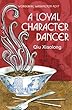
He ordered a South Sea bird’s nest soup with tree ears, oysters fried in spiced egg batter, a duck stuffed with a mixture of sticky rice, dates, and lotus seed, a fish steamed live with fresh ginger, green onions, and dried pepper, … (page 120-121).

In this book he has two crimes to deal with – the murder of an unknown man found in Bund Park, a park celebrated for “its promenade of multi-colored flagstones, a long curved walkway raised above the shimmering expans of water which joined the Huangpu and Suzhou rivers.” The man was in his forties, dressed in silk pajamas and he had been hacked more than a dozen times with a sharp, heavy weapon.

His second case is to investigate the disappearance of Wen Liping, the wife of Feng Dexiang, a crucial witness in an illegal immigrant case in Washington. The American and Chinese governments have agreed to a joint investigation to find Wen and Chen is assigned to work with Inspector Catherine Rohn, of the US Marshall’s Office.

I loved this book. There is a lot in it about life in China, the impact of the Cultural Revolution and the country itself. There is a very strong sense of place and this had me reaching for my sister’s books on China (she visited a few years ago before she died) to see photos of the locations and read more about life in China.

Having to explain things to Catherine made it easy for Qiu to pack in lots of information that otherwise could have seemed intrusive. For example as well as quoting poetry he also quotes from Confucius and explains literary references. Wen was a beautiful young woman, forced to leave her home to be “re-educated” when she was only sixteen during the Cultural Revolution. She had become a Red Guard cadre and a member of the song-and-dance ensemble, dancing the loyal character dance (hence the title of the book). Chen explains to Catherine that although dancing was not then allowed in China, this was particular form of dancing was allowed :

…  dancing with a paper-cut out of the Chinese character of Loyalty or with a red paper heart bearing the character, while making every imaginable gesture of loyalty to Chairman Mao. (page 84)

Chen is an enigmatic man, skilled at working the system. As a chief inspector he is also responsible for preserving Shanghai’s image. Keeping and saving face is very important. His boss, Li, the Party Secretary is more concerned with making sure that Catherine has a satisfactory stay in China, seeing only the good things than with carrying out the investigation into Wen’s disappearance. He does not like it when Chen and Catherine discuss the living conditions of the poor, China’s birth control policy and the question of illegal immigrants to the US. However, Chen and Catherine make a good partnership and with the help of Chen’s assistant, Dectective Yu get to the bottom of the mysteries of the murder and Wen’s disappearance, despite the activity of rival triad gangs.

Teaser Tuesdays – Crime on the Move

Teaser Tuesdays is a weekly bookish meme, hosted by MizB of Should Be Reading.

Share a couple or more sentences from the book you’re currently reading. You also need to share the title of the book that you’re getting your ‘teaser’ from €¦ that way people can have some great book recommendations if they like the teaser you’ve given!

My teaser this week is from Crime on the Move: the Official Anthology of the Crime Writers’ Association of 2005, a collection of short stories edited by Martin Edwards. The last one in the book is Seeing Off George by David Williams.

Disposing of the body was so often the undoing of conspirators like Tristan and Laura, and she knew it. But not only had she lighted upon the perfect solution to their problem, she had also devised a credible story to account for George’s disappearance which would purportedly take place more than a thousand miles away from Farringly. (page 318)

I’ve now finished reading this book, which is an excellent selection of crime stories from a number of authors who were new to me, as well as some very well known ones.

Crime Fiction Alphabet W is for Why Didn’t They Ask Evans?

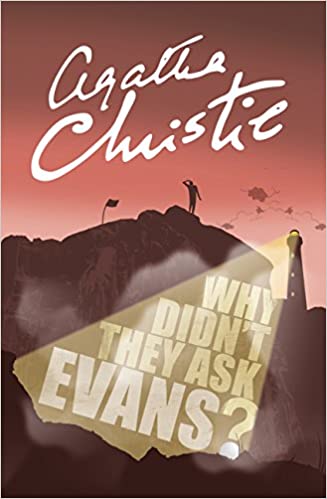
I’m returning to Agatha Christie to illustrate the letter W in Kerrie’s Crime Fiction Alphabet series, with Why Didn’t They Ask Evans? The copy I read is one of the Collected Works series with the original illustrations by Patrick Couratin and Sylvia Dausset. Why Didn’t They Ask Evans? was first published in 1934.

Why didn't they ask evans

The book begins with Bobby Jones playing golf with Dr Thomas on a golf course on a misty day by the sea. They find a dying man, who had fallen off a cliff. He has no identification on him, just a photo of a young woman that Bobby finds in his pocket. At the inquest Mrs Cayman said it was a photograph of her and that she was the dead man’s sister.

Bobby tells Mr and Mrs Cayman her brother’s last words, which apparently are meaningless and of no importance.Then Bobby is drugged with enough morphia to kill him (he survives) and he realises that the photo in the dead man’s pocket was not Mrs Cayman.  Frankie, (aka Lady Frances Derwent), his aristocratic friend decides that the dead man must have been pushed over the cliff and the killer is determined to kill Bobby too. She and Bobby then set out to discover the dead man’s true identity.

Neither Poirot, nor Miss Marple feature in this book. Bobby and Frankie solve the mystery with a little help from the police in the form of Inspector Williams. The novel as a whole is light-hearted with staged accidents, as Bobby and Frankie, a self-confident and rather bossy young woman relish the adventure of it all, despite being bound and gagged by the villain. There are disguises and subterfuges throughout, drug addicts, an American heiress, a sinister doctor with a questionable sanitorium, suicides and a charming  “ne’er-do-weel”. Bobby says:

You can’t mix up too many different sorts of crimes. (page 59)

But Agatha Christie manages it admirably.

Crime Fiction Alphabet: V is for A Fatal Inversion by Barbara Vine

Kerrie’s Crime Fiction Alphabet series moves towards the end of the alphabet and has now reached the letter ‘V’.

A Fatal Inversion was first published in 1987 and was reissued in 2009 by Penguin Books.

Although about a group of not very likeable characters I was drawn into the world of this mystery. In 1976 Adam, a university student of 19 inherited Wyvis Hall from his great-uncle. He stayed there for a while that hot summer with a group of young people. Something tragic and terrible happened which led to them leaving the house and eventually Adam sold it. Then ten years later the current owners, whilst burying their pet dog in the animal cemetery in the woods, find the bones of a young woman and a baby. The police are seeking previous owners of the Hall to identify the bodies.

It’s a complicated plot told in flashbacks, seen from mainly three of the characters’ viewpoints – Adam, his friend, Rufus, a medical student, and Shiva, a British Indian. Shiva and his friend Vivian had thought they were joining a commune whereas with no money Adam was just keen to get others to contribute. They are reduced to selling his uncle’s silver for food and drugs and after Zosie’s arrival to stealing to support themselves. I thought the characterisation was good and the setting excellent – a grand old house, out in the Suffolk countryside surrounded by dark, dense and menacing pine woods, ‘the kind of place you saw in story-book illustrations or even in your dreams and out of which things were liable to come creeping.’

I wasn’t sure at first who the victims were, but the killer soon becomes obvious. I thought it a clever book, with clues dropped casually, so that I had to read it carefully. The plot covers a number of issues – family relationships, friendship, loyalty, race and class discrimination, the consequences of our actions and above all the nature of evil and guilt.  The ending is most satisfying, such a neat inversion, I thought.

Sunday Salon – Reading And All That …

Today is Mother’s Day and I’ll be spending some time reading my present from my son – Amos, Amas, Amat … And All That by Harry Mount. It’s been on my wishlist for some time now! And a nice change it will make from all the crime fiction I’ve been reading recently. From the back cover:

 In this delightful guided tour of Latin, which features everything from a Monty Python grammar lesson to David Beckham’s tattoos and all the best snippets of prose and poetry from 2000 years of literary history, Harry Mount wipes the dust off those boring primers and breathes life back into the greatest language of them all …

Not that the crime fiction I’ve been reading is boring – far from it. My reading has been a real treat and is way ahead of my reviews of these books:

I finished reading A Fatal Inversion by Barbara Vine at the end of last week and was so pleased after not liking her book The Birthday Present to find that this book about the discovery of the bones of a young woman and a baby in an animal burial ground was very different. There is a real air of mystery surrounding the several unlikeable characters – anyone of whom could be the guilty party.

 The Careful Use of Compliments by Alexander McCall Smith was a complete surprise to me as I had no idea when I borrowed it from the library just how much I was going to enjoy it. From a somewhat slow start I soon got used to the rhythm of his writing and was greatly intrigued by the character of Isabel Dalhousie.

Why Didn’t They Ask Evans? by Agatha Christie is a light-hearted mystery featuring Bobby Jones and Frankie (Lady FrancesDerwent) as they investigate a murder. This is a highly fantastical tale which I read at break-neck speed and thoroughly enjoyed.

Dead in the Morning by Margaret Yorke is the first book in her Patrick Grant series, first published in 1970. Set in an English village this is about an English family upset by the death of their housekeeper. All sorts of family secrets are revealed with plenty of red herrings along the way but the ending is predictable.

I’ll be writing in more detail about each one soon.

Next week my choice of reading is between these books, which I have on the go:

  • The Girl With the Dragon Tattoo by Stieg Larsson which I started a few weeks ago and put to one side.
  • Being Shelley by Ann Wroe – ongoing reading
  • Stratton’s War by Lorna Wilson. I’m not sure if I’ll finish this as I feel little inclination to pick it up at the moment.

I’m tempted to start a new one. Maybe another Agatha Christie or Ian Rankin, or The Little Stranger by Sarah Waters, which I’ve read is very good, or Maggie’s Tree by Julie Walters – her first novel, described as “dark and very funny”, which I found at the library.

A New Rebus Story

A new Rebus short story by Ian Rankin, The Very Last Drop was published in The Scotsman today. I couldn’t find it online but it is in a four page pull-out in the paper, complete with illustrations and a photo of Ian Rankin reading his story at the Royal Blind School fundraising event that took place last Thursday at Edinburgh’s Caledonian Brewery.

Rebus, now retired, is on a tour around The Caledonian Brewery as a retirement present from Siobhan Clarke. When the tour guide Albert Simms tells the group about the ghost of Johnny Watt, who had died sixty years ago “almost to the day” after banging his head when he fell in one of the vats overcome by fumes, Rebus’s interest is aroused.  As Siobhan says

Soon as you get a whiff of a case – mine or anyone else’s -you’ll want to have a go yourself. 

He can’t resist looking back at the case, using the company’s archives and back copies of The Scotsman. What he finds is more than a ghost story.