Teaser Tuesday – Crime on the Move

Teaser Tuesdays is a weekly bookish meme, hosted by MizB of Should Be Reading.

Share a couple or more sentences from the book you’re currently reading. You also need to share the title of the book that you’re getting your ‘teaser’ from €¦ that way people can have some great book recommendations if they like the teaser you’ve given!

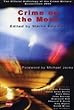
This week I’ve been reading short stories from Crime on the Move: the Official Anthology of the Crime Writers Association edited by Martin Edwards. The contributors include  Ann Cleeves, Reginald Hill, Michael Gilbert, Keith Miles Martin Edwards and Kate Ellis who wrote Top Deck, the story  I’m quoting from today.

The theme of the collection of the stories in this book is illustrated in Top Deck through Keith’s journey home from work in Liverpool by bus in 1965. What he sees has a profound effect on the rest of his life.

When the bus stopped briefly in the Ullet Road to let somebody off Keith found himself staring straight across into a lighted upstairs window. The curtains were wide open and two people were silhouetted behind the glass; a man and a woman who, for a split second, seemed faintly familiar. The man seemed to have both his hands raised up to the woman’s throat and they were moving slowly to and fro as if the woman was trying to ward him off, trying to save her life. (page 92)

The stories in this collection are varied, succinct and satisfying, ranging from the macabre and eerie to the comic, about journeys on the sea, in the air and on land. This is a book to dip into and enjoy.

Crime Fiction Alphabet: T is for The Franchise Affair by Josephine Tey

I’ve read two books by Josephine Tey – The Daughter of Time and now The Franchise Affair. Josephine Tey was a pseudonym for Elizabeth Mackintosh(1896 – 1952). She was a Scottish author who wrote mainly mystery novels.

I read The Daughter of Time a few years ago and thought it was an excellent book, a mix of historical research and detective work. Inspector Alan Grant is in hospital and to keep his mind occupied he decides to discover whether Richard III really did murder his nephews – the Princes in the Tower.

Franchise Affair001When I saw this hardback secondhand copy of The Franchise Affair on sale last year (on a hospital book sale trolley, for £1) I had to buy it and have been going to read it ever since. So as Kerrie’s Crime Fiction Alphabet series has reached the letter T I thought now was the right time to read it.

It is also an excellent book, one I devoured and enjoyed immensely. It was first published in 1948 and it’s set in a post Second World War England reflecting the social attitudes of its time. It’s actually based on a real case from the 18th century of a girl who went missing and later claimed she had been kidnapped.

The Franchise is a “flat white house“, isolated on a road out of the town of Milford, surrounded by a “high solid wall of brick, with a large double gate, of wall height” – “the iron lace of the original gates had been lined, in some Victorian desire for privacy, by flat sheets of iron, and the wall was too high for anything inside to be visible”, except for a distant view of roof and chimneys“. It’s where Marion Sharpe and her mother live.

DI Grant is just a minor character in this story, the main investigator is local solicitor, Robert Blair, of Blair, Hayward and Bennet. He doesn’t normally deal with criminal cases but Marion appeals to him for help because she and her mother are accused of kidnapping Betty Kane, a girl of fifteen, of holding her prisoner for a month in their attic, and of beating her unless she agreed to work for them.  She’d escaped one night and arrived back home, covered in bruises.

Even though Betty Kane is able to describe them,  their house and its contents accurately the Sharpes completely deny her story. Reluctantly Robert agrees to give legal advice and is then drawn into investigating what had happened to Betty during the time she claimed she had been held captive, becoming convinced of their innocence. His life is completely changed. The problem is that it is possible to believe Betty’s story and also to find it a complete invention from beginning to end.

Betty is described as an innocent with baby blue eyes, intelligent and truthful – how could she have invented such a story? Marion and Mrs Sharpe on the other hand are a bit odd, a bit eccentric, keeping themselves to themselves and distrusted by the locals. Mrs Sharpe is intimidating – Robert thinks  she is “capable of beating seven different people between breakfast and lunch any day of the week“, but he rather likes Marion’s “habit of mockery“. In fact he is rather smitten by Marion.

Then the press get hold of the story and public opinion is outraged at the tale of Betty’s ordeal. The case goes to trial as the Sharpes are vilified and their house attacked. The letters to the newspaper shock Robert with their contents:

… he marvelled all over again at the venom that these unknown women had aroused in the writers’ minds. Rage and hatred spilled over on to the paper; malice ran unchecked through the largely illiterate sentences. It was an amazing exhibition. And one of the oddities of it was that the dearest wish of so many of these indignant protestors against violence was to flog the said women within an inch of their lives. (page 103)

But worse is to come as the trial comes to an end and hatred results in actions. I found it an irresistable book. I just had to know what happens, all the time convinced of the Sharpes’ innocence but somehow wondering if they really were guilty. I liked Tey’s style of writing, straight forward, with touches of irony. Her characters are believable, well developed and unforgettable. The locations are well described, although as I used to live near some of them I may be biased there.

Now I want to read more of Josephine Tey’s books. She didn’t write many, but I hope to read at least some of these (list copied from Wikipedia):

  • The Man in the Queue also known as Killer in the Crowd (1929)
  •  A Shilling for Candles (1936) (the basis of Hitchcock’s 1937 movie Young and Innocent)
  • Miss Pym Disposes (1946)
  • Brat Farrar [or Come and Kill Me] (1949)
  • To Love and Be Wise (1950)
  • The Singing Sands (1952)
  • Kif: An Unvarnished History (1929) (writing as Gordon Daviot)
  • The Expensive Halo (1931)
  • The Privateer (1952)
  • Claverhouse (1937) (writing as Gordon Daviot) (a life of the 17th-century cavalry leader John Graham, 1st Viscount of Dundee)

Crime Fiction Alphabet: S is for C J Sansom

For this week’s letter, S my contribution to Kerrie’s Crime Fiction Alphabet series is  Sansom and Shardlake, more specifically C J Sansom’s Matthew Shardlake  historical crime fiction series.

Chris J Sansom trained and worked as a solicitor before he wrote the Tudor murder mystery series featuring lawyer Matthew Shardlake. There are currently four books:

Dissolution – set in 1537 – Shardlake investigates the death of a Commissioner during the dissolution of the monasteries.

Dark Fire – set in 1540 – Shardlake is assigned to find the formula for Greek Fire, whilst defending a young girl accused of brutal murder.

Sovereign – set in 1541 – Shardlake investigates a number of murders whilst on a secret assignment  from Archbishop Cranmer.

Revelation – set in 1543 – Shardlake investigates the murder of his old friend Roger Elliard,and also works on the case of a teenage boy, imprisoned in the Bedlam hospital for the insane.

A fifth book – Heartstone (set in 1545) will be published later this year. Dark Fire won the 2005 CWA Ellis Peters Historical Dagger and Sansom was “Very Highly Commended” in the 2007 CWA Dagger in the Library award, for the Shardlake series.

Matthew Shardlake, the main character, is a hunchback, an outsider, scorned by society, but prized by Thomas Cromwell for his intelligence and persistence.  As the story progresses through the books he begins to question both his religous and political beliefs. He is a fascinating character.

The books all have a rich historical background. The 16th century was a time of great change – changes in thought, belief and social control. The books have a wonderful sense of time and place – Tudor England from the gutter to the court. The historical characters include Thomas Cromwell, the King’s Chief Minister, Thomas Cranmer, the Archbishop of Canterbury, and  Henry VIII. They had me turning the pages to see what happens next and find out who committed the murders, and there was enough commentary on the political, religious and social scene for me to grasp what it was like living in Tudor England. They are written in a  fluent, readable style with a good balance between dialogue and description and the characters are well-defined and believable. I loved all of them.

I read the first three books before I began this blog, so I’ve only written about Revelation – see here. There is a BBC4 Bookclub broadcast interview with Sansom talking about his first book, Dissolution.

I’ve seen reports that Kenneth Branagh was in discussions about playing Shardlake for the BBC, but I don’t know how true this is and after seeing him as Wallender I can’t imagine him playing Matthew Shardlake. Does anyone have any more information?

Sansom  has also written Winter in Madrid, an action packed thrilling war/spy story about the Spanish Civil War. It is tense and gripping  but it’s also a moving love story and historical drama. I wrote more about it here.

Not Safe After Dark by Peter Robinson

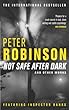
Not Safe After Dark and Other Works is a collection of twenty short stories by Peter Robinson. There are three Inspector Banks stories, one of which Going Back is a novella that had not been published before. The other stories are varied in length, technique and style.

 Of them all I prefer the Inspector Banks stories, in particular Going Back. There isn’t much mystery in this story, but a lot about Banks himself, his youth, relationships with his parents and brother Roy and about his old girlfriend, Kay. It’s his parents’ golden wedding anniversary and Banks goes home for the weekend for the party. He sleeps in his old bedroom with its old glass-fronted bookscase containing a cross-section of his early years’ reading, finds old records he’d forgotten he had, his old school reports, photos and his books of adolescent poetry. His mother treats him like she did as a child, prefering his younger brother Roy and his visit is spoilt by the presence of a new neighbour, the ever-helpful and charming Geoff Salisbury. He is suspicious of Geoff from the start – and with good reason.

Some are historical –In Flanders Field, Missing in Action and The Two Ladies of Rose Cottage. The latterwas inspired by Robinson’s visit to Brockhampton in Dorset where Thomas Hardy was born and also by his interest in Hardy. In 1939 the narrator of the story as a young man first met Miss Eunice and Miss Teresa, who had known Thomas Hardy – was she really the Tess on which he based Tess of the D’Urbervilles? She denied it but then it turned out that Miss Teresa was charged with murder, although  nothing was proved. Years later Miss Eunice had a shocking tale to tell.  This reminded me I still haven’t finished reading Claire Tomalin’s biography of Hardy – The Time-Torn Man.

Of  the other stories I also liked Some Land in Florida, in which Santa ends up in the pool with his electric piano thrown in after him – still plugged in. A private eye, there on holiday isn’t convinced it is an accident. April in Paris is a poignantly sad love story about happened when love turned to hatred.

Some of the stories were written when Robinson was asked for stories on a specific topic – Gone the the Dawgs, about American Football and The Duke’s Wife, a modern telling of Shakespeare’s Measure for Measure.

I enjoyed some of these stories more than others – mainly the longer ones. I do prefer novels where characters and plots are more developed than is possible in a short story. I wrote more about this book here.

The Hollow by Agatha Christie: Book Review

The Hollow by Agatha Christie is a country house mystery in which Hercule Poirot comes across what he decribes as “A set scene. A stage scene”; a murder scene specifically staged, he thinks at first, to deceive him.

Gerda and her husband John Christow, a Harley Street doctor were visiting Sir Henry and Lucy, Lady Angkatell at their house, The Hollow. John is an agressive dominant personality. Also down for the weekend were Lucy’s cousins Midge, who works in a London dress shop, Henrietta, a sculptress, Edward, a rather pale character and David, a student.

Lucy is sure it will be a difficult weekend – Gerda always appears vacant and lost, completely dominated by John, who is having an affair with Henrietta. Edward is in love with Henrietta and Midge is in turn in love with Edward. David is too intellectual  and Lucy herself is vague, charming and completely eccentric. As a distraction she has invited the “Crime man“, Poirot, whose weekend cottage is next door, to lunch on the Sunday. She describes Poirot’s house disparagingly as

… one of those funny new cottages – you know, beams that bump your head and a lot of new plumbing and quite the wrong kind of garden. London people like that sort of thing. (page 13)

As Poirot arrives and is taken through the garden to the swimming pool all the characters are there, with Gerda, revolver in hand, standing over the dying body of her husband, as his blood drips gently over the edge of the concrete into the pool. Poirot hears his final word “Henrietta”.

I found Lucy’s reaction amusing. It’s typical of her vague, almost detached nature. She says:

Of course, say what you like, a murder is an awkward thing – it upsets the servants and puts the general routine out – we were having ducks for lunch – fortunately they are quite nice eaten cold. (page 102)

Later she observes:

There would be something very gross, just after the death of a friend, in eating one’s favourite pudding. But caramel custard is so easy – slippery if you know what I mean – and then one leaves a little on one’s plate. (page 113)

This is now one of my favourite Agatha Christie books. She herself described it in her autobiography as “in some ways rather more of a novel than a detective story.” I agree, the characters are well drawn and the setting of both The Hollow and Ainswick, the larger country house Edward has inherited from his uncle, Lucy’s father are described with nostalgia. Agatha Christie also revealed that she thought she had ruined the book by the introduction of Poirot:

I had got used to having Poirot in my books and so naturally he had to come into this one, but he was all wrong there. He did his stuff all right, but how much better, I kept thinking, would the book have been without him. So when I came to sketch out the play, out went Poirot.(page 489-490)

Poirot has a small role, the investigation into John’s death is headed by Inspector Grange and it is a comment he makes that leads Poirot to discover the culprit. I’m used to having Poirot in her books too, so I didn’t find too much wrong with him being there.

It seems that everyone could have committed the murder and I swung from one to the other as I read, no doubt as Agatha Christie intended, but I did work it out before Poirot unveiled the killer.  As Poirot  says:

That is why every clue looked promising and then petered out and ended in nothing. (page 249)

Crime Fiction Alphabet: R is for Ian Rankin

letter_RThis week the letter in the Crime Fiction Alphabet Community Meme is R, so of course it just had to be Ian Rankin, who is fast becoming my favourite crime writer.

I’ve previously written a bit about Ian Rankin after I went to a talk he gave in January – see here.

R is also for Rebus. There are 17 Inspector Rebus books (a a book of short stories) and I’m reading them in sequence starting with the first one Knots and Crosses. Currently I’m reading the tenth book, Dead Souls. As well as the Rebus books Rankin has written a few others, the latest being The Complaints, featuring a new cop Inspector Malcom Fox. The complete list of Rebus books is on Ian Rankin’s website and on Wikipedia. Both places give more information about the man and his books. Just as a taster the author details on the latest book I read  The Hanging Garden reveal that after graduating from the University of Edinburgh he  had been employed as

a grape picker, swine-herd, taxman, alcohol researcher, hi-fi journalist and punk musician.

The Hanging Garden is full of characters, sub-plots and plenty of crime from the local gang leader Tommy Telford, vying for supremacy over crime boss, Big Ger Cafferty, currently imprisoned in Barlinnie but still in control of his empire through his second in command, the Weasel, to Chechian and Yakuza villains. Then there is Mr Pink-Eyes, a Newcastle gangleader to contend with. It’s a mix of prostitutes, drug running, money laundering and attacks on Cafferty’s territory and associates, with retaliations on Telford’s strongholds.

Rebus is struggling to keep off the alcohol, aided by his friend Jack Morton, when his daughter, Sammy is the victim of a hit and run. Who is trying to warn off Rebus and is he in the pay of Big Ger?  At the same time he is investigating a suspected Nazi War Criminal and helping a Bosnian prostitute, Candice who looks so like his own daughter and who pleads with him for safety. Added to all this his ex-wife Rhona and his lover Patience meet over Sammy’s hospital bed.

It’s grim and tough and as Rebus involves Jack in an undercover operation it all goes wrong – dramatic and tense right to the end.