Top 5:Books:Book Covers

Top 5 Tuesday was created by Shanah at Bionic Book Worm, and it is now being hosted by Meeghan at Meeghan Reads. For details of all of the latest prompts for October to December, see Meeghan’s post here.

Today the topic is Book Covers: What are some of your favourite covers that you have seen this year? Maybe these were reprints, redesigns or alternate covers that came out this year, or maybe they are brand new books!!

These are books I’ve read this year – one new and the rest books that were on my TBR shelves. I love them for their combination of colours, and the scenery.
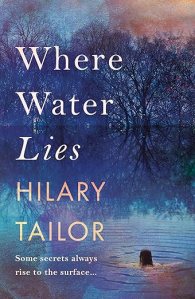
Where Water Lies by Hilary Tailor – her second novel published in June this year.

Every morning is the same for Eliza: she swims in Hampstead Ponds, diving into her memories, reliving the heady days of her teenage friendship with Eric and Maggie. The obsession, the adoration, and the sense of belonging she always craved was perfect, until everything was destroyed in a single afternoon. With guilt never far from the surface, she still asks herself: what really happened that day?

Then one morning, on a street corner, the past collides with the present. Eliza is now a respected member of the community and the carefully constructed life she has built comes crashing down. Should she track down the one person who may be able to forgive her? Or should she keep the past where it belongs?

Soon Eliza begins to wonder: will learning the truth set her free – or will it only drag her down deeper?

The Children’s Book by A S Byatt

From the renowned author of Possession, The Children’s Book is the story of the close of what has been called the Edwardian summer: the deceptively languid, blissful period that ended with the cataclysmic destruction of World War I. In this compelling novel, A.S. Byatt summons up a whole era, revealing that beneath its golden surface lay tensions that would explode into war, revolution and unbelievable change — for the generation that came of age before 1914 and, most of all, for their children.

Famous author Olive Wellwood writes a special private book, bound in different colours, for each of her children. In their rambling house near Romney Marsh they play in a story-book world – but their lives, and those of their rich cousins and their friends, the son and daughter of a curator at the new Victoria and Albert Museum, are already inscribed with mystery. Each family carries its own secrets.

They grow up in the golden summers of Edwardian times, but as the sons rebel against their parents and the girls dream of independent futures, they are unaware that in the darkness ahead they will be betrayed unintentionally by the adults who love them.
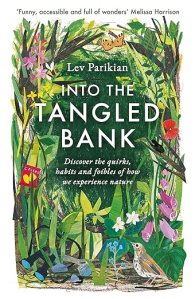
Into the Tangled BanK: Discover the Quirks, Habits and Foibles of How We Experience Nature by Lev Parikian

This is non fiction about nature. It’s easy reading, Parikian writes with humour, in a chatty style, but also richly descriptive. I loved it, it is compulsive reading. He is a storyteller, so there are lots of anecdotes and stories, plus his thoughts on nature and how we view it. Amongst many other topics he ponders about the ethics of zoos – something that puzzles me too – and wonders if the definition of a nature lover is becoming that of one who loves nature programmes. There’s a lot packed into this book.

Great Meadow by Dirk Bogarde, first published in 1992, Great Meadow is volume five of Bogarde’s best-selling memoirs.

A recollection of his childhood, from 1927 to 1934 when he was a 19 year old, living in a remote cottage in the Sussex Downs with his sister Elizabeth and their strict but loving nanny, Lally. For the children it was an idyllic time of joy and adventure: of gleaning at the end of summer, of oil lamps and wells, of harvests and harvest mice in the Great Meadow.

With great sensitivity and poignancy, this memoir captures the sounds and scents, the love and gentleness that surrounded the young boy as the outside world prepared to go to war.
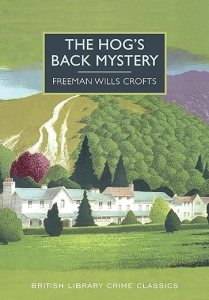
The Hog’s Bank Mystery by Freeman Wills Croft

This is a British Library Crime Classic, first published in 1933, during the Golden Age of detective fiction between the two world wars. Dr James Earle and his wife live near the Hog’s Back, a ridge in the North Downs in the beautiful Surrey countryside. When Dr Earle disappears from his cottage, Inspector French of Scotland Yard is called in to investigate. At first he suspects a simple domestic intrigue – and then begins to uncover a web of romantic entanglements beneath the couple’s peaceful rural life.

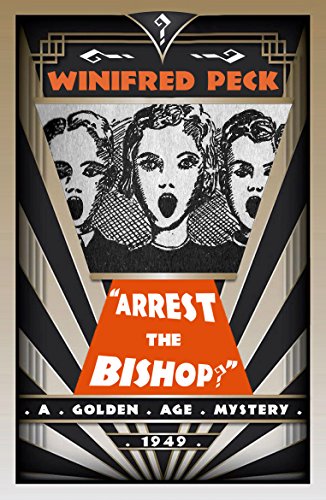
Dean Street December

DeanStreetDecember is hosted by Liz @ Adventures in reading, running and working from home. Dean Street Press is a publisher devoted to republishing lost gems of vintage literature, from Golden Age Detective novels to middlebrow novels by twentieth century women writers. Read from DSP, review the book(s) you’ve read and link them up on the post on Liz’s blog.

These are the Dean Street Press books I have on my Kindle ready to read – I’m aiming to read at least some of these:

  1. Arrest the Bishop? by Winifred Peck
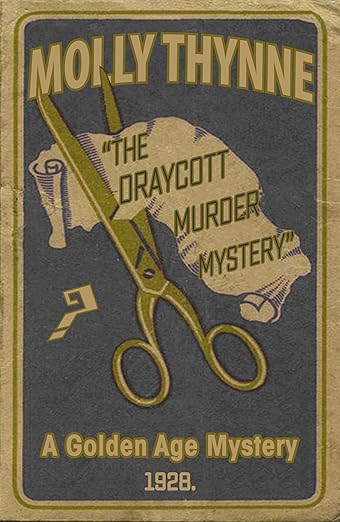
  2. The Draycott Murder Mystery by Molly Thynne
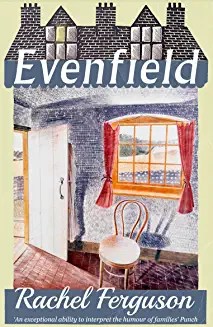
  3. Evenfield by Rachel Ferguson
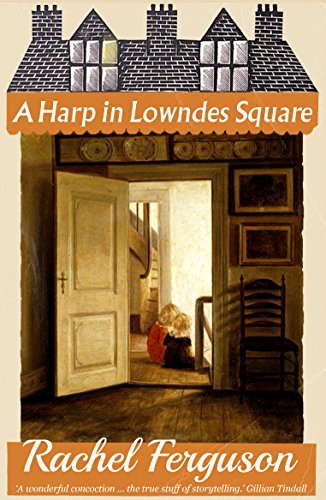
  4. A Harp in Lowndes Square by Rachel Ferguson
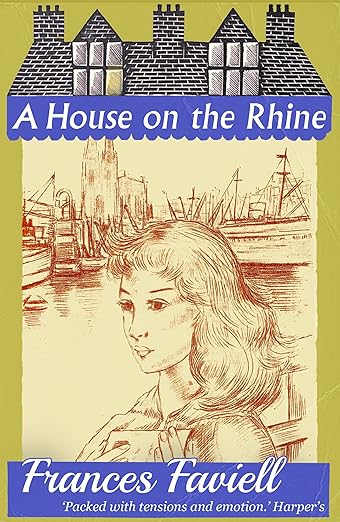
  5. A House on the Rhine by Francis Faviell
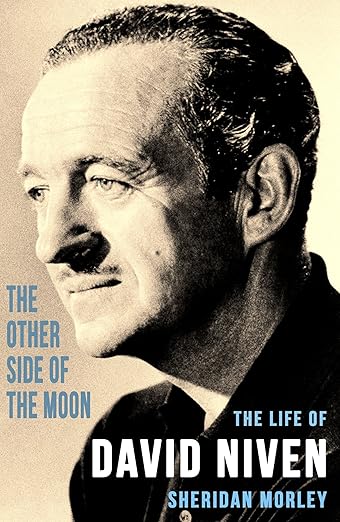
  6. The Other Side of the Moon: David Niven by Sheridon Morley
  7. The Red Lacquer Case by Patricia Wentworth
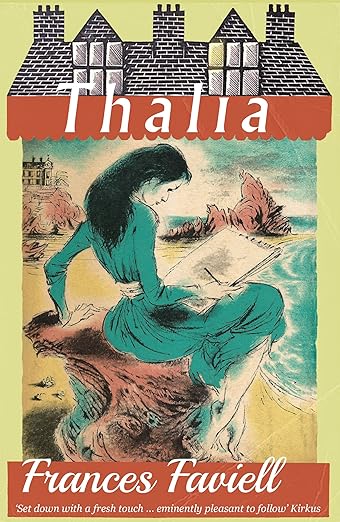
  8. Thalia by Francis Faviell
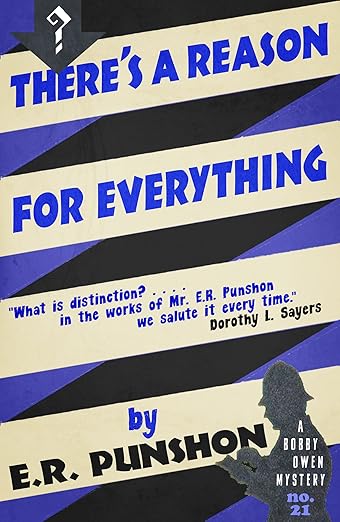
  9. There’s a Reason for Everything by E.R. Punshon
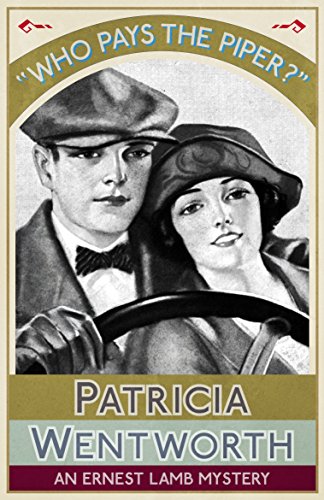
  10. Who Pays the Piper? by Patricia Wentworth

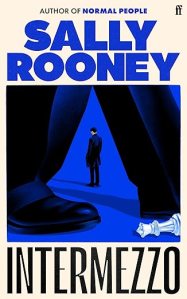
Six Degrees of Separation from  Intermezzo by Sally Rooney to White Nights

It’s time again for Six Degrees of Separation, a monthly link-up hosted by Kate at Books Are My Favourite and Best. Each month a book is chosen as a starting point and linked to six other books to form a chain. A book doesn’t need to be connected to all the other books on the list, only to the one next to it in the chain.

This month starts with Intermezzo by Sally Rooney. I haven’t read this book, so this is the description on Amazon UK:

Aside from the fact that they are brothers, Peter and Ivan Koubek seem to have little in common.

Peter is a Dublin lawyer in his thirties – successful, competent and apparently unassailable. But in the wake of their father’s death, he’s medicating himself to sleep and struggling to manage his relationships with two very different women – his enduring first love Sylvia, and Naomi, a college student for whom life is one long joke.

Ivan is a twenty-two-year-old competitive chess player. He has always seen himself as socially awkward, a loner, the antithesis of his glib elder brother. Now, in the early weeks of his bereavement, Ivan meets Margaret, an older woman emerging from her own turbulent past, and their lives become rapidly and intensely intertwined.

For two grieving brothers and the people they love, this is a new interlude – a period of desire, despair and possibility – a chance to find out how much one life might hold inside itself without breaking.

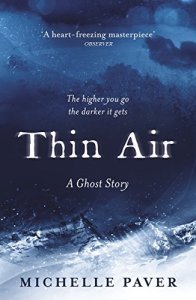
My first link is Thin Air, a novel by Michelle Paver also about two brothers. Kanchenjunga, the third highest mountain in the world, had claimed many lives and no one had reached the summit. Held to be a sacred mountain, it is one of the most dangerous mountains in the world – believed to be the haunt of demons and evil spirits. An unsuccessful attempt had been made in 1907, led by Edmund Lyell, when only two men had returned. The group in 1935, led by Major Cotterell, attempted to follow the 1907 route up the south-west face. Their story is narrated by medic, Dr. Stephen Pearce, accompanying his older brother, Kits. The brothers have always been rivals and this continues as they make their way up the mountain. Things start to go wrong almost straight away and Stephen is full of foreboding.

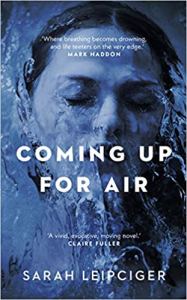
My second link is a book that also has ‘air’ in the title – Coming Up For Air, Sarah Leipciger’s second novel. It is a beautiful novel, a story of three people living in different countries and in different times. How their stories connect is gradually revealed as the novel progresses. As the author explains at the end of the novel it is a mix of fact and fiction and has its basis in truth. There is grief and loss and despair in each story, but above all, it is about love, and the desire to live. I think Sarah Leipciger is a great storyteller. It is an inspiring book, beautifully written, which emphasises the importance of the air we breathe and the desire to live. I read this book in June 2021.

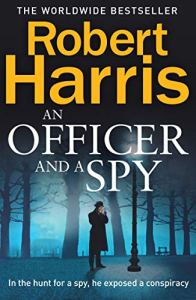
My third link is An Officer and a Spy, historical fiction by Robert Harris, another book I read in June 2021. It is a gripping book about the Dreyfus affair in 1890s France. Alfred Dreyfus, a young Jewish officer, was convicted of treason by passing secrets to the Germans in 1895 and sent to solitary confinement on Devil’s Island. It’s narrated by Colonel George Picquart, who became convinced that Dreyfus was innocent. Harris goes into meticulous detail in staying accurate to the actual events, but even so this is a gripping book and I was completely absorbed by it from start to finish.

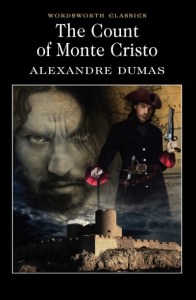
My fourth link is The Count of Monte Cristo, historical fiction by Alexandre Dumas, in which the main character is also wrongly imprisoned on an island. It begins in 1815 when Edmond Dantès, a sailor, having returned to Marseilles is wrongly accused of being a Bonapartist and imprisoned in the Chateau d’If on the Isle of Monte Cristo, for fourteen years. It’s a great story, action-packed, and full of high drama and emotion. Montecristo is a real island in the Tyrrhenian Sea, part of the Tuscan Archipelago, and administered by the municipality of Portoferraio in the province of Livorno.

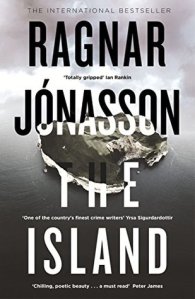
So My fifth link is also set on a real island, that of the isolated island of Elliðaey off the coast of Iceland in Ragnar Jónasson’s novel The Island, a murder mystery with elements of horror. Four friends visit the island ten years after the murder of a fifth friend, Katla, but only three of them return. One of them, Klara, fell to her death from a cliff – but did she jump or was she pushed? Detective Inspector Hulda Hermannsdóttir is sent to investigate. A suspect had been charged, but had committed suicide before the verdict was announced and the case had been closed. But are the two murders connected, even though they are ten years apart? This book is the second in Jónasson’s Hidden Iceland series.

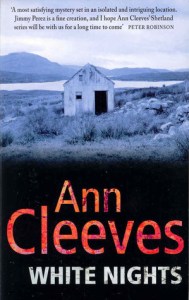
My final link is also the second book in a series, that is White Nights by Ann Cleeve, the second in her Shetland Quartet, featuring Detective Jimmy Perez. It’s set mainly in the village of Biddista, when Kenny Thomson finds a man’s body hanging in the hut where the boat owners of the village keep their lines and pots. At first it looks as though the man, his face covered by a clown’s mask, has committed suicide, but he’d been dead before he was strung up. As well as the mystery of who killed the man in the clown mask and why, there is also the disappearance 15 years earlier of Kenny’s older brother Lawrence. It was thought that he left the island after Bella had broken his heart. Kenny hadn’t heard from him since and at first thought the dead man could be him.

The books in my chain are mainly a mix of crime and historical fiction. And the chain has become a circle with the last book connecting to the starting book and the first book, all containing two brothers.

What is in your chain, I wonder?

Next month (December 7, 2024), we’ll start with a beach read – Sandwich by Catherine Newman.

Dead Man’s Time by Peter James: Book Beginnings & The Friday 56

Every Friday Book Beginnings on Friday is hosted by Gillion at Rose City Reader where you can share the first sentence (or so) of the book you are reading. You can also share from a book you want to highlight just because it caught your fancy.

I’m featuring Dead Man’s Time by Peter James, his 9th Roy Grace crime fiction thriller. It’s one of my TBRs. I started reading it a few days ago.

Brooklyn, February 1922

The boy’s father kissed him goodnight for the last time – although neither of them knew that.

Also every Friday there is The Friday 56, hosted by Freda at Freda’s Voice, but she is taking a break and Anne at My Head is Full of Books has taken on hosting duties in her absence. You grab a book and turn to page 56 (or 56% of an eBook), find one or more interesting sentences (no spoilers), and post them.

‘It’s Nurse Wilson, Mr Daly. Your sister is weakening. I think you should come back quickly.’

Description from Amazon UK

Detective Superintendent Roy Grace is haunted by the past in his latest case, and his private life, in Dead Man’s Time, by award winning crime writer Peter James.

A vicious robbery at a secluded Brighton mansion leaves its elderly occupant fighting for her life. Millions of pounds’ worth of valuables have been stolen.

Within days, Grace is racing against the clock, following a murderous trail that leads him from the shady antiques world of England, across Europe and all the way back to the New York waterfront’s gang struggles of 1922, chasing a killer driven by the force of one man’s greed and another man’s fury.

Although the Roy Grace novels can be read in any order, Dead Man’s Time is the ninth gripping title in the bestselling series. Enjoy more of the Brighton detective’s investigations with Want You Dead and You Are Dead.


The Girl Next Door by Ruth Rendell

Rating: 5 out of 5.

Ruth Rendell, Lady Rendell of Babergh, also known as Barbara Vine, who died aged 85 in 2015, was a literary phenomenon. From 1964, when Inspector Reginald Wexford first appeared in From Doon With Death, she wrote more than sixty novels, including police procedurals, standalone and psychological mysteries plus numerous books of short stories. Many of them were adapted for television or made into feature films.

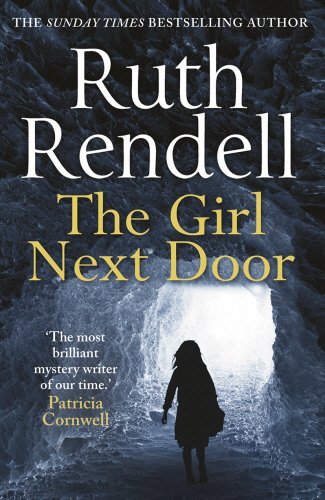
The Girl Next Door by Ruth Rendell, is one of my TBRs, a book that’s been sitting on my bookshelves since 2016. It’s one of her later novels, a stand-alone book, first published in 2014, a year before her death.

Description from Amazon UK

Beneath the green meadows of Loughton, Essex, a dark network of tunnels has been dug. A group of children discover them. They play there. It becomes their place.

Seventy years on, the world has changed. Developers have altered the rural landscape. Friends from a half-remembered world have married, died, grown sick, moved – or disappeared.

Work on a new house called Warlock uncovers a long buried grisly secret: the bones of two severed hands are discovered in a box, and an investigation into a long-buried crime of passion begins.

The friends, who played together as children, begin to question their past. And a weary detective, more concerned with current crimes, must investigate a case of murder.

The book begins just before the second world war when Woody killed his wife and her lover when he discovered they were having an affair. He then cut off their hands, a right hand and a left that they had held together, and put them in a biscuit tin, which he buried in a tunnel, where the local children played.

Time moves on to 1944. Ruth Rendell describes a garden where the neighbourhood children play:

The garden was not beautiful. It had no flowering trees, no roses, no perfumed herbs. Tunnels they called it at first. The word ‘qanat’, an impossible word, was found by Daphne Jones and adopted by the rest of them. It meant, apparently, a subterranean passage for carrying water, in some oriental language. They liked it because it started with a q without a u. Their schoolteachers had taught them that no word could ever start with q unless followed by u, so Daphne’s idea appealed to them and the tunnels became qanats. (pages 13 – 14)

Time moves on again and we meet up with the children as adults in their seventies, when the skeletal hands have been discovered. The qanats were actually the foundations of a house called Warlock in Loughton, twelve miles north of London and most of the children, are now still living in the area. When they read the newspaper report about the discovery of the hands they get together and reminisce about their childhood and playing in the tunnels, wondering whose hands had been buried.

This is when the book expands into a study of ageing as well as murder mystery:

As you get older, you forget names: those you studied with, lived next door to, the people who came to your wedding, your doctor, your accountant and those who cleaned your house. Of these people’s names you forget perhaps half, perhaps three quarters. Then whose names do you never forget, because they are incised on the rock of your memory? Your lovers (unless you have been promiscuous and there are too many) and the children you went to your first school with. You remember their names unless senility steps in to scrape them off the rock face. (page 17)

It’s quite a long book, nearly 350 pages in a small font in my copy and Ruth Rendell takes time to describe these old friends’ lives and reveals their relationships, their loves and losses and those of their own children and grandchildren as well as their regrets, and bereavements. I felt I really got to know them as real people. Long buried secrets rise to the surface, and old passions are reignited.

From the beginning we know the identity of the murderer, Woody and that of his wife Anita, but not that of the man, whose hand had held Anita’s. At times I thought I’d worked out who it was but when his identity was revealed it wasn’t who I thought it was – it was more complicated than I’d realised. And who is ‘the girl next door‘? I did work that out correctly. It is in some places a bleak novel, and all the characters’ lives have changed by the end of the book. It’s a book that really gripped me and drew me on to find out more. And I really enjoyed how it shows the changes that have taken place in society from the 1930s onward.

I’ve read several of Ruth Rendell’s standalone books and I think this is one of her best. I’ve also read some of her Inspector Wexford books and those she wrote under the name of Barbara Vine.

The 1970 Club

It’s time for the 1970 Club, the bi-annual event where Simon and Karen ask readers across the internet to join together to build up a picture of a particular year in books. Any book published in 1970 counts – in whatever format, language, place.

I’ve previously read and reviewed read three books published in 1970:

Passenger to Frankfurt by Agatha Christie – not representative of Agatha Christie’s books and not one I’d recommend to anyone who hasn’t read any of her books. Although there is a degree of pessimism and cynicism running through it there is also a strain of humour, a sense that you shouldn’t take it all too seriously and I did enjoy it.

Sir Stafford Nye, a diplomat is on his way back to London, sitting in an airport lounge in Frankfurt. He was thinking that “life and journeys by air were really excessively boring” when he met a dark haired woman whose life was in danger and his own life changed for ever. The woman wanted his passport to get her safely to London, disguised by his dark purply-blue cloak with its scarlet lining and hood.  He agreed. So far, so good. From then on Sir Stafford is dragged along, somewhat unwillingly at first into a world of espionage, and world-wide organisations dedicated to anarchy and violence.

A Clubbable Woman by Reginald Hill, his first published book and the first book featuring Dalziel and Pascoe. My first encounters with Dalziel and Pascoe (played by Warren Clarke and Colin Buchanan respectively) were the TV adaptations that began in 1996 and I was pleased to find out that Warren Clarke’s portrayal of him was a good match for Reginald Hill’s description.

Connon, known as Connie, was set to play rugby for England before an ankle injury ended his career. He is no longer Wetherton Rugby Football Club’s star player but he still plays occasionally. After a match in which he returns home dazed and confused after a blow on the head he finds his wife, Mary watching television, leaving him to get his own meal. Feeling sick he goes upstairs, then passes out. Later he realises that she is still downstairs, apparently still watching the television – then he discovers that she is dead, with a hole in the middle of her forehead. Dalziel, who is a member of the rugby club, and Pascoe investigate the murder. 

Wycliffe and How to Kill a Cat by W J Burley is the second book in the Wycliffe series. It’s set in Cornwall in the late 1960s, specifically at the time of the astronauts’ first moon landing in July 1969. Superintendent Wycliffe, despite being on holiday, can’t help getting involved when a young woman is found murdered in her seedy hotel bedroom. She’d been strangled and her face had been savagely smashed in. A thousand pounds was still in a drawer, hidden beneath her clothes, so the motive wasn’t theft. I like Wycliffe, a quiet man who works on instinct and I’ve read a few more of the books in the series.

I have two other books published in 1970 to read in my TBRs:

I’m the King of the Castle by Susan Hill, which I am currently reading and The Sovereignty of Good by Iris Murdoch.