My Reginald Hill Reading Project

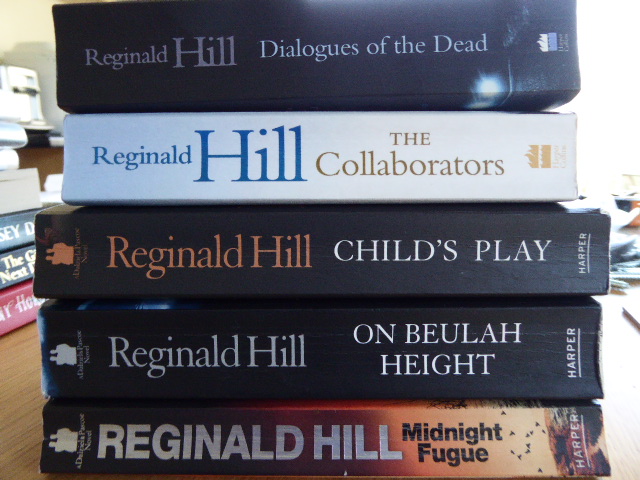
Inspired by reading Reginald Hill’s Bones and Silence recently I decided I want to read more of his books and I’ve made a page to record my progress. When I visited two secondhand bookshops this last week I stocked up on as many of his books that were on the shelves that I haven’t read:
P1010900

They are all Dalziel and Pascoe novels, apart from The Collaborators, which is a standalone novel set in 1945 in Paris. From the top down they are (synopses from Amazon, essentially the blurbs on the back covers) :

  • Dialogues of the Dead: A man drowns. Another dies in a motorbike crash. Two accidents ‘ – yet in a pair of so-called Dialogues sent to the Mid-Yorkshire Gazette as entries in a short story competition, someone seems to be taking responsibility for the deaths.In Mid-Yorkshire CID these claims are greeted with disbelief. But when the story is leaked to television and a third indisputable murder takes place, Dalziel and Pascoe find themselves playing a game no one knows the rules of against an opponent known only as the Wordman.
  • The Collaborators:Paris, 1945. In the aftermath of the French liberation, Janine Simonian stands accused of passing secret information to the Nazis.She is dragged from her cell before jeering crowds, to face a jury of former Resistance members who are out for her blood. Standing bravely in court, Janine pleads guilty to all charges.Why did Janine betray, not just her country, but her own husband? Why did so many French men and women collaborate with the Nazis, while others gave their lives in resistance?What follows is a story of conscience and sacrifice that portrays the impossible choice between personal and national loyalty during the Nazi occupation.
  • Child’s Play:When Geraldine Lomas dies, her huge fortune is left to an animal rights organization, a fascist front and a services benevolent fund. But at her funeral a middle-aged man steps forward, claiming to be her long-lost son and rightful heir. He is later found shot dead in the police car park, leaving behind a multitude of suspects. And Superintendent Dalziel and Peter Pascoe find themselves plunged into an investigation that makes most of their previous cases look like child’s play’¦
  • On Beulah HeightFifteen years ago they moved everyone out of Dendale. They needed a new reservoir and an old community seemed a cheap price to pay. But four inhabitants of the valley could not be moved, for nobody knew where they were: three little girls who had gone missing, and the prime suspect in their disappearance, Benny Lightfoot. This was Andy Dalziel’s worst case and now he looks set to relive it. Another child goes missing in the next valley, and old fears arise as someone sprays the deadly message on Danby bridge: BENNY’S BACK!
  • Midnight FugueGina Wolfe is searching for her missing husband, believed dead, and hopes Superintendent Andy Dalziel can help. What neither realize is that there are others on the same trail. A tabloid hack with some awkward enquiries about an ambitious MP’s father. The politician’s secretary who shares his suspicions. The ruthless entrepreneur in question ‘and the two henchmen out to make sure the past stays in the past.Four stories, two mismatched detectives trying to figure it all out, and 24 hours in which to do it: Dalziel and Pascoe are about to learn the hard way exactly how much difference a day makes’.
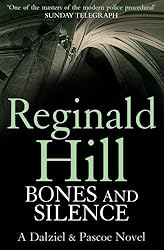
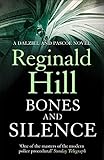
Bones and Silence by Reginald Hill

I found a lot to enjoy in Bones and Silence, Reginald Hill’s 11th book in his Dalziel and Pascoe series, first published in 1990.

Blurb (from the back cover):

When Detective Superintendent Andy Dalziel witnesses a bizarre murder across the street from his own back garden, he is quite sure who the culprit is. After all, he’s got to believe in what he sees with his own eyes. But what exactly does he see? And is he mistaken? Peter Pascoe thinks so.

Dalziel senses the doubters around him, which only strengthens his resolve. To make matters worse, he’s being pestered by an anonymous letter-writer threatening suicide. Worse still, Pascoe seems intent on reminding him of the fact.

Meanwhile the effervescent Eileen Chung is directing the Mystery Plays. And who does she have in mind for God? Dalziel of course. He shouldn’t have too much difficulty in acting the part …

My thoughts:

I liked all the complications of plot and sub-plots in this book and the interplay of the characters. It’s full of interesting characters and humour, but it is the plot that takes precedence. It is so tricky, with numerous red herrings and plot twists. Dalziel is positive that he saw Philip Swain shoot his wife; shooting her at close range, destroying much of her face and removing the top of her head. But Swain insists it was an accident – he was trying to stop her from killing herself and the gun went off. The only other witness, Greg Waterson, backs up Swain’s story – and then disappears.

My image of Dalziel comes from Warren Clark’s portrayal of him in the TV series because I watched the programmes before I read any of Hill’s books. To me Warren Clarke is Dalziel, just as David Suchet is Poirot. Dalziel is a larger than life character, speaks his mind and is never politically correct. He is is positive in his belief in Swain’s guilt even when everyone else thinks his wife’s death was an accident:

Andrew Dalziel, despite what his friends said, was no paranoiac. He did not believe himself to be infallibly perfect or unjustly persecuted. His great strength was that he walked away from his mistakes like a horse from its droppings, and as he himself once remarked, if you leave crap on people’s carpets, you’ve got to expect a bit of persecution.

But when he believed himself right, he did not readily accept evidence that he might be wrong, not while there was any stone left unturned. (page 242)

But it doesn’t help that Swain has been cast in the role of the devil opposite Dalziel’s God in the mystery play and the two are constantly sparring. The whole sub-plot of the mystery play is brilliant. Each Part of the book is headed by a quotation from the York Cycle of Mystery Plays, each one relevant to the events that follow. And the vision of Dalziel as God is so funny, especially when the fat man has to climb a narrow ladder up the back of a triple decker stage mounted on a flat car. Dalziel has to sit on a tiny platform over the upper deck, perched above polystyrene clouds.

Pascoe has recently returned to work after a period of sick leave, following an accident and, impatient to find evidence against Swain, Dalziel delegates the anonymous letters to Pascoe to discover who has been sending them. This sub-plot about the identity of the letter writer is the only part of the book that I’m not sure about. I had several thoughts about who it could be, but I was wrong and in the end when the author was revealed I wasn’t completely convinced that that character could have known all the information given in the letters. Still, it makes a dramatic conclusion to the book and came as a complete surprise to me.

Although Bones and Silence is a long book (524 pages) I read it quite quickly, completely absorbed in its mysteries and impressed both with the ingenuity of the plot and the quality of the writing. I really mustn’t leave it very long before I read some more of Reginald Hill’s books.

  • Paperback: 528 pages
  • Publisher: Harper (25 Jun. 2009)
  • Language: English
  • ISBN-10: 0007313128
  • ISBN-13: 978-0007313129
  • Source: I bought the book

Reginald Charles Hill FRSL (3 April 1936 ‘“ 12 January 2012) was an English crime writer, and the winner in 1995 of the Crime Writers’ Association Cartier Diamond Dagger for Lifetime Achievement.

Reading Challenges: Mount TBR Reading Challenge 2016 – a book I’ve owned for four years.

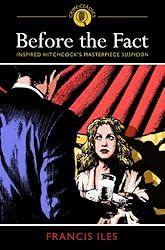
Before the Fact by Francis Iles

On the face of it Before the Fact is a straight forward story. It tells the tale of wealthy, intelligent but plain Lina McLaidlaw whose family are against her marriage to the handsome, charming and fascinating Johnnie Aysgarth; Lina’s father tells her Johnnie is a ‘rotter’. But right from the opening paragraph it’s obvious that Lina’s father is right. In fact Johnnie is much worse than her father realised:

Some women give birth to murderers, some go to bed with them, and some marry them. Lina Aysgarth had lived with her husband for nearly eight years before she realized that she was married to a murderer.

First published in 1932 by Francis Iles (* see below*), Before the Fact is a Golden Age crime fiction novel that is a psychological character study of its two main characters, Lina and Johnnie. It’s cleverly written. Lina slowly realises Johnnie’s true nature – that of a compulsive liar and gambler, a manipulative scoundrel who thinks nothing of being unfaithful, even of arranging a murder, or two.  But still she stays with him, trying to control and change him, believing his lies until she has to accept him for what he is, with disastrous consequences.

As Lina’s eyes are slowly opened I became exasperated at her naiveté, her acceptance of what she she has discovered about Johnnie. She comes across as a fool besotted by him and desperate for his love and attention, and even though her suspicions are aroused she still deliberately ignored all the warning signs, descending from panic, terror, horror and despair into passivity. She is maddening, a born victim and I began to wonder how it could possibly end. It was even more chilling than I had imagined.

*About the Author (copied from the publishers):

Frances Iles was a pseudonym of Anthony Berkeley Cox, who was born in 1893 in Watford. After serving in the army during the First World War, Berkeley worked as a journalist for many years before his first foray into the crime genre with The Layton Court Mystery (1925).

His two primary non-de-plumes were Francis Iles and Anthony Berkeley. As the former, he was a master of the psychological suspense genre, always with a wry humorous tenor to his writing; as the latter he acted as a trailblazer in the classic ‘Golden Age’ of crime and detective novels.

An intensely private man who always shunned publicity, Berkeley died in 1971.

As I read I marked a few passages that although not directly connected with the story I found interesting:

About artistic criticism – in particular female criticism:

If one did not happen to like a certain book, picture, or piece of music, one took it for granted that the book, picture, or piece of music was just bad; and the people who thought it was good, were, quite simply and plainly, mistaken. It never occurred to any female critic that a book might possibly be above her own level of intelligence (the men of course read only detective stories). (page 42)

on artists:

‘Aren’t artists intelligent?’ Lina asked innocently.

‘Of course they’re not. Most of them haven’t got the brains of a mouse. They just have this odd knack of being able to put things on canvas, and that’s all. They are the dullest of all the creators. Musicians are the nicest: you never hear a musician talk about himself at all. Then the really good authors. They don’t thrust their work down one’s throat; they’ve no need to. Then the second-rate authors, who do, and have. And then the painters, a long way bottom.’ (page 125)

I wonder who he was referring to?

And on murder:

When you incite a person to do something which both of you know will probably kill him – is that legally murder or not? (page 177)

Lina discusses this point with Isobel Sedbusk (based on Dorothy L Sayers), a writer of detective stories, thinking that it wasn’t ‘real murder, like giving the man poison, or shooting him, or anything like that.’ Isobel replies:

‘No, I’m inclined to doubt whether it would be murder, from the legal point of view. The legal definition of murder is ‘to kill with malice aforethought’. Still, you’ve got the malice aforethought all right. And if he knowingly incited the man to commit an act which would result in his death …’

Malice Aforethought – another novel by Francis Iles (published in 1931) begins with revealing the identity of the murderer. I shall have to read that one soon.

Reading Challenges:

My Week in Books: 13 April 2016

This Week in Books is a weekly round-up hosted by Lypsyy Lost & Found, about what I’ve been reading Now, Then & Next.

IMG_1384-0

A similar meme,  WWW Wednesday is run by Taking on a World of Words.

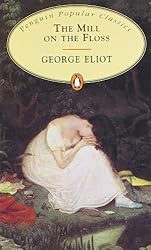
Now: Currently I’m reading three books, because I like to vary my reading. So, I have a classic, a crime fiction and a non-fiction book on the go:

Blurb:

George Eliot drew on her own anguished childhood when she depicted the stormy relationship between Maggie and Tom Tulliver. Maggie’s often tormented battle to do her duty and belong on the one hand, and to be  herself, wild and natural, on the other, propels her from one crisis to another. As the Tulliver fortunes decline and fall, the rift between Maggie and her family becomes almost irreconcilable. But Maggie’s biggest mistake of all is to fall in love with Stephen Guest who is engaged to another woman.

Both a sharp and observant picture of English rural life and a profoundly convincing analysis of a woman’s psychology, The Mill on the Floss is a novel that tackles the complexities of morality versus desire.

  • Bones and Silence by Reginald Hill – a Dalziel and Pascoe crime fiction novel. It’s book 11 in the series, which I’m reading totally out of order (there are over 20 in the series) and it is really good.

Blurb:

When Detective Superintendent Andy Dalziel witnesses a bizarre murder across the street from his own back garden, he is quite sure who the culprit is. After all, he’s got to believe what he sees with his own eyes. But what exactly does he see? And is he mistaken? Peter Pascoe thinks so.

Dalziel senses the doubters around him, which only strengthens his resolve. To make matters worse, he’s being pestered by an anonymous letter-writer, threatening suicide. Worse still, Pascoe seems intent on reminding him of the fact.

Meanwhile, the effervescent Eileen Chung is directing the Mystery Plays. And who does she have in mind for God? Daziel, of course. He shouldn’t have too much difficulty acting the part’¦

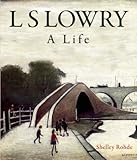
  • L S Lowry: A Life by Shelley Rohde. Lowry is one of my favourite artists, well known for his urban paintings of industrial towns but his work covers a wide range of themes and subjects, from landscapes and seascapes to portraits. This biography is based on collections of private papers held in The Lowry, Salford Quays.
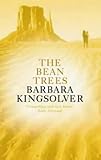
  • Then: I’ve recently finished The Bean Trees by Barbara Kingsolver, her first novel. I’ve read some of her other books –  loved The Poisonwood Bible which I’ve read a few times, and Homeland, a book of short stories, but wasn’t so taken with The Lacuna. I thoroughly enjoyed The Bean Trees – my review will follow shortly:

Blurb:

Plucky Taylor Greer grows up poor in rural Kentucky with two goals: to avoid pregnancy and to get away. She succeeds on both counts when she buys an old car and heads west. But midway across the country motherhood catches up with her when she becomes the guardian of an abandoned baby girl she calls Turtle. In Tuscon they encounter an extraordinary array of people, and with their help, Taylor builds herself and her sweet, stunned child a life.

Next: I really don’t know.

What about you? What are you reading this week?

Stacking the Shelves: 2 April 2016

STSmall

Stacking The Shelves is all about sharing the books you are adding to your shelves. This means you can include ‘˜real’ and ‘˜virtual’ books (ie physical and ebooks) you’ve bought, books you’ve borrowed from friends or the library, review books, and gifts.

I bought three books this week.

I loved watching The Night Manager, adapted from John le Carré’s novel, so when I went to Main Street Trading on Tuesday I hoped they would have a copy. They didn’t – but they did have Tinker Tailor Soldier Spy, a book I’ve wanted to read ever since I watched the BBC adaptation many years ago (Alec Guinness was George Smiley).

Blurb:

George Smiley, who is a troubled man of infinite compassion, is also a single-mindedly ruthless adversary as a spy.

The scene which he enters is a Cold War landscape of moles and lamplighters, scalp-hunters and pavement artists, where men are turned, burned or bought for stock. Smiley’s mission is to catch a Moscow Centre mole burrowed thirty years deep into the Circus itself.

Yesterday I went shopping and passing Berrydin in Books I had to go in and, of course, I had to buy a book – well two actually. First another book that I was prompted to read by a TV adaptation in 2012 – Birdsong by Sebastian Foulks.

Blurb:

A novel of overwhelming emotional power, Birdsong is a story of love, death, sex and survival. Stephen Wraysford, a young Englishman, arrives in Amiens in northern France in 1910 to stay with the Azaire family, and falls in love with unhappily married Isabelle. But, with the world on the brink of war, the relationship falters, and Stephen volunteers to fight on the Western Front. His love for Isabelle forever engraved on his heart, he experiences the unprecedented horrors of that conflict – from which neither he nor any reader of this book can emerge unchanged.

And also Citadel by Kate Mosse, because I like time-slip books. The main story is set in 1942-44 in Nazi-occupied  Carcassonne in France and moves back in time to 342, with a monk, Arinus trying to find a hiding place for a forbidden Codex.

Blurb:

1942, Nazi-occupied France. Sandrine, a spirited and courageous nineteen-year-old, finds herself drawn into a Resistance group in Carcassonne – codenamed ‘Citadel’ – made up of ordinary women who are prepared to risk everything for what is right.

And when she meets Raoul, they discover a shared passion for the cause, for their homeland, and for each other.

But in a world where the enemy now lies in every shadow – where neighbour informs on neighbour; where friends disappear without warning and often without trace – love can demand the highest price of all…

As soon as I read some of my TBR books (6 in March) it seems I just have to find more – at least it’s only three this time.

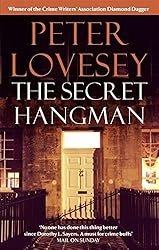
The Secret Hangman by Peter Lovesey

The Secret Hangman is the first book I’ve read by Peter Lovesey and as it’s the 9th in his Peter Diamond series I was hoping it would read OK as a stand alone book – it does. Peter Diamond is a Detective Superintendent with the Bath police.

Blurb:

Peter Diamond, the Bath detective, is having woman trouble. His boss wants him to find a missing person, the daughter of one of her friends in the choir. He is not enthusiastic. Another woman, who calls herself his Secret Admirer, wants to set up a meeting in a local pub. He tries ignoring her. Then there is sexy Ingeborg Smith, the ex-journo detective constable, distracting the murder squad from their duties. No one ignores Ingeborg.

Murder becomes a possibility when a woman’s body is found hanging from a playground swing in Sydney Gardens and a suspicious second ligature mark is found around her neck. Diamond investigates the victim’s colourful past. More hangings are discovered and soon he is certain that a secret hangman is at work in the city . . .

My thoughts:

Diamond’s wife had died three years earlier – as I haven’t read the earlier books I suppose this is a spoiler, but it is important to know this from the start of this book, because he is now beginning to recover from his grief and becomes rather too involved with an attractive woman he met by chance in a carpark. The story of their relationship runs parallel to the investigations into the hangings and the series of ram raids his boss wants him to investigate.

At first there doesn’t appear that there is any connection between the victims and the motive for killing them only becomes clear quite late on in the book. The only similarities are that the victims are all couples – the wives are killed first, followed a few days later by their husbands, and all the bodies are found in public places as though the killer wanted their deaths to be discovered and publicised.

It takes a while before Diamond cottons on to the identity of the killer – and I was there some time before him, but that didn’t spoil my enjoyment of the book. Diamond is not a brilliant detective. He is rather old-school, not above a bit of threatening behaviour (and more) to suspects, not bothered about upsetting his boss, nor is he comfortable with technology. But he is determined and thorough – I liked him and want to read more from the series.

Peter Lovesey is a British writer of historical and contemporary crime novels and short stories. He has written many books, not just the Peter Diamond series, but also a series of books featuring Sergeant Cribb, a Victorian-era police detective based in London – the full list of his books is on his website – there are plenty to read!

————

Reading challenges: Mount TBR Reading Challenge – a book I’ve owned for 7 years, and one I should have read ages ago, but well worth the wait.