Dreamwalker: The Ballad of Sir Benfro Book 1

Dreamwalker

I read  Dreamwalker: The Ballad of Sir Benfro by James Oswald on my Kindle.  It has since been published by Penguin as Dreamwalker by J D Oswald.
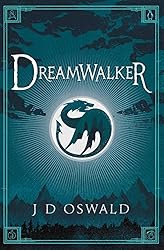
So far there are three books in the series and there will eventually be five books published by Penguin. See James Oswald’s website for more information.

Synopsis from Amazon UK:

In a small village, miles from the great cities of the Twin Kingdoms, a young boy called Errol tries to find his way in the world. He’s an outsider – he looks different from other children and has never known his father. No one, not even himself, has any knowledge of his true lineage.

Deep in the forest, Benfro, the young male dragon begins his training in the subtle arts. Like his mother, Morgwm the Green, he is destined to be a great Mage. No one could imagine that the future of all life in the Twin Kingdoms rests in the hands of these two unlikely heroes.

But it is a destiny that will change the lives of boy and dragon forever …

My view:

I enjoyed this book, inspired by Welsh folklore. It’s very readable, each time I picked it up I just wanted to carry on reading this magical tale of the young dragon, Benfro and the young boy, Errol, born on the same day. I was drawn into their fantasy world.

But I wasn’t prepared for the ending – when you get to the end of the book it is not the end – it’s only the end of the first instalment! The tension builds throughout the book as both Benfro and Errol approach their fourteenth birthdays, Benfro in the dragon community, learning their magical powers and Errol,growing up thinking his mother was the village healer and then taken from his home by Melyn, the Inquisitor to train to be one of the warrior priest. Then there is the wicked Princess Beaulah, who is keeping her father the king alive until she reaches her 21st birthday.

And as the tension built I was eager to find out how it would end, only to be faced with the words ‘To be continued in The Ballad of Sir Benfro -Volume Two‘. I was so frustrated, as it just came to a full stop after a catastrophic event, that I couldn’t really believe had happened – a real cliff-hanger! I wish I’d realised before so that I’d been prepared – it was a complete let-down. So, if you are going to read it be warned!

Dreamwalker is followed by The Rose Cord and The Golden Cage. J. D. Oswald is also the author of the Detective Inspector McLean series of crime novels under the name James Oswald. In his spare time James runs a 350-acre livestock farm in North East Fife, where he raises pedigree Highland Cattle and New Zealand Romney Sheep.

Read more about Dreamwalker on the Penguin website.

Reading ChallengesDreamwalker is the perfect choice for Once Upon a Time IX. As it’s been on my Kindle since 2012 it’s also perfect for the Mount To Be Read Challenge and as James Oswald lives in Scotland it fits into the Read Scotland Challenge too.

The Wonderful Wizard of Oz by L Frank Baum

The Wonderful Wizard of Oz has been on my shelves for a few years and as I’m taking part in the Once Upon a Time event hosted by Carl at Stainless Steel Droppings I decided it was time I read it. It’s a complete change of genre for me as I rarely read children’s books.

It was first published in 1900, made into a Broadway Musical in 1902 and a film in 1939. I’ve seen the film and also a stage version in a local amateur dramatic society production some years ago.

I enjoyed this entertaining story, pure escapism, which I would have loved as a child, following Dorothy’s adventures in the Land of Oz after the cyclone whisked her house high in the air out of Kansas and set it down on top of the Wicked Witch of the East, thus killing her. Dorothy and her little dog, Toto, are very anxious to get back home to Kansas and they set out on the yellow brick road leading to the Emerald City to ask the Wizard of Oz to help them. On the way she meets the Scarecrow, the Tin Man and the Cowardly Lion, who go with her as they want the Wizard to give them brains, a heart and courage respectively.

Their journey is interrupted in various places and by a variety of creatures, some very dangerous indeed; as in most fairy tales, there is a fair amount of violence in the book, as Dorothy and her friends combat the Wicked Witch of the East. I was fascinated by the Winged Monkeys, who can grant three wishes, the Fighting Trees, the Dainty China Country and its pretty little, fragile people and by the Quadlings with their flat hammer heads.

There are several interpretations* of the story that I’ve come across, but the simple message of the story is, of course, that you have to use your brains yourself, after all the Scarecrow can think, he just doesn’t realise that he can and he came up with lots of ingenious ideas along the way; courage comes from facing danger even when you are afraid – it comes from within and the Lion does that without realising he already has courage. As for the Tin Man, again he truly did have a heart – his desire for one shows his kindness and goodness.

And by the way Dorothy’s shoes are silver and not red as in the film.

*On Goodreads there are several reviews that draw parallels with the economics of America in the late 19th century and the political climate of the time.

And I found this interesting article in The New York Times Scarecrow, Lion, Tin Man and Freud, Too by Janet Maslin discussing this book: The Real Wizard of Oz, The Life and Times of L. Frank Baum by Rebecca Loncraine. Baum apparently drew on his own experiences in writing his book – images of the Civil War amputees led to the Tin Man, bizarre sights such as displayed by PT Barnum, the Chicago World Fair and so on. It sounds a fascinating book! I am constantly finding reading one book leads on to wanting to read yet more books – and I hadn’t realised before that there are more Oz books that Baum wrote!

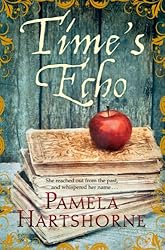
Time's Echo by Pamela Hartshorne


As I wrote in a First Chapter post  Time’s Echo mixes time as Grace Trewe is drawn into Hawise Aske’s life, four and a half centuries earlier in York, 1577. I saw this book in the library and although I hadn’t heard of Pamela Hartshorne I thought the title was interesting, and from the description on the back cover and the opening paragraphs, I thought it was worth borrowing.

It’s a good choice for Carl’s R.I.P. IX challenge, a time-slip story with an element of mystery and suspense in both time periods. Grace is staying in York to sort out the sale of her late godmother’s house when she experiences unnerving episodes in which she appears to be reliving the traumatic events in Hawise’s life beginning in 1577.  Grace likes to travel and although she survived the Boxing Day tsunami she is suppressing her memories of what happened. 

I think the suspense is somewhat diluted because right from the opening chapter it’s revealed that Hawise was drowned on All Hallows’ Eve, with her thumb tied to her toe – ie as a witch. But as Grace’s episodes continue she learns what happened in Hawise’s life to bring her to her dramatic death and this is interwoven with events in Grace’s life. It gets to the point where she dreads slipping out of current time into not only Hawise’s past but also into her own as what happened to her in the tsunami breaks through her mind.

What does add to the suspense is the unpredictability of the time-slips and the sense of malice and evil. So much so that the sceptic in me was unable to decide whether this was a question of whether Grace was suffering from post-traumatic stress disorder or was she really being “possessed” by Hawise, as she believed, feeling Hawise clamouring to be let into her mind. I found the historical sections more interesting than the modern story, which I think often happens when I read time-slip stories.

Pamela Hartshorne explains how she came to write this book in the Author’s Note at the end of the book. It grew out of her research on the wardmote-court returns of early modern York. These records dealt primarily with nuisances, things that affected the quality of life for the neighbourhood – such as noisy neighbours, blocked sewers. potholed streets etc (I note that local life hasn’t changed much over the centuries!). Some of the minor characters were real people, but this book is a work of fiction and Hartshorne is not intending this to be an accurate historical account, although she has tried to make it as convincing and as authentic as she could – I think she succeeded.

I thought the book was rather drawn out in parts, slowing the story down a bit too much for my liking. But, I like the fact that the book has a factual background, even though there are some liberties with the evidence – eg there was no plague in York in the 1570s or 1580s as featured in the book. So, on the whole I enjoyed Time’s Echo primarily because of its historical elements and I’ll look out for more books by Pamela Hartshorne. I see from her website that she has just published another time-slip book, The Memory of Midnight.

What's In A Name 7: Completed

Whats in a name 7Hosted by  by Charlie at The Worm Hole this challenge runs from January to December 2014. During this time you choose a book to read from six categories.

I’ve now completed the challenge and these are the books I read:

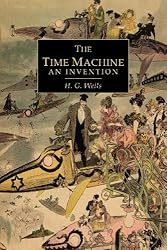
  • A reference to time €“ The Time Machine by H G Wells, first published in 1895, is a work of imagination and an early example of science fiction, but it is also a commentary on late 19th century society and a vehicle for H G Well’s views on socialism and industrialisation.

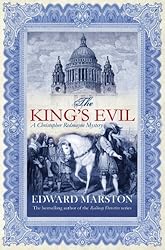
  • A position of royalty €“ The King’s Evil by Edward Marston. This is historical crime fiction set in London in September 1666, just as the Great Fire of London has begun, eventually devastating a large part of the old medieval City of London

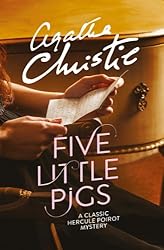
  • number written in letters – Five Little Pigs by Agatha Christie, a Poirot mystery
    first published in 1943. Caroline Crale was convicted of the murder of her husband, Amyas and died in prison. Sixteen years later, her daughter, a child of five at the time of the murder, asks Poirot to clear her mother’s name, convinced that she was innocent.
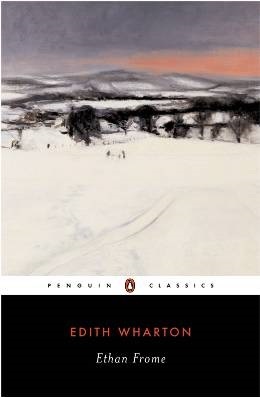
  • forename or names  Ethan Frome by Edith Wharton  a beautifully told tale €“ a tragedy, signalled right from the beginning of the book, when the unnamed narrator first saw Ethan Frome and was told he had been disfigured and crippled in a €˜smash up’, twenty four years earlier. Ethan Frome
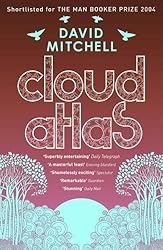
  • type or element of weather – Cloud Atlas by David Mitchell covers a time period from the 19th century to a post apocalyptic future. It’s not a book to read quickly; it requires patience, but on the whole I enjoyed it. I liked the change in style, suited to each time period, moving between straight narrative and letters and journal entries, encompassing historical fiction, thriller and sci-fi.

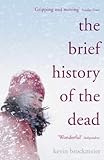
  • A book with a school subject in the title €“ The Brief History of the Dead by Kevin Brockmeier  fantasy fiction set some time in the future, about a place between heaven and earth, and the people who end up there after they’ve died and what happens to them. 

My favourite of these books is Ethan Frome by Edith Wharton.

Thanks to Charlie for an interesting challenge that helped me reduce my to-be-read piles.

The Brief History of the Dead by Kevin Brockmeier

The Brief History of the Dead by Kevin Brockmeier, has been sitting on my bookshelves for 7 years (and moved house with me). It’s one of those books that I kept taking down off the shelf, flicking through it and putting it back.

As we’re in the middle of the R.I.P. IX Challenge it seemed this could be a good book to read as it’s fantasy fiction set some time in the future, about a place between heaven and earth, and the people who end up there after they’ve died and what happens to them. Amazingly they eat, sleep, fall in love and go to work in a city that looks like any on Earth with trees, houses, roads, businesses, shops, cafés and so on. It seems they are kept there as long as there is someone alive who remembers them. Parallel with this is the story of Laura, trapped in the Antarctic.  She is one of an expedition exploring methods of converting polar ice to use in manufacturing soft drinks. When their communication system fails two of the team go for help leaving Laura on her own. Eventually she too ventures out across the snow towards the Ross Sea, where there is a station studying emperor penguins.

I’m glad I read this book even if it didn’t quite live up to my expectations. The idea is good, and the two stories are dealt with in alternate chapters. It’s soon obvious that there has been some sort of worldwide disaster or epidemic and at first I was caught up with both stories, but the link between them is so obvious that the element of surprise or suspense just frittered away very quickly.

There is plenty of description; rather too much though and I got tired of reading about Laura’s struggle to cross the Antarctic, and the numerous descriptions of her battles to get in and out of her frozen sleeping bag, and hauling the sledge across the snow. There are plenty of flashbacks and digressions that promised to be interesting but were left undeveloped. It’s as though Brockmeier compiled the book from a series of short stories and scenic descriptions. By the end I really didn’t care what happened to any of the characters as they all waited for whatever came next. It’s a shame because I thought the idea had so much promise – what does happen when we die?

Reading Challenges

Once Upon a Time VIII Challenge Completed

Once upon a time viiiCarl’s Once Upon a Time Challenge for this year ended on 21 June and I exceeded my expectations – well, it wasn’t hard as I aimed very low with The Journey, which was to read at least one book within one of the four categories of Fairy Tale, Folklore, Fantasy and Mythology. So I went on to the First Quest which was to read at least 5 books that fit somewhere within those categories.

Quest the first

I read:

  1. The Last Enchantment by Mary Stewart
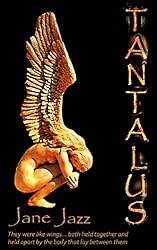
  2. Tantalus by Jane Jazz
  3. The Wicked Day by Mary Stewart
  4. The Graveyard Book by Neil Gaiman
  5. The Book of Lost Things by John Connolly

I initially wanted to read from my own to-be-read books, but as usual I actually read books that appealed to me at the moment of choosing what to read next, but two of them were books I’ve owned for some years – The Last Enchantment, an excellent book and The Book of Lost Things, not such an excellent book in my opinion.

Choosing a favourite out of these books is not easy but by a short head it’s Jane Jazz’s début novel TantalusThere is so much in this book that I loved €“ the characters, the story, the charged emotions and longing, the setting (in Yorkshire and Tuscany), and the art €“ the paintings and the sculpture. 

Tantalus is a perfect title for the novel as according to Greek myth Tantalus was famous for eternal punishment by being made to stand in a pool of water beneath a fruit tree with low branches, with the fruit ever eluding his grasp, and the water always receding before he could take a drink.

Thanks to Carl for hosting and I’m already looking forward to September and his R.I.P. Challenge.