Category: e-books
The Lost Man by Jane Harper: Blog Tour Review
He had started to remove his clothes as logic had deserted him, and his skin was cracked. Whatever had been going through Cameron’s mind when he was alive, he didn’t look peaceful in death.

Little, Brown|7 February 2019 |384 pages|e-book |Review copy|4.5*
As I loved Force of Nature by Jane Harper I was absolutely delighted when Caollin Douglas at Little, Brown Publishing asked me if I wanted to take part in the blog tour for Jane Harper’s latest book, The Lost Man. I wasn’t disappointed – I loved it.
Blurb:
Did Cameron walk to his death under the unrelenting sun of the Australian Outback? If not, what happened? Set in the unfamiliar, isolating and disorientating landscape of the Outback, The Lost Man combines intrigue, surprise and intellect to create a gripping and thrilling narrative.
Two brothers meet at the remote border of their vast cattle properties under the unrelenting sun of the outback. In an isolated part of Australia, they are each other’s nearest neighbour, their homes hours apart.
They are at the stockman’s grave, a landmark so old that no one can remember who is buried there. But today, the scant shadow it casts was the last hope for their middle brother, Cameron. The Bright family’s quiet existence is thrown into grief and anguish.
Something had been troubling Cameron. Did he choose to walk to his death? Because if he didn’t, the isolation of the outback leaves few suspects…
My thoughts:
This is essentially a family drama and is very much character-driven, set in an isolated part of Australia hundreds of miles from anywhere and revolving around the death of Cameron Bright. There are three Bright brothers – Nathan the oldest, then Cameron and the youngest brother, Bub. They have a vast cattle ranch in the Queensland outback.
The book begins with the discovery of Cameron’s body lying at the the base of the headstone of the stockman’s grave – a headstone standing alone, a metre high, facing west, towards the desert, in a land of mirages. It provides the only bit of shade for miles around. He had obviously died an agonising death in the intense forty-five degrees of heat, crawling round the headstone in search of its shade as the earth rotated around the sun. Nathan and Bub meet at the site and can’t understand why he was there – his car was found several kilometres away and at first they assumed he had just walked away to end his life, but that didn’t seem to make sense. Nathan just can’t believe Cameron would do that. There is little actual police investigation and so Nathan delves into the past on his own looking for answers. He is astonished at what he finds.
Nathan is a solitary man, divorced and living alone, a three hours’ drive from the rest of the family. There is a mystery surrounding his isolation not just from his family but also from the small town, three hours drive away. Whereas, Cameron, who took over the ranch after his father died, is well liked, married with two little girls. The youngest brother, Bub, meanwhile is an angry young man, resentful of the way Cameron runs the business, mainly because he thinks his views are being ignored. As Nathan tries to fathom what had happened hidden passions and resentments begin to surface and it becomes clear that this is a dysfunctional family. He realises there was a lot about his family he had never known.
Throughout the book the Australian outback looms large, a huge and isolated territory, red earth stretching for hundreds of miles, with its unbearable heat, dust and, at times, the threat of flood. But it’s the characters, as their past history and relationships are exposed and they became real personalities, that made the book such compelling reading for me. I liked the storytelling, the details of the legends surrounding the stockman, the drama of the family grieving over Cameron’s death – and the mystery of his death – was it suicide or murder, and if it was murder who had killed him and why?
It’s a powerful and absorbing book and after I finished it I wondered about the title – just which one of the men was the ‘Lost Man‘. I’m still not sure, maybe they all were …

Source: Review copy as part of The Lost Man blog tour, via NetGalley– Thank you.
About the Author

Jane Harper is the author of the international bestsellers The Dry and Force of Nature.
Her books are published in more than 36 territories worldwide, with film rights sold to Reese Witherspoon and Bruna Papandrea. Jane has won numerous top awards including the CWA Gold Dagger Award for Best Crime Novel, the British Book Awards Crime and Thriller Book of the Year, the Australian Book Industry Awards Book of the Year and the Australian Indie Awards Book of the Year. Jane worked as a print journalist for thirteen years both in Australia and the UK and now lives in Melbourne.
You can find out more by visiting Jane’s website and finding her on Facebook, Instagram and Twitter @janeharperautho.
Challenges:
- Mount TBR Challenge on my TBR list since November 2018
- Calendar of Crime Challenge for November – a book in which family relationships play a major role
The Colour of Murder by Julian Symons

Poisoned Pen Press|5 February 2019 |224 pages|e-book |Review copy|4*
This edition of The Colour of Murder, published in association with the British Library, has an introduction by Martin Edwards. It was first published in 1957 by Collins. It won the prize for the best crime novel of that year awarded by the Crime Writers’ Association. I came fresh to this novel, knowing little about the plot and nothing at all about its author, Julian Symons*, so I was pleasantly surprised by how much I enjoyed it.
The Colour of Murder is a cleverly written, very readable mystery, with a focus on the psychological aspects of crime. It reflects the society and racial attitudes of its time. Written in two parts – the first is a statement to a psychiatrist, Dr Max Andreadis, written in the first person, from John Wilkins, accused of a murder on the beach at Brighton. The second part, which is written in the third person, describes John’s subsequent trial.
John is an unreliable narrator and not a very attractive character. He works in the Complaints Department in large Oxford store, a job with responsibility, but poor pay and suffers from blackouts after which he declares he can’t remember what he did. Are they brought on by his drinking, or not? He has an over-possessive mother and a dull and dutiful wife May, who doesn’t get on with his mother. When he meets Sheila in the local library he finds her beautiful and irresistible. He becomes infatuated with her, but May insists she loves him and won’t countenance a divorce. Sheila is not attracted to him but she leads him on and John believes she returns his love. So when she announces she is engaged to Bill he is devastated. At the end of the first part of the book I was left wondering who he had killed – was it May or Sheila, or Bill? That mystery is quickly cleared up in the second part with John’s trial- but I’m not revealing it now either – that would spoil the story.
By the end of the book I still wasn’t clear about the murder. Was John the murderer, was he insane or was he responsible for his actions? Or was he innocent and if so who was the murderer? What really happened? This is a book that kept me guessing right to the very end. The characters are well drawn, although maybe veering into stereotypes in John’s mother and uncle. The account of the trial is excellent, with the introduction of additional and credible witnesses giving their accounts of John’s character and actions.
*Symons’s full name was Julian Gustave Symons, born in 1912. He was a poet, biographer (including biographies of Charles Dickens and Thomas Carlyle) and a criminologist as well as a novelist and critic. He was a post-war President of the Detection Club from 1976 to 1985, and wrote several crime fiction and detective novels, short stories and in Bloody Murder (US title Mortal Consequences) a history of the detective story. In 1982 he was named as Grand Master of the Mystery Writers of America – an honour accorded to only three other English writers before him: Graham Greene, Eric Ambler and Daphne Du Maurier. He died in 1994.
My thanks to the publishers, Poisoned Pen Press, for my review copy via NetGalley.
Challenges:
- Mount TBR Challenge on my TBR list since December 2018
- Calendar of Crime Challenge for May – the author’s birth month.
The Murder of My Aunt by Richard Hull
 Poisoned Pen Press|4 September 2018 |227 pages|e-book |Review copy|5*
This edition, published in association with the British Library, has an introduction by Martin Edwards. It was first published in 1934 by Hamish Hamilton. It was Richard Hull’s first novel. His real name was Richard Henry Sampson (1896 – 1973) and up until 1934 he had worked as a chartered accountant. With the success of The Murder of My Aunt he devoted himself to writing.
The Murder of My Aunt is one of the best of the classic crime fiction novels from the Golden Age that I’ve read. On the face of it has a straightforward plot as Edward Powell, the narrator for most of the book, plots to murder his Aunt Mildred. They live in a house called Brynmawr on the outskirts of the Welsh town of Llwll. Mildred is his guardian, his parents having died in mysterious circumstances when Edward was very young. He detests living in Lwll and he also detests his aunt. It’s a contest of wills as Mildred finds Edward a great trial, she sees all his faults – he is selfish, self-centred, vain and lazy and foppishly effeminate – and she constantly nags him to change his ways, or she will ‘have to take action’. Edward, though decides that he will take action, thinking his life would be so much better without Mildred and he sets out to find a way to arrange her death so that no suspicion will fall on him. He makes copious notes of various methods and the steps he plans to take and that’s more difficult than he expected as his attempts keep failing.
But it’s the writing that lifts this book from the ordinary to an original and funny murder mystery and, whilst not laugh-out-loud funny, I thought it was brilliant. It’s witty and ironic from the start as Edward pontificates on the pronunciation of the word ‘Lwll’. Neither Edward nor Mildred come across as caricatures, but as real people, both of them with their own faults. Edward is just so insufferably awful that I felt on Mildred’s side in their battle of wits, even though she shows him up in front of the whole village – and after all she had brought him up.
Once I started to read The Murder of My Aunt I was captivated and I had to read it quickly, anxious to find out if Edward did manage to kill his aunt. It makes very entertaining reading and I loved the ending, which took me by surprise and I thought was so clever – definitely a 5* read for me!
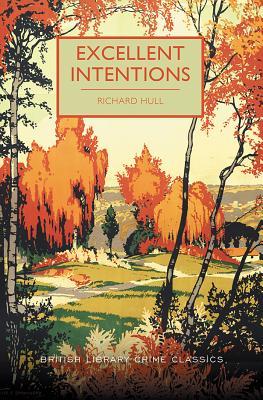
Now I’m looking forward to reading more of Richard Hull’s books and have Excellent Intentions lined up to read soon.
My thanks to the publishers, Poisoned Pen Press, for my review copy via NetGalley.
This is qualifies for the Mount TBR Challenge and for the Calendar of Crime Challenge for March in the category of a book in which money/fortune/inheritance has a major role.
Poisoned Pen Press|4 September 2018 |227 pages|e-book |Review copy|5*
This edition, published in association with the British Library, has an introduction by Martin Edwards. It was first published in 1934 by Hamish Hamilton. It was Richard Hull’s first novel. His real name was Richard Henry Sampson (1896 – 1973) and up until 1934 he had worked as a chartered accountant. With the success of The Murder of My Aunt he devoted himself to writing.
The Murder of My Aunt is one of the best of the classic crime fiction novels from the Golden Age that I’ve read. On the face of it has a straightforward plot as Edward Powell, the narrator for most of the book, plots to murder his Aunt Mildred. They live in a house called Brynmawr on the outskirts of the Welsh town of Llwll. Mildred is his guardian, his parents having died in mysterious circumstances when Edward was very young. He detests living in Lwll and he also detests his aunt. It’s a contest of wills as Mildred finds Edward a great trial, she sees all his faults – he is selfish, self-centred, vain and lazy and foppishly effeminate – and she constantly nags him to change his ways, or she will ‘have to take action’. Edward, though decides that he will take action, thinking his life would be so much better without Mildred and he sets out to find a way to arrange her death so that no suspicion will fall on him. He makes copious notes of various methods and the steps he plans to take and that’s more difficult than he expected as his attempts keep failing.
But it’s the writing that lifts this book from the ordinary to an original and funny murder mystery and, whilst not laugh-out-loud funny, I thought it was brilliant. It’s witty and ironic from the start as Edward pontificates on the pronunciation of the word ‘Lwll’. Neither Edward nor Mildred come across as caricatures, but as real people, both of them with their own faults. Edward is just so insufferably awful that I felt on Mildred’s side in their battle of wits, even though she shows him up in front of the whole village – and after all she had brought him up.
Once I started to read The Murder of My Aunt I was captivated and I had to read it quickly, anxious to find out if Edward did manage to kill his aunt. It makes very entertaining reading and I loved the ending, which took me by surprise and I thought was so clever – definitely a 5* read for me!
Now I’m looking forward to reading more of Richard Hull’s books and have Excellent Intentions lined up to read soon.
My thanks to the publishers, Poisoned Pen Press, for my review copy via NetGalley.
This is qualifies for the Mount TBR Challenge and for the Calendar of Crime Challenge for March in the category of a book in which money/fortune/inheritance has a major role.
My Friday Post: The Murder of My Aunt by Richard Hull
Every Friday Book Beginnings on Friday is hosted by Gillion at Rose City Reader where you can share the first sentence (or so) of the book you are reading, along with your initial thoughts about the sentence, impressions of the book, or anything else the opener inspires.
I have just started to read The Murder of My Aunt by Richard Hull, a Crime Classic first published in 1934.
It begins:
My aunt lives just outside the small (and entirely frightful) town of Llwll. That is exactly the trouble.
Also every Friday there is The Friday 56, hosted by Freda at Freda’s Voice.
 These are the rules:
- Grab a book, any book.
- Turn to page 56, or 56% on your eReader. If you have to improvise, that is okay.
- Find any sentence (or a few, just don’t spoil it) that grabs you.
- Post it.
- Add the URL to your post in the link on Freda’s most recent Friday 56 post.
Pages 55-56:
Blood is so repellent. In fact the very thought is so disturbing that I had to stop writing and read a story of de Maupassant’s to calm my nerves, before I could continue to write these notes.
~~~
Blurb
Edward Powell lives with his Aunt Mildred in the Welsh town of Llwll. His aunt thinks Llwll an idyllic place to live, but Edward loathes the countryside and thinks the company even worse. In fact, Edward has decided to murder his aunt. A darkly humorous depiction of fraught family ties, The Murder of My Aunt was first published in 1934.
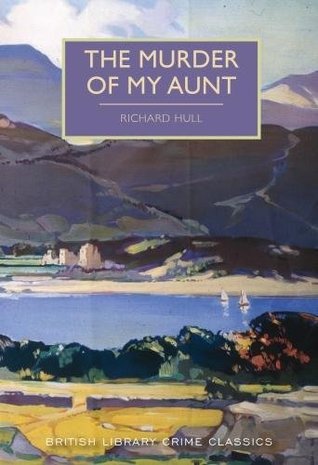
This tempts me in different ways – I like the title, I like murder mysteries and I like the promise of humour. And I like the cover too.
What do you think? Does it tempt you or would you stop reading?
The Glass Woman by Caroline Lea

The Glass Woman by Caroline Lea, set in Iceland in 1686, has a dark atmosphere, saturated in sadness, fear and superstition, a story of suspicion, love and violence. The story takes places over just a few months from August to December. It begins in November 1686 as a body surfaces from the ice-crusted sea, a body that had been weighted down with stones. But the land in Iceland is never still and the stones had been dislodged, pushing the body upwards and breaking the ice above.
And then the story steps back a few months to August 1686 as Rósa is sent to the remote village of Stykkishólmur to join her new husband, Jón Eiríksson, a rich fisherman, farmer and merchant, and the chieftain. In other words a powerful man. He and Rosa had met when he had been travelling south and although his wife, Anna, had only been dead for two months he had proposed to Rosa. She accepted him, not because she loved him but to save her mother from starvation. Jon gives her a small glass figurine, shaped in the perfect form of a woman, hands clasped and her gaze meekly lowered, as a wedding present. He said it reminded him of her.
And a few months later accompanied by Petur, his apprentice, she travels to Stykkishólmur. Petur is reputed to be one of the huldufolk – one of the ‘hidden people’ or elves, who take people and feast on their souls. (Icelandic works are used throughout the book and there is a short glossary at the end of the book, which I didn’t find until I finished the book.) He warns her not to ask questions about Anna, not to him or the villagers and especially not to Jon. As they near the village Rosa becomes suspicious and fearful, especially as strangers they meet warn her that Jon may look honest but underneath he is a devil.
Her fears only increase as she finds she is isolated in a croft apart from the other villagers, who shun her with the exception of one woman, Katrin, who offers to help her. Jon forbids her to enter the locked room in the loft or the outbuildings, which of course rouses her curiosity. He expects her to obey him and occupy herself in the croft – to be subservient, like the glass woman. So, Rosa obediently went through her daily tasks. There was an old belief that reading and writing could be a form of witchcraft and Rosa’s mother, who knows Rosa is too wilful to be a wife, had warned her that Jon would set fire to her feet if she wrote a single word. So Rosa, who loves the Sagas, hid her writing from Jon. Then, hearing strange noises in the loft, she is irresistibly drawn to investigate and the tension rises, slowly mounting to violence as the book progresses.
I had high hopes that I would love The Glass Woman, but my hopes dwindled as I read on. I thought it was too long, too drawn out and slow, especially in the first half of the book. The structure of the story let it down for me and there are parts of the story I thought were a bit too predictable. The action takes place over just a few months – from August to December – and the narrative switches backwards and forwards over these months, between Rosa in the third person and Jon in the first person which I found rather disjointed and awkward having to work out what happened when. The pace did pick up towards the end of the book, though, as the violence reaches its climax.
I liked the setting in Iceland and the historical context. Caroline Lea explains in her author’s note at the end of the book that as she immersed herself in Jon and Rosa’s world she found the landscape itself was becoming a character. I can see what she means – the landscape does play a large part in the story and I liked her descriptions of its changing nature as earthquakes engulf whole hills, the land falling away or rising up. She was also fascinated by the Sagas with their references to the supernatural and that comes across strongly too.
The questions, however kept my interest – what had happened to Anna, what is in the locked room, and why does Jon want to keep Rosa away from the village? And what about the body that emerges from ice – how does that fit into the story? Overall, then I did enjoy this book.
My thanks to the publishers, Penguin UK Michael Joseph, for my review copy via NetGalley.
This is my first book for the What’s In a Name? challenge – a book with the word ‘woman’ in the title, for the When Are You Reading? challenge, the Calendar of Crime challenge and the Mount TBR challenge too.

