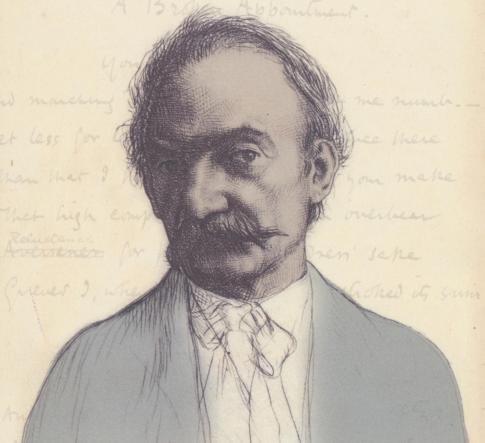
The Return of the Native by Thomas Hardy

Blurb from Amazon:

First published serially between January and December of 1878 in the sensationalistic monthly London magazine “Belgravia”, Thomas Hardy’s “The Return of the Native” is the author’s sixth published novel. Set in Egdon Heath, an area of Thomas Hardy’s fictionalized Wessex known for the thorny evergreen shrubs, called furze or gorse, which are cut there by its residents for fuel.

When the story begins, on Guy Fawkes Night, we find Diggory Venn, a merchant of the red mineral called reddle which farmers use to mark their sheep, giving aid to Thomasin Yeobright, whom he is in love with but has unsuccessfully wooed over the preceding two years. Diggory is helping Thomasin, who is in distress having left town with Damon Wildeve under the false promise of matrimony, return home to her aunt, Mrs. Yeobright. Damon has rebuffed Thomasin in favor of the beautiful young Eustacia Vye.

However when Mrs. Yeobright’s son Clym, a successful diamond merchant, returns from Paris, Eustacia loses interest in Damon, seeing a relationship with Clym as an opportunity to escape the Heath in favor of a more glamorous and exciting locale. A classically modern novel, “The Return of the Native” presents a world of people struggling between their unfulfilled desires and the expectations of society. 

My thoughts:

Thomas Hardy is one of my favourite authors and I throughly enjoyed The Return of the Nativewhich I think is one of his best books. I loved the setting on Eldon Heath, which is based on the small heath by Hardy’s childhood home, but is much larger. The ancient round barrows named Rainbarrows, and Rushy Pond, which lie immediately behind Hardy’s childhood home, form the centre of the fictional heath. Hardy’s description of it is detailed, poetically lyrical and beautiful. 

It’s a dramatic and tragic love story. It has a large cast of characters, with lovers who change their affections throughout the novel and it’s full of intrigue with striking moonlit scenes, disputes, heated quarrels and misunderstandings, along with rustic characters and traditional celebrations, for example Guy Fawkes night, May Day and a Mummers’ play at Christmas.

It was first published in 1878 in three volumes with revisions at later dates. The revision I read was published in 1912. Hardy’s Preface establishes that the events described took place between 1840 and 1850. ‘Egdon Heath’ is a combination of various heaths that were later ploughed or planted to woodland. He liked to think of it as the ‘heath of that traditionary King of Wessex – Lear’. The Return of the Native is a complex novel, shocking to its contemporary public because of its depiction of passionate and illicit sexual relationships (tame by today’s standards).

It begins with a description of Egdon Heath, a sombre isolated place, loved by some and hated by others, some regarding it as a prison. Along the ancient highway that crossed the heath the solitary figure of an old man sees a cart ahead of him in the long dry road. Both the driver, who walked beside it, and the cart, were completely red – he was a reddleman, who supplied  farmers with redding for their sheep. He plays an important part in the novel, appearing at significant times and places to great effect on the course of events. 

It’s not a book to read quickly and it transported me back to a time that ceased to exist before I was born, where time moved more slowly, ruled by the seasons and the weather, and with a clearly defined social hierarchy. And yet, I was surprised to find that youngsters were scribbling graffiti on ‘every gatepost and barn’s doors’, writing ‘some bad word or other’ so that a woman can hardly pass for shame some time.’ Learning to write and sending children to school was blamed:

’Ah, there’s too much of that sending to school these days! It only does harm. … If they’d never been taught how to write they wouldn’t have been able to scribble such villainy. Their fathers couldn’t do it, and the country was all the better for it.’ (Page 108)8

Quite simply – I loved it. It’s a love story full of depth, atmosphere and passion, but also of tragedy  and a mix of darkness and light.

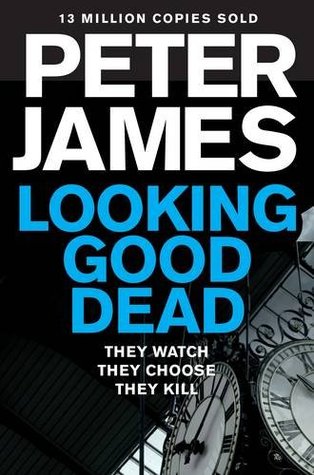
Looking Good Dead by Peter James

looking good dead

I’ve read a few books by Peter James, but only three of his Roy Grace books, Simply Dead, the first book in the series, Not Dead Enough, the third one and now Looking Good Dead, the second book (and one of my TBRs).

Synopsis from Fantastic Fiction

Tom Bryce did what any decent person would do. But within hours of picking up the CD that had been left behind on the train seat next him, and attempting to return it to its owner, he is the sole witness to a vicious murder. Then his young family are threatened with their lives if he goes to the police. But supported by his wife, Kellie, he bravely makes a statement, to the murder enquiry team headed by Detective Superintendent Roy Grace, a man with demons of his own – including his missing wife – to contend with. And from that moment, the killing of the Bryce family becomes a mere formality – and a grisly attraction. Kellie and Tom’s deaths have already been posted on the internet. You can log on and see them on a website. They are looking good dead. ‘Destined for the bestsellers’ – “Independent on Sunday”. ‘A terrific tale of greed, seduction and betrayal’ – “Daily Telegraph”.

My thoughts:

It really is necessary to read these books in order because although each one is a complete murder mystery, they tell the continuing story of Roy Grace’s personal life and the mystery of his missing wife, Sandy. She had disappeared eight years earlier than the events described in the first book and had never been found. When all the usual sources had failed to find her he had turned to psychics and mediums for help, which he does again in this case.

As I wrote in my WWW Wednesday this book is set in Brighton and Peter James describes the setting in detail which slows the action down somewhat, but apart from that it’s fast paced. Tom is on a disastrous course as soon as he puts the CD into into his computer in an attempt to identify the man who left it on the train. The CD directs him to a site where he witnesses a murder and then he and his family also become targets for the killer and the tension immediately rises and culminates in the most terrifying scenes by the end of the book. I raced through it, trying not to visualise the gruesome details and impatient whenever the action moved away from the murder mystery, keen to find out whether Tom and his family would survive.

  • Format: Kindle Edition
  • File Size: 2117 KB
  • Print Length: 428 pages
  • Publisher: Pan; New Edit/Cover edition (4 Sept. 2008)
  • My Rating: 3.5*
  • Source: I bought it

The 16th book in this series, Find Them Dead will be published in July.

Becoming Mrs Lewis by Patti Callahan

Becoming Mrs Lewis

3*

Blurb:

Poet, atheist and communist, New Yorker Joy Davidman is an unconventional woman – and an unlikely partner for an English academic and theologian.

And when she starts a correspondence with Narnia author C. S. Lewis, she isn’t looking for love. Her own marriage crumbling, she seeks refuge in her work, and guidance from a writer she admires.

But in Joy’s letters Lewis discovers a kindred spirit, and an intellect to equal his own. Bonding over a shared love of literature and ideas, a deep connection is forged between the two.

Embarking on the adventure of a lifetime, Joy travels from America to England and back again. Facing heartbreak and poverty, discovering friendship and faith, against all the odds, the couple struggle to secure a love that will endure forever.

My thoughts:

I was keen to read Becoming Mrs Lewis by Patti Callahan as I have read many of C S Lewis’ books and was enthralled watching Anthony Hopkins, Debra Winger, and Julian Fellowes in Shadowlands (not a dry eye in the cinema) some years ago. Shadowlands is  about his meeting with Helen Joy Davidman and about the events that led to their marriage. I think the blurb (see above) summarises the events that led to Jack and Joy’s marriage very well and it was what made me want to read the book. 

When I’d read part of the book I discovered that Patti Callahan was giving an online blog tour.  It was very helpful, as I had been wondering whether the correspondence between Jack (as C S Lewis was known to his family and friends) and Joy that she quoted in the book was taken from their actual letters. She clarified that their letters had been lost – Jack had destroyed Joy’s letters to him because they were personal, whilst Joy had kept his letters to her in a trunk, but later it was vandalised and all the letters had gone. So, she had read the letters they had written to other people and used those as a basis for the letters in her book. In other words the letters in the book are imagined but inspired by those letters. She also said that the bones of her book are based on the facts – the dates and times are correct the rest is fiction.

However when I went back to the book I became disappointed. Written as though Joy herself is telling their story it is intense, passionate and very personal and I felt very uncomfortable reading it – as though I was eavesdropping on the characters. If I had been reading romantic fiction I wouldn’t have felt that way – but then I probably wouldn’t have read it at all.

Joy’s marriage was portrayed as a nightmare, her boys were in fear of their father and what he wanted from Joy was not the independent woman she was, but the little wife at home, submissive and obedient to him. He was abusive, an alcoholic and subject to rages. She found acceptance and understanding from Jack both in his letters and in person when she met him in England. What I found difficult to read is the personal thoughts and feelings ascribed to Joy and her desire for a physical relationship with Jack. I couldn’t warm to her, which is a shame as Patti Callahan’s admiration of her came over very strongly in her talk and she said that she had written the book so that people would care about her. It appeared to me from this book that she was almost stalking Jack. I was surprised that she felt able to spend so much time in England, despite missing her sons. She had left them at home with her husband and her cousin who was so obviously the kind of woman her husband desired.  

I was in two minds several times about finishing the book, but I’m glad I persevered to the end as overall I did enjoy it even though I think it went into too much detail. It has inspired me to look back at the books I have by and about C S Lewis and  to find out more about Joy Davidman.

My thanks to Harper Collins Inspire for a review copy via NetGalley.

Latest e-book additions at BooksPlease

We’re in self isolation right now and one of the things I’m hoping to do is to spend more time than usual reading. And one of the best things about reading e-books is that you don’t have to go out of the house or meet anyone to get them. 

The Overstory by Richard Powers – this was my Mother’s Day present from my son.

An artist inherits a hundred years of photographic portraits, all of the same doomed American chestnut. A hard-partying undergraduate in the late 1980s electrocutes herself, dies, and is sent back into life by creatures of air and light. A hearing- and speech-impaired scientist discovers that trees are communicating with one another. An Air Force crewmember in the Vietnam War is shot out of the sky, then saved by falling into a banyan.

This is the story of these and five other strangers, each summoned in different ways by the natural world, who are brought together in a last stand to save it from catastrophe.

The Feather Thief : Beauty, Obsession, and the Natural History Heist of the Century by Kirk Wallace Johnson – I’ve been watching Chris Packham’s daily live broadcasts and this is one of the books that he recommended.

One summer evening in 2009, twenty-year-old musical prodigy Edwin Rist broke into the Natural History Museum at Tring, home to one of the largest ornithological collections in the world. Once inside, Rist grabbed as many rare bird specimens as he was able to carry before escaping into the darkness.

Kirk Wallace Johnson was waist-deep in a river in New Mexico when his fly-fishing guide first told him about the heist. But what would possess a person to steal dead birds? And had Rist paid for his crime? In search of answers, Johnson embarked upon a worldwide investigation, leading him into the fiercely secretive underground community obsessed with the Victorian art of salmon fly-tying.

Was Edwin Rist a genius or narcissist? Mastermind or pawn?

The Dutch House by Ann Patchett – Longlisted for the Women’s Prize 2020. I’d reserved this at the library, but as it’s now closed I decided to buy the e-book!

Danny Conroy grows up in the Dutch House, a lavish mansion. Though his father is distant and his mother is absent, Danny has his beloved sister Maeve: Maeve, with her wall of black hair, her wit, her brilliance. Life is coherent, played out under the watchful eyes of the house’s former owners in the frames of their oil paintings.

Then one day their father brings Andrea home. Though they cannot know it, her arrival to the Dutch House sows the seed of the defining loss of Danny and Maeve’s lives. The siblings are drawn back time and again to the place they can never enter, knocking in vain on the locked door of the past. For behind the mystery of their own exile is that of their mother’s: an absence more powerful than any presence they have known.

Told with Ann Patchett’s inimitable blend of humour, rage and heartbreak, The Dutch House is a dark fairy tale and story of a paradise lost; of the powerful bonds of place and time that magnetize and repel us for our whole lives.

The Animals at Lockwood Manor by Jane Healey

A terrible secret lies buried at the heart of this house

Animals at Lockwood Manor

Mantle| 5 March 2020| 352 pages| e-book| review copy via NetGalley| 3*

I enjoyed The Animals at Lockwood Manor by Jane Healey although I think is too long with some repetitions and so in places I felt it dragged a bit. It is historical fiction, part a love story and part a mystery, beginning in 1939 at the outbreak of World War Two. A taxidermy collection of mainly mammals is being evacuated from a natural history museum in London to Lockwood Manor in the countryside to save them from the threat of bombs. Owned by Major Lord Lockwood, the Lockwood estate is ancient, although most of the house had been built in the Jacobean style in the nineteenth century, with two round turrets and a pierce parapet with pinnacles. Most of its many rooms are empty as the only residents are the Major and his daughter, Lucy along with the servants, whose numbers are down as they enlist.

In charge of the collection is Hetty Cartwright, a young woman, who soon realises she had taken on more than she expected. And it’s not long before, one after another, some of the animals go missing or are mysteriously moved from their positions in the long gallery. The book begins well as the scene is set, and I could feel the tension and mystery surrounding the house and in particular surrounding Lucy and her mother, Heloise. Heloise died in a car crash not long before the book begins, but we see her in Lucy’s journal in which she writes down her nightmares, thoughts and memories.

The narration alternates between Lucy’s journal and the events as experienced by Hetty. The characters of Hetty and Lucy are well drawn as their relationship develops, and the house and the museum animals too are vividly described. I loved the details of the museum collection, and how the conditions at Lockwood affected their condition as insects invaded the stuffed creatures. 

After a good start the pace then slows down and not a lot really happens until the final dramatic ending. Some of the characters are caricatured – for example the Major who is portrayed as an overbearing lecherous man, a pantomime villain. There is a more than a touch of the supernatural in the book, and a lot in it that reminded me of Jane Eyre and The Woman in White, as Hetty fears she is descending into madness. It’s the type of story that would make an excellent film or TV drama and, this is not something I usually think, would probably be better than the book.

Many thanks to Mantle for a review copy via NetGalley.

Reading Challenges: Mount TBR Challenge, Calendar of Crime, Historical Fiction Reading Challenge

Stone Cold Heart by Caz Frear

Stone Cold Heart

2*

Stone Cold Heart is Caz Frear’s second novel and I’m sorry to say that I didn’t get on with it very well. However, I’m in the minority as there are lots of 4 and 5 star reviews on Amazon and Goodreads. My copy is a NetGalley copy that I’ve had far too long – I did start reading it when I first downloaded it but soon realised that it would be better if I read her debut novel, Sweet Little Lies first. These are police procedurals written in the first person present tense narrated by DC Cat Kinsella who is part of the Murder Investigation Team 4, and her personal life is a major part of both books.

Naomi Lockhart, a young Australian woman was murdered and at first it looked as though her flatmate had killed her. The night before she was murdered Naomi had been at a party held by her employer, Kirstie Connor and her husband, Marcus. Also at the party were Joseph Madden and his meek wife, Rachel, Marcus’ sister. Joseph is an emotionally abusive narcissist, who manages the local coffee shop and when suspicion then falls on him and he is arrested he claims that Rachel is setting him up. And so begins a most convoluted and tangled tale about Joseph and the rest of his family, filled with secrets and lies, most of which are complete red herrings.  

Alongside the murder mystery, the book follows the story of DC Cat Kinsella’s family and the mystery surrounding Maryanne Doyle that was told in Sweet Little Lies – you really do need to read that book first to understand what is going on in her family life in this book. Cat is a conflicted character to say the least and although other readers have found her a warm and likeable character I found her one of the most irritating fictional detectives in crime fiction. She is full of guilt and angst about her family, in particular about her father and her brother. She is keeping the identity of her boyfriend a secret from everybody – if you’ve read Sweet Little Lies you’ll know why, otherwise you’ll be as mystified as her family and police colleagues are.

I found the secrets surrounding Cat’s family the most interesting part of the book, more so than the investigation into Naomi’s murder. The Murder Investigation Team all get on well together, but their continuing team meetings in which they endlessly consider all the possible theories about the murder and what happened, although interesting at first soon became tedious – far too much hypothesising. The book just dragged on and on. And then there is the ending – except it’s just the murder mystery that ends as it looks as though there is still more to come about Cat Kinsella. If you like long detective stories, full of twists and turns, lots of red herrings and dubious and unreliable characters who withhold evidence you may like it more than I did.

Amazon UK link
Amazon US link

My thanks to the publishers, Zaffre, for a review copy via NetGalley.

Reading challenges: Mount TBR challenge and Calendar of Crime – the main action takes place in November.