Gallows View by Peter Robinson

Gallows View: DCI Banks (Inspector Banks 1)

This year marks the 30th anniversary of the first Inspector Banks bookGallows View by Peter Robinson* (see below). I’ve read some of the later Banks books, totally out of order, which doesn’t seem to matter as I think they work well as stand alone books.

Inspector Alan Banks has been in Eastvale in the Yorkshire Dales for six months, having relocated from London. He has now got used to the slower pace of life and is working well with his colleagues. Sandra, his wife, has also settled well in Eastvale, making friends with Harriet and joining the local photography club.

There’s a peeping tom in the area, targeting young, blonde women, following them as they leave the pub and then watching as they undress for bed and there is also spate of break-ins by two balaclava-wearing thugs who rob old ladies and vandalize their homes. It’s clear quite early in the book that the two thugs are teenagers, Trevor Sharp and his friend, Mick Webster, who progress from robbing old ladies to burgling more prosperous homes when their owners are away from home, guided by Mick’s older brother, Lenny.

The main mystery is that of Alice Matlock, an old woman, living on her own, who is is found dead in her ransacked house in Gallows View, a row of old terraced  cottages. Her body was discovered by her friend, Ethel Carstairs, lying on her back, having fractured her skull on the corner of a table while falling backwards – or had she been pushed? Was she also a victim of Trevor and Mick, could it have been the peeping tom, or was someone else responsible? It might have just been an accident – she was old and her bones were brittle.

Dr Jenny Fuller, a psychologist at York University, has been brought in to help by providing a profile for the peeping tom case. Banks, a happily married man, is immediately attracted to her. They work well together, although Sandra, his wife, is rather suspicious at first about their relationship when she discovers that Dr Fuller is a young, attractive redhead.

It’s a good start to the series, which has now reached 24 books. It has quite a relaxed pace, with a complex and well constructed plot. The characters are convincing and realistic, and I like Banks, a hard working dedicated detective who gets on well with his boss, Superintendent Gristhorpe, who likes to build dry stone walls in his spare time.

As well as the crimes Robinson also explores a number of other issues – for example, feminism and gender, and education, comparing comprehensives and grammar schools. One thing that really dates it is the frequent mention of smoking in pubs!

As with other detective novels that have since been adapted for TV there are differences from the books. Peter Robinson explains on his website he has no power in the TV universe, and he thinks of the Banks books and the TV series as parallel universes. The characters are clearly meant to be different versions of the same person; they look different, have different personalities and meet different fates in different worlds.

  • Format: Kindle Edition
  • File Size: 826 KB
  • Print Length: 324 pages
  • Publisher: Pan; Reprints edition (21 Aug. 2009)
  • Source: I bought the e-book
  • My Rating: 4*

Gallows View is a book I’ve owned for over 2 years, so it qualifies for Bev’s Mount TBR Challenge.

*Peter Robinson later wrote a novella, Like A Virgin published in a short story collection, The Price of Love, which is about his last case in London just before he moved to Yorkshire.
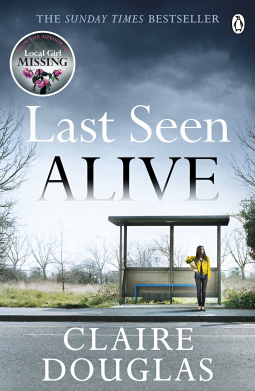
Last Seen Alive by Claire Douglas

Publication date: 13 July 2017, Penguin

Source: review copy via NetGalley

Blurb:

Libby Hall never really wanted to be noticed. But after she saves the children in her care from a fire, she finds herself headline news. And horrified by the attention. It all reminds her of what happened nine years ago. The last time she saw her best friend alive.

Which is why the house swap is such a godsend. Libby and her husband Jamie exchange their flat in Bath for a beautiful, secluded house in Cornwall. It’s a chance to heal their marriage – to stop its secrets tearing them apart.

But this stylish Cornish home isn’t the getaway they’d hoped for. They make odd, even disturbing, discoveries in the house. It’s so isolated-yet Libby doesn’t feel entirely alone. As if she’s being watched.

Is Libby being paranoid? What is her husband hiding? And. As the secrets and lies come tumbling out, is the past about to catch up with them? 

Last Seen Alive is the first novel by Claire Douglas that I’ve read and I loved it. It’s everything the blurb promised, and the secrets and lies never stop coming, right up to the end of the book. To write too much about the plot would only spoil it – you have to experience it as you read to get the full impact.

I can only say that right from the beginning of the book I was hooked as Jamie and Libby arrive at their house swap in the Roseland Peninsula in Cornwall (I’ve been there – it is beautiful) and I felt the suspense and tension as they explored the house by the sea. It’s a remote detached rectangular house with a round turret at one end and inside it had been recently restored. They are dismayed by the contrast with their poky two bed flat in Bath. Immediately alarm bells are going off in Libby’s head, what were the owners’ real reasons for wanting to swap this house for their little flat?

Strange things happen, Libby’s fears escalate and then Jamie begins to question her about her past. He knew that Karen, her best friend had died in a fire when the two of them were in Thailand and that Libby had been lucky to escape. But she doesn’t want to talk about that and she knows that he is keeping things from her too. Then Jamie comes down with a bad attack of food poisoning and ends up in hospital. Their stay in Cornwall comes to an end as the owner tells them he is leaving their flat. They return and from then on everything gets worse – much worse.

Needless to say this is a complicated and complex story, perfectly paced as the secrets are revealed and the lies are exposed. The characterisation is good. As I read I grew to like Libby a lot but began to suspect that maybe she wasn’t as genuine as I first thought and Jamie’s attitude began to irritate me – signs that the characters are well drawn. At one point I began to get a glimmer about the truth as I realised how the Prologue fitted into the story.

I was never really sure who I could believe, just who was telling the truth. It’s one of those books that keeps you guessing right up to the end and this one is excellent, dramatic, tense and so very, very twisty.

My thanks to NetGalley and Penguin, the publishers for a review copy.

  • Format: Kindle Edition
  • File Size: 2751 KB
  • Print Length: 389 pages
  • Page Numbers Source ISBN: 1405926422
  • Publisher: Penguin (13 July 2017)
  • My rating: 5*

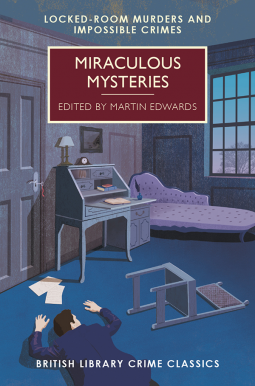
Miraculous Mysteries: Locked Room Mysteries and Impossible Crimes edited by Martin Edwards

I’ve said before that I’m not a big fan of short stories, often finding them disappointing. So I’m glad to say that I enjoyed this anthology edited by Martin Edwards: Miraculous Mysteries: Locked Room Mysteries and Impossible Crimes. Some stories, of course, are better than others.

These are the sixteen stories in the collection. Martin Edwards has prefaced each one with a brief biographical note, which I found useful as some of the authors were new to me. I read the collection slowly, which I find is the best way to approach a short story collection.

  • The Lost Special by Arthur Conan Doyle (not a Sherlock Holmes/Dr. Watson story) about a train that disappears on its route from Liverpool to London. This was first published in The Strand Magazine in 1898.
  • The Thing Invisible by William Hope Hodgson, an author I hadn’t come across before. First published in 1913 this is a murder mystery dressed up as a ‘ghost’ story. Very atmospheric.
  • The Case of the Tragedies in the Greek Room by Sax Rohmer, another new-to-me author, although I had heard of his most well known character, the master criminal Dr Fu Manchu. In this story amateur detective Moris Klaw  and his beautiful daughter investigate a locked room murder in a museum, involving ‘psychic photographs’.
  • The Aluminum Dagger by Richard Austin Freeman, featuring one of Dr. John Thorndyke’s scientific stories, describing in detail how a man was discovered in a locked room, stabbed to death.
  • The Miracle of Moon Crescent by G. K. Chesterton, a Father Brown story set in America, in which the cleric investigates a death by a curse.
  • The Invisible Weapon by Nicholas Olde, an impossible murder mystery, in which there is only one man who could have done it – and he could not have done it.
  • The Diary of Death by Marten Cumberland – an impossible crime, a kind of chess problem. Lilian Hope’s diary provides a list of victims -people she had hated.
  • The Broadcast Murder by Grenville Robbins, in which a murder takes place in a radio station and is broadcast has it happens.
  • The Music-Room by Sapper (not a Bulldog Drummond story), featuring a secret passage and a falling chandelier.
  • Death at 8:30 by Christopher St. John Sprigg, in which a murderer predicts the date and exact time of the death of the victim unless a ransom is paid.
  • Too Clever By Half by G. D. H. and Margaret Cole – Dr Tancred’s advice, if you intend to commit a murder, is don’t make the mistake of trying to be clever!
  • Locked In by E. Charles Vivian – a death by shooting in a locked room.
  • The Haunted Policeman by Dorothy L. Sayers (a Lord Peter Wimsey story) – probably my favourite in the collection. It had me completely mystified. The policeman is new to the beat and can’t believe his eyes.
  • The Sands of Thyme by Michael Innes (a John Appleby story) murder at Thyme Bay, or was it suicide? Footprints in the sand provide a clue.
  • Beware of the Trains by Edmund Crispin (a Gervase Fen story), a clever and baffling story about a lost train driver.
  • The Villa Marie Celeste by Margery Allingham (an Albert Campion and Inspector Luke story) – another favourite, in which a young couple disappear, leaving behind their half-eaten breakfast, taking only a couple of clean linen sheets. There was no clue why they left and no signs of any violence.

My thanks to the publishers for my review copy via NetGalley.

An Uncertain Place by Fred Vargas

An Uncertain Place (Commissaire Adamsberg, #8)

I loved An Uncertain Place, a clever and also a confusing book. It’s the sixth in Fred Vargas’ Commissaire Adamsberg series in which he investigates a macabre murder. I say confusing because I got a bit lost in the middle of the book, and looking back I think it’s because Adamsberg is not your normal detective – he works by intuition and I simply hadn’t followed his train of thought. With a bit of concentration I was back on track and caught up with him.

I say clever because it is such a convoluted plot, with what I thought could be red herrings, but which turned out to be vital clues. I think the blurb on the back cover summarises the story better than I could:

Commissaire Adamsberg leaves Paris for a three-day conference in London. With him are Estalere, a young sergeant, and Commandant Danglard, who is terrified at the idea of travelling beneath the Channel. It is a welcome change of scenery, until a macabre and brutal case comes to the attention of their colleague Radstock from New Scotland Yard.

Just outside the gates of the baroque Highgate cemetery a pile of shoes is found. Not so strange in itself, but the shoes contain severed feet. As Scotland Yard’s investigation begins, Adamsberg and his colleagues return home and are confronted with a massacre in a suburban home. Adamsberg and Danglard are drawn in to a trail of vampires and vampire-hunters that leads them all the way to Serbia, a place where the old certainties no longer apply.

My thoughts:

This is one of those books that once I begin reading I don’t want to put down. I had to, of course, and it’s not a book to dash through to the end or you’ll miss so much. Adamsberg is a very likeable detective, although he must be a nightmare to work with, as his colleagues find his methods of working just as bewildering and confusing as I do. But they are used to him and trust his leaps of intuition.

The mystery of who left the shoes outside the gates of Highgate Cemetery is a theme throughout the book:

The smell was ghastly, the scene appalling, and even Adamsberg stiffened, standing back a little behind his English colleague. From the ancient shoes, with their cracked leather and trailing laces, projected decomposed ankles, showing dark flesh and white shinbones which had been cleanly chopped off. The only thing that didn’t match Clyde-Fox’s account was that the feet were not trying to get into the cemetery. They were just there, on the pavement, terrible and provocative, sitting inside their shoes at the historic gateway to Highgate Cemetery. They formed a carefully arranged and unspeakable pile. (page 23)

 The scene that confronts Adamsberg on his return to Paris is even more gruesome. Pierre Vaudel, a former journalist who specialised in legal affairs, had been murdered, or rather it looked as though his body had exploded and had been strewn around the room. The only way to identify the body was by DNA. Suspicion falls on the gardener, who reported the death and who inherited all of Vaudel’s property and also on Vaudel’s son.

After a similar murder occurs in Austria, Adamsberg is eventually led to a village on the Serbian/Romanian border, finding himself immersed in the weird world of vampires. Books featuring vampires (with the exception of Dracula) are not part of my preferred reading, but I found this aspect of the book fascinating. Adamsberg, himself, is sceptical and ignores warnings not to start meddling or even visit the tomb of Petar Blagojevic who had died in 1725. Blagojevic/Plogojowitz was said to be a ‘vampyr‘, and the clearing in the wood, where he was buried is known by the locals as ‘the place of uncertainty.’ Adamsberg’s disregard for his own safety puts him in danger of losing his own life.

This book is full of wonderful and unique characters, the plot, as I said, is clever and completely bamboozled me, the settings are easily imagined from Vargas’ descriptions, and the suspense is maintained throughout. It’s a complicated book – one of the most intriguing aspects is the sudden appearance of a man claiming to be Adamsberg’s son. Maybe this is not a book everyone will enjoy, but I think it’s a most satisfying and surreal mystery, and one that I enjoyed immensely.

  • Paperback: 416 pages
  • Publisher: Vintage (5 April 2012)
  • Language: English
  • ISBN-10: 009955223X
  • ISBN-13: 978-0099552239
  • Source: I bought my copy
  • My Rating: 4.5*

Reading challenges: Mount TBR Reading Challenge 2017

My Friday Post: An Uncertain Place

Book Beginnings ButtonEvery Friday Book Beginnings on Friday is hosted by Gillion at Rose City
Reader
 where you can share the first sentence (or so) of the book you are reading, along with your initial thoughts about the sentence, impressions of the book, or anything else the opener inspires.

My opening this week is from An Uncertain Place by Fred Vargas*, another book that has sat unread on my shelves for a while.

An Uncertain Place (Commissaire Adamsberg, #8)

Commissaire Adamsberg knew how to iron shirts. His mother had shown him how you should flatten the shoulder piece and press down the fabric round the buttons. He unplugged the iron and folded his clothes into his suitcase. Freshly shaved and combed, he was off to London, and there was no getting out of it.

Also every Friday there is The Friday 56, hosted by Freda at Freda’s Voice.

Friday 56

These are the rules:

  1. Grab a book, any book.
  2. Turn to page 56, or 56% on your eReader.
  3. Find any sentence (or a few, just don’t spoil it) that grabs you.
  4. Post it.
  5. Add the URL to your post in the link on Freda’s most recent Friday 56 post.

From Page 56:

Since London, and perhaps since Danglard had presented such an encyclopedic account of Highgate Cemetery, the commissaire had been feeling he ought perhaps to try harder to remember names, phrases, sentences. His memory for them had always been poor, though he could recall a sound, a facial expression or a trick of the light years later.

Blurb (Goodreads):

Commissaire Adamsberg leaves Paris for a three-day conference in London. With him are a young sergeant, Estalère, and Commandant Danglard, who is terrified at the idea of travelling beneath the Channel. It is the break they all need, until a macabre and brutal case comes to the attention of their colleague Radstock from New Scotland Yard.

Just outside the baroque and romantic old Highgate cemetery a pile of shoes is found. Not so strange in itself, but the shoes contain severed feet. As Scotland Yard’s investigation begins, Adamsberg and his colleagues return home and are confronted with a massacre in a suburban home. Adamsberg and Danglard are drawn in to a trail of vampires and vampire-hunters that leads them all the way to Serbia, a place where the old certainties no longer apply.

I have just started to read this book this morning and so far it looks very promising, rather quirky and bizarre.

*Fred Vargas is the pseudonym of the French historian, archaeologist and writer Frédérique Audoin-Rouzeau.  Her crime fiction policiers have won three International Dagger Awards from the Crime Writers Association, for three successive novels: in 2006, 2008 and 2009.

A Place of Execution by Val McDermid

For years I’ve steered clear of reading any of Val McDermid‘˜s books and the reason is that I can’t stand to watch the violence and torture scenes in TV series such as Wire in the Blood, based on her Tony Hill/Carol Jordan series. But then I thought that maybe I wasn’t being fair to judge a writer’s work on films based on the books, and I read Cleanskin, one of the Quick Reads series, aimed at ‘adults who’ve stopped reading or find reading tough, and for regular readers who want a short, fast read.’ I enjoyed it and I’ve been meaning to read one of her full length books ever since.

There are many to choose from but I decided to read A Place of Execution, one of her standalone books. The book was made into a 3-part TV drama shown on ITV 1 in 2008, which I didn’t see. It is one of my TBRs.

A Place of Execution

Blurb:

In the Peak District village of Scarsdale, thirteen-year-old girls didn’t just run away. So when Alison Carter vanished in the winter of ’63, everyone knew it was a murder.

Catherine Heathcote remembers the case well. A child herself when Alison vanished, decades on she still recalls the sense of fear as parents kept their children close, terrified of strangers.

Now a journalist, she persuades DI George Bennett to speak of the hunt for Alison, the tantalising leads and harrowing dead ends. But when a fresh lead emerges, Bennett tries to stop the story ‘“ plunging Catherine into a world of buried secrets and revelations.

My thoughts:

This is an excellent psychological thriller, full of tension and suspense, set in the Derbyshire village of Scardale, an isolated community of about ten houses, where everyone is related, a place that had a reputation of being a law unto itself. So everyone could tell Detective Inspector George Bennett the time that Alison Carter left home taking her dog for a walk. But despite extensive searches her body is never found, although they do find her dog in the woodland, tied to a tree with elastoplast wound round its muzzle.

A Place of Execution spans the years from 1963 when Alison went missing up to 1998 when Catherine Heathcote, a journalist decided to write a book about the case. It had Bennett’s first major investigation and he’d been determined to find out what had happened to Alison. The majority of the book is about his investigation and the meticulous searches he and his team carried out until the case was resolved. But why in 1998 after going over the details of the case with Catherine did he suddenly write to her begging her to abandon the book?

The sense of place and time is so well done in this book and the characterisation is so good that I felt I knew these people. Even when the case appears to have been resolved there is something more, something hidden that still needs to be revealed. I had an inkling about what it was but I had by no means guessed all of it. But the clues were all there.

There are many layers in A Place of Execution. The villagers are a close-knit community suspicious of outsiders and reluctant to talk to the police. I realised towards the end of the book that the way that Val McDermid has structured the book allows for a great deal of deception and that things are not always what they seem. I loved it and I shall definitely be reading more of her books.

Paperback, 624 pages
Published February 6th 2006 by Harper Collins (first published June 7th 1999)