Top Five Tuesday:Top 5 books with an emotion in the title

Top 5 Tuesday was created by Shanah at Bionic Book Worm, and it is now being hosted by Meeghan at Meeghan Reads. For details of all of the latest prompts for January to March, see Meeghan’s post here.

Today the topic is Top 5 books with an emotion in the title. Whether it’s happy or sad, anger or excitement, any emotion is fine!

These are all books I’ve read with links to my reviews.
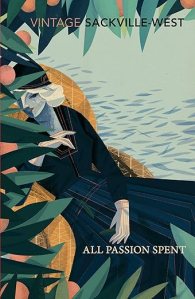
All Passion Spent by Vita Sackville-West. Lady Slane is an ageing British aristocrat. Her husband has recently died at the age of 94, leaving his family with the problem of ‘What was to be done about Mother?’ The family are four sons and two daughters. Lady Slane at 88 is still a beautiful woman and quickly but quietly asserts her independence. She ignores her children and decides to live, with her maid Genoux, in a house in Hampstead that she had first seen thirty years previously. This is a novel of contrasts, beautifully written, and expressing so many emotions in a quiet unassuming manner.
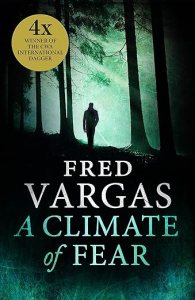
A Climate of Fear by Fred Vargas, a Commissaire Adamsberg murder mystery. I like Adamsberg; he’s original, a thinker, who doesn’t like to express his feelings, but mulls things over. He’s an expert at untangling mysteries, an invaluable skill in this, one of the most complicated and intricate mysteries I’ve read. He’d compared the investigation right from the start to a huge tangled knot of seaweed. A woman is found bleeding to death in her bath, having apparently committed suicide, there’s a secretive society studying and re-enacting scenes from the French Revolution, and two deaths ten years earlier on an isolated island off the coast of Iceland, where the afturganga, the demon who owns the island summons people to their death.

The Grapes of Wrath by John Steinbeck. Steinbeck’s writing conjures up such vivid pictures and together with his use of dialect I really felt I was there in America in the 1930s travelling with the Joad family on their epic journey from Oklahoma to California. What a long, hard journey with such high hopes of a better life and what a tragedy when they arrived to find their dreams were shattered, their illusions destroyed and their hopes denied. Throughout the book, Steinbeck shows the inhumanity of man to man and also the dignity and compassion, the essential goodness and perseverance of individuals against such appalling conditions and inhumane treatment. 
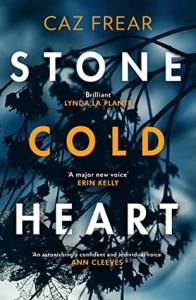
Stone Cold Heart by Caz Frear, a police procedural written in the first person present tense narrated by DC Cat Kinsella who is part of the Murder Investigation Team 4. Naomi Lockhart, a young Australian woman was murdered and at first it looked as though her flatmate had killed her. It’s a most convoluted and tangled tale, filled with secrets and lies, most of which are complete red herrings.  Alongside the murder mystery, the book follows the story of DC Cat Kinsella’s family and the mystery surrounding Maryanne Doyle that was told in Sweet Little Lies – you really do need to read that book first to understand what is going on in her family life in this book. Cat is a conflicted character to say the least and although other readers have found her a warm and likeable character I found her one of the most irritating fictional detectives in crime fiction.

Cruel Acts by Jane Casey. A year ago, Leo Stone was convicted of murdering two women and sentenced to life in prison. Now he’s been freed on a technicality, and he’s protesting his innocence. DS Maeve Kerrigan and DI Josh Derwent are determined to put Stone back behind bars where he belongs, but the more Maeve digs, the less convinced she is that he did it. Then another woman disappears in similar circumstances. Is there a copycat killer, or have they been wrong about Stone from the start?
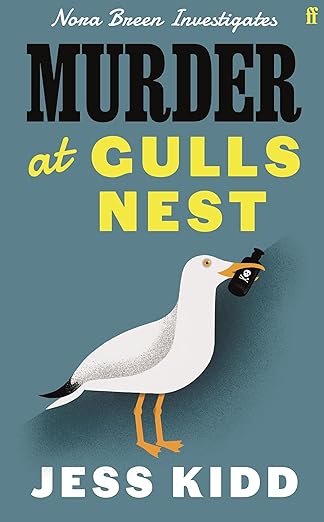
Murder at Gull’s Nest by Jess Kidd

Faber & Faber| 11 Mar. 2025| 335 pages| review copy| e-book| 4*

Summary from the publishers’ website:

The first in a sparkling new 1950s seaside mystery series, featuring sharp-eyed former nun Nora Breen.

After thirty years in a convent, Nora Breen has thrown off her habit and set her sights on the seaside town of Gore-on-Sea. Why there? Why now? Instinct tells her it’s better not to reveal her reasons straight away. She takes a room at Gulls Nest guest house and settles in to watch and listen.

Somewhere in the north, a religious community meets for Vespers. Here on the southeast coast, Nora Breen prepares for braised liver and a dining room full of strangers.

Over disappointing – and sometimes downright inedible – dinners, Nora realises that she was right to keep quiet: her fellow lodgers are hiding something. At long last, she has found an outlet for her powers of observation and, well, nosiness: there is a mystery to solve, and she is the only person for the job.

My thoughts:

This is the first one of Jess Kidd’s books that I’ve read and I didn’t know what to expect. I enjoyed it. It’s quirky with some odd characters. At times it feels like a cosy crime mystery, but it’s also rather dark and foreboding, whereas at other times there’s some humour and also a hint of a romance. The setting is good in a fictional 1950s British seaside town.

It’s the mystery and the characters (there a lot) that stand out the most in my mind. Nora, the main character, is a no-nonsense person, who has just left a convent after 30 years, where she worked as a nurse. She went to the same guest house at Gore-on-Sea to find her friend, Frieda, a novice who had previously left the same convent due to ill health. Frieda had been writing to her weekly, but Nora hadn’t heard from her for some time and knew something was very wrong.

There are some very strange people. Among these people the ones who stood out for me are Nora, who is adjusting to life outside the outside world, whilst trying not to draw attention to herself. Dinah, who is eight years old, is the daughter of Helena, the owner of Gulls Nest, and is a very strange child. Nora first met Dinah hanging upside down from a curtain rail. Sometimes she hides in a small cupboard and doesn’t speak to anyone, living in a world of her own. Then there is old Professor Poppy, a Punch and Judy man with his puppets, and the mysterious Karel Jezek, who follows the young married couple Stella and Teddy. Teddy is suspicious of Karel, suspecting that something is going on between him and Stella.

Frieda had told Nora that she believed all the people at Gulls Nest were concealing some kind of secret. And indeed they were as Nora finds out. Life at Gulls Nest is tense, as all the residents’ secrets and past lives bubble away under the surface. Matters come to the boil as some of them die, or are they murdered? Nora helps Detective Inspector Rideout of the local police as he investigates the deaths as well as Frieda’s disappearance.

Overall I loved this book, crime fiction that is really in a category all of its own, that kept me wondering what was going on all the way to the end.

Jess Kidd was brought up in London as part of a large family from county Mayo and has been praised for her unique fictional voice. Her debut, Himself, was shortlisted for the Irish Book Awards in 2016, the Authors’ Club Best First Novel Award 2017 and longlisted for the John Creasey (New Blood) Dagger 2017. Jess won the 2016 Costa Short Story Award. Her second novel, The Hoarder, also titled Mr. Flood’s Last Resort (U.S.), was shortlisted for the Kerry Group Irish Novel of the Year 2019 and longlisted for the 2020 International Dublin Literary Award. Both books were BBC Radio 2 Book Club Picks. Her third book, the Victorian detective tale Things in Jars, has been released to critical acclaim. Jess’s work has been described as ‘Gabriel García Márquez meets The Pogues.’

Jess’s first book for children, Everyday Magic, was published in April 2021. Jess’s fourth novel for adults, The Night Ship, was released in August 2022. Murder at Gulls Nest, the first in the Nora Breen Investigates series will publish in Spring 2025. Jess is currently developing her own original TV projects with leading UK and international TV producers. (Copied from the C & W, a London-based literary agency’s website)

Many thanks to the publishers for a review copy via NetGalley.

WWW Wednesday: 12 March 2025

WWW Wednesday is run by Taking on a World of Words.

The Three Ws are:

What are you currently reading?
What did you recently finish reading?
What do you think you’ll read next?

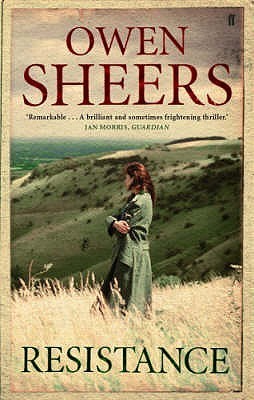
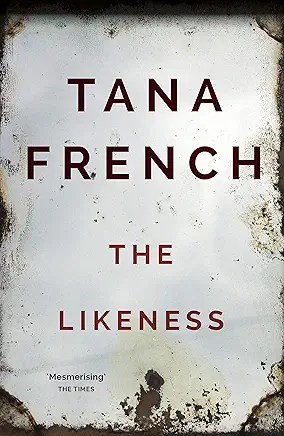
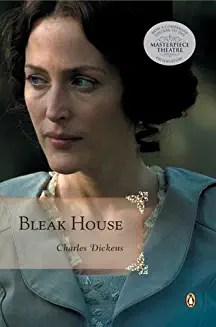
Currently I am reading Resistance by Owen Sheers, The Likeness by Tana French and Bleak House by Charles Dickens. They’re all what I call ‘wordy’ books and are taking me quite a while to read.

Resistance is an alternative history novel by Welsh poet and author Owen Sheers. The plot centres on the inhabitants of the isolated Olchon valley in the Black Mountains of south-east Wales close to Hereford and the border.  It’s set in 1944–45, shortly after the failure of Operation Overlord and a successful German counterinvasion of Great Britain.  It has beautiful descriptions of the Welsh countryside and farming life. I’m enjoying it but finding it slow reading.

The Likeness by Tana French, book 2 of the Dublin Murder Squad. I enjoyed reading the first book In the Woods, in 2014 but I don’t remember the details. No matter it reads well as a standalone. Detective Cassie Maddox is shocked to find out that a murdered girl is her double. At nearly 500 pages this will take me a while to read!

Bleak House by Charles Dickens is another chunkster, over 1000 pages full of description and lots of characters, about the complex and long-drawn out lawsuit of Jarndyce v Jarndyce. I’m only on page 43. I love the beginning – London in the fog.

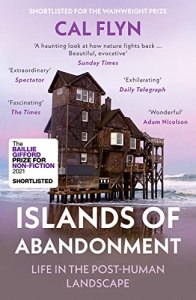
The last book I read was Islands of Abandonment: Life in the post-human landscape by Cal Flyn, a remarkable book, about abandoned places: ghost towns and exclusion zones, no man’s lands and fortress islands – and what happens when nature is allowed to reclaim its place.

I began reading this book in October and have been reading it slowly since then, only finishing it yesterday. It’s not a book to read quickly, but rather one to take your time to take in all the details. It’s fascinating, thoroughly researched and beautifully written.

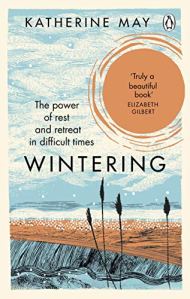
What will I read next? As I’m currently reading the three novels shown above, which will probably take me until the end of the month and beyond I’m not planning to start any more novels. However, I like to have a nonfiction book on the go to read with my breakfast, so tomorrow I’ll start reading Wintering by Katherine May. It’s described as  ‘a poignant and comforting meditation on the fallow periods of life, times when we must retreat to care for and repair ourselves. Katherine May thoughtfully shows us how to come through these times with the wisdom of knowing that, like the seasons, our winters and summers are the ebb and flow of life.’ (Amazon UK)

Top Five Tuesday:Top 5 books with a place in the title

Top 5 Tuesday was created by Shanah at Bionic Book Worm, and it is now being hosted by Meeghan at Meeghan Reads. For details of all of the latest prompts for January to March, see Meeghan’s post here.

Today the topic is Top 5 books with a place in the title – any location or place in a title is fine. I decided to feature books in different countries than my own (UK) – namely Italy, Japan, Greece, Russia and France.

These are all books I’ve read with links to my reviews.

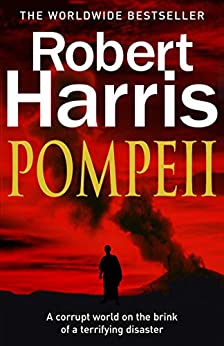
Pompeii by Robert Harris – one of my favourite books. Vesuvius erupts destroying the town of Pompeii and killing its inhabitants as they tried to flee the pumice, ash, searing heat and flames. The story begins just two days before the eruption of Mount Vesuvius and builds up to a climax. 

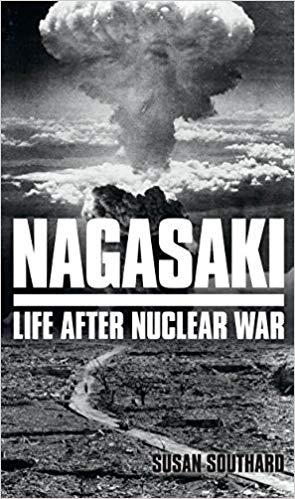
Nagasaki : Life After Nuclear War by Susan Southard, nonfiction, an amazing, heart-wrenching book. On August 9th 1945, two days after the atomic bombing of Hiroshima, a five-ton plutonium bomb was dropped on the small coastal town of Nagasaki. The effects were cataclysmic. It follows the lives of five of the survivors from then to the present day. 

This must be one of the most devastatingly sad and depressing books I’ve read and yet also one of the most uplifting, detailing the dropping of the bomb, which killed 74,000 people and injured another 75,000. 

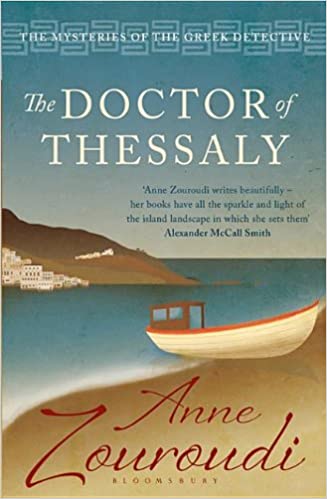
The Doctor of Thessaly by Anne Zouroudi, the third in the series of her Mysteries of the Greek Detective, about Hermes Diaktoros, a mysterious fat man. I was never sure who he worked for, or how he knew of the mystery to solve. Each of the books in the series features one of the Seven Deadly Sins – in this one it is envy, a tale of revenge and retribution.

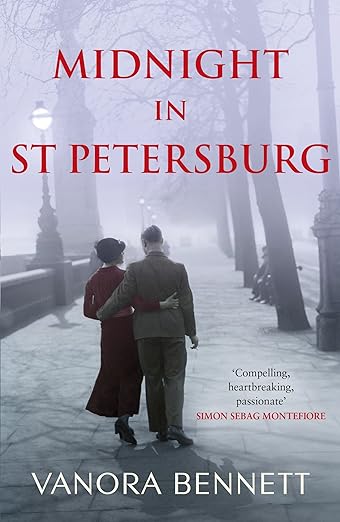
Midnight in St Petersburg by Vanora Bennett. It begins in 1911 in pre-revolutionary Russia with Inna Feldman travelling by train to St Petersburg to escape the pogroms in Kiev hoping to stay with her distant cousin, Yasha Kagan. The book is split into three sections – September – December 1911, 1916-17 and 1918-19 as Russia enters the First World War and is plunged into Revolution and life becomes increasingly dangerous for them all.

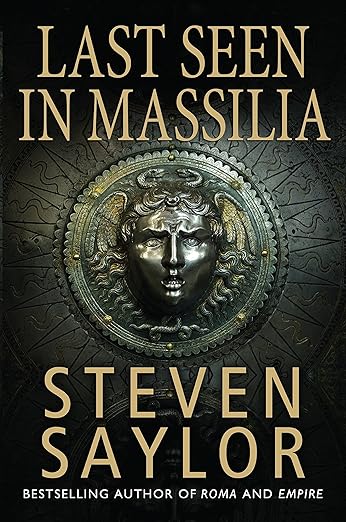
Last Seen in Massilia by Steven Saylor, historical crime fiction set in in Massilia – modern day Marseilles. It’s 49BC during Caesar’s siege of the city., featuring an investigator called Gordianus the Finder. I really liked all the details about Massilia – how it was governed – the hierarchy of the Timouchoi its ruling officials, its relationship to Rome, its traditions and customs. This is the 8th book in Saylor’s Roma Sub Rosa series set in ancient Rome.

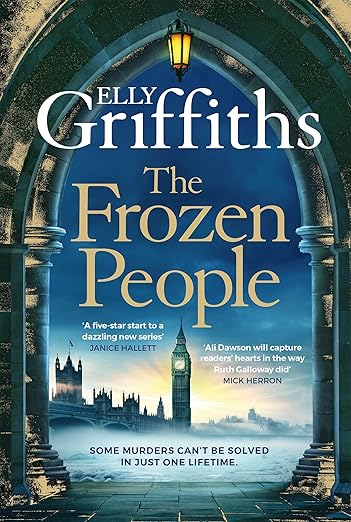
The Frozen People by Elly Griffiths

Quercus/ 13 February 2025/ 354 pages/review copy/e-book |Review copy| 5*

The Frozen People is the first in a new series, the Ali Dawson Mysteries, by Elly GriffithsIt’s not like her other books, but it’s still a murder mystery. Ali is fifty, a Detective Sergeant in a cold case team that investigates crimes in a unique way – by travelling back in time, physically, to do their research and interview the witnesses. You do need to suspend your disbelief but that wasn’t hard for me to do, as Elly Griffiths is an excellent storyteller.

I can’t say I understood how Serafina Jones, a physicist has developed a way of moving atoms in space. There are no concrete details about how it’s achieved and it’s all a bit vague. Jones explains it by saying it’s as if you create a space and then fill it with that exact person. The team calls it ‘going through the gate’. No matter, I never understood how Captain James T Kirk and his crew travelled through time and space in Star Trek, but I still loved it. And just as in Star Trek, Ali and her team are instructed not to interfere with historical events, and are required to maintain the timeline, to prevent history from being altered.

Ali and her colleague, Dina, have made a few trips back in time to collect evidence, but for their current case Ali has to go back in time further than she has gone before – to 1850, to the time and place when Ettie Moran, an artist’s model was murdered. She was found in a building used by artists owned by Cain Templeton, an influential man, who was a suspect, although he was never charged with the murder. He was part of a club called The Collectors. To be a member you had to have killed a woman. Cain’s great great grandson, Isaac, the MP Finn works, for is the Secretary of State for Justice and he wants to clear Cain’s name. So, Ali is assigned to the case. So far, so good. But it all starts to go wrong when Ali finds that she can’t get back to the present day it’s her biggest fear. She is stuck in 1850!

I was quickly drawn into this absorbing story. It’s a combination of two genres I love, crime fiction and historical fiction. The main characters come over as real people, the historical facts and the setting are detailed and convincing. And the plot held me captivated throughout.

I’m looking forward to reading more Ali Dawson books in the future.

Many thanks to the publishers for a review copy via NetGalley.

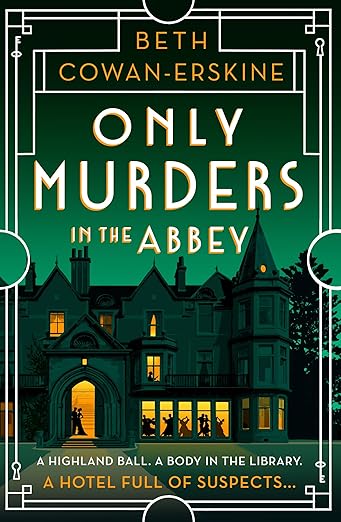
Only Murders in the Abbey by Beth Cowen-Erskine

Hodder & Stoughton/ 13 February 2025/ 363 pages/e-book |Review copy| 5*

I read the first Loch Down Murder Mystery, Loch Down Abbey in 2021 and enjoyed it very much, so I was looking forward to reading Only Murders in the Abbey, set in 1930s Scotland . And I’m glad to say that I thought it was even better than the first one.

Description from the publishers:

Mrs MacBain, thank god it’s you.’ Without another word, he grabbed her arm and pulled her into the room, locking the door behind them. Mrs MacBain turned around, clearly offended at being manhandled, but then gasped, ‘Is that blood?’

Loch Down Abbey is full of guests for a Highland Ball. Including several uninvited members of the Inverkillen clan, the Abbey’s former residents. Housekeeper Mrs MacBain thinks her biggest challenge will be finding suitable rooms for everyone and keeping the peace at cocktail hour.

Until the morning after the ball, when one of the guests is discovered inside the Abbey’s library – as dead as a doornail.

Who would have had motive to want them dead? And how did they manage to commit their crime and escape while keeping the door locked from the inside?

With an Abbey full of suspects and secrets, it is down to Mrs MacBain to catch the killer before they strike again…

The Abbey, formerly the ancestral home of the Ogilvy-Sinclair family is now an hotel, owned by several of the long-standing employees and staffed mainly by the former servants, led by Mrs Alice McBain as the Director of Operations. The manager of the hotel is The Honourable Fergus Ogilvy-Sinclair, the youngest grandson of Lady Georgina, the Dowager Countess of Inverkillen. Her eldest grandson is Lord Angus Inverkillen, the current Earl of Inverkillen.

There are so many characters in this book including family members, hotel staff and guests that I found it difficult to keep track of all of them. However the main characters are very clearly defined and there is a list of all the characters at the beginning of the book, which is a great help.

The book begins the morning after a Highland Ball as Hudson, one of the co-owners of the Abbey, is doing his rounds when he finds a dead body in the Small Library, which had been locked for the Ball. The name of the victim is not revealed. The narrative then goes back to the fortnight before the Ball, introducing the characters and their relationships and it is not until the second half of the book that the identity of the victim is revealed.

Detective Inspector Jarvis from the local constabulary is called in to investigate, but as Mrs McBain thinks he is not ‘the sharpest axe in the shed’. And it is mainly down to her to get to the bottom of the mystery – how a murder could take place in a locked room, who had the motive to commit murder and how was the opium trade in Shanghai involved. As the victim had been stabbed to death the number of suspects includes all the men at the ball who were in Highland dress which includes a sgian-dubh, (pronounced ‘skeen doo’), a small single-edged knife, worn as part of Highland dress in the sock of a kilted Scot. So, there are many suspects, making the investigation tremendously complicated and involving many red herrings, and twists and turns as several secrets and scandals are revealed.The Epilogue introduces yet another unexpected turn.

How on earth Beth Cowan-Erskine kept so many strands in play, set in a richly described location and with believable characters is totally beyond me. But she did, with immense skill making this a most enjoyable book. As she describes it it is ‘a lunatic world’ that she has created. I really hope there will be a third Lock Down Murder Mystery.

Many thanks to the publishers for a review copy via NetGalley.