Every Friday Book Beginnings on Friday is hosted by Gillion at Rose City Readerwhere you can share the first sentence (or so) of the book you are reading. You can also share from a book you want to highlight just because it caught your fancy.
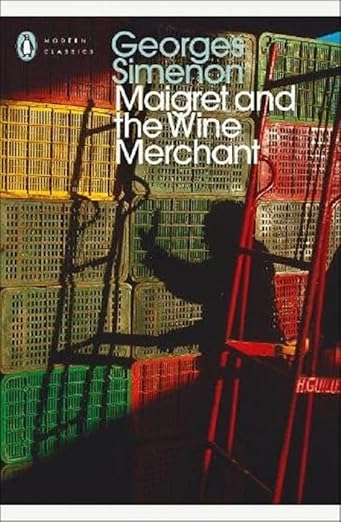
Maigret and the Wine Merchant is one of the books I’m currently reading. I fancied reading something shorter that the books I’ve been reading and thought this one with just 176 pages was ideal. It’s the seventy first book in the Maigret series, and was originally published in 1971. The Penguin Classics edition was first published in September 2019.
The book begins:
“You only killed her to rob her, didn’t you?”
Also every Friday there is The Friday 56, hosted by Freda at Freda’s Voice, but she is taking a break and Anne at My Head is Full of Books has taken on hosting duties in her absence. You grab a book and turn to page 56 (or 56% of an eBook), find one or more interesting sentences (no spoilers), and post them.
Page 56:
‘Was Madame Thorel one of Oscar Chabut’s mistresses?’
‘Rita? She’s come with him and with overs. She’s a sexy little brunette who can’t do without men.’
Description from Goodreads:
‘Maigret had never been comfortable in certain circles, among the wealthy bourgeoisie where he felt clumsy and awkward … Built like a labourer, Oscar Chabut had hauled himself up into this little world through sheer hard work and, to convince himself that he was accepted, he felt the need to sleep with most of the women.’
When a wealthy wine merchant is shot in a Paris street, Maigret must investigate a long list of the ruthless businessman’s enemies before he can get to the sad truth of the affair.
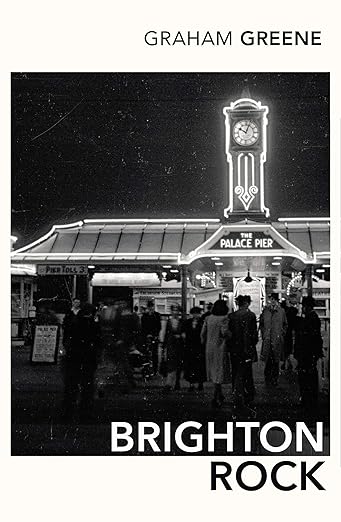
The latest Classic Club Spin challenged you to read book 11 on your CC Spin #41 list by 24th August. That was Brighton Rock by Graham Greene for me.
Vintage Digital| 2 October 2010| 258 pages| e-book| 4*
Description on Amazon:
A gang war is raging through the dark underworld of Brighton. Seventeen-year-old Pinkie, malign and ruthless, has killed a man. Believing he can escape retribution, he is unprepared for the courageous, life-embracing Ida Arnold. Greene’s gripping thriller exposes a world of loneliness and fear, of life lived on the ‘dangerous edge of things.
In this gripping, terrifying, and unputdownable read, discover Greene’s iconic tale of the razor-wielding Pinkie.
I’ve enjoyed some of Greene’s books, so I’ve been meaning to get round to reading Brighton Rock for some years and I was pleased it came up as my Spin book. It was his ninth book, first published in 1938, and one of his Catholic Novels (the others being The End of the Affair, The Power and the Glory and The Heart of the Matter). In his Introduction J M Coetzee writes that it was hisfirst serious novel, serious in the sense of working with serious ideas. Brighton in the 1930s had two faces, one the attractive seaside resort, and the other a nest of criminal activity in the desolate industrial suburbs.
The opening line sets the scene for a murder – “Hale knew, before he had been in Brighton three hours, that they meant to murder him.’ Later he is found dead, apparently from a heart attack. Ida Arnold, who had met Fred as he tried to evade the gang, had left him alone for a few minutes and when she returned he was nowhere to be seen. She is determined to find out what really had happened to him as the official account of his death doesn’t match up with what she knew. So when the police ignore what she says she carries out her own investigation. She believes in Right and Wrong – to Ida death was the end of everything, she didn’t believe in heaven or hell, and she wants justice for Fred.
To say that Pinkie Brown, the teenage gangleader, is a complex character is an understatement. He is desperately trying to cover up his involvement with Fred. Rose is a young innocent girl who could reveal his guilt although she doesn’t realise it. Pinkie believes that if he marries her she wouldn’t be able to give evidence against him. Both of them are Roman Catholics. Rose believes in Good and Evil and salvation, whereas Pinkie believes in Hell fire and damnation, but is unsure about the existence of Heaven. He becomes increasingly paranoiac, more desperate and violent.
This novel is bleak, full of violence, menace and suspense, not a book I could enjoy. I struggled at first to understand what was going on and who all the characters were. It’s an odd mixture really – a crime is committed and the amount of violence is shocking, but it is also a psychological character study and an in-depth consideration of the questions of life and death. It’s a tough book to read and to review without giving away any spoilers, which is why I haven’t gone into much detail about the plot. Whilst it is not my favourite book by Graham Greene, it is well written with memorable characters and brilliantly described which brings it all vividly and terrifyingly to life.
Lisa at ANZ LitLovers will be hosting a new reading event – Short Story September, running from September 1 to 30. On September 1st Lisa will set up a post where all contributions can be posted so that they form a valuable resource that is easy to find.
To participate, please keep it simple. We all know that it’s hard to review short story collections, so all you are asked to do is to read a collection and then choose just one story from that collection to review. To sidestep all the yada-yada about how many words a short story can be, just choose a story that can be read in under an hour.
Contributions should include the name of the short story and its author, and the title of the collection that you found it in, and its editor is there is one. Please #NameTheTranslator for all translations. It’s fine to mention the titles of other stories in the collection that you also enjoyed, of course.
Aim for a review that’s less than 800 words, but this is not a hard-and-fast rule because some stories need less and others need more.
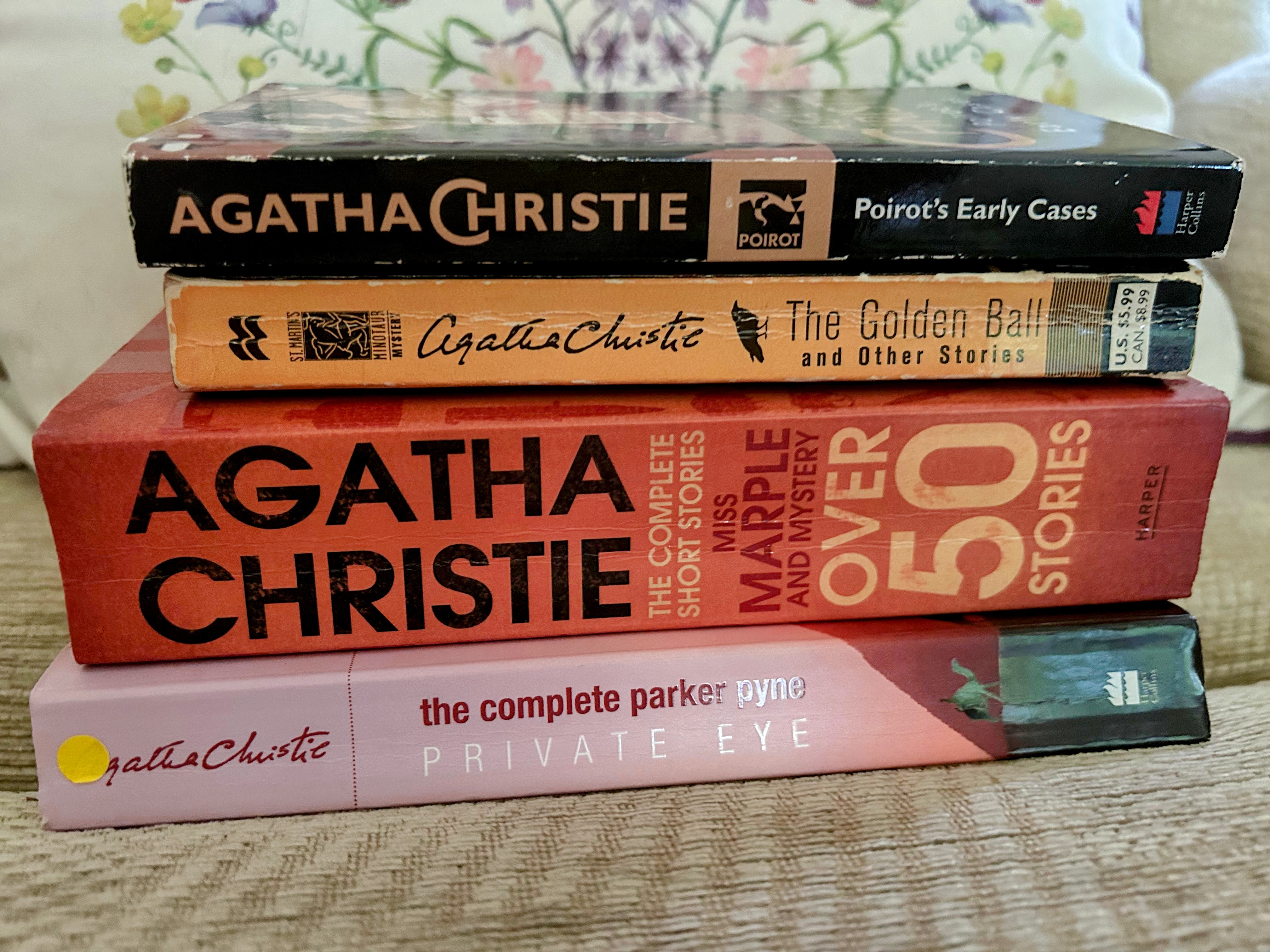
I’ve four collections of Agatha Christie’s short stories I’ve been meaning to read for ages. So, I got them down from the bookshelves:
Poirot’s Early Cases – Captain Hastings recounts 18 of Poirot’s early cases from the days before he was famous from theft and robbery to kidnapping and murder – were all guaranteed to test Poirot’s soon-to-be-famous ‘little grey cells’ to their absolute limit.
The Golden Ball and Other Stories – bizarre romantic entanglements, supernatural visitations and classic murders.
Miss Marple and Mystery: the Complete Short Stories, an omnibus of 55 short stories, presented in chronological order 1923 -1958.
The Complete Parker Pyne, Private Eye – this edition brings together all 14 stories featuring the rather fat and unconventional Mr Parker Pyne.
Top 5 Tuesday was created by Shanah at Bionic Book Worm, and it is now being hosted by Meeghan at Meeghan Reads. You can see the Top 5 Tuesday topics for the whole of 2025 here.
Today the topic is Books with Colours in the Title.
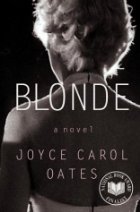
Blonde by Joyce Carol Oates, a work of fiction, not a biography of Marilyn Monroe. I had to keep reminding myself of that as I was reading, because it was so easy to believe in the characters. it’s a tragic story, intense and shocking in parts. It begins with a Prologue – 3 August 1962 with Death hurtling along towards 12305 Fifth Helena Drive, Brentwood, California. It then follows Norma Jeane Baker’s life in chronological sections from The Child 1932 – 1938 to The Afterlife 1959 – 1962. It switches from one narrator to the next, and from third person to first person perspective throughout. It’s brutal, tender and both lyrical and fragmented
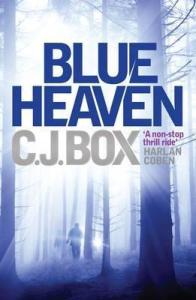
Blue Heaven by C J Box. The action takes place over four days in North Idaho one spring. It’s a story about two children, Annie and William who decide to go fishing without telling their mother, Monica, and witness a murder in the woods. One of the killers sees them and they run for their lives. It’s written in a style that appeals to me – straightforward storytelling, with good descriptions of locality and characters, secondly characters that are both likeable and downright nasty, but not caricatures, and finally the ending was what I hoped, and also dreaded it would be.
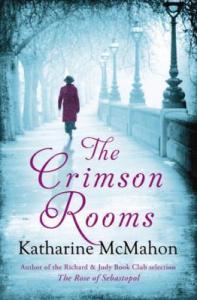
The Crimson Rooms by Katharine McMahon, set in London in 1924, with Britain still coming to terms with the aftermath of the First World War. Evelyn Gifford, one of the few pioneer female lawyers, takes on the case of Leah Marchant, who wants to get back her children who had been taken into care. She was accused of trying to kidnap her own baby. It’s early days for women to be accepted as lawyers and Evelyn struggles to defend Leah who distrusts her and wants Daniel Breen, Evelyn’s boss to defend her. It clearly shows the prejudice these women had to overcome just to qualify as lawyers, never mind the difficulties of persuading law firms to employ them and clients to accept them.
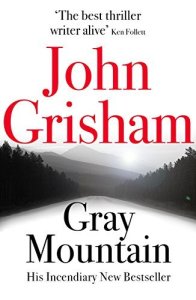
Gray Mountain by John Grisham, a book that puts the big American coal companies under the microscope, companies that are ruining the environment by strip-mining in the Appalachian mountains. I was amazed to read the details – clear-felling the forests, scalping the earth and then blasting away the mountain tops to get at the coal. All the trees, topsoil and rocks are then dumped into the valleys, wiping out the vegetation, wildlife and streams. Gray Mountain is one of the mountains destroyed in this way.
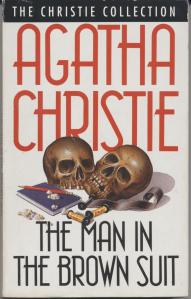
The Man in the Brown Suit by Agatha Christie. The novel is a mix of murder mystery and international crime organised by an arch-villain known as ‘the Colonel’, involving violence (but not graphic) and suspense. Anne Beddingfield saw a man fall to his death on the live rails at Hyde Park tube station. He had a terrified look on his face and turning round Anne sees a man in a brown suit, who quickly becomes The Man in the Brown Suit both to her and the newspapers. A second death follows, this time a young woman, found strangled at Mill House, the home of Sir Eustace Pedler, MP. She was thought to be a foreigner. Anne decides to investigate and the trail takes her on board the Kilmorden Castle sailing to Cape Town. As usual there are a number of suspects and Anne has to work out who she can trust and who to believe
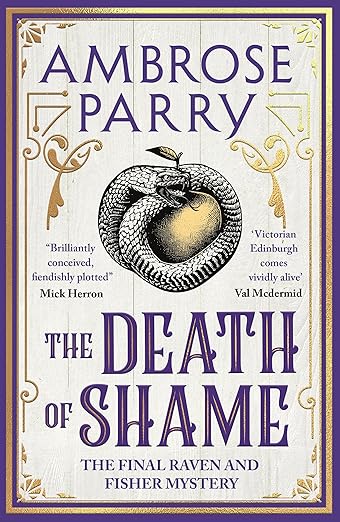
1854, Edinburgh. Respectable public faces hide sordid private sins.
Apprentice Sarah Fisher is helping to fund Dr Will Raven’s emerging medical practice in exchange for being secretly trained as a medic, should the rules barring women ever change. Sarah needs no instruction in the inequalities that beset her gender, but even she has her eyes opened to a darker reality when a relative seeks her help in searching for her missing daughter. Annabelle Banks was promised a situation in a prestigious household, but there has been no word from her since she left home, and the agency that arranged her position says she never appeared.
Sarah’s inquiries lead her to reforming campaigners trying to publicise the plight of the hundreds of girls ensnared in Edinburgh’s houses of assignation. Sarah learns how young women are lured, deceived, trafficked and raped, leaving them ruined in the eyes of a society obsessed with moral purity, and where virginity is prized as a lucrative commodity. Drawing upon real historical events, The Death of Shame takes Raven and Sarah into a treacherous labyrinth of exploitation, corruption, high-level complicity and Victorian-style revenge porn.
Ambrose Parry is the pseudonym of crime fiction author, Chris Brookmyre and Marisa Haetzman, a consultant anaesthetist. The combination of a crime fiction writer and an anaesthetist works excellently in Ambrose Parry’s novels. The research into the history of medicine is extensive, making this book a combination of historical fact and fiction, a tale of murder and medical matters, with the social scene, historical and medical facts slotting perfectly into an intricate murder mystery.
The Death of Shameby Ambrose Parry is the 5th and final Raven and Fisher book. Dr Will Raven is no longer working with Dr Simpson (a real historical person, renowned for his discovery of chloroform) but is setting up his own medical practice with the financial assistance of Sarah Fisher. Sarah, who began working as a housemaid for Dr Simpson, then as a nurse, has ambitions to train as a doctor, something rarely possible for women in her position. So secretly Will is training her as his apprentice to become a doctor.
It’s set in 1854, when Will and his wife, Eugenie have two children, as she is struggling to bond with her children suffering from postnatal depression. The book begins with the death of her father, himself an eminent doctor with a wealthy practice. It appears he committed suicide but Eugenie can’t accept that and asks Will to investigate. Meanwhile Sarah has also been asked to investigate the disappearance of her young niece who has disappeared after leaving home to start a job in Edinburgh.
The plot is complicated and although you could read this as a standalone book as there is some background to what has happened in the earlier books, I really think it’s better to have read them – and they are well worth reading. Will and Sarah’s separate investigations take them into dark and desperate places dealing with blackmail, murder, suicide, abortion, rape, female exploitation, and prostitution. The position of women and girls in society and the dangers they faced are centre stage.
I always enjoy reading the Historical Notes at the end of the Raven and Fisher books and this one is no exception. It gives the factual background and sources that Ambrose Parry used and information about the real life people who are included in the book as well as Dr Simpson, such as Henry Littlejohn, Edinburgh’s police surgeon who served as Medical Officer for Health and medical advisor to the Crown, and Emily Blackwell, one of the pioneers of women in medicine.
This is a great ending to the series but I’d like to think this is not the end of their stories – I’d love to read more about them! In the meantime there is a short story, The Apple Falls Not Far by Ambrose Parry, a digital exclusive short story from the world of Raven and Fisher to read – more about that in a later post.
It’s time again for Six Degrees of Separation, a monthly link-up hosted by Kate atBooks Are My Favourite and Best. Each month a book is chosen as a starting point and linked to six other books to form a chain. A book doesn’t need to be connected to all the other books on the list, only to the one next to it in the chain.
This month we start with The Safekeep by Yael Van Der Wouden, the Women’s Prize Winner for Fiction 2025. This is Amazon’s description:
It is fifteen years after the Second World War, and Isabel has built herself a solitary life of discipline and strict routine in her late mother’s country home, with not a fork or a word out of place. But all is upended when her brother Louis delivers his graceless new girlfriend, Eva, at Isabel’s doorstep – as a guest, there to stay for the season…
In the sweltering heat of summer, Isabel’s desperate need for control reaches boiling point. What happens between the two women leads to a revelation which threatens to unravel all she has ever known.
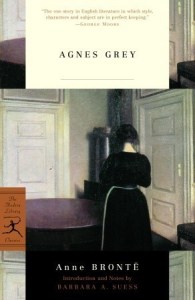
First link: I really didn’t know how to start this chain, until I remembered that the cover of Agnes Grey by Anne Bronte also has doors, although they are closed doors as opposed to the open doors on The Safekeep. This is a novel about a young woman, a governess and her experiences working for two families in Victorian England. Agnes is the younger daughter of an impoverished clergyman. Her parents had married against her mother’s family’s wishes and when their fortune was wrecked Agnes determines to help out by working as a governess. It gives a very clear picture of the life of a governess, with all its loneliness, frustrations, insecurities and depressions.
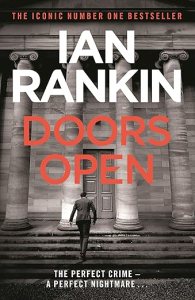
I am staying with doors for the second link, although they are not shown not on the cover, but in the title, with Doors Open by Ian Rankin. This was the first Rankin book wrote after he retired John Rebus in Exit Music. It’s about an art heist – planned by Mike Mackenzie, a self-made man, rich and bored with life, Robert Gissing, the head of Edinburgh’s College of Art and Allan Crickshank a banker with a passion for art that he cannot afford to buy on his salary. Between them they devise a plan to steal some of the most valuable paintings from the National Gallery of Scotland on the day that buildings normally closed to the public throw open their doors and invite them in.
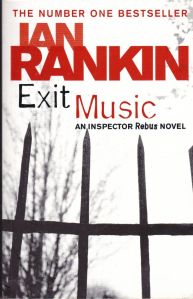
My Third link is Exit Music by Ian Rankin, the 17th Inspector Rebus novel. The Crime Thriller Award for Author of the Year 2008 was awarded to Ian Rankin for this book. It marked the end of an era as Rebus came to the end of his career. At the beginning of this book Rebus is 10 days from his retirement and is anxious to tie up all the loose ends in his current cases, trying to get DS Siobhan Clarke interested in them. So when the body of the dissident Russian poet Alexander Todorov is found dead this is Rebus’s last case. He throws himself into the investigation, desperate to take his mind off the end of his career.
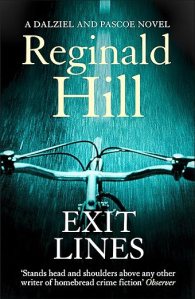
Which brings me rather obviously to my fourth linkExit Lines by Reginald Hill, a Dalziel and Pascoe murder mystery. In this one there are three elderly victims who all died violently one cold and storm-racked November night. A drunken Dalziel is a suspect in one as it seems he was driving the car that hit an elderly cyclist. The plot is intricate, with each separate case being linked together. I thought it was an excellent crime fiction novel which kept me guessing until the end.
My Fifth link is also about a murder that took place during a stormy night. It’s The Redemption of Alexander Seaton by Shona MacLean. Alexander Seaton is a schoolteacher in Banff. It’s set in 17th century Scotland, mainly in the town of Banff, where on a stormy night Patrick Davidson, the local apothecary’s assistant collapses in the street. The next morning he is found dead in the school house of Alexander Seaton, a failed minister, now a schoolteacher
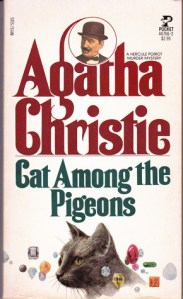
My sixth link is about another schoolteacher, this time a headmistress, Miss Bulstrode in Agatha Christie’s novel Cat Among the Pigeons. She is the head of an exclusive and expensive girls’ school, Meadowbank, in England, said to be based on her daughter Rosalind’s school. Like Miss Brodie, Miss Bulstrode has built a reputation for excellence. But disaster strikes when two of the teachers, Miss Springer, the new Games Mistress and the History and German teacher, Miss Vansittart are murdered. Rather late in the day Hercules Poirot is called in to investigate their deaths.
My chain is mostly made up of two of my favourite genres, historical fiction and crime fiction. It went from a governess to a headmistress with murder mysteries in between. What is in your chain?



 BooksPlease