Top Ten Tuesday: Books I’ve Read But Not Reviewed

Top Ten Tuesday is a weekly meme created by The Broke and the Bookish and now hosted by Jana at That Artsy Reader Girl. For the rules see her blog. This week’s topic is a freebie and I decided to write about – Books I’ve Read But Not Reviewed.

These are all books I read before I began blogging in 2007. I’ve linked them to their pages on the Fantastic Fiction website.

  1. Alias Grace by Margaret Atwood – Did Grace kill her employer Thomas Kinnear and his housekeeper/lover Nancy Montgomery? I couldn’t decide all the way through the book. I’ve enjoyed all of her books that I’ve read so far – this is one of my favourites.
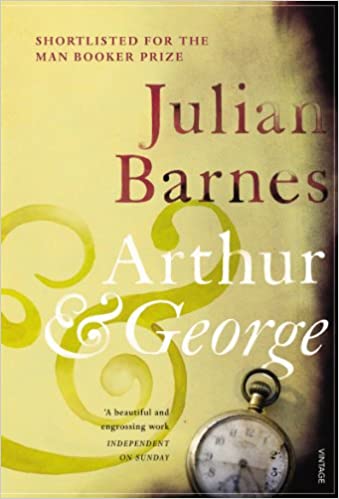
  2. Arthur and George by Julian Barnes – this is based on the true story of Arthur Conan Doyle and George Edalji, a solicitor from Birmingham. I’ve since read a few more of his books.
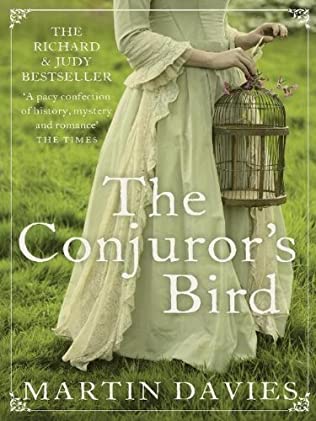
  3. The Conjuror’s Bird by Martin Davies about an extinct bird from Capt Cook’s second voyage, described on Davies’ website as a ‘novel of two narratives – one of the present day and one of the late 18th Century. As the two stories intertwine, the novel unfolds layer after layer of mystery and suspense.’
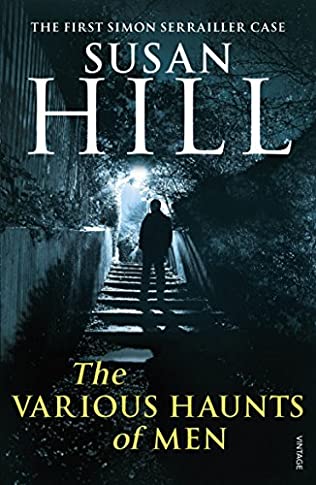
  4. The Various Haunts of Men by Susan Hill – the first book in the Simon Serrailler series. I’ve read seven books in the series – and then decided I’d have enough of them and haven’t read the later books.
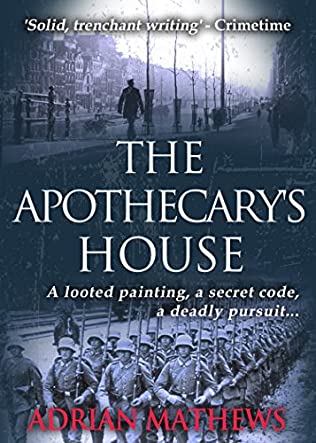
  5. The Apothecary’s House by Adrian Mathews – set in Amsterdam about the history of the piece of looted Nazi art, a painting with a disturbing wartime provenance. Archivist, Ruth Braams at the Rijks Museum, enters a series of increasingly lethal adventures as she investigates its secret symbolism.
  6. Dissolution by C J Sansom – the first in his Tudor murder mystery series featuring Matthew Shardlake. This is set in 1537 – Shardlake investigates the death of a Commissioner during the dissolution of the monasteries. I’ve read all of his subsequent Shardlake books.
  7. The Stone Diaries by Carol Shields – the story of Daisy Goodwill, from her birth on a kitchen floor in Manitoba, Canada, to her death in a Florida nursing home nearly ninety years later.
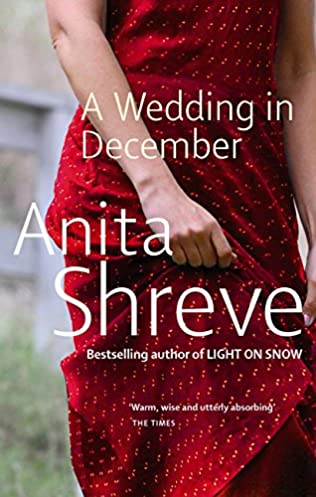
  8. A Wedding in December by Anita Shreve – at an inn in the Berkshire Mountains of western Massachusetts, seven former schoolmates gather for a wedding. It’s an astonishing weekend of revelation and recrimination, forgiveness and redemption. At one time I loved Anita Shreve’s but went off the more recent ones.
  9. The Shadow of the Wind by Carlos Ruiz Zafron – The discovery of a forgotten book leads to a hunt for an elusive author who may or may not still be alive.
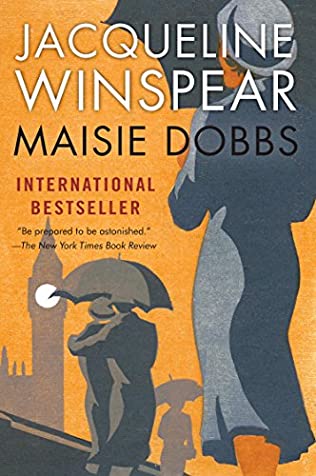
  10. Maisie Dobbs by Jacqueline Winspear – this is the first in the Maisie Dobbs series. In 1929 Maisie set herself up as a private investigator, having started as a maid to the London aristocracy, studied her way to Cambridge and served as a nurse in the Great War. I’ve read a few more of the series since I read this one.

Moonflower Murders by Anthony Horowitz

A labyrinth of clues. A mystery novel hiding a deadly secret. A killer with a fiendish plot: a brilliantly intricate and original thriller from the bestselling author of Magpie Murders

Random House Cornerstone| 20 August 2020| 400 pages| Review copy| 5*

Moonflower Murders is a follow up novel to Magpie Murders. It has the same format – that of a book within the book. Although I don’t think you have to read Magpie Murders first as this stands well on its own merits, I think it would help to know the background and some of the characters if you do.

Susan Ryeland, the main character, has retired as a publisher and is running a small hotel on a Greek island with her long-term boyfriend, Andreas. Their hotel is in debt, they’re in danger of going bankrupt and she is missing her literary life in London. So, when Lawrence and Pauline Trehearn, the owners of an hotel, Branlow Hall in Suffolk visit her and ask if she would investigate the disappearance of their daughter Cecily from their hotel for a fee, she decides to go – and at the same time visit London.

Before she had disappeared Cecily had read Alan Conway’s murder mystery, Atticus Pund Takes the Case, based on a murder that happened at Brownlow Hall eight years earlier. At that time, the evidence against Stefan, the general maintenance man was overwhelming and he was convicted. Cecily was convinced that there was something in the novel that proved Stefan wasn’t responsible for the crime. Unfortunately she hadn’t told anyone what had convinced her. The Trehearnes had read the book, but they couldn’t see any connection, although there are similarities – the characters are clearly based on the people at Brownlow Hall, with the same or similar names.

Susan had published Conway’s books, but thought that if he had indeed discovered that an innocent man was in prison he would have gone straight to the police and not turned it into a novel. But investigating Cecily’s disappearance, she re-reads his book and examines the evidence relating to the murder of eight years ago.

Moonflower Murders combines elements of vintage-style golden age crime novels with word-play, cryptic clues and anagrams. I thoroughly enjoyed trying to work it all out. it – Anthony Horowitz’s style of writing suits me – so easy to read, I whizzed through it, no doubt missing all the intricacies and clues along the way. But it is such an enjoyable way to read – no need to puzzle about the structure, or who is who as the characters all come across as individual people. Of course it’s not a straightforward mystery and along the way I was easily distracted by the red herrings. I thoroughly enjoyed trying to work it all out.

Many thanks to NetGalley and the publishers Cornerstone for an ARC.

WWW Wednesday: 22 July 2020

IMG_1384-0

WWW Wednesday is run by Taking on a World of Words.

The Three Ws are:

 What are you currently reading?
What did you recently finish reading?
What do you think you’ll read next?

The book descriptions are from Amazon.

Currently reading:

After much deliberation and starting several books from my 20 Books of Summer list I decided to read Thin Air: a Ghost Story by Michelle Paver.

Kangchenjunga. Third highest peak on earth. Greatest killer of them all.

Five Englishmen set off from Darjeeling, determined to tackle the sacred summit. But courage can only take them so far – and the mountain is not their only foe.

As mountain sickness and the horrors of extreme altitude set in, the past refuses to stay buried. And sometimes, the truth won’t set you free. . .

Recently Finished: 

I finished reading The Luminaries yesterday and am still mulling it over. I enjoyed it but I’m not sure I liked the structure, with the length of the chapters decreasing as the story progressed.

It is 1866, and young Walter Moody has come to make his fortune upon the New Zealand goldfields. On the stormy night of his arrival, he stumbles across a tense gathering of twelve local men who have met in secret to discuss a series of unexplained events: A wealthy man has vanished, a prostitute has tried to end her life, and an enormous fortune has been discovered in the home of a luckless drunk. Moody is soon drawn into the mystery: a network of fates and fortunes that is as complex and exquisitely ornate as the night sky.

Reading Next:

At the moment I think it could be Smallbone Deceased by Michael Gilbert. I wrote about the opening paragraph and included a quotation from page 55 in My Friday post. Ot it could be Wycliffe and How To Kill a Cat by W J Burley. But it might be a different book that takes my fancy when the time comes.

The girl was young, with auburn hair arranged on the pillow. Wycliffe could almost believe she was asleep – that is, until he saw her face. She had been strangled, and someone had brutally smashed her face – but after death, not before… She lay in a seedy hotel room down by the docks, but her luggage, her clothes and her make-up all suggested she had more class than her surroundings.

Superintendent Wycliffe was officially on holiday, but the case fascinated him. Who was the girl? Why was she lying naked in a shabby hotel room? What was she doing with a thousand pounds hidden underneath some clothing? And, above all, why had someone mutilated her after she was dead?

As Wycliffe begins to investigate, he finds there are too many suspects, too many motives – and too many lies . . .

What do you think – which one would you read next?

My Friday Post: Smallbone Deceased by Michael Gilbert

Every Friday Book Beginnings on Friday is hosted by Gillion at Rose City Reader where you can share the first sentence (or so) of the book you are reading, along with your initial thoughts about the sentence, impressions of the book, or anything else the opener inspires.

My choice this week is Smallbone Deceased by Michael Gilbert, one of the British Library Crime Classics.

It begins:

‘The thoughts of all present tonight,’ said Mr Birley, ‘will naturally turn first to the great personal loss – the very great personal loss – so recently suffered by the firm, by the legal profession and, if I may venture to say so without contradiction, by the British public.’

Also every Friday there is The Friday 56, hosted by Freda at Freda’s Voice.

30879-friday2b56

These are the rules:

  1. Grab a book, any book.
  2. Turn to page 56, or 56% on your eReader. If you have to improvise, that is okay.
  3. Find any sentence (or a few, just don’t spoil it) that grabs you.
  4. Post it.
  5. Add the URL to your post in the link on Freda’s most recent Friday 56 post.

Page 55 (page 56 is missing)

‘And why does that mean he couldn’t have killed Smallbone?’ said Bohun quietly.

‘I quite forgot, ‘ said Hazelrigg, ‘You don’t know how he was killed.’

‘I don’t said Bohun steadily, ‘and I suggest,’ he added, ‘that if you you’re going to trust me you don’t set traps for me.’

The book blurb:

Horniman, Birley and Craine is a highly respected legal firm with clients drawn from the highest in the land. When a deed box in the office is opened to reveal a corpse, the threat of scandal promises to wreak havoc on the firm’s reputation – especially as the murder looks like an inside job. The partners and staff of the firm keep a watchful and suspicious eye on their colleagues, as Inspector Hazlerigg sets out to solve the mystery of who Mr Smallbone was – and why he had to die.

Written with style, pace and wit, this is a masterpiece by one of the finest writers of traditional British crime novels since the Second World War.

~~~

This will be the third book by Michael Gilbert that I’ve read. I thoroughly enjoyed Death Has Deep Roots when I read it last year, and so I’m hoping I’ll enjoy this one too.

If you have read it please let me know what you thought of it.

Maigret’s Holiday by Georges Simenon

I am way behind with writing about the books I’ve read, so I thought it’s best to start catching up by writing about the last book I finished, whilst it is still relatively fresh in my mind.

Rating: 5 out of 5.

Maigret’s Holiday, translated by Ros Schwartz, is one of Penguin Classics’ new translations of the entire series of Georges Simenon’s Maigret novels. This edition was published 4 February 2016. It was first published in French as Les Vacances de Maigret in 1948 (the 28th book in the series) and has previously been published in translations as No Vacation for Maigret and A Summer Holiday.

It is August; Maigret and his wife are on holiday in the seaside town of Les Sables d’Olonne. On their first evening they’d eaten a huge dish of freshly caught mussels and they’d both been ill. Maigret quickly recovered but next day on the beach Madame Maigret complained of vague pains and their second night she developed a fever. Admitted to hospital the next day, she was still there nine days later after an emergency operation for acute appendicitis. When a young woman in room 15 in another ward died, Maigret was unable to resist investigating the circumstances of her death, especially as he had received an anonymous note that had been slipped into his pocket; the words irritated him:

For pity’s sake, ask to see the patient in room 15.

The young woman had died after being flung from a moving car. Of course, it is not a straightforward death and the mystery deepened with the disappearance of her brother.

Maigret visited his wife everyday for half an hour. But he was bored with his routine as he strolled around the resort, along the promenade, Le Remblai, feeling he couldn’t go and sit alone on the vast beach among all the mothers and their children. He wandered from stall to stall in the covered market and stopped at cafes and various favourite places for a glass of white wine or of Calvados. Each afternoon he went to the Brasserie du Remblai, overlooking the beach, where a group of important men, including the local chief inspector of police, Monsieur Mansuy, met to play bridge. Maigret sat and watched them play. And it is through Mansuy that Maigret learns about the local characters, which proves essential for him in solving the mystery.

I loved the way Simenon sets the scene. His writing is direct and lucid with just the right amount of description. I could imagine myself in Les Sables d’Olonne, walking on the narrow cobblestone streets and going into the hospital with its atmosphere that reminded Maigret of his childhood when he was a choirboy – ‘the purity of silence had a quality that cannot be found anywhere other than a convent.’ A hospital where the nurses were nuns.

Maigret relieved his boredom by investigating the mystery surrounding the patient in room 15. He gradually peeled back the layers and without him, no one would have had any idea what had really happened or why. Maigret worked methodically and thoroughly, as he tried to understand the locals and their reactions to the police. In the end he painstakingly visited the shops and cafes asking questions and realised that there was at least one other person in danger. But he knew nothing about that person, not even whether it was a man or a woman and he couldn’t guess their age or profession. As he got closer to the solution he became agitated, so much so that it seemed to him that he was no longer breathing, as he tried to avert a further tragedy.

I thoroughly enjoyed reading this book. It is perfectly paced, building in intensity and complexity, over just 199 pages. A note about the author reveals that Simenon acknowledged that he and his fictional detective shared an important characteristic:

My motto, to the extent that I have one, has been noted often enough, and I’ve always conformed to it. It’s the one I’ve given to old Maigret, who resembles me in certain points … ‘understand and judge not.’

I think that is exactly what Maigret does in this book.

How to Disappear by Gillian McAllister

I’ve read three books by Gillian McAllister and enjoyed each one so I was delighted when I saw that she has a new book, How To Disappear published today. But, I have mixed feelings about this book, because although it is so tense in parts and is compulsive reading – I really wanted to know what happens next – I did have difficulty in suspending my disbelief for a large part of it. I liked the originality of the story – a murder mystery that is not a police procedural or an amateur detective story, but the story of a family devastated by their experience of being in witness protection. Although I’ve seen TV dramas about witness protection I’ve never read a novel before about it.

Blurb:

What do you do when you can’t run, and you can’t hide?

Lauren’s daughter Zara witnessed a terrible crime. But speaking up comes with a price, and when Zara’s identity is revealed online, it puts a target on her back. The only choice is to disappear. To keep Zara safe Lauren will give up everything and everyone she loves, even her husband. There will be no goodbyes. Their pasts will be rewritten. New names, new home, new lives. The rules are strict for a reason. They are being hunted. One mistake – a text, an Instagram like – could bring their old lives crashing into the new. They can never assume someone isn’t watching, waiting.

As Lauren will learn, disappearing is easy. Staying hidden is harder…

I thought it began well, although, it’s written in the present tense, often a stumbling block for me, setting the scene and establishing the characters. Zara is fourteen when she witnesses the murder of a homeless man by two teenagers. A year later she gives evidence as Girl A, to protect her identity, at the trial of two teenage footballers. But it all goes wrong, the boys are freed and after the trial a search is on to discover her identity and make her pay for what she did. As the situation escalates she is forced to go into witness protection.

This is a dark, intense story about what happened next, and going into more detail about what led up to the murder. It’s told from the four main characters’ viewpoints – Zara, Lauren her mother, Aidan her stepfather and his daughter Ruby. It moves along at quite a good pace, although sometimes I thought it was a bit repetitive about long hot baths or lack of a long hot bath, comfort eating cakes, and compulsive shopping.

The main themes of the book are about witness protection, parenting and family relationships. Gillian McAllister explains in her Author’s Note that there are many blanks she was unable to fill in, ‘due to the UK’s protection service not wishing to reveal their secrets’ to her. She hopes it is ‘believable despite basically having … made it up.’ I found it believable up to a point, but it was the characters’ behaviour that I found so far-fetched. However, it certainly made me wonder how I would cope in witness protection, faced with being unable to contact the family I’d left behind in anyway for fear of the consequences. But, most of all, I didn’t enjoy reading it, and for me that is important when I’m reading a novel. It left me drained – and the ending felt so contrived that it really spoiled the whole book for me.

This was not an easy book for me to review, especially as I was expecting to enjoy it as much as her earlier books!

  • Format: Kindle Edition
  • File Size: 1560 KB
  • Print Length: 480 pages
  • Publisher: Penguin (9 July 2020)
  • Source: Review copy
  • My rating: 2

My thanks to the publishers, Penguin for my review copy via NetGalley.